

Six Health Companies from Fast Company's 50 Most Innovative List File IPO Prospectuses
Fast Company, the renowned global business magazine, recently released its list of the World’s 50 Most Innovative Companies of 2015. Online eyewear retailer Warby Parker topped the list, followed closely by tech giants Apple and China’s Alibaba. A total of four Chinese companies made the list: Alibaba, Xingshulin, Wandoujia, and drone manufacturer DJI Innovations. Notably, among the six healthcare-related companies featured, Xingshulin was the only internet healthcare company from China, ranking 25th. Fast Company cited Xingshulin’s inclusion with the rationale: “For seeking the cure to what ails Chinese health care.”
Let’s take a look at the six healthcare-related companies that made the list.
No. 12: Catapult
Reason for Inclusion: Better Prevention of Sports Injuries
Catapult, founded in 2010 and headquartered in Texas, USA, provides on-site preventive physical examination services and offers personalized health reports. On February 16 this year, it secured $8.5 million in funding.
The champions of last season’s NFL, NBA, and NCAA all share one commonality: they used Catapult to monitor their athletes’ health. The company has developed a suite of devices that convert athletes’ physical conditions into visualized data, facilitating the analysis and identification of injury predispositions and excessive training loads, thereby ensuring that athletes are in peak physical condition for competition.
Last year, Catapult’s sales grew by 64%. The company has now established partnerships with nearly half of the NFL teams and one-third of the NBA teams.
16th: Gilead Sciences
Reason for Ranking: Developing Life-Saving Drugs at the Fastest Pace
Gilead Sciences was founded by Michael Riordan in 1987, currently employs more than 7,000 people worldwide, and went public as early as 1992.
Over the past several years, this pharmaceutical company has developed four new therapies capable of effectively suppressing HIV. In late 2013, the company launched a breakthrough drug named Sovaldi for the treatment of hepatitis C. In the first three quarters of 2014 alone, sales of the drug reached $8.5 billion, tripling Gilead’s profits from the previous year’s $3 billion.

No. 25: Xingshulin
Reason for Inclusion: Seeking Solutions to the Challenges Plaguing China’s Healthcare Sector
In China, many doctors work in state-owned hospitals. A newly licensed physician earns a monthly salary of only around RMB 3,000, yet is required to see 50 to 60 patients per day. This has led to extremely strained doctor-patient relationships, with doctors becoming targets of verbal abuse and even physical harm. In this context, any tool that enhances the quality and efficiency of medical care will benefit society as a whole. Founded in 2011, this company aims to leverage internet-based solutions to improve physicians’ work efficiency and “make practicing medicine easier.”
Xingshulin, founded by Zhang Yusheng in 2011, is a company dedicated to developing mobile applications for medical professionals. It currently offers three products: “Bingli Jia” (Medical Record Clip), “Yi Koudai” (MedPocket), and “Yixue Wenxian” (Medical Literature). The company has completed three rounds of financing, raising tens of millions of US dollars in total, and has become one of the representative enterprises in China’s internet healthcare sector.
Currently, 25% of China’s 2.5 million physicians use at least one of the three apps developed by Xingshulin, with the user base growing by nearly 2,000 new users per day.
No. 46: Perfint Healthcare
Reason for Inclusion: Using Robots to Treat Cancer
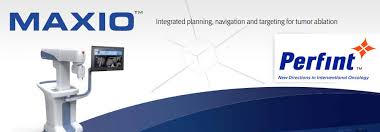
Currently, the primary medical approaches for cancer treatment include surgery, chemotherapy, and radiotherapy. Now, an India-based health technology company is pioneering the development of a fourth modality: minimally invasive image-guided robotic systems. Maxio, developed by Perfint Healthcare, guides physicians in cancer diagnosis, surgical procedures, and pain management interventions, enabling them to formulate more effective treatment plans and deliver precise therapies. The system has been involved in over 1,500 cancer treatments at renowned hospitals across the United States, India, Germany, and Russia, and is set to expand further into other Asian markets, including Japan and South Korea, this year.
Perfint Healthcare was founded in 2005 and has completed four rounds of financing to date, with a cumulative total of $32.7 million raised.
No. 47: Omada Health
Reason for Inclusion: Improving Health Through Guidance
Omada Health is a Silicon Valley startup founded in 2011 by former Google analyst Sean Duffy. It primarily partners with insurers such as Kaiser Permanente and Humana to help patients with diabetes and high-risk populations improve their lifestyles, thereby treating and preventing diabetes. Notably, Omada Health was named one of the “30 Most Underrated Healthcare Startups to Watch in 2015” by wallstcheatsheet.com.For details, click here)
In 2014, Omada Health’s customer base grew tenfold, with each client achieving an average weight loss of 10%. Currently, diabetes has become one of the seven leading causes of death in the United States, with annual treatment costs reaching as high as $245 billion.
Omada Health has raised a total of $29.5 million in funding to date. The company primarily aims to change unhealthy lifestyle habits among many individuals through video-based coaching, thereby reducing the risk of disease. Currently, its focus is limited to diabetes, and it generates revenue by offering structured health programs.

No. 48: ElMindA
Reason for Inclusion: It Changed the Way We Observe the Brain
Brain science is highly complex. Ronen Gadot, CEO of ElMindA, offers a vivid analogy: Imagine your brain as a complex urban road network. Technologies such as magnetic resonance imaging (MRI) allow us to clearly visualize the structure of this network. However, if we want to understand the actual traffic conditions on these roads, we need to use ElMindA’s BNA device.
ElMindA is a technology company based in Herzliya, Israel. Founded in 2006, it aims to transform the management and treatment of brain injuries by translating cutting-edge neuroscience into clinical practice.
ElMindA’s BNA device represents a landmark breakthrough in brain science research and disease treatment. With this technology, doctors and scientists can observe the subtle responses of billions of neurons during activities such as thinking, speaking, and even breathing, thereby gaining insight into the specific changes that occur in the brain in conditions like depression, pain, or memory loss. In the words of Ronen Gadot, if there is a “traffic jam” in the brain, we will not only be able to detect it at the earliest stage but also take appropriate measures to alleviate the congestion. In July 2014, ElMindA’s BNA received FDA approval.
Note: Special thanks to Nicole from Intour.
(To stay updated on the latest internet healthcare startup news, please follow VCBeat’s WeChat official account: vcbeat. We also welcome you to engage with us on topics of interest, contact us via WeChat, and share your startup projects or related research insights.)