

Accenture: 2015 Survey Report on Physicians' Use of Healthcare IT Technologies
Recently, Accenture conducted a survey of 2,619 physicians across six countries to assess their attitudes toward and acceptance of electronic health records (EHRs) and healthcare IT. The six countries included Australia (510 physicians), Brazil (504 physicians), the United Kingdom (502 physicians), Norway (302 physicians), Singapore (200 physicians), and the United States (601 physicians). This online global survey was carried out by Nielsen Market Research from December 2014 to January 2015 (with the U.S. portion conducted from December 2 to December 8, 2014). The analysis primarily focused on country, specialty, age, and level of EHR usage.

I. Research Methods1. Accenture’s PartnerAccenture partnered with Nielsen Consumer Insights (formerly Harris Interactive) to conduct this survey. Nielsen has previously managed numerous large-scale projects, including the recruitment and screening of physicians among trusted partners in various countries.2. About the Survey RespondentsThe survey respondents included primary care physicians, secondary care physicians, and specialists in Australia, Brazil, the United Kingdom, Norway, Singapore, and the United States, all of whom were registered for market research activities. All survey work was conducted in an environment combining open and private settings. Primary care physicians included general practitioners and family medicine practitioners; secondary care physicians included specialists in surgery, neurology, endocrinology, rheumatology, oncology, and cardiology.3. How Respondents Were ScreenedPhysicians were contacted via email containing a unique link; clicking the link allowed them to complete the survey anonymously. To maximize participation, two emails were sent to each physician. Taking into account subtle cultural nuances in Singapore, we conducted interviews with physicians by telephone and provided real-time technical assistance via tablets.4. Quality of RespondentsAll physicians underwent double verification and re-screening prior to participating in the survey.5. Ensuring Sample Balance and Representativeness Across Regions and SpecialtiesTimely quota updates for emails ensured that all follow-up emails were dispatched. To maintain relative fairness and representativeness, respondents were stratified by region, department, and specialty.6. Data WeightingData from the United States was weighted by gender, region, and specialty. Data from Australia, Brazil, the United Kingdom, and Norway was weighted by the overall age, gender, and specialty distributions of physicians in each respective country. Data from Singapore was not weighted.II. Statistical Data on U.S. Physicians

III. Survey Results
"Most U.S. physicians report greater clinical proficiency with electronic health records compared to two years ago."


Most U.S. physicians believe that electronic health records (EHRs) and e-prescribing significantly assist them in delivering medical services.
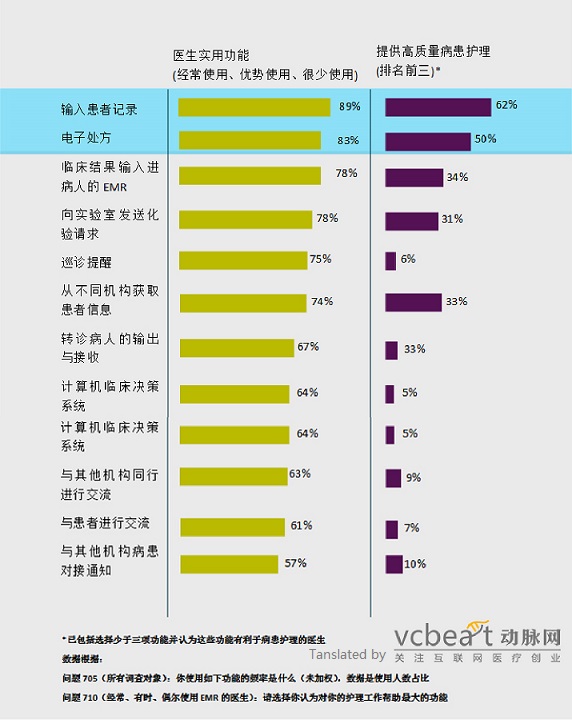

The number of physicians using routine functions has been increasing year by year.

* This is unweighted data. Question Q705 (all respondents): How often do you use the following features? The data presented reflects physicians who selected the "frequently use" option.
Physicians believe that since 2012, the use of electronic health records (EHRs) has been on the rise, with a substantial increase in the number of patients accessing their medical records and treatment outcomes online.
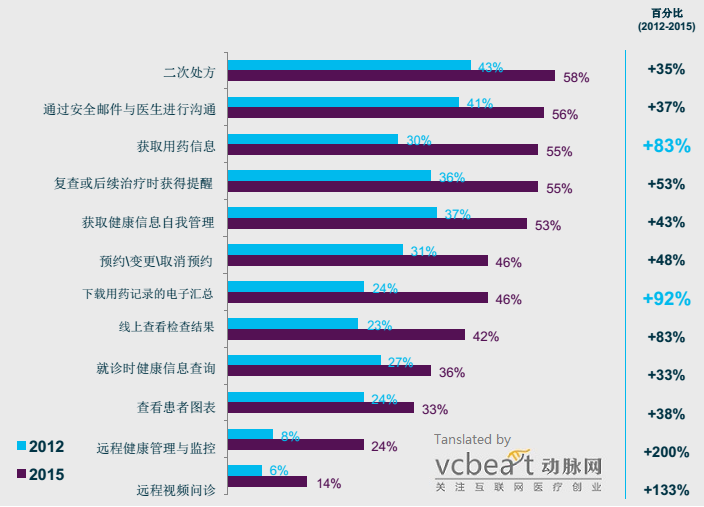
Question Q925/Q740 (All Respondents):Are the following features effective for digitizing your patient information? They can...
U.S. Physicians Believe That Updating Personal Electronic Health Records Facilitates Patient Engagement.
Most people also believe that EMRs help patients understand their health status, improve doctor-patient communication, ensure accurate documentation, and enhance patient satisfaction.

Question Q930 (All Respondents):When you allow patients to update their medical records themselves, do you think this will have a positive or negative impact on the following situations?
Many physicians consider the electronic medical record (EMR) systems at their healthcare institutions to be highly inconvenient and anticipate improvements.

The Importance of Optimizing Patient Treatment Quality Through Medical IT Technology (Significance)

Question Q810: Do you agree with the following statement? Question Q725: Which of the following do you consider to be very important in optimizing the quality of diagnosis and treatment through medical IT technology?
For most U.S. physicians, health IT means less time with patients

EMRs also have limitations. Most physicians in the United States believe that EMRs have not played an effective role in diagnostic decision-making, medical malpractice, and patient healthcare expenditures, as these areas have not improved compared to the past; reducing the rate of medical errors remains the primary benefit brought by EMRs.
The Impact of EMR and HIE

*Unweighted Data Question Q805: What do you consider to be the primary impacts of using EMR and HIE? Compiled by Xing Zhaopeng; Edited by Mo Renying