

CCTV Reports: Radiation from Kids' Smartwatches Exceeds Mobile Phones by 1000 Times
1, the global next-generation sequencing (NGS) market size will reach $30 billion in 2022
According to Grand View Research, the global next-generation sequencing (NGS) market size was $2 billion in 2014 and is projected to grow at a compound annual growth rate (CAGR) of 40.1% from 2015 to 2022, reaching $30 billion by 2022.
Whole-genome testing technology is developing the fastest and will gradually replace targeted resequencing, dominating the NGS market.
With the growth of the global population, the rising incidence of infectious diseases and cancer will further drive the expansion of the NGS market, fueled by increasing demand for disease diagnosis and treatment. The NGS market is being further expanded by novel applications of genomic sequencing in cancer and infectious disease research, rising healthcare expenditures required for effective cancer diagnosis, and the growing adoption of biomarkers.
Among them, Illumina, Thermo Fisher Scientific, and Hoffmann-La Roche account for 90% of the genetic testing market share.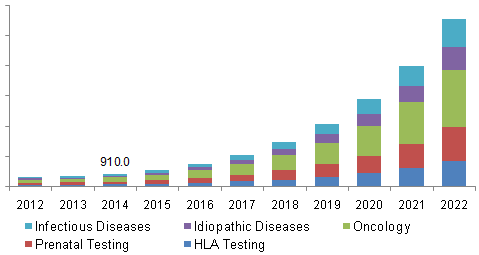
2Abbott Acquires Heart Valve Manufacturer Tendyne for $250 Million
Recently, Abbott completed the acquisition of Tendyne for $250 million. Tendyne is a medical technology company under the Jean Boulle Group. This acquisition marks a further deepening of collaboration between Abbott and the investment firm Jean Boulle Medtech.
Abbott’s acquisition was primarily driven by Tendyne’s heart valve technology, which is specifically designed to treat mitral regurgitation caused by complex mitral valve anatomy, a condition in which the left-sided mitral valve fails to close completely. If left untreated, mitral regurgitation can lead to heart failure and death. In the United States alone, millions of patients stand to benefit from mitral valve replacement.
3, SF Express, China Post, and others have entered the third-party pharmaceutical logistics sector
On September 11, according to a report by 21st Century Business Herald, logistics companies including China Post, SF Express, and UPS will gradually enter the pharmaceutical logistics market and officially join the industry once relevant “permits” are approved.
As China continues to liberalize its policies on online pharmaceutical sales, the pharmaceutical logistics sector is poised for significant market growth, with potential rivaling that of the current brick-and-mortar pharmaceutical sales market.
However, the barriers to entry in pharmaceutical logistics are relatively high, with strict controls required for drug sorting, storage, and transportation temperatures. This poses a significant challenge for third-party pharmaceutical logistics companies, while logistics giants such as SF Express and China Post have already begun to strategically position themselves in the pharmaceutical logistics sector.
4CCTV: Radiation Levels of Children's Smartwatches Exceed Those of Mobile Phones by 1,000 Times
According to CCTV’s “First Time,” children’s smartwatches emit radiation more than 1,000 times that of mobile phones at the moment a call is answered.
CCTV reporters purchased three models of children’s GPS tracking watches, priced at 148 yuan, 380 yuan, and 798 yuan, respectively. These devices were then sent to the School of Physics and Optoelectronic Engineering at Dalian University of Technology for radiation monitoring, with comparisons made against three mobile phones.
The results showed that in standby mode, children's smartwatches had the same radiation levels as mobile phones. However, during phone calls, the 148-yuan children's watch emitted radiation 1,000 times higher than that of a mobile phone making a call. Nevertheless, radiation levels were not correlated with price; the 380-yuan model exhibited the lowest radiation value.
CCTV stated that only mobile phones tested and confirmed to be safe in terms of human radiation exposure can obtain a network access license, but there are no corresponding production standards for children’s positioning watches. Industry insiders in China’s telecommunications sector have indicated that watches with higher transmission power are not suitable for long-term wear.