

Bailumei Secures RMB 100 Million Strategic Investment to Expand Offline Concept Beauty Salons
1, Beauty O2OBailu Mei Won 1¥100 Million FinancingEstablishing Offline Physical Presence
On September 24, BaiLuMei, a beauty O2O enterprise, secured RMB 100 million in strategic investment from a professional investment firm specializing in postpartum care centers, high-end kindergartens, and maternity hospitals. The funds raised will be used to expand the company’s offline concept beauty salons.
Bailu Mei is an on-demand beauty service app that primarily offers facial and body care treatments. Users can select beauticians for home visits based on their location and personal preferences.
After placing an order and scheduling an appointment, the beautician will promptly contact the user by phone to confirm the home visit time and help verify whether the selected beauty treatment is suitable for the user's skin type.
Bailu Mei, a beauty industry app brand under Beijing Liangkezhang Technology Co., Ltd., was established in December 2014. At its inception, Bailu Mei secured nearly RMB 10 million in angel-round investment from Yu Minhong and the Peking University Venture Capital Fund. In April 2015, it further obtained RMB 15 million in Pre-A round financing.
Currently, Bailu Mei offers three major service categories—beauty, body care, and wellness—with nearly 60 service items. It has already opened locations in Beijing, Shanghai, Hangzhou, and Nanjing.
2, Tencent Ping An Leads Investment in CliniCloudSmart Medicine Kit Obtains 500$10,000 in financing
On September 25, 2015, CliniCloud secured $5 million in financing led by Tencent and Ping An. CliniCloud is a company that develops smart home medical devices; its intelligent home medical kit can connect to smartphones, and pre-orders began in February of this year.
CliniCloud was founded in the United States by two Australian physicians. The company’s home medical kit, which includes a wireless non-contact thermometer and a digital stethoscope, connects to smartphones via the headphone jack. It records users’ respiratory rate, heart rate, and body temperature data; the measurements are displayed on the CliniCloud app and then shared with physicians. Through Doctor on Demand, users can initiate video consultations with doctors, who can listen to the user’s heart sounds in real time via the app.
The medical kit, priced at $149, will launch in October and be sold in over 500 Best Buy stores.
3President Xi Jinping Visits MicrosoftExperience Cutting-Edge 3D TechnologyHolographic Glasses
Recently, President Xi Jinping visited the headquarters of Microsoft during his trip to the United States and experiencedMicrosoft's HoloLens Hololens. Microsoft demonstrated to President Xi Jinping the applications of HoloLens in motorcycle styling design and in visualizing U.S. meteorological data, bringing this cutting-edge Microsoft product back into the public spotlight.
In January this year, Microsoft released these augmented reality 3D holographic glasses. The holographic glasses can create a transparent environment, featuring holographic images, high-definition visuals, and spatial audio, allowing users to view holograms within the real world. Their applications in the medical field have also garnered significant attention.
Holographic glasses can enable the reconstruction of human anatomical structures and tissue organs, as well as virtual manipulation and dissection of organs. They can display various types of bone fractures in a floating manner, such as spiral fractures and open fractures. Their functionality in the field of medical education has the potential to spark a revolutionary transformation in the medical technology sector.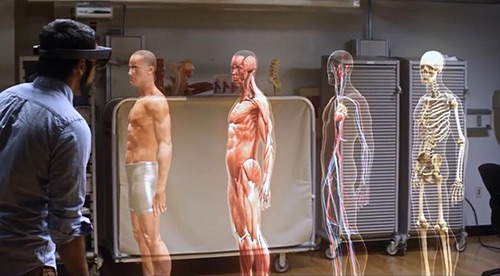 4, dissatisfied with drug prices “"Black Curtain"Hillary Clinton’s Move Deals Heavy Blow to Biotech Stocks
According to foreign media reports, Hillary Clinton, the Democratic presidential candidate in the United States, announced a policy to curb excessive profits by pharmaceutical companies, dealing a significant blow to the U.S. biotech sector.
Hillary had previously accused pharmaceutical companies of “price gouging.” According to her, after one pharmaceutical company acquired another, the price of an existing drug specifically used to treat life-threatening parasitic infections skyrocketed from $13.50 to $750.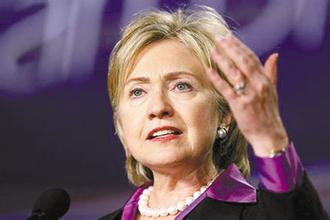
On the 22nd local time, Hillary Clinton unveiled a policy at a town hall in Iowa, U.S., aimed at curbing excessive profits by pharmaceutical companies, seeking to cap monthly out-of-pocket costs for prescription drugs used by patients with chronic conditions at $250.
Hillary Clinton’s entry into the debate over drug prices has dealt a severe blow to the U.S. biotechnology sector. The Nasdaq Biotechnology Index plummeted 4.3% on Monday, with shares of several biotech companies falling sharply. Illumina, a gene-sequencing instrument manufacturer, saw its stock drop more than 8% over two days, while Valeant, considered the pharmaceutical company with the most pronounced price hikes, experienced a 10% decline in its share price over the same period.
Hillary’s remarks may have merely served as the “trigger,” as concerns about a “bubble” in the U.S. biotechnology sector have long persisted. This was particularly evident during the August pullback in the U.S. stock market, when biotech stocks declined significantly more than most other sectors, reflecting investors’ worries over the elevated valuations of these companies.