

MirrorMe3D Files IPO Prospectus: Pioneering 3D-Printed Personalized Plastic Surgery Simulation
The integration of 3D printing with such a wide array of application scenarios is truly dazzling. Recently, 3D Systems and Dr. Carrie Stern’s New York-based startup, “MirrorMe3D,” reached a preliminary agreement to collaborate. Both parties hope that this partnership will help create a better experience for plastic surgery patients and improve the overall outcomes of reconstructive procedures.
If you are as fascinated as I am by cosmetic surgery culture and the pursuit of creating a perfect human appearance, then it makes perfect sense for entrepreneurs to venture into 3D printing to produce 3D models that closely approximate an entirely new face.
Still worried that your long-contemplated rhinoplasty may not meet your expectations? Rest assured: the partnership between MirrorMe3D and 3D Operating System aims to alleviate plastic surgery patients’ fears of unexpected or undesirable changes to their appearance once the postoperative dressings are removed.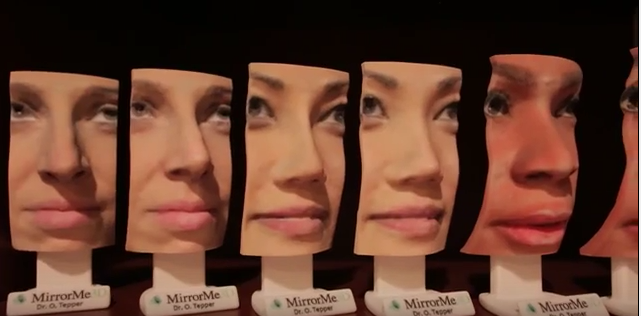
MirrorMe3D will employ 3D printing to create patient-specific models for preoperative and postoperative simulations. Clearly, being able to visualize the anticipated changes before they actually occur provides significant reassurance. Imagine the convenience of having all preparations completed using 3D-printed models prior to the patient’s surgery. This represents another advantage of 3D modeling in healthcare, akin to the benefits offered by other surgical advancements.
This unique surgical plastic surgery approach is referred to by physicians familiar with common cosmetic surgery procedures as a “game changer” or a “paradigm shift.” Dr. Glenn Jelks, a plastic surgeon at NYU Langone Medical Center, describes the collaboration between MirrorMe3D and 3D operating systems as a new “paradigm shift.” In practice, you receive a printed card indicating tissue volumes, whether for bone, soft tissue, or fat grafting, all of which require reconstruction.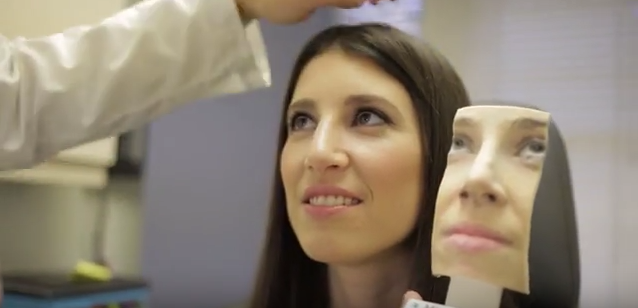
Thus, the integration of plastic surgery with 3D printing has ushered in a new model, suggesting that 3D technology companies are well-positioned to lead this paradigm shift. 3D Systems is collaborating closely with biomedical engineers at its medical facility in Colorado. They leverage the latest versions of Geomagic Studio and Geomagic software to prepare models for printing, utilizing the 3D Systems ProJet 660 Color Printer to produce the models, which then undergo post-processing. “MirrorMe3D is a perfect example of how medical professionals are combining 3D software tools with 3D printing technology to enhance their services and deliver more personalized care,” said Kevin, Chief Operating Officer of the healthcare company McAlea.
Compiled by: Xu Lei