

Seven Distinct AI Applications Uncover Diverse Healthcare Needs: Innovations Spanning Infection Control, Personalized Therapy, Workforce Optimization, Medication Adherence, Chronic Care, Drug Safety, and Clinical Decision Support
The latest U.S. healthcare legislation requires healthcare providers to enhance patient experience while minimizing medical costs as much as possible. Clearly, the rapidly advancing artificial intelligence (AI) technology is well-positioned to meet these demands. In fact, AI has been quietly making significant inroads in the healthcare sector for quite some time. Below, we introduce several healthcare applications that leverage AI technology:
Medical University of Vienna: AI Monitoring of Hospital-Acquired Infections
The Artificial Intelligence Surveillance Project at the Medical University of Vienna, which is carried out through a series of data flow model evaluations, primarily monitors the emergence and spread of bacteria that may cause nosocomial infections (NIs). Nosocomial infections, or hospital-acquired infections (NIs), are common complications among hospitalized patients. The digitization of hospital patient records enables automated machine identification and monitoring of NI activities. In accordance with European surveillance system standards, we have developed a fuzzy knowledge-based system designed to identify and monitor NI activities in intensive care units; this system has already been implemented at the Vienna General Hospital. Named Moni, the system primarily monitors NIs, utilizing Medical Knowledge Packages (MKPs) to confirm and track various infections, such as pneumonia, urinary tract infections, and central venous catheter-related infections.
University of Pittsburgh and Carnegie Mellon University: Machine Learning for Developing Personalized Treatment Plans
Although both individuals are undergoing treatment for breast cancer, they may have vastly different identities. One might be a marathon runner, while the other is a quiet reader; one could be a heavy smoker, whereas the other is a health-conscious enthusiast; one may be 60 years old, while the other has just turned 40. Due to these differences, the two female patients may require different treatment approaches.
The greatest challenge for scientists and physicians lies in extracting treatment information tailored to specific patient populations from vast databases. While it may take years to filter out the necessary data, clinicians cannot afford such a lengthy wait.
Scientists at Carnegie Mellon University and the University of Pittsburgh are leveraging artificial intelligence to extract actionable insights from vast datasets—including electronic health records, diagnostic imaging, prescriptions, genomic analyses, insurance claims, and even data generated by wearable devices—to develop rational healthcare plans tailored to specific population groups rather than focusing solely on particular diseases.
Researchers are leveraging big data to design targeted therapies aimed at curbing epidemics and discovering treatments for fatal diseases.
“Current systems are not intelligent, which made the initial stages of this idea fraught with frustration,” said a professor from the Machine Learning Department at Carnegie Mellon University. “Data stored in these systems is essentially inert. Machine learning and artificial intelligence can mine useful knowledge from vast data warehouses, enabling reasoning over that information. It functions like an active artificial brain, rather than merely a storage system.”
This project was completed through a joint collaboration between Carnegie Mellon University and the University of Pittsburgh Medical Center, a partnership we refer to as the “Pittsburgh Health Data Alliance.” The Medical Center has agreed to provide annual research funding of $10 million to $20 million for their research over the next six years.
“Every patient is different,” said Xing. “You can take a very simplistic view, stating that breast cancer should be treated with Drug A or B, but the uniqueness of each individual’s lifestyle, environment, and other health factors makes every person distinct. Artificial intelligence can extract key features from the collective experience of not just one physician, but many, and it can also derive characteristic information from patients with similar profiles.”
Artificial intelligence software operates much faster than the human brain; it excels at pattern analysis and feature extraction, thereby assisting doctors and scientists in identifying critical information.
For instance, if a 50-year-old patient with diabetes experiences significant positive changes in their quality of life after receiving a specific treatment, physicians may subsequently attempt to employ similar therapeutic approaches.
We also learned from Xing that the organization is developing a smartphone app designed to provide users with recommendations for disease prevention and healthier living. The app is expected to launch in approximately one year.
“This AI-powered app can tell people when they should see a doctor, what type of specialist to consult, and what steps they can take to maintain their health,” said Philip, Associate Dean of the School of Computer Science at Carnegie Mellon University.
They aim to launch prototypes of different products each year—ranging from applications to machine learning tools and services—with the goal of having a dozen new products within the next five to six years. They believe that all of this will redefine healthcare.
Some Hospitals Are Using the Einstein II Workforce Solution to Improve Efficiency
Many hospitals utilize the Einstein II workforce management solution to enable flexible scheduling based on patient census, staff availability, and historical data. Primarily designed to enhance the efficiency of existing workforce resources, this cloud-based system eliminates the need for additional hardware or server space while ensuring real-time data updates. Functioning like a “crystal ball,” it provides comprehensive visibility into the work status of all hospital personnel. The system operates based on institutional scheduling rules while accommodating ad-hoc scheduling needs, thereby ensuring rational staff allocation in most scenarios. Furthermore, Einstein II serves as an analytical tool; leveraging its built-in artificial intelligence engine, it extracts actionable insights and patterns from historical data to inform current and future decision-making. Additionally, it generates real-time analytical reports during maintenance, making it an excellent choice for meeting and reporting purposes.
Aicure: Medication Adherence Solution
AiCure is committed to providing better medication adherence solutions. So, how does it work?
First, it features a highly user-friendly interactive software that requires users to input their daily dosage. Additionally, the software has certain requirements for the user's camera resolution, given its real-time imaging capabilities.
AiCure’s HIPAA-compliant platform utilizes facial recognition and motion sensors via smartphones to automate Directly Observed Therapy (DOT) for medication adherence. The platform is designed to monitor a variety of medications and multiple routes of administration, including oral, sublingual, inhalers, and injection pens. The application and dashboard support easy multilingual display.
Subsequently, all observed data will be encrypted and anonymized, and secure information (voice and text messages) will be integrated into the dashboard.
One standout feature of this application is its robust machine learning capability, which enables it to optimize monitoring and treatment plans based on accumulated data and detect deceptive or perfunctory behaviors (such as tampering with medication timestamps and unusual medication interruptions). All of this is made possible by its powerful artificial intelligence algorithms.
Therefore, when using this app to take medication, please make sure to face the camera. Does that feel a bit odd? Don’t worry—this feature is designed to help patients adhere more closely to their doctors’ instructions. Remember the song “Listen to Mom”? Haha!
Alme Health Coach: Virtual Assistant for Patients with Chronic Diseases
One of the primary challenges in healthcare is patients’ inability to adhere to treatment plans and physicians’ instructions. As Alme Health Coach primarily serves patients with chronic diseases, the treatment cycle is often prolonged. Therefore, it is essential for patients to fully understand the purpose of this application and establish a trusting relationship with it prior to engagement.
Alme aims to ensure that patients understand its underlying motivation: by analyzing personal lifestyle factors—such as dietary habits, exercise routines, and medication adherence—through AI-driven data processing, it provides a comprehensive assessment of their chronic disease status and delivers personalized health solutions.
It primarily functions as a “virtual assistant,” capable of automatically helping patients plan their daily health routines, monitor sleep, provide medication and testing reminders, and even reverse-engineer the root causes of non-adherence or lethargy in patients who fail to follow these reminders. The overarching goal of all these activities is to help patients with chronic diseases change unhealthy habits and adopt a healthier lifestyle through a fully automated approach.
It can seamlessly integrate into patients' daily lives, with its API capable of connecting to wearable devices, smartphones, enterprise systems, and electronic medical records, thereby eliminating the hassle of cross-platform data transfer.
That’s right—GeNü Health Coach is truly impressive; those who try it know the difference~
AdverseEvents Explore: Drug Effect Prediction Algorithm
It primarily provides data on drug effects approved by the FDA, as well as access to proprietary information through the Freedom of Information Act (FOIA), enabling physicians to obtain real-time drug safety and cost information. The core analytical algorithm of this browser, Rxsuite, mainly includes RxFilter, RxCost, RxSignal, and RxScore. RxFilter fully optimizes the FAERS dataset through a 17-step algorithm, making it fully accessible and searchable; RxCost is a standardized method for determining the direct costs of adverse drug reaction events, allowing decisions to be made based on total healthcare costs; RxSignal is a predictive algorithm that alerts users to emerging and previously unknown side effects of drugs, which may potentially trigger FDA inquiries in the future; RxScore is the first drug safety rating system, capable of quickly summarizing comprehensive post-approval drug safety issues, similar to the FICO credit scoring system.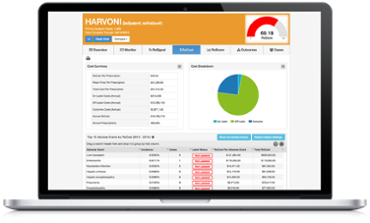
Modernizing Medicine: Providing Physicians with Intelligent Treatment Tools
Modernizing Medicine is dedicated to the modernization of healthcare, utilizing its Electronic Medical Assistant (EMA) to deliver comprehensive services and solutions. The system features a highly intuitive interface that can be customized to align with each physician’s individual workflow style. Built on cloud-based storage, it ensures real-time data synchronization. Similar to everyday smartphone usage, the system incorporates touch-screen functionality, allowing physicians to rapidly create patient charts, billing records, and other medical data through simple taps and swipes. With the EMA system, doctors can access patients’ medical histories directly via touch-screen interaction. Modernizing Medicine has currently partnered withBy integrating with IBM Watson’s artificial intelligence system, it claims to differ significantly from conventional EMR systems, offering a workflow tailored precisely to your needs.