

Haplox Launches 10,000-Person Genomic Sequencing Initiative to Advance Core ctDNA Technology
“"Promoting Health for Every Life"120Year”This is Hipro’s vision and the direction toward which it strives.
The Ten-Thousand-Person Genome Sequencing Project ChinaTop Cancer Hospitals Join Successively
On July 17, 2015, Shenzhen HybriBio Technology Co., Ltd., in collaboration with Shenzhen People’s Hospital, launched the “Ten-Thousand-Person Cancer Genome Sequencing Initiative.” Through genomic sequencing, the initiative aims to facilitate non-invasive early tumor detection, provide personalized medication guidance, and assess drug resistance for individuals at high risk of cancer and cancer patients. Its goal is to establish a cancer genomic database specific to the Chinese population, thereby laying the foundation for precision oncology in China.
The program offers free testing to high-risk individuals and cancer patients through a screening-based enrollment approach. To date, HaploX has completed genomic sequencing for nearly 1,000 tumor samples. According to CEO Xu Mingyan, the genomic sequencing initiative aims to complete 10,000 tumor genetic tests by the end of 2016 and establish a comprehensive database encompassing information on tumors, genes, drugs, therapeutic efficacy, and clinical data from the general population, high-risk groups, and cancer patients. This database will serve as a critical foundation for providing precision cancer diagnosis and treatment services in China.
Currently, dozens of large Grade A tertiary oncology hospitals across China have joined the program.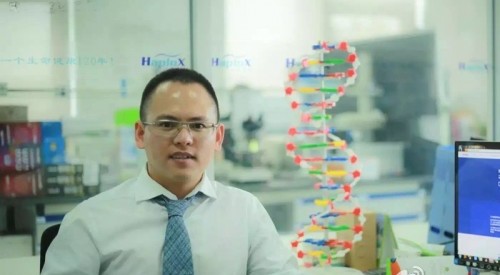
Xu Mingyan, CEO of HaploX, believes that for ultra-early screening and prevention of cancer, only risk coefficients for disease onset can currently be provided to offer recommendations to subjects. The larger and more comprehensive the database, the more accurate and reliable the predictive results will be. Currently, testing for susceptibility genes is relatively accurate. Only by accumulating multi-dimensional databases covering diseases, genes, medications, prognosis, and other factors across patients, high-risk populations, and healthy individuals can ultra-early screening and prevention of diseases become more accurate and reliable.
Next-Generation Sequencing (NGS) Technical Research Experience Becoming the Technological Driving Force for Entrepreneurship
“We chose tumor gene sequencing as our first startup venture primarily for two reasons,” said Xu Mingyan, CEO of Helios.
First, there are currently severe challenges in the diagnosis and treatment of tumors, urgently necessitating technological transformation. Existing diagnostic and therapeutic techniques exhibit significant deficiencies in early detection, personalized medication, prognosis monitoring, and drug resistance assessment, creating an urgent demand for more advanced technologies. In terms of application categories, the NGS (Next-Generation Sequencing) market can be segmented into tumor testing, genetic screening, infectious disease research, drug and biomarker discovery, molecular epidemiology, agriculture, and other applications. Among these, tumor testing accounts for 35% of the market share in terms of revenue and sample volume, making it the most readily commercializable segment. Relevant agencies predict that China’s tumor gene sequencing market will reach RMB 20 billion annually, maintaining a compound annual growth rate (CAGR) of 15%.
Furthermore, although the curtain has risen on the clinical application of tumor genetic testing, there is not yet any mature product in China for the application of gene sequencing in the oncology field, with various stakeholders poised for action. Hyplaus’s market entry presents both opportunities and challenges. In oncology, particularly the combination of liquid biopsy and next-generation sequencing (NGS), has become the most promising approach to precision cancer medicine; however, substantial R&D investment is still required before it can be maturely applied in clinical settings. “In this process, differentiation will emerge among all sequencing companies. Only those possessing core technologies and competitive advantages, and capable of continuous R&D and technological innovation, will hold a superior position in future competition,” judged Xu Mingyan.
Second, this direction is closely tied to the founder’s experience. Xu Mingyan earned his master’s degree in Radiopharmaceutical Chemistry from Beijing Normal University and subsequently pursued a Ph.D. in Biomedical Sciences in the United States, specializing in sequencing technologies and the development of sequencers. After graduation, he joined Cambrian Genomics, a tech startup in San Francisco, where he was responsible for the development of sequencing technologies and instruments. His work experience in San Francisco exposed him to the entrepreneurial atmosphere and passion of Silicon Valley, while also revealing the promising prospects for the development of gene sequencing in China.
During his doctoral studies in the United States, Xu Mingyan gained extensive exposure to next-generation sequencing (NGS) technology. Working in his advisor Jeremy S. Edwards’ gene sequencing laboratory and collaborating with George M. Church’s team at Harvard University, he contributed to the development of a series of genetic testing technologies and NGS platforms, thereby deepening his understanding and expertise in gene sequencing technology.
During his more than a year of working in the genomics field in San Francisco, he was deeply influenced by the surrounding entrepreneurial atmosphere. Combined with his own judgment on the future development of the sequencing technology industry, he and his wife gave up their newly obtained H-1B visas (work visas for high-skilled professionals) in 2014. They returned to China with less than $100,000 and co-founded Helixgene Biotechnology Co., Ltd. in Shenzhen with his high school classmates Chen Shifu and Fang Wen, diving into the current wave of entrepreneurship.
Gene Sequencing ctDNACore Technology Is Key
According to Xu Mingyan, the domestic gene sequencing market is currently in the early stages of an emerging industry. The sector is just getting started, with a surge in the number of participants. It can be specifically categorized into the following types:
1. There are likely more than 200 companies associated with the concepts of “genes” or “genetic testing,” including those engaged in sales and those utilizing non-sequencing technologies (such as FISH, qPCR, and DNA microarrays);
2. There are fewer than 20 companies with backgrounds in gene sequencing and R&D capabilities;
3. In the field of ctDNA sequencing, which presents greater technical challenges for updates, there are no more than five companies in China, with a similar number abroad. Simply put, previous non-sequencing technologies could only identify a few, dozens, hundreds, or even millions of specific points out of the 3 billion base pairs in the genome. In contrast, gene sequencing technology can scan and identify all 3 billion base pairs across the entire genome at once, with high efficiency and low cost. ctDNA, or circulating tumor DNA, originates from dead cancer cells that have entered the bloodstream, resulting in extremely low concentrations in blood, typically ranging from 0.1% to 1%. Such low abundance cannot be detected by conventional next-generation sequencing (NGS) technologies, which have a detection limit above 1%. It is also nearly impossible for other non-sequencing techniques to detect such low levels, which become even lower in the early stages of disease. Without the capability for ultra-sensitive detection, effective prediction and screening for many types of cancer are virtually unattainable.
The field of gene sequencing is an emerging sector experiencing explosive growth, with many new companies expected to enter the market in the next two to three years. The current industry landscape remains uncertain. At present, the only clinical product based on gene sequencing is non-invasive prenatal testing (NIPT); however, as a nascent field, it will ultimately give rise to thousands of diverse products. The gene sequencing industry today is akin to the internet industry in the 1990s. Therefore, over the next five to ten years, numerous new companies will emerge in this space, and these sequencing firms will differentiate into first-tier and subsequent tiers, much like in other industries. Given the nature of the biopharmaceutical sector, core technologies and superior products are both necessary and sufficient conditions for establishing a firm position in the first tier.
By John Wang