

Where Is Our Baymax in the Era of Healthcare 2.0?
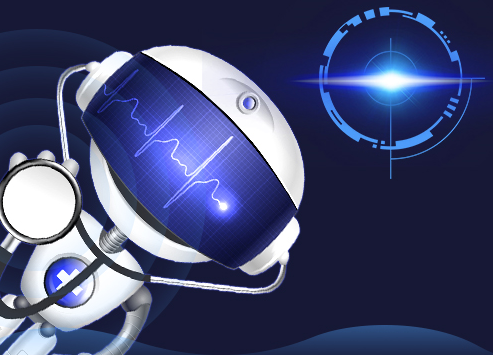
This is an era of disruption, an era dubbed “2.0.” Looking around us, we see profound transformations in every aspect of daily life—clothing, food, housing, and transportation. Yet healthcare appears to have remained largely unchanged: visiting a hospital today offers an overall patient experience that is fundamentally no different from what it was twenty years ago. It seems as though time has shown special “favor” toward healthcare. The internet has revolutionized our lives, but failed to transform healthcare—a notion that sounds almost inconceivable.
What is behind this seemingly inconceivable phenomenon? Last year was hailed as the “Year One” of mobile health, with a large number of internet-based innovative approaches and services being applied to healthcare. Currently, when we visit hospitals, we can schedule appointments in advance via apps, with appointment times largely confirmed in real time during registration. Meanwhile, various medical payment methods have emerged, enabling us to complete payments directly through apps. Pharmaceutical e-commerce apps also allow us to receive medications at home. It appears that changes are unfolding logically, with healthcare being transformed by the internet. Consequently, many people believe that the era of Healthcare 2.0 has arrived, and that the internet will ultimately reshape the healthcare landscape. In this context, entrepreneurs, investors, and onlookers have flocked into the sector, ushering in the “Year One” of mobile health and giving rise to nearly 3,000 healthcare apps.
Amidst widespread acclaim, we have uncovered a paradox: when we actually fall ill and visit a hospital, we find that little has changed. We still endure long waits, and the overall medical experience remains unchanged in the so-called “2.0” era. What exactly have these 3,000 apps delivered to us? We need to deconstruct the entire healthcare journey into its five typical stages: registration, consultation, examination, payment, and medication pickup. It appears that our 3,000 apps have addressed the first and last four stages, while uniquely overlooking “examination.” This is significant, as the examination stage is by far the most time-consuming and offers the poorest user experience compared to the other four. You may spend only a few moments speaking with your doctor, who then prescribes a battery of tests and lab work. You must then go to the laboratory for blood draws and wait an extended period for results; you must queue at the radiology department for imaging and exams, followed by another lengthy wait for reports; and you must schedule ultrasound examinations, which in most large hospitals cannot be performed on the same day—you may need to book an appointment for five days later, only to face another half-day wait in massive crowds at the ultrasound department. After all this waiting time exchanged for test reports, the doctor still completes the diagnosis and conclusion in no more than two minutes. In fact, even before the advent of the internet, the examination stage was inherently the most time-consuming among these five steps. The 3,000 apps have primarily revolved around the other four stages. On reflection, this makes sense: it is exceedingly difficult for apps to replace the hospital-based examination process. Suddenly, it becomes clear—the crux of the issue lies here!
What is the solution? Do we really want this situation to continue indefinitely? Will healthcare in 20 years still be the same as it is today?
Fortunately, this is an era of transformation, and the means of obtaining various diagnostic data are also undergoing change. The continuous emergence of home-use diagnostic devices is improving the examination process. The development of portable and wearable medical devices will undoubtedly transform traditional clinical examination procedures, thereby reshaping the entire healthcare experience. Furthermore, since physicians’ diagnoses rely on these diagnostic reports, once such reports are readily accessible, we may be able to leverage medical robots to assist in diagnosis. This is not mere fantasy; as early as May this year, certain healthcare institutions in the United States and Canada have already employed IBM’s medical robot, “Watson,” to provide diagnoses and treatment plans.
Technology that fails to address core issues is insufficient to usher in a new era. Similarly, technology that cannot resolve the core challenge in healthcare—diagnostic examination—is inadequate to drive Healthcare 2.0. Therefore, “Healthcare 2.0” is not merely “Internet Plus Healthcare,” but rather the emergence of home medical robots. Only when every household has a “Baymax-like robot” safeguarding the health of you and your family will we truly enter the era of Healthcare 2.0. This future may indeed be closer than we think.
The views expressed in this article are those of the author alone and do not represent the position of VCBeat.
This article is published on VCBeat with the author’s authorization. Reproduction without permission is prohibited.
Author: Liu Yun, Founding Partner of Guanghe Capital
WeChat: 2975881974