

Zheng Yuewen Tops China's Pharmaceutical Rich List with RMB 43 Billion, as State Council Pushes for Mature Tiered Diagnosis System Within Five Years
1. Hurun Pharmaceutical Rich List Released: Zheng Yuewen Becomes China’s Richest in Pharma with RMB 43 Billion
On October 28, the Hurun Research Institute released in Shanghai one of the sub-lists of the Hurun Rich List, the “2015 Hurun Healthcare Rich List,” marking the ninth consecutive year that the institute has published the top 50 of the “Hurun Healthcare Rich List.”
“Blood Products King” Zheng Yuewen, 53, of Shanghai RAAS Blood Products, is this year’s “dark horse” in the pharmaceutical industry. His wealth has more than tripled, reaching RMB 43 billion and surpassing last year’s richest pharma entrepreneur, Li Jinyuan, to become China’s wealthiest figure in the pharmaceutical sector. Two pharmaceutical tycoons from our province made the list: the Ankang family and Zhu Wenchen, ranking 10th and 37th, respectively.
Zheng Yuewen spent 15 years strategically positioning in the blood products sector, and last year, through two acquisitions, propelled Shanghai RAAS to become China’s largest blood products company.

2. 37 Pharmaceutical Majors: Monthly Salary Rankings Five Years After Graduation
Many people consider the pharmaceutical industry to be a well-paying sector, but what are the actual income levels? After statistically analyzing a sample of 11.73 million undergraduate graduates and hundreds of millions of environmental data points, Aipin.com has compiled the most comprehensive big data report on employment outcomes across various departments of Chinese universities to date. The report shows that five years after graduation, the monthly salary for pharmaceutical majors ranges from RMB 4,000 to RMB 8,700. (Check quickly to see if your major is included.)
As shown in the figure below:

3. Mao Qun’an, Spokesperson for the National Health and Family Planning Commission, Interprets Tiered Diagnosis and Treatment: To Reach Maturity and Stability Within Five Years
On October 30, the State Council Information Office held a regular policy briefing of the State Council. Mao Qun’an, spokesperson for the National Health and Family Planning Commission, provided an interpretation of the policies related to advancing the establishment of a tiered diagnosis and treatment system.
Mao Qunan stated that the tiered diagnosis and treatment system is designed to alleviate the numerous problems people encounter when seeking medical care, facilitate access to healthcare services, and ensure the quality and efficiency of medical care. The essence of the tiered diagnosis and treatment system can be summarized in sixteen Chinese characters: “initial consultation at primary care facilities, two-way referral, separate management of acute and chronic conditions, and coordination between upper- and lower-level medical institutions.”
In accordance with the requirements of the Guiding Opinions issued by the General Office of the State Council, initial results should be achieved through gradual improvement over two years, and comprehensive enhancement with mature and standardized systems should be realized within five years.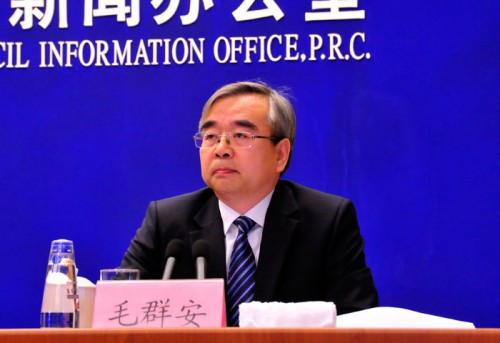
By John Wang