

Preface to the China-U.S. Dialogue Forum: Interviews with Chinese and American Healthcare Enterprises
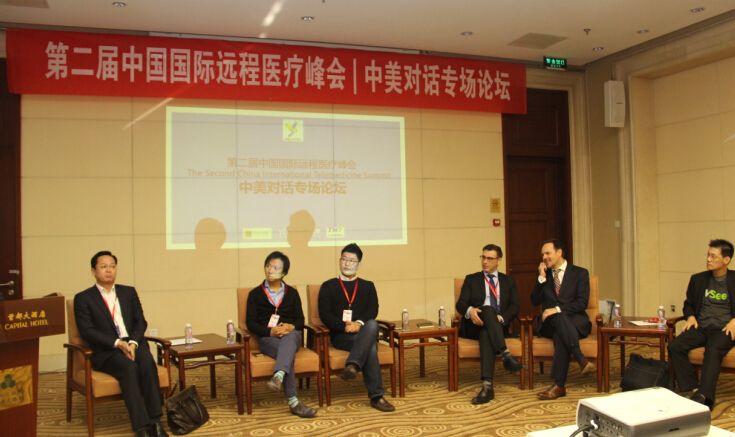
At the China-U.S. Dialogue Forum on October 31, VCBeat invited several media outlets to conduct a joint interview with the keynote speakers. The following highlights have been compiled for the benefit of VCBeat’s loyal readers:
First, the invited guests gave brief self-introductions. They were Milton Chen, CEO of VSee; Tobias Barker, Vice President of CVS MinuteClinic; Babak Movassaghi, President of International Business at 2nd.MD; Paul Lee, CEO of Curely; Mr. Yun Yang, Vice President of Engineering Technology at DynoSense; and Wu Xinhua, CEO of iPeak.
VCBeat: Is CVS considering establishing healthcare facilities in China similar to its MinuteClinics? If so, what is the implementation plan?
Tobias Barker: Since the healthcare providers at minute clinics are primarily nurse practitioners and physician assistants, who hold a lower professional rank than hospital physicians, I am unsure whether China has such medical personnel. Notably, nurse practitioners and physician assistants in some U.S. states have prescribing authority, which represents a key difference between China and the United States. Another factor is that our minute clinics are located exclusively near pharmacies; thus, the pharmacy systems in China and the United States are fundamentally different. Therefore, for CVS to enter the Chinese market, the first transformation required would be in the pharmacy system within healthcare services.
VCBeat: Currently, many Chinese internet healthcare companies, especially those offering purely online consultations, are not profitable. How does Mr. Paul Lee view this issue? Is the situation similar in the United States? How many Chinese doctors are on your platform?
Paul Lee: There are actually not many Chinese doctors on our platform. Furthermore, as a mobile health platform that brings together physicians from around the world, I believe it is crucial to first build such a community. Once an ecosystem encompassing both doctors and patients is established, revenue models—such as commercial advertising—will naturally emerge. However, the priority is to cultivate this environmental framework first.
Contemporary Physician Journalist: Telemedicine is currently very popular. Which telemedicine technologies are most widely applied in hospitals?
Guest: In fact, telemedicine technologies have been applied in dermatology, radiology, and psychotherapy, as well as in remote intensive care units (ICUs). Although telemedicine originated in the 1950s, its development was truly propelled by NASA, which used ground-based remote monitoring to track astronauts’ health. Now that this technology has been adapted for civilian use, patients can receive a physician’s diagnosis within three minutes via smartphones and obtain prescription medications remotely. Additionally, pediatrics and cosmetic surgery are also exploring telemedicine, primarily to facilitate information sharing among physicians and between doctors and patients. Therefore, as telemedicine becomes increasingly widespread, the key issue shifts from patients selecting a specific hospital for treatment to them actively choosing their physicians.
Contemporary Physicians: Many patients still prefer to seek treatment at large hospitals. What role do you believe internet healthcare plays in changing patients' healthcare-seeking behaviors?
Guest: As a physician myself, let me provide an example from a clinical perspective. Our hospital employs 120 doctors, with each doctor seeing an average of 20 patients per day. However, 90 of these physicians could actually serve patients remotely. Patients could consult via email, text message, phone calls, or remote video consultations, as their conditions are often not as urgent as they might assume. Therefore, patients could receive direct diagnoses from physicians at home, eliminating the need to spend time traveling to the hospital.
Currently, there are issues within the healthcare system. For instance, patients from underdeveloped regions or areas with scarce medical resources often seek treatment at major hospitals in first-tier cities. Additionally, due to the brand effect, patients tend to place greater trust in physicians from renowned institutions, such as experts from Harvard Medical School. As this brand bias remains significant, I hope that telemedicine can help change the status quo and enable patients to overcome such prejudices.
VCBeat Reporter: What are the differences in the policy environments between China and the United States during the development of telemedicine?
Guest: In the United States, the development of healthcare relies on both technological advancements and taxpayer support. Previously, taxpayers were reluctant to fund internet-based healthcare initiatives, but this attitude is shifting, with growing willingness to pay for telemedicine services. Alongside these advances, it is essential to strengthen patient education and cultivate habits that encourage them to try such programs. Physicians’ attitudes are also evolving, as they gradually accept telemedicine as a viable mode of care delivery. If these factors can be effectively integrated, significant progress is sure to follow in the future. Although there are considerable differences between countries, and China faces its own unique obstacles, I believe the coordinated development of these aspects is crucial.
Wu Xinhua: Telemedicine in China has developed rapidly, especially in recent years with the promotion of the New Rural Cooperative Medical Scheme. Township and county hospitals have seen significant growth. While there is substantial medical demand among local residents, there are marked disparities in the quality of healthcare services across hospitals in different provinces, cities, and townships. This gap has spurred the emergence of telemedicine services. However, a bottleneck restricting the development of telemedicine is that medical experts at top-tier hospitals are overwhelmed with patient loads, leaving them with insufficient time and incentive to engage in telemedicine services.
Guest: The primary reason American physicians have embraced telemedicine is patient demand. Because telemedicine offers significant convenience for patients, it has created a bottom-up pressure that compels physicians to adopt these technologies. In other words, American doctors must adapt to new diagnostic modalities to meet patients’ healthcare consumption needs.
Furthermore, the income of U.S. family physicians is often significantly lower than that of specialists; by adopting telemedicine technologies, they can reach more patients and increase their earnings, which explains their willingness to embrace such technologies. In contrast, Chinese specialists already enjoy substantial incomes, resulting in insufficient motivation to adopt telemedicine.