

Pfizer in Talks to Acquire Allergan, Google Developing Mental Health Wearables, and Public Hospitals Implement Zero-Markup Drug Policy
Today's Highlights:
PfizerNegotiating the Acquisition of Allergan
Google Hires Experts to Develop Wearable Devices Capable of Tracking Human Psychological States
Multiple Provinces Pilot "Zero Markup" Policy for Drugs in Public Hospitals
Medical DisturbanceCriminalization Officially Takes Effect
2015 List of China’s Most Valuable Private Hospitals Released
2nd EditionChina-U.S. Telemedicine SummitConvene
2015 First Oncology ConferencePrecision MedicineHeld in Beijing
1.PfizerIn Talks to Acquire Allergan, Bid May Reach $100 Billion
Over the past two years, Pfizer has been tirelessly seeking opportunities to acquire a pharmaceutical giant. After experiencing setbacks and navigating various rumors, a credible development has now emerged: On the 31st (Beijing time), Pfizer and Allergan successively announced that they are engaged in preliminary friendly discussions regarding a potential transaction. However, Pfizer also issued a statement emphasizing that no agreement has been reached with Allergan, and it cannot be certain whether the negotiations will result in a successful acquisition or fail. The company declined to comment further on this potential deal at present. Allergan is renowned for manufacturing Botox and other anti-wrinkle medications, enjoying high prominence in the global cosmetics industry. Currently, Allergan’s market capitalization stands at $112.5 billion, while Pfizer’s market cap reaches $215.8 billion. If the merger succeeds, the transaction value is expected to become the largest deal in the history of the global pharmaceutical industry, and indeed across all sectors.
In fact, Pfizer acquired one of the top ten global pharmaceutical companies for $120 billion last MayAstraZenecaAfter the deal was rejected, rumors circulated in the market that Pfizer was in talks with global generic drug giant Actavis and might launch a takeover bid. Last November, Actavis acquired Allergan for $70.5 billion, forming the new Allergan plc. This July, Allergan sold its generic drug business to Teva Pharmaceutical, the world’s largest generic drug manufacturer, for $40.5 billion.
For Pfizer, whether acquiring AstraZeneca or Allergan, one of the primary objectives was to achieve tax avoidance through “tax inversion.”
2. Google Hires Experts to Develop Wearable Devices Capable of Tracking Human Psychological States

If you ever feel depressed or even suicidal, your wearable assistant may alert your family before you take any action. This is no joke; as you know, Google always loves to surprise us.
Google Life Sciences Research CenterThe company recently hired Dr. Thomas Insel, a mental health expert who served as the director of the National Institute of Mental Health for 13 years. They held in-depth discussions on the development of psychological wearable devices, whose sensors can monitor the language and mental state of patients in the early stages of psychiatric disorders.
During the conversation, he specifically mentioned suicide, believing that everyone has seen the movie One Flew Over the Cuckoo's Nest, because in the United StatesPsychiatric Treatment Systemis "abnormal."
3. All Public Hospitals in Nanjing, Jiangsu Province Implement Zero Markup on Drugs, Ending the Practice of “Subsidizing Healthcare with Drug Sales”
Effective from 00:00 on the 31st, the comprehensive reform of pharmaceutical pricing in urban public hospitals in the Nanjing area was officially launched. Fifty-seven hospitals will simultaneously implement zero-markup drug sales and adjust medical service prices. Under this reform, prices for drugs and certain laboratory and diagnostic tests will be reduced, while fees for some pathological examinations and surgical procedures—previously priced significantly below their actual value—will be increased. It is reported that due to the mixed nature of these adjustments (with some prices rising, others falling, and some remaining unchanged), the overall financial burden on patients seeking medical care will not increase.
Additionally, starting from October 31, all public hospitals in Jiangsu Province (including Grade A tertiary hospitals) will implement zero-markup drug sales. As a result, drug prices for patients seeking care and purchasing medications at large hospitals will decrease by 15%, although fees for diagnosis, treatment, and surgeries will increase.
4. Starting from November 1,Medical DisturbanceCriminalization Officially Takes Effect
Notably, the newly revised law introduces a number of new provisions, bringing nine common offenses under the scope of criminal punishment. These include disseminating false information on WeChat and Weibo, hiring impostors to take national examinations, attempting to profit from medical disturbances, serious overloading or speeding of school buses and passenger vehicles, illegal possession of terrorist materials, and abuse of the elderly, children, the sick, and persons with disabilities. Previously, such unlawful acts might have been subject only to administrative penalties; henceforth, however, they will incur criminal liability, resulting in a permanent and stigmatizing criminal record.
Once again, discussions about “medical disturbances” have surged on Weibo.
@Dr. Liu Yi: Each doctor sees about 80 patients daily, spending roughly five minutes per patient. It takes an entire day of nonstop consultations, leaving us utterly exhausted. If we were to spend half an hour with each patient, the workload for a single day would stretch into a week, inevitably inviting all sorts of criticism. Medicine, originally one of the noblest professions, has been distorted beyond recognition. Doctors work from dawn till dusk, providing attentive care and engaging in rigorous research. We do not seek gratitude; we only ask for understanding!
@Zengzeng is here: So if you waited in line for five hours and the doctor only spent five minutes with you, that’s considered a lack of medical ethics? Then how many minutes would constitute ethical practice? It’s easy to criticize when you’re not the one affected. The doctor worked continuously for five hours without even a break—why don’t you try putting yourself in their shoes?
@Wan Jingya-: Hospitals have specialized infectious disease departments that handle various contagious conditions such as HIV/AIDS, syphilis, and tuberculosis. Healthcare workers remain steadfast at their posts, caring for patients. Their work is arduous; surgeries can sometimes last several hours. Please show respect to every individual in this profession.
5. 2015 China's Most Valuable Private Hospitals List Released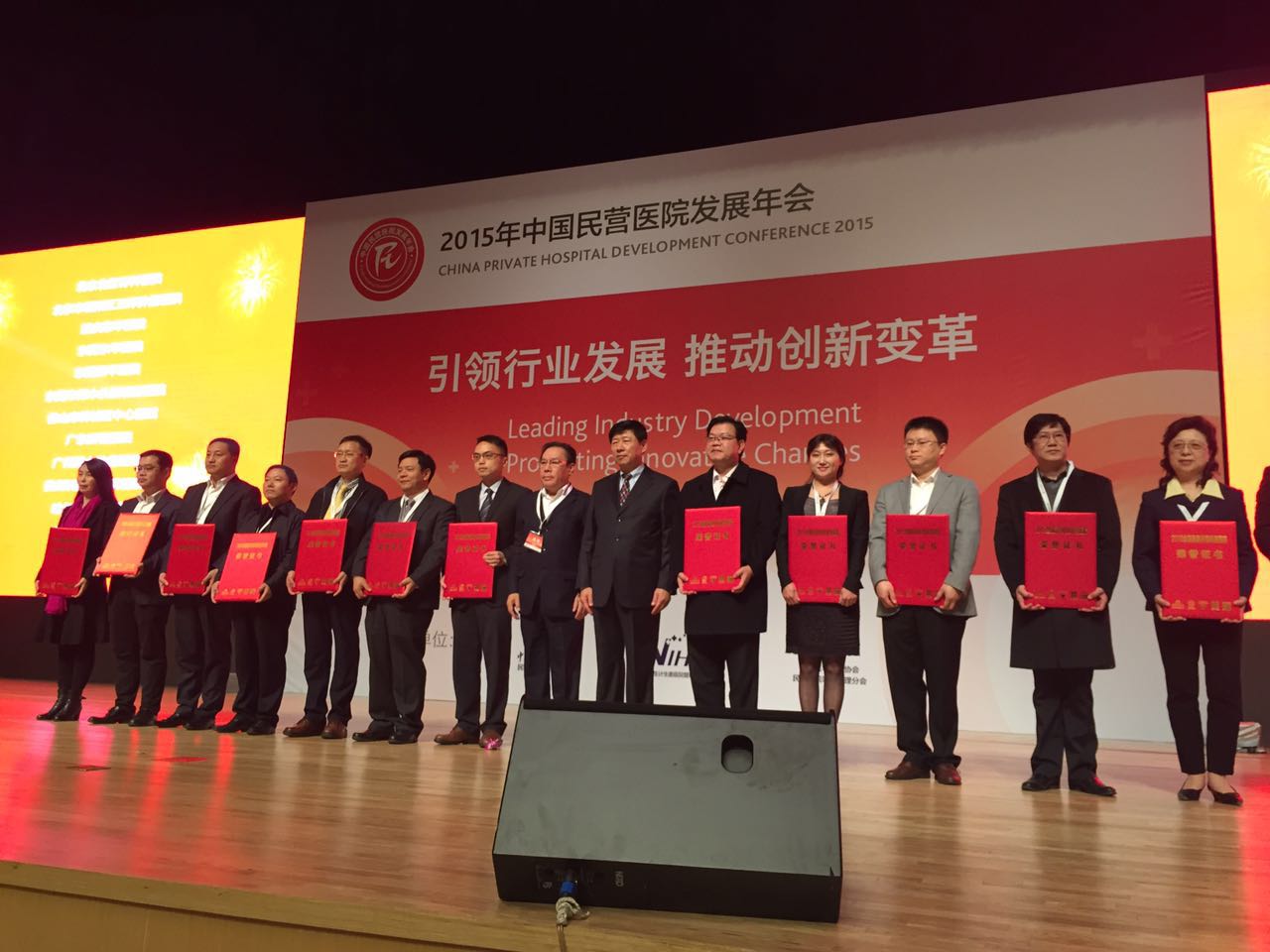
On November 1, 2015, the 2015 Annual Conference on the Development of Private Hospitals in China was held in Xi’an. At the conference, the 2015 List of the Most Valuable Private Hospitals in China was released, with 38 hospitals from across the country standing out. The list is as follows (in no particular order):
2015 China's Most Valuable Private Hospitals
Beijing Beiya Orthopedic Hospital
Beijing Chaoyang District Third Ring Cancer Hospital
Chongqing Kanghua Hospital
Dongguan Donghua Hospital
Dongguan Kanghua Hospital
Shixin Hospital, Zhangmutou Town, Dongguan City
Foshan Chancheng Central Hospital
Guangdong Clifford Hospital
Guangzhou Fuda Cancer Hospital
Guizhou Limeikang Surgical Hospital
Harbin Jiarun Hospital
Handan Mingren Hospital
Henan Hongli Hospital
Huainan Chaoyang Hospital
Huangshi Aikang Hospital
Jilin Baihe Stomatological Hospital
Jilin Heart Hospital
JD Sino-US Hospital
Nanjing Tongren Hospital
Ningbo Mingzhou Hospital
Shanxi Huanghe Hospital
Suzhou Kowloon Hospital, Shanghai Jiao Tong University School of Medicine
Shenzhen Overseas Chinese Hospital
Shenyang He Eye Hospital
Shijiazhuang Ping'an Hospital
Capital Medical University Sanbo Brain Hospital
Wenzhou Kangning Hospital
Urumqi Adiya Eye Hospital
Wuhan Aier Eye Hospital
Wuhan Puren Hospital
Wuhan Asia Heart Hospital
Xiangya Bo'ai Rehabilitation Hospital
Xinjiang Jiayin Hospital
Xinjiang Cardiovascular and Cerebrovascular Disease Hospital
Yiwu Fuyuan Private Hospital
Yunnan Kidney Disease Hospital
Zhangjiagang Aoyang Hospital
Zhengzhou Daqiao Hospital
6.iKang GuobinPartnering with Dajia Medical: Accelerated Expansion of Platform-Based Healthcare Institutions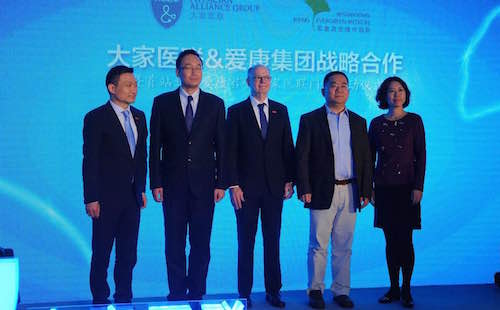
On October 31, at the second floor of the LG Twin Towers in Beijing, iKang Group formally entered into a strategic partnership with “Dajia Medical Alliance,” China’s first physician group established within the public healthcare system, announcing the official launch of the Beijing iKang Guoan Dajia Medical Alliance Outpatient Center to jointly create an integrated service spanning from health check-ups to clinical diagnosis and treatment.
On October 31, 2015, iKang Group, the first publicly listed company in China’s health checkup industry, announced a strategic partnership with “Dajia Medical Alliance,” a physician group affiliated with public healthcare institutions, and officially launched the Beijing iKang Jun’an Dajia Medical Alliance Outpatient Center. This came just over five months after iKang Guobin had announced its collaboration with three medical experts in Guangzhou to establish the iKang Jun’an “Private Doctor Studio.”
7. The Second BoundaryChina-US Telemedicine SummitOpened in Beijing on October 31
The "Second China International Telemedicine Summit," co-hosted by the Chinese Medical Education Association, the Chinese Academy of Medical Sciences, the American Telemedicine Association (ATA), and the Tianjin Telemedicine Association (TTA), was held at the Beijing Capital Hotel on October 31 and concluded on November 1.
In the era of mobile internet, “Internet+” has transformed the operational model of the traditional healthcare industry through its unique business logic, driving medical reform from a technological perspective. “Internet+ Healthcare” will optimize traditional diagnosis and treatment models, effectively alleviate issues such as information asymmetry and low efficiency in consultation and patient intake, reduce resource waste, enhance user experience, improve the accessibility of high-quality medical resources, and is expected to address the challenge of irrational allocation of medical resources in China, thereby increasing the utilization efficiency of scarce medical resources.
The International Telemedicine Summit, themed “Internet + Healthcare,” features four major segments: a high-level forum, thematic forums, capital matchmaking, and project showcases and demonstrations. The event primarily covers areas such as innovation in internet-based healthcare models, chronic disease management, development prospects and applications of medical robots, telemedicine in smart communities, internet applications of genomics, food safety, and the analysis and translation of big healthcare data.
8. 2015 InauguralPrecision OncologyForum Held in Beijing
The “2015 First Forum on Precision Medicine in Oncology,” co-hosted by the Central Committee’s Medical and Health Commission of China Zhi Gong Party and the Scientific Anti-Cancer Promotion Working Committee of the China Life Care Association, and organized by Beijing Baofa Cancer Hospital, was held in Beijing from October 30 to November 1.
The forum consisted of two parts: academic presentations and panel discussions. The focal point of the forum was “What is Precision Medicine and Precision Oncology,” with the concept of precision medicine permeating the entire conference. During the academic presentation session, Dr. Baofa Yu, a renowned oncologist and former Assistant Professor at the University of California, San Diego School of Medicine, proposed a minimally invasive, precision immunotherapy approach known as the Sustained-Release Depot Therapy. This therapy primarily focuses on local tumor cell inactivation by combining physical and chemical mechanisms. Under imaging guidance, an ultra-fine percutaneous needle is used to inject a drug composition—comprising anticancer agents, sustained-release carriers, and immune adjuvants—directly into the tumor site. Imaging-guided fine-needle insertion ensures precise spatial targeting of solid tumors, while programmed injection achieves quantitative precision in treatment delivery.