

Theranos Faces Scrutiny Amid IPO Preparations; Biden's Cancer Moonshot and 2015 Prix Galien Awards Highlight Medical Innovation
Today's Highlights:
Theranos CEOElizabeth Holmes"Indicates that it will help the company pass FDA review."
The "Nobel Prize of the Pharmaceutical Industry"—2015 US Galien Awards Announced
Biden’s Cancer Fight to Boost Political Support
IBMPartnering with Carnegie Mellon University to Develop a Navigation App for the Visually Impaired
Bristol Myers May Acquire Private Biotech Firm Cardioxy for $2 Billion
PwC Announces the 2015 Global Innovation 1000
Pfizer and Allergan Poised to Strike Deal Before Thanksgiving
Japan’s renowned pharmaceutical company Daiichi Sankyo has obtained FDA Breakthrough Therapy Designation for its new drug, pexidartinib.
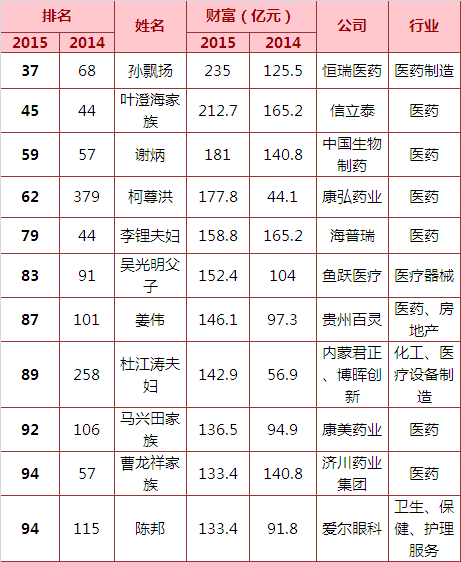
Forbes China Releases List of Pharmaceutical Billionaires
Xinhua News Agency Releases Full Text of the 13th Five-Year Plan Recommendations
1.Legendary Female Entrepreneurs in Silicon ValleyElizabeth HolmesIndicates that Therano is bound to pass FDA review
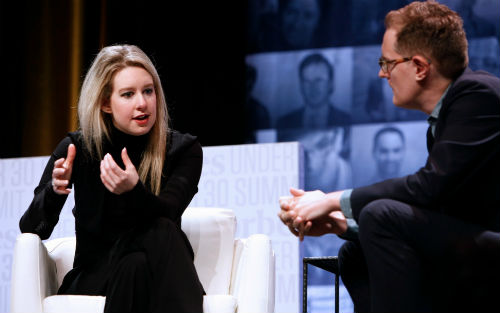
Theranos, the unicorn company valued at $9 billion, was recently accused in a Wall Street Journal article of severely exaggerating its technological capabilities. The report claimed that most of Theranos’s operations were conducted using non-Theranos equipment and that there were significant issues with data accuracy. Although the allegations were reportedly leaked by former employees, they constitute a serious matter for Silicon Valley companies.
Theranos’s core business lay in its technology that could rapidly perform comprehensive blood tests—including over 240 assays, ranging from cholesterol to cancer markers—using just a few drops of blood obtained via a simple finger prick, a development hailed as a groundbreaking breakthrough in the medical community.
Theranos, which has long been the subject of rampant industry rumors about an impending initial public offering, suddenly faces a highly uncertain outlook.
At the World Wealth Forum on Monday, she continued to defend her company against unfair criticism. Elizabeth stated that the company had merely undertaken a noble endeavor, yet had faced intense backlash. She explained that the earlier demonstration was conducted solely due to FDA requirements, but this did not imply a lack of technological capability for large-scale deployment. She earnestly asserted that the FDA would inevitably approve the technology. As everyone knows, she had never previously discussed Theranos’s underlying technology and operational methods in public, as the company places paramount importance on protecting its intellectual property. Their emergence into the spotlight was intended to demonstrate to the world that such efforts are underway and that there are individuals striving to drive innovation in medical technology.
VCBeat will continue to monitor subsequent developments in this incident.
2. The Nobel Prize of the Pharmaceutical Industry: 2015 Galien Awards Announced

The Prix Galien Award, established in France in 1970 and presented by the Prix Galien Foundation, is regarded as an international research award and enjoys the reputation of being the “Nobel Prize of the pharmaceutical industry.” The U.S. Steering Committee for the Prix Galien Award consists of 11 members, seven of whom are Nobel laureates. As one of the highest honors in the pharmaceutical and biomedical industries, the award recognizes outstanding contributions to medical science through research and innovation. The Prix Galien USA Award has been presented in the United States since 2007 and comprises three categories: Best Pharmaceutical Product, Best Biotechnology Product, and Best Medical Technology.
The products that won the 2015 U.S. Galien Award are as follows:
Best Drug Award: IMBRUVICA (ibrutinib)
This year’s Best Drug Award was awarded to Imbruvica (ibrutinib) from Janssen Biotech and Pharmacyclics.
Imbruvica (ibrutinib) is a first-in-class oral Bruton’s tyrosine kinase (BTK) inhibitor that exerts its anticancer effects by inhibiting BTK, which is required for tumor cell replication and metastasis. Imbruvica blocks the signaling pathways that mediate the uncontrolled proliferation and dissemination of malignant B cells, helping to kill cancer cells and reduce their numbers, thereby delaying disease progression.
Best Biotechnology Product Award: OPDIVO (nivolumab) & KEYTRUDA (pembrolizumab)
PD-1/PD-L1 Immunotherapy: A Promising New Class of Cancer ImmunotherapyPD-1/PD-L1 immunotherapy is a highly anticipated new class of anticancer immunotherapies designed to harness the body’s own immune system to combat cancer. By blocking the PD-1/PD-L1 signaling pathway, it induces cancer cell death and holds potential for treating various types of tumors. Currently, PD-1 inhibitors are primarily used as first-line therapy or for patients with advanced (unresectable or metastatic) melanoma or metastatic non-small cell lung cancer who have received prior treatment.
Best Medical Technology Award: T2Candida Panel
This year’s Best Drug Award was presented to T2 Biosystems’ T2Candida Panel. The T2Candida Panel is a diagnostic panel used for detecting and monitoring Candida infections and sepsis. It is the first pathogen diagnostic panel for sepsis that does not require blood culture and can provide specific results within 3–5 hours, enabling physicians to initiate antifungal therapy earlier, prevent disease progression, and reduce the risk of infection-related mortality.
3. Biden’s Cancer Plan
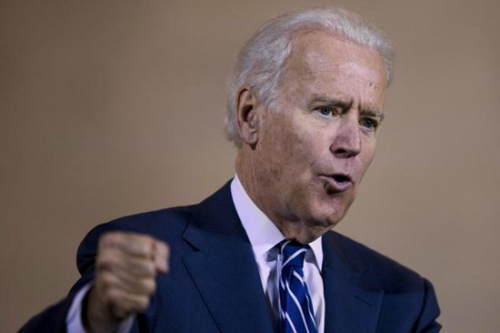
Recently, U.S. Vice President Biden met with renowned Chinese-American physician and entrepreneur Patrick Soon-Shiong, seeking his advice on conquering cancer in the United States. Biden aims to make the fight against cancer the next “moonshot,” striving to accomplish a major milestone within his lifetime. Soon-Shiong did not hold back, pointing out that combating cancer requires entirely new thinking. He highlighted that expanding genomic sequencing and developing personalized tumor vaccines would be key weapons in defeating cancer. Notably, Soon-Shiong’s own company is currently developing natural killer (NK) cell therapies.
Joe Biden is a seasoned American politician who has run for president multiple times. His family has suffered profound tragedies: his wife and one of his daughters died in a car accident years ago, and this year, he lost another son to a brain tumor. It had been widely assumed in political circles that he would enter next year’s presidential race; however, he decided to withdraw after observing that Hillary Clinton had not yet made any fatal mistakes. The untimely death of his son may have become a primary driving force behind his commitment to conquering cancer as a national cause. Although Patrick Soon-Shiong has achieved considerable commercial success, he sometimes tends to oversell his own products. When Biden consulted him on a national strategy for conquering cancer, Soon-Shiong recommended a specific technology that conveniently aligned with the development direction of his own company. This is akin to the Chinese Football Association asking a star player how to build a player development system capable of winning the World Cup, only to be told that mastering overhead kicks is the key to victory.
In 1971, President Nixon proposed the “War on Cancer” initiative in the United States; however, cancer has proven far more complex than anticipated. With the exception of a few types of leukemia and surgically resectable tumors detected at an early stage, most cancers—particularly those that have metastasized—remain incurable. As a politician, Biden is less interested in specific technical details and more focused on strategic direction and leveraging the power of the U.S. government to improve the R&D environment.
For many years, information on cancer treatment in the United States has been highly opaque. From basic research and industrial development to physicians and the media, there has been a consistent exaggeration of the potential of therapeutic interventions, leading most patients to harbor unrealistic expectations about cancer treatment. Studies indicate that 70–80% of patients with advanced-stage lung cancer believe chemotherapy can cure their disease, which directly influences their healthcare spending behavior. Politicians also frequently make unrealistic claims; for instance, the head of the National Cancer Institute (NCI) predicted in 2001 that cancer would be conquered by 2015. Even physicians often overestimate the efficacy of treatments. The media has been particularly irresponsible; an article published last week in JAMA reported that half of the drugs hailed by the media as “miracles” fail to even reach the market. Accurately assessing the value of new therapeutic interventions and honestly informing patients can effectively marginalize marginally beneficial drugs, thereby conserving valuable resources for the development of truly disruptive therapies.
4. IBM Partners withCarnegie Mellon UniversityDeveloping a Navigation App for the Blind

Researchers from IBM Research and Carnegie Mellon University are developing an app to assist blind and visually impaired individuals with navigation. The app conveys information about the surrounding environment to users through audio cues and haptic feedback.
This app, named NavCog, will initially be deployed exclusively on the Carnegie Mellon University campus, as its navigation functionality relies on Bluetooth beacons installed along sidewalks and within buildings. However, open-source tools will enable developers to create versions tailored for other regions. In the future, researchers plan to leverage facial recognition technology to alert users when they encounter acquaintances along their route.
5. Bristol-Myers to Acquire Private Biotech Firm Cardioxyl for $2 Billion

According to reports, global pharmaceutical giant Bristol-Myers Squibb Co. stated on Monday local time that it has agreed to acquire the private biotechnology company Cardioxyl Pharmaceuticals Inc. Under the terms of the transaction, the company will make an upfront payment of up to $300 million, followed by milestone payments of up to $1.775 billion upon the achievement of specified targets.
Cardioxyl Pharmaceuticals is primarily dedicated to researching treatments for cardiovascular diseases. Francis Cuss, Chief Scientific Officer of Bristol-Myers Squibb, stated, “The acquisition of Cardioxyl strengthens Bristol-Myers Squibb’s approach to treating heart failure, going beyond merely alleviating disease symptoms.” The acquisition is expected to be completed in the fourth quarter.
As of press time, the company’s stock traded flat in pre-market trading.
6.PwCThe Global Innovation 1000 (2015)
On November 2, PwC announcedAnalysis Report on the Global Innovation 1000 in 2015In the 2015 Global Innovation 1000 study, Strategy& (PwC’s strategy consulting business) analyzed the flow of corporate R&D spending worldwide. We found that since our 2008 survey first highlighted the trend toward globalization of R&D, companies have significantly accelerated their efforts to deploy innovation capabilities around the world. The current landscape clearly reflects this geographic shift, as companies initiate overseas innovation projects to access top talent and enter high-growth markets.
Driven by robust growth in China and India, Asia has become the region with the highest corporate R&D expenditure.
Regionally, a greater share of corporate R&D expenditure is allocated to Asia (35%), surpassing North America (33%) and Europe (28%). This marks a significant shift from the 2007 landscape, in which Europe ranked first and Asia third.
Strong growth in China and India has propelled Asia to the top. Between 2007 and 2015, R&D spending by foreign enterprises in China increased by 79%, making China the second-largest global destination for R&D investment. India also saw a 116% increase in overseas R&D expenditure, becoming the third-largest global destination for R&D investment.
The United States remains the largest country in terms of corporate R&D expenditure, as well as the leading exporter and importer of R&D.
The United States is the largest spender on research and development (R&D), but its lead has narrowed due to the strong rise of some Asian countries, particularly China. Between 2007 and 2015, R&D expenditure in China grew by 120%, compared with only 34% in the United States.
Despite the United States’ intensified efforts to shift research and development (R&D) to low-cost Asian countries such as China and India, the majority of foreign R&D investment still originates from Europe, accounting for 63% of the nation’s total R&D expenditure in 2015.
Europe has fallen from the top spot to third place in terms of corporate R&D expenditure.
A significant portion (46%) of R&D spending was diverted away from Europe, coupled with sluggish growth in domestic R&D expenditure and overseas R&D investment (2% and 18%, respectively), causing Europe to fall from the largest R&D spending region to third place.
The decline in Europe’s ranking is primarily attributable to Western European countries, whose R&D output surplus (output minus input) increased by 352% between 2007 and 2015.
The Globalization of R&D Expenditure Yields Returns.
Compared with companies whose R&D activities are relatively concentrated, those with a global R&D footprint deliver comparable or even superior financial performance. This suggests that locating R&D overseas offers substantial advantages and that multinational corporations are capable of effectively coordinating R&D efforts across different regions worldwide.
R&D Spending Returns to Track After the Trough of the Financial Crisis.
In 2015, the R&D expenditure of the Global Innovation 1000 reached $680 billion, representing a year-on-year increase of more than 5%, the largest growth rate since 2012.
In our analysis, the software and internet industry recorded the largest year-on-year growth (27%), surpassing the industrial goods sector to become the fourth-largest industry in terms of R&D expenditure in 2015.
Based on votes from survey respondents, Apple and Google continue to dominate the top two spots on the list of the most innovative companies. Tesla has climbed to third place, pushing Amazon down to fifth, while Toyota has returned to the list at number 10 after a two-year absence.
Full Version:“The Global Innovation 1000 of 2015”
7.PfizerDeal with Allergan Expected to Be Finalized Before Thanksgiving
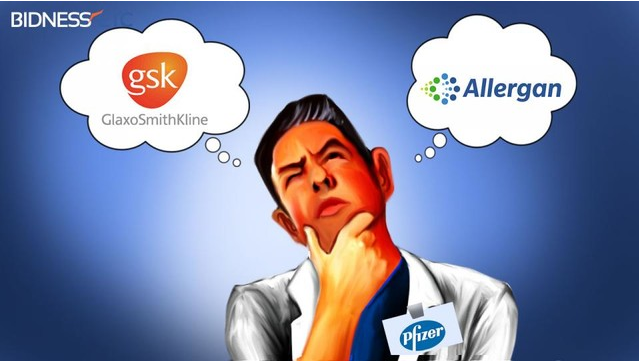
According to Bloomberg, insiders revealed that both Pfizer and Allergan hope to reach an agreement on acquisition terms on friendly terms and expect to finalize the deal before Thanksgiving. However, negotiations have not yet delved into details, and Pfizer has not provided a specific offer.
VCBeat will continue to monitor the acquisition between the two parties.
8. Daiichi SankyoAnnouncement: The Company’s Novel Anti-Cancer Drug Pexidartinib Receives FDA Approval
.On November 2, 2015, the renowned Japanese pharmaceutical company Daiichi Sankyo recently announced that its newly developed drug, pexidartinib, had received Breakthrough Therapy Designation from the U.S. Food and Drug Administration (FDA). This also marks the formal entry of this therapy into the priority review pathway.
Pexidartinib is a novel drug approved for the treatment of tenosynovial giant cell tumor (TGCT). TGCT is a rare neoplasm arising from the tendon sheath. Currently, surgical resection is the standard clinical approach for managing this condition; however, due to the heterogeneous subtypes of TGCT and its frequent involvement of bone and joint structures, there is an urgent clinical need for new interventional therapies. In March this year, Daiichi Sankyo Company initiated a Phase III clinical trial enrolling 126 patients with TGCT to evaluate the real-world efficacy of this medication.
The FDA has granted pexidartinib Breakthrough Therapy Designation, primarily based on the results of the confirmatory Phase I clinical study provided by the company. In this study, scientists demonstrated that pexidartinib exhibits favorable efficacy in the treatment of tenosynovial giant cell tumor (TGCT), sufficiently supporting its direct advancement to Phase III clinical trials. Meanwhile, Daiichi Sankyo stated that this Breakthrough Therapy Designation will provide a pathway for direct communication with FDA reviewers, enabling ongoing dialogue during the Phase III clinical trials.
9.ForbesVCBeat Releases China’s Rich List, Pharmaceutical Industry Shows Strong Performance
10.Xinhua News Agency Release13th Five-Year PlanFull Text of the Recommendations
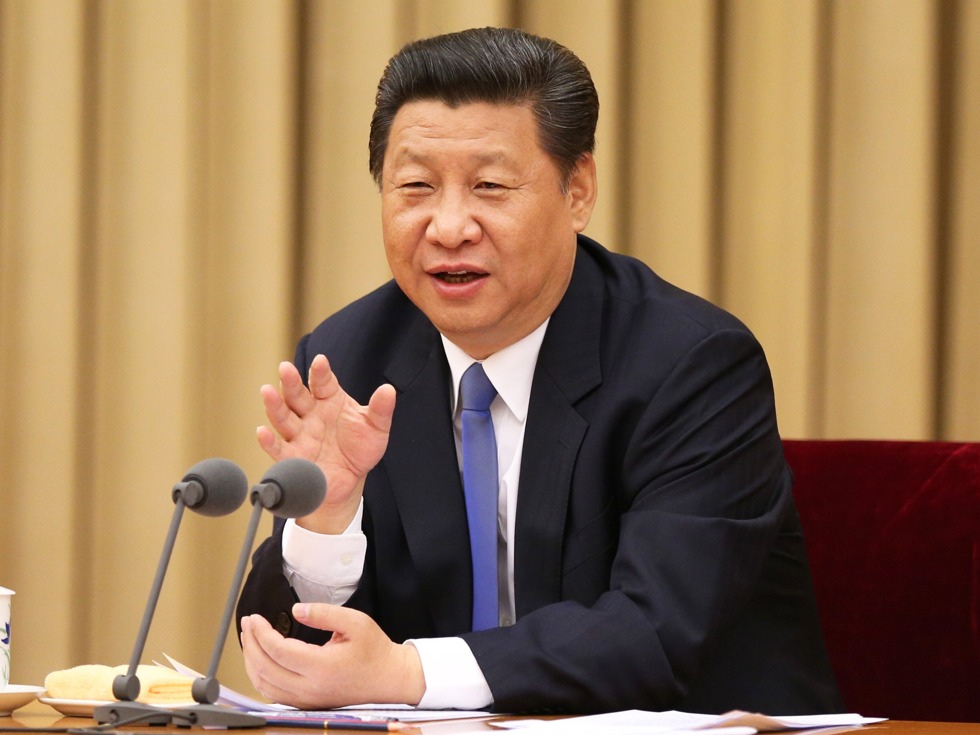
The "Recommendations" of the 13th Five-Year Plan proposed: comprehensively implement the critical illness insurance system for urban and rural residents; reform medical insurance payment methods to leverage their role in cost containment; improve personal accounts and establish pooled funding for outpatient expenses; and achieve direct settlement of inpatient medical costs for retirees resettled across provincial boundaries.
In recent days, we have been inundated with various interpretations, yet the actual text of the “Proposal for the 13th Five-Year Plan” remained elusive. On November 3, Xinhua News Agency finally released the full text of the Proposal. VCBeat has compiled several recommendations from the document pertaining to the pharmaceutical industry and the advancement of human health for our readers.
Private Hospitals to Receive Equal Treatment as Public Hospitals
Fully Implement the Critical Illness Insurance System for Urban and Rural Residents
Appropriately Reduce Social Insurance Contribution Rates
Establish a Rational Adjustment Mechanism for Basic Pension Benefits
Introduce a Policy of Gradually Delaying the Retirement Age
Assisting Family Planning Households Facing Special Hardships
Establish a National Population Basic Information Database