

Exoskeleton Series II: Iron Man Spin-off – Medical Wearable Exoskeleton System Files IPO Prospectus
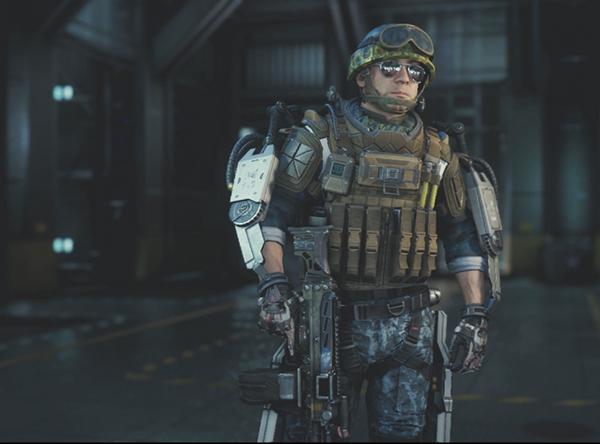
In a secret mountain laboratory in Utah, USA, software engineer Rex Jameson puts on aMetal Mechanical ExoskeletonHe slipped on the aluminum boots, fastened the straps around his legs and waist, hoisted the backpack onto his back, slid his arms into the “sleeves,” and gripped the control levers. It looked no more complicated than putting on a jacket.
Then he began to move, and at that moment, the mechanical exoskeleton instantly came to life, synchronizing with his every movement. He raised his fists, mimicking boxing motions, and hopped on alternating feet, much like Muhammad Ali, despite wearing 150 pounds ofIron Shell, yet he appeared remarkably relaxed. He could easily shove a nearby programmer to the ground or overturn a table—but what was even more astonishing was his ability to sustain such exertion throughout the day. To demonstrate his superhuman endurance, he approached a rack holding barbells and lifted one loaded with 200 pounds of weight. Then he lifted it again, and again. After completing 50 repetitions, he set the barbell down. In previous experiments, he had lifted the same 200-pound barbell 500 consecutive times. He ultimately stopped not due to fatigue, but out of boredom.
“Hey, bro, what are you wearing? It’s so impressive.”
“Oh, it’s nothing. It’s just something I developed out of boredom before, calledXOS's Mecha System“...just for fun to kill time; scientific research is too boring.”
“。。。。。。。”
Allen had previously reviewed"Iron Man"Ever since, I’ve been obsessed with Tony Stark’s high-tech armored suit. It’s impact-resistant, durable, capable of flight, and equipped with automatic targeting and firing systems. Anyone who dons this gear instantly transforms into Iron Man—the mission to save the world is now in your hands!
Many people may find it quite remarkable, but what Allen wants to say is,This is true!!
Such mecha equipment is, in fact, what has long been hyped as “wearable devices,” which are generally referred to in professional fields asExoskeleton (Exoskeleton)This term is used to refer to it. The word “exoskeleton” originates from animals in the phylum Arthropoda.
Generally, the biological community refers to the tough chitinous outer layer as an exoskeleton. The most critical function of the exoskeleton is to protect the relatively fragile and soft bodies and internal organs of organisms. The shells of animals such as crabs and shrimp, which we commonly observe, are all considered exoskeletons.
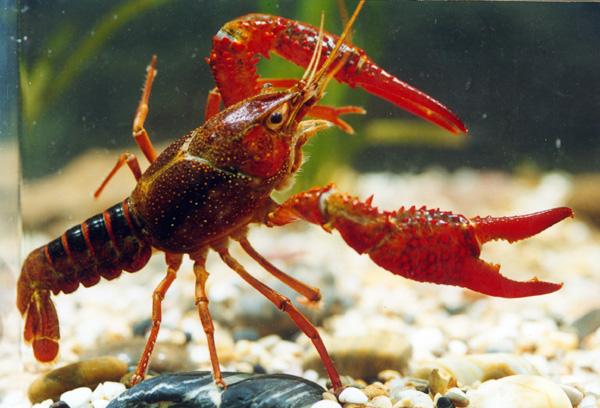
Shrimp are the most typical exoskeletal organisms.
In this regard, humans actually discovered the benefits of exoskeletons from animals and utilized them thousands of years ago. For instance, the body armor worn by medieval heavy cavalry, the diving equipment that emerged later, and even the protective suits worn by astronauts can all be considered forms of exoskeletons. It is these various “exoskeletons” that have enabled humans to overcome harsh natural environments and protect our relatively fragile bodies.
Let us travel back in time to Britain in 1830. Robert Seymour, a renowned British illustrator of the era, was feeling rather bored and thus let his imagination run wild, hand-drawing a picture:《Walking By Steam》。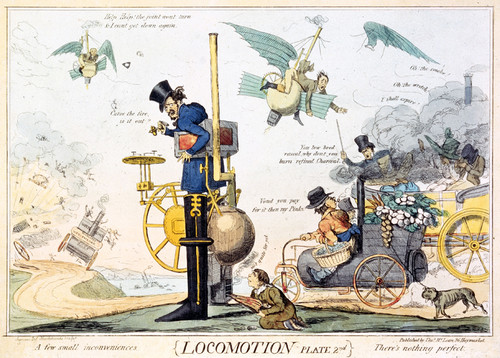

Since then, steam-powered ambulatory assistive devices have inspired countless scientists to explore this concept, serving as the precursor to contemporary powered exoskeleton technology.
Turning the clock back to 1890, a Russian teenage prodigy named Nicholas Yagin invented an exoskeleton device designed to assist people in walking, running, and jumping. However, due to its overly simple construction—consisting merely of leaf springs and pneumatic air valves—the device still required human movement for actuation and could not provide additional power. Therefore, it did not qualify as a true powered exoskeleton.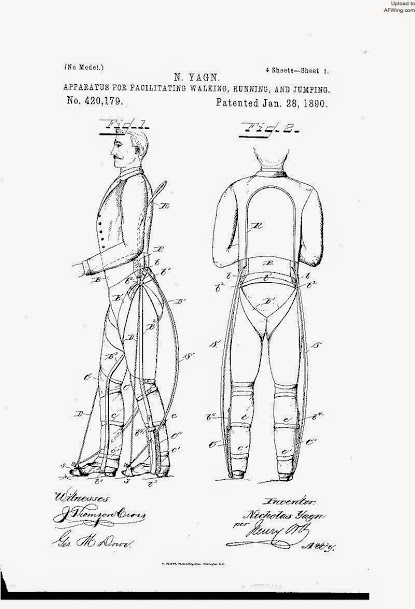
Yet even so, these pioneering artists and inventors have left behind valuable lessons for future generations. As a result, more mature concepts and innovations came to fruition in 20th-century America.
By 1917, the United States was in the midst of the Industrial Revolution, with society experiencing widespread prosperity. Inventor Leslie Kelly proposed a work titled "Pedomotor"The steam-powered gait assistance device laid the foundation for modern powered exoskeleton research and development, and was the first to recreate Robert Seymour's 'Walking By Steam.' However, due to the necessity for the wearer to carry a small steam engine during actual use, and because the Pedomotor's design was overly simplistic—unable to perfectly accommodate the complex structural deformations of the human body—it was ultimately abandoned."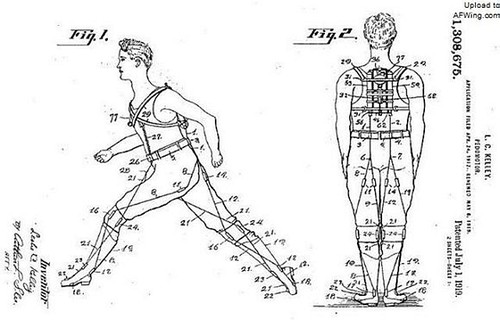
pedemotor exoskeleton
Nearly half a century later, we turn our attention to 1958. At the height of the Cold War, in an effort to comprehensively surpass the Soviet Union in arms, technology, and space exploration, the United States established the Defense Advanced Research Projects Agency (DARPA)—the agency behind groundbreaking innovations such as the Internet and GPS.DARPA, this institution has supported numerous forward-looking biotechnology initiatives, including the da Vinci Surgical System project.
One year after DARPA’s establishment, Robert A. Heinlein, hailed as one of the “Big Four” of the Golden Age of American Science Fiction, published his classic science fiction novel Starship Troopers, in which he first mentioned “Enhanced Armor“concept.” No one would have imagined that this kind of power armor, which sounded like something out of Arabian Nights, would take deep root in the minds of American inventors overnight.
In the 1960s, perhaps inspired by Starship Troopers, DARPA, under the leadership of Neil Mizen and with a focus on “black-tech” innovations, launched the first truly substantive research and development effort into powered exoskeletons in modern history, marking their initial militarization. Regrettably, due to insufficient power supply and limited operational endurance, the device was gradually forgotten in that relatively conservative era, being regarded as more of a gimmick than a practical solution.
In 1961, Cornell Aeronautical Labs began developing a true exoskeleton system.Man-Amplifier。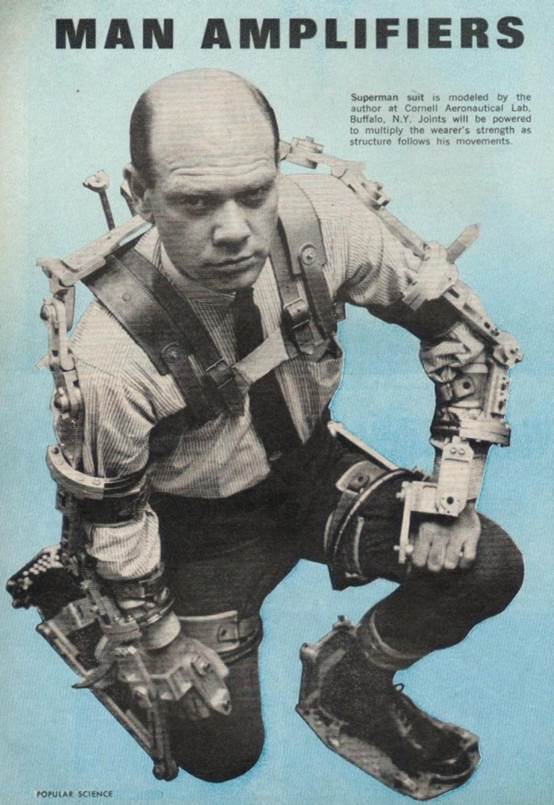
In 1963, when the Marvel Comics character “Iron Man” first appeared, the military was also conceptualizing its own “Iron Man.” At that time, Sergei Zarudny, a weapons researcher in the U.S. Army, published a report describing his design for a wearable robotic exoskeleton that would grant the wearer Hulk-like strength. However, the technology to realize this vision did not yet exist, and apart from a few non-military designs, the prospects for truly superpowered exosuits were slim.
Until 1965, the U.S. military and General Motors jointly developed a device named “Hardiman”powered exoskeleton device. By employing a hybrid hydraulic and electric motor drive system, Hardiman overcame the insufficient power supply issues that had plagued DARPA. Integrated with a force-feedback sensing system, Hardiman could not only detect the wearer’s movement intentions but also amplify the user’s strength by 25 times. Although this seemed perfect in theory, the entire unit weighed 680 kilograms, making it impossible for the wearer to walk freely.
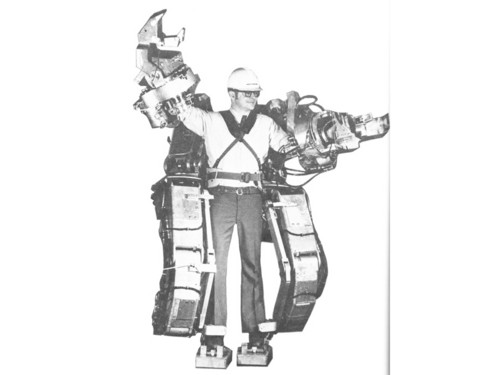
Hardiman
Later, Hardiman was ultimately changed toRobotic arm.
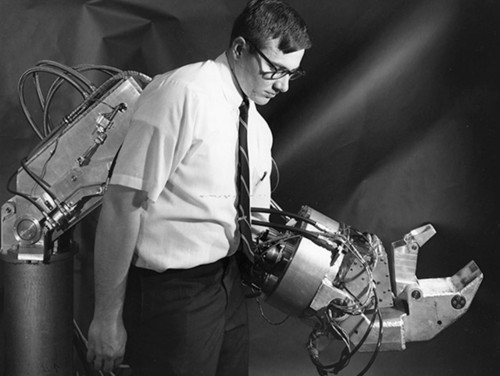
Hardiman was ultimately transformed into a robotic arm.
By the turn of the millennium in 2000, rapid advancements in computing had matured all necessary conditions, enabling research to transcend disciplinary boundaries. At this juncture, the United States invested heavily to comprehensively strategize and develop mecha manufacturing.
In 2000, the U.S. Defense Advanced Research Projects Agency (DARPA) launched a seven-year, $75 million research program on mechanical exoskeletons, known as Exoskeletons for Human Performance Augmentation (EHPA). At that time, a small number of exoskeleton proponents, including U.S. Army Colonel Jack Obusek, believed that technology had finally caught up with the concept. Since 1995, Obusek had been assisting in advancing exoskeleton research. He stated that as sensors became increasingly smaller and more comprehensive in functionality, and processor speeds increased, he and other proponents had reason to believeMechanical ExoskeletonIt could become a reality.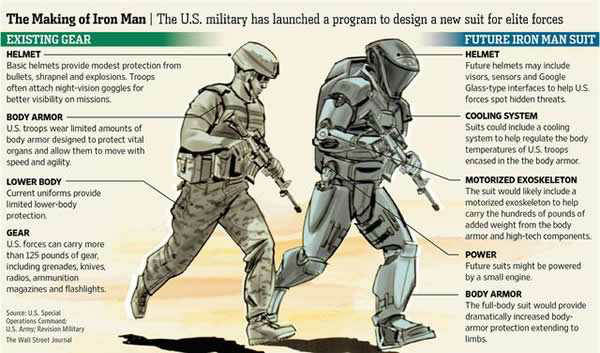
Yet DARPA’s ambitious goals strike everyone as unrealistic. It envisions a miraculous machine that would allow soldiers to run for days on end while dragging hundreds of pounds of weight, without feeling fatigued; enable them to deftly operate weapons that normally require two personnel; and effortlessly evacuate the battlefield while carrying two wounded comrades. The agency requires this mechanical exoskeleton to incorporate armor, rendering it impervious to enemy artillery fire. They even hope it will help soldiers jump higher.
Before the program was launched, some consultants advised by DARPA immediately pointed out that their concept was impractical. Efraín García, an engineer at Cornell University who was initially responsible for DARPA’s Iron Man program, said, “Among the people I consulted, half were firmly convinced of its viability, while the other half believed it was simply a waste of time, money, and resources.” Those who poured cold water on the idea were not wrong, he added; “It is indeed a formidable challenge.” The mechanical exoskeleton would require a lightweight power system capable of supplying electricity continuously for several days; it would also need compact yet powerful artificial muscles, as well as a sophisticated motion control system. Furthermore, it must be agile and responsive.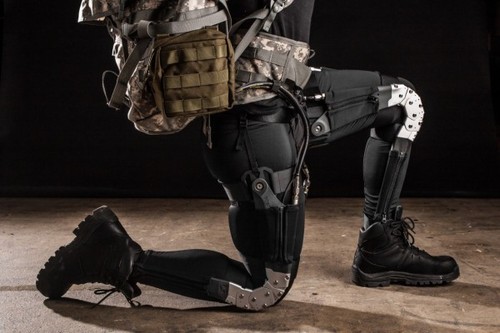
The exoskeleton must become the soldier’s mechanical shadow, capable of interpreting his every move and promptly mimicking each action. Even a millisecond of delay would impose a burden, making the soldier feel as if he were walking through water. The sensors on this mechanical suit must be able to detect every subtle movement applied across its entire structure at a rate of thousands of times per second. Its microprocessor must be powerful enough to convert these data into commands in real time and transmit them to the mechanical limbs, ensuring they move in perfect coordination with the wearer inside.
However, Intel microprocessors in 2000 did not yet possess such powerful data processing capabilities; much like early virtual reality headsets, the timing was not yet ripe.
At that time, the University of California, Berkeley accepted a $50 million investment from DARPA and developed the "Berkeley Lower Extremity Exoskeleton (BLEEX)BLEEX)”, which is currently the most “Longevity” as one of the powered exoskeleton devices. This device brought Ekso Bionics, then a leading elite manufacturer in the exoskeleton industry, into the spotlight.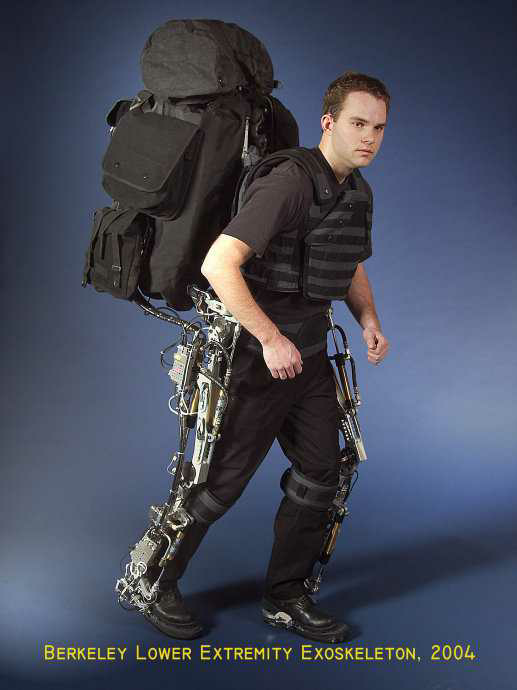
BLEEX. 2004
In contrast to military exoskeletons, which repeatedly encountered bottlenecks in the 19th century, the development of BLEEX was more measured and pragmatic. Focused on enhancing the wearer’s load-bearing capacity, BLEEX shifted its design emphasis to support structures at the waist and legs. BLEEX not only enables U.S. military personnel to effortlessly carry loads of up to 90 kilograms but also allows them to traverse complex terrains. When power is insufficient, the wearer can detach the device from the legs and fold it into a standardized backpack for convenient storage and transport. Combining practicality with portability, BLEEX has paved the way for further research and development of powered exoskeletons.
Not long after, a research enterprise based in Utah, United States, named "Sarcos," began developing exoskeleton systems after receiving an order from DARPA. Its first prototype passed DARPA's program review in 2006; it is the widely acclaimedXOS。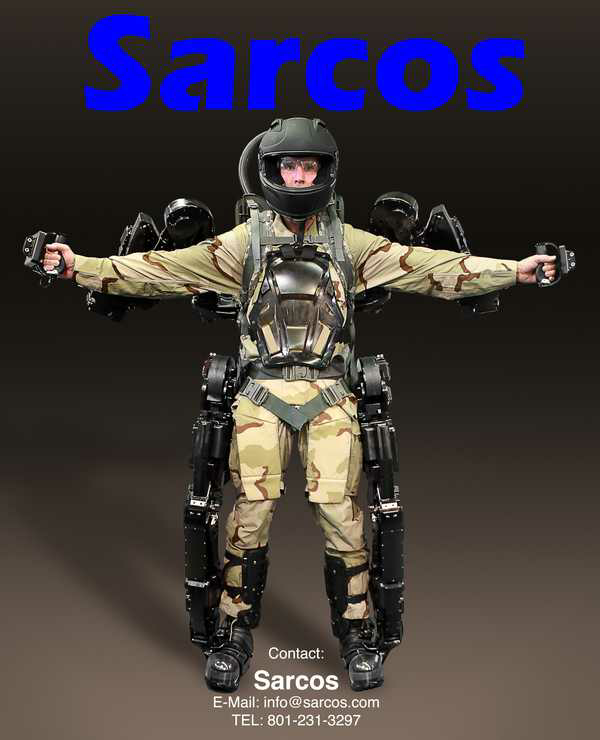
XOS, weighing 68 kilograms, enables the wearer to effortlessly lift loads of up to 90 kilograms. It features unprecedented motion sensitivity and provides a force amplification ratio of up to 6:1. Sensors closely adhered to the body surface directly detect the wearer’s range and intensity of movement; after computational processing, XOS replicates the same range of motion with six times the force. However, the first-generation prototype of XOS unfortunately offers only 40 minutes of battery life.
In 2005, three scholars from the University of California, Berkeley’s Robotics and Human Engineering Laboratory founded Berkeley Bionics. That same year, they launched the ExoHiker series, which increased long-distance load-bearing capacity to 150 pounds (70 kilograms); by 2007, the load-bearing capacity was upgraded to 200 pounds (90 kilograms).
In 2009, Berkeley Bionics released the Hydraulic Human Exoskeleton Load-Carrying System (HULC/Human Universal Load Carrier), with a load-bearing capacity of 200 pounds/90 kilograms (including weapons, ammunition, electronic equipment, body armor, etc.), which can significantly enhance individual combat capabilities. In the same year, Berkeley Bionics exclusively licensed the HULC technology to Lockheed Martin Corporation.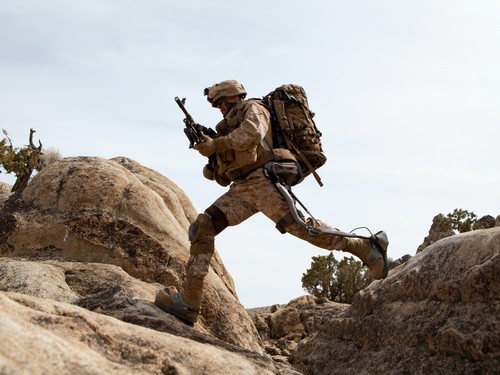
HULC Powered Exoskeleton
In fact, as early as the debut of XOS, Lockheed Martin, a company deeply rooted in aerospace technology, began to venture into the field of powered exoskeletons. With the technological assistance of Berkeley Bionics, it successfully launchedHULC(Human Universal Load Carrier, human load-bearing exoskeleton) system. The first-generation HULC can provide a load capacity of approximately 90 kilograms, enabling the wearer to sprint at speeds close to 16 kilometers per hour without feeling the burden of the load.
Following continuous improvements by Lockheed Martin, the latest generation of HULC not only boasts an ultra-long endurance of 24 hours on a full tank of fuel but also seamlessly synchronizes with soldiers’ complex movements, including squats and crawling.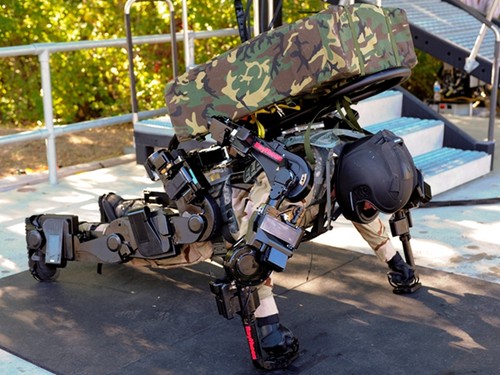
In 2010, the U.S. defense giant acquired SarcosThorThe Company Launches a Lighter and More Comprehensive Second-Generation ProductXOS2, it is more durable and flexible than the first generation, while also reducing power loss. The wearer can perform thousands of push-ups with ease, effortlessly lift objects weighing up to 200 pounds, and split wooden boards as thick as 3 inches with a single hand.
The scene abruptly shifts to a hidden bunker in Afghanistan, where four men armed with rifles stand guard before a thick, rusted iron door. Bang! A massive fist hammers against the door from within. Bang! The fierce impact dents the metal. The door shudders violently, its hinges snapping off. The guards flinch and retreat. Whatever is about to burst through that door must be a colossal, enraged beast.
The door was suddenly battered open, and a metal giant burst out. It appeared to be a robot, but within the iron armor, the renowned weapons designer Tony Stark manipulated this metallic beast. Bullets ricocheted off the armor, leaving barely a trace. He punched a guard to the ground, glared at the surrounding enemy camp, activated the flamethrower on his arm, and engulfed the stronghold in a sea of fire.
This was merely a plot point in “Iron Man,” yet it became the starting point for another initiative.
In late 2012, a special operations soldier was shot and killed during a hostage rescue mission in eastern Afghanistan, where SEAL Team Six was attempting to free an American doctor. This incident directly prompted the U.S. Special Operations Command (USSOCOM) to launch a new exoskeleton research initiative in 2013—the Tactical Assault Light Operator Suit (TALOS) program.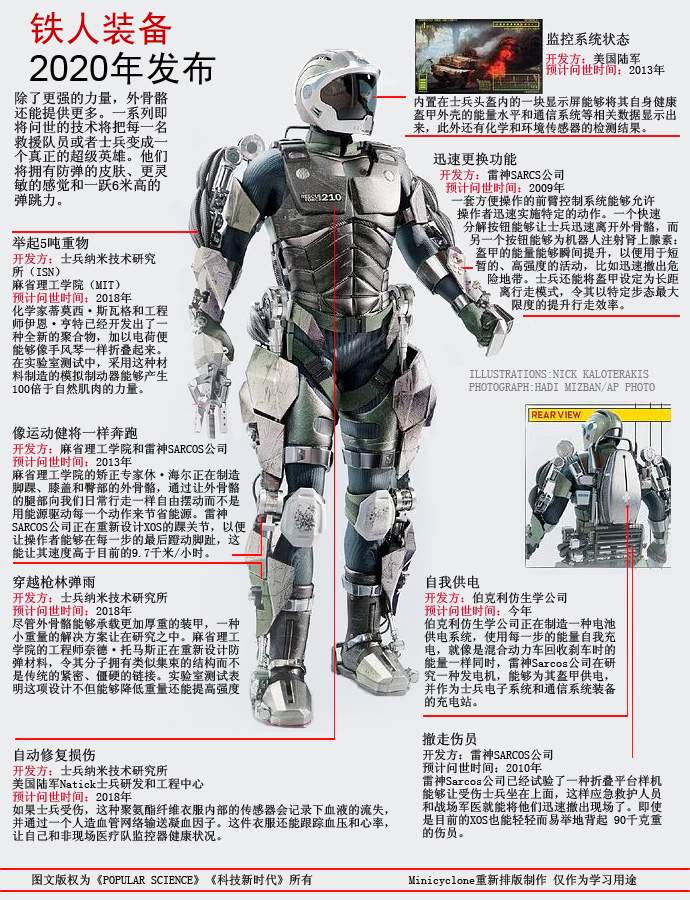
The U.S. Special Operations Command has divided the Tactical Assault Light Operator Suit (TALOS) into several functional modules, specifying detailed development requirements for each. These modules will ultimately be integrated into a complete powered armor system. This approach offers insight into the future development direction of individual soldier powered exoskeletons.
Power and Energy: The energy source is built-in with a minimized footprint; the propulsion system operates quietly and does not require oxygen, featuring an integrated energy management system. In addition to powering exoskeleton movement, the propulsion system must also support wearable computers, programmable radios, and transmitting antennas.
Mobility: A powered exoskeleton system that significantly enhances the wearer's flexibility and strength, featuring natural, distortion-free movements and a low-power design.
Armor: Provides full-body protection against standard rifle fire and blast shockwaves, with reinforced defense for the head, neck, and vital areas. Constructed from advanced materials to maximize protection while minimizing weight. Features limited underwater breathing capability.
Attack System: omnidirectional strobe dazzle lights, high-power loudspeakers that cause temporary incapacitation, reusable high-voltage electroshock devices, and other non-lethal weapons.
Human-Machine Interface: An embedded health monitoring system capable of real-time tracking of the wearer’s psychological and physiological metrics. An air conditioning system that regulates the internal temperature of the armor. Automatic recording of armor operational data. The helmet-mounted display provides environmental information acquired by sensor arrays, enhancing situational awareness.
Data and Control: Onboard multi-core implementation processor, supporting continuously improved open-source architecture, and onboard data storage.
Communication System: High-bandwidth communication system with detachable emergency communication devices.
The TALOS project involves the participation of 56 companies, 18 government agencies, 13 universities, and 10 national laboratories, including special effects model producer Legacy Effects, small technology firms, and defense contractors such as Sarcos/Raytheon, Ekso/Lockheed Martin, and General Dynamics.
The research objectives of this project are approaching the scenarios depicted in standard science fiction: it not only features bulletproof protection, power assistance, night vision, and augmented reality capabilities, but also enables vital sign monitoring and automated drug delivery.
However, across the Pacific in Japan, the picture is quite different.
Continued: “CYBERDYNE Artificial Mecha: A Dream of an Era in the Land of the Rising Sun”