

Novo Nordisk China Layoffs, First Dermatology Doctor Group Launches in Beijing, and Spanish 'Sex Watch' Makes Headlines
Today's Highlights
Tmall Health Partners with Pharmacies to Launch “Senior Expert Consultation” Campaign
Multinational Pharma Giant Novo Nordisk Cuts Jobs in China
Chinese Academy of Engineering Unveils Pharmaceutical Sector Layout in "Made in China 2025"
The Ministry of Industry and Information Technology recently released the "Blue Book: Current Status of China's In Vitro Diagnostics Industry in 2015"
China’s First Dermatology Physician Group Established in Beijing
Japan Develops World’s Thinnest Artificial Blood Vessel
University of Oxford Discovers New Secrets of Gene Mutations
Spanish Company Geeksphone Launches “Sex Watch”
Qilekang Completes Hundreds of Millions of USD in Series B Financing
CITIC Limited Acquires Medical Device Manufacturer Biosensors for RMB 5.2 Billion
Lai Mei Pharmaceutical Tests the Waters of Telemedicine
The Mexican Government Vigorously Develops Medical Tourism

Today, the “Xi-Ma Meeting” will witness a historic moment as leaders from both sides of the Taiwan Strait hold talks for the first time in 66 years. The editor is extremely excited!
But, what everyone may be discussing is another matter, namely the upcoming annual “Shopping Festival” as major e-commerce platforms engage in fierce competition.

As autumn and winter arrive, more people seek out Traditional Chinese Medicine (TCM) practitioners for health regulation and wellness, prompting Tmall to join in on the shopping festival.
Starting November 3, Tmall Pharmacy has partnered with Hu Qing Yu Tang, Tong Ren Tang, Fang Hui Chun Tang, and Lei Yun Shang to launch a “1-cent online flash sale for consultations with renowned traditional Chinese medicine practitioners” for residents in Beijing, Hangzhou, and Suzhou.
Specifically, from November 3 to November 10, four clinics—Hu Qing Yu Tang, Tong Ren Tang, Fang Hui Chun Tang, and Lei Yun Shang—will sequentially release 10 appointment slots with scarce, renowned veteran Traditional Chinese Medicine (TCM) practitioners daily on the Tmall Health platform. Over the eight-day period, a total of 80 appointment slots will be made available to residents of Beijing, Hangzhou, and Suzhou. Consumers can log in to the Tmall Health platform at 12:00 PM each day for a chance to secure a consultation with a local famous TCM practitioner for just RMB 0.01. Upon successfully securing an appointment, the customer service center of the corresponding time-honored brand will proactively contact the consumer by phone to confirm details such as the assigned expert and the scheduled consultation time. Subsequently, consumers may visit the respective time-honored brand’s store at the appointed time for the consultation with the designated expert.
The editor remarked, “Brushing off our sleeves, let them be~”
However, the pharmaceutical industry remains as it always has been: calm on the surface, yet with undercurrents churning beneath. As snow falls in Beijing, multinational pharmaceutical giant Novo Nordisk is set to begin layoffs!
The company stated that Novo Nordisk China has indeed closed certain positions, including those of education specialists, affecting 130 employees.
“The primary drivers of this change are cost reduction and efficiency optimization. The external environment facing the pharmaceutical industry has undergone significant changes in recent years, posing substantial challenges to Novo Nordisk’s operations in China, which we must adapt to as quickly as possible. To address these challenges, Novo Nordisk has had to implement certain cost-control measures, regrettably including the elimination of some positions,” a representative from Novo Nordisk told the media.
Novo Nordisk is a multinational pharmaceutical company headquartered in Denmark. In 2014, its sales of diabetes treatments reached $11.3 billion, ranking first globally. Since establishing its overseas branch in China in 1994, nearly all of Novo Nordisk’s performance in China has come from diabetes products. According to sales data for diabetes medications in sample hospitals provided by the Southern Institute of Pharmaceutical Economics, recombinant human insulin accounted for 12.40% of diabetes treatments in China, with Novo Nordisk holding a 69.12% share. Meanwhile, insulin aspart accounted for 10.05% of the diabetes drug market and was an exclusive product of Novo Nordisk.
Let the layoffs come; what we want to say is that no amount of workforce reduction can dampen the state’s fervent commitment to advancing the medical manufacturing industry.

Recently, the Chinese Academy of Engineering officially released the electronic version of the roadmap.
According to the introduction, the roadmap covers 10 key areas and 23 priority directions, with each direction further divided into several key products.
Among them, the layout in the medical field includes:
High-end CNC machine tools and robotics encompass two directions,
High-end CNC machine tools and basic manufacturing equipment, robots;
Biopharmaceuticals and high-performance medical devices include two directions,
Biopharmaceuticals and High-Performance Medical Devices.
Each key development direction in the roadmap is systematically analyzed and outlined across five dimensions: needs, objectives, development priorities, priority areas for application demonstrations, and strategic support and safeguards, thereby forming a detailed technology roadmap spanning from 2015 to 2025, with an outlook toward 2030.
In addition, the classification of medical industry clusters is quite interesting. It divides China's medical industry zones as follows:
Innovation Cluster for Medical Devices in the Beijing-Tianjin-Hebei Region, which fully leverages the region’s intellectual and medical resources, with a focus on innovation, achievement transformation, and technology export.
Advanced Medical Device Cluster in the Yangtze River Delta Region, leveraging the region’s abundant human resources and industrial strength, with a focus on globalization, innovation, advanced manufacturing, and product application services.
The Pearl River Delta Digital Medical Device Cluster leverages the region’s forward-thinking mindset of openness, innovation, and entrepreneurship, along with its strong industrial foundation, to establish distinctive strengths in engineering innovation, advanced manufacturing, and exports.
Not to be outdone by the Chinese Academy of Engineering’s professionalism, the Ministry of Industry and Information Technology also stepped up its game.

According to the "Blue Book" released by the China Pharmaceutical Industry Information Center, the total size of China's medical device market reached RMB 276 billion in 2014. In terms of market share, the top three segments were: medical imaging equipment, accounting for nearly 20% (19%); in vitro diagnostic (IVD) products, with a 16% share; and high-value medical consumables and implants, holding a 13% share. The IVD industry has become a significant growth driver in the overall medical device market.
Five international giants, including Roche and Abbott, currently hold over 37% of the domestic market share for in vitro diagnostic (IVD) reagents. In contrast, Chinese IVD brands are in a relatively weak position, with low visibility and recognition in international markets and even scarce presence on procurement lists at top-tier (Grade A tertiary) hospitals in China.
The Blue Book points out that the scale of most domestic in vitro diagnostic (IVD) manufacturers is currently very limited, with only a handful of companies achieving annual sales revenues of RMB 500 million. The major IVD manufacturers in the current domestic market are primarily foreign brands, including Roche, Abbott, and Siemens Healthineers; domestic brands include Kehua Bio-Engineering, Mindray Medical, and Daan Gene.
As the nation accelerates its development, physicians in Beijing are also staying active; recently, Beijing established China’s first dermatologist physician group.
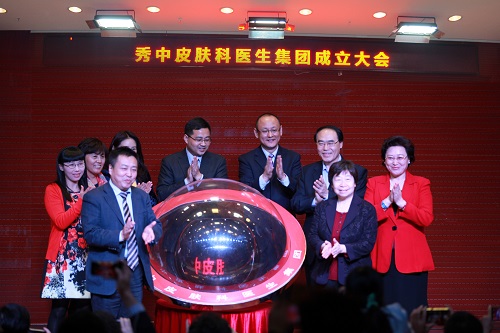
On November 4, the Xiu Zhong Dermatologists Group, China’s first dermatologist group, was officially established. It was jointly initiated by Zhang Jianzhong, Director of the Department of Dermatology at Peking University People’s Hospital, and Ma Lin, Director of the Department of Dermatology at Beijing Children’s Hospital, along with dermatology experts from more than 30 hospitals, including Peking Union Medical College Hospital and Beijing Chaoyang Hospital.
The Xiuzhong Dermatology Physician Group was founded by the aforementioned dermatology experts, with Mifu Medical responsible for its operations and implementation. According to Luo Yong, Secretary-General of the Xiuzhong Dermatology Physician Group, the services provided by the physician group include facilitating cross-regional and cross-institutional collaboration among dermatologists across China; strengthening continuing education and science popularization at the primary care level through initiatives such as grassroots lecture series to promote standardized treatment of skin diseases; and leveraging mobile internet platforms to enhance doctor-patient communication and management.
Not only that, the medical and scientific community is also buzzing with excitement, with new breakthroughs emerging one after another. As we eagerly anticipate these advances, accessible healthcare is drawing ever closer~

The National Cerebral and Cardiovascular Center in Japan recently announced that its researchers have successfully developed an artificial blood vessel with a diameter of just 0.6 millimeters. This is currently the world’s thinnest artificial blood vessel and holds promise for applications in vascular bypass surgeries for the brain and heart, among other areas.
The research team plans to initiate clinical trials within the next one to two years, with widespread adoption anticipated within five years. At that time, these artificial blood vessels are expected to be utilized in transplant surgeries for organs requiring extremely fine vasculature, such as the brain and heart.
Japan is striving so hard, and Germany is not to be outdone.
Merck & Co. recently announced a partnership with Selvita to establish a new translational alliance for anti-tumor drugs, with both parties planning to collaborate in the research and development of small-molecule anticancer agents. Previously, Merck and Selvita had engaged in a two-year research collaboration focused on identifying enzyme inhibitors that regulate metabolic pathways in tumor cells. Initiated in 2013, this partnership has effectively investigated metabolic pathways associated with tumor cell growth and dissemination, and several drug candidates from this project have now advanced to preclinical studies.
On this occasion, the two parties have renewed their three-year collaborative agreement to further build upon previously achieved results. They will conduct further evaluations of existing drug candidate molecules from the perspectives of bioinformatics, medicinal chemistry, and drug toxicity, with Merck & Co. ultimately advancing them into clinical trials.
The UK subsequently expressed its dissent, stating, “Scientific research cannot do without the University of Oxford.”

It is well known that genetic mutations drive cancer cell growth and promote resistance to therapies and drugs. However, these genetic mutations can also become Achilles' heels for tumor cells. A research team at the University of Oxford has discovered that mutations in a gene called SETD2 may cause lethal damage to cancer cells. The relevant findings were published in the international academic journal Cancer Cell.
Researchers have discovered that the drug AZD1775 can inhibit a protein called WEE1, and this inhibition of WEE1 enables the killing of cancer cells harboring SETD2 gene mutations. Researchers state that this cytotoxic effect leverages a concept known as "synthetic lethality" (synthetic lethality: simultaneous inactivation of two non-lethal genes leads to cell death). This approach can specifically target cancer cells, resulting in lower toxicity but greater efficacy compared to conventional methods.
This new discovery provides a scientific basis for precision targeted therapy in certain specific cancer types. Researchers have stated that they are preparing to apply this finding to clinical trials, but considerable work remains before this approach can be truly brought to market.
At this point, seeing everyone working so hard to produce research reports for the well-being of humanity, Spain also made its appearance—though in a rather unique way.
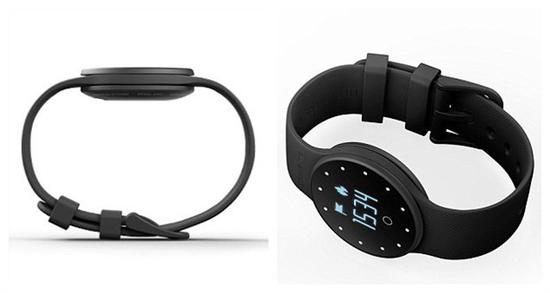
Spain-based Geeksphone has recently launched a “sex watch” called GeeksMe. The device tracks the duration, intensity, total calories burned, and frequency of each sexual encounter for the wearer.
Reportedly, the smartwatch features four modes: Fitness, Sleep, Sex, and Environment. When the wearer activates the “G!Love” mode, the device begins recording physiological changes and provides the aforementioned data. It even offers detailed weekly, monthly, and annual statistical reports and charts to illustrate the intensity of each sexual encounter. Users can also rate each encounter to evaluate their sexual experiences. Geeksphone stated that all such data will be kept strictly confidential and accessible only to the individual wearer.
“Sexual activity is also an important part of a healthy lifestyle,” the company noted on its official website. “You should understand your own feelings and track your progress.”
Sexual activity is also an important part of a healthy lifestyle, which makes sense—but first, you need to have a girlfriend...
Everyone is striving hard for the future of humanity, and at this time, some domestic medical companies can no longer sit idly by~

According to industry sources, 7LeKang has completed its Series B financing, raising over USD 100 million. In January of this year, 7LeKang publicly announced that it had secured RMB 300 million in Series A financing from investors including Jiangsu High-Tech Venture Capital Group’s Bangsheng Capital, Shanghai Changjiang Guohong Investment, TusCapital, and its affiliated Guangdong Qicheng Youth Fund.
Following the completion of its Series A financing, Qilekang stated that the funds would be primarily allocated to warehouse construction, logistics infrastructure, system upgrades (including the development of a mobile app platform), Customer Relationship Management (CRM) systems, and Warehouse Management Systems (WMS). The company also planned to strengthen its warehouse and logistics capabilities, pilot a “24-hour medication delivery” service, and enhance customer experience.
By comparison, CITIC Group’s acquisition was far more low-key.
On November 4, the Singapore Exchange issued a statement indicating that CITIC Private Equity Funds Management, a subsidiary of CITIC Limited (00267), has agreed to acquire the remaining 80.4% equity stake in local medical device manufacturer Biosensors at S$0.84 per share. The total transaction value amounts to S$1.14 billion (approximately US$817 million or HK$6.3 billion). CITIC Private Equity Funds Management currently holds a 19.6% interest in Biosensors. Spurred by the news, Biosensors’ shares surged 19.1% on the SGX, closing at S$0.81. Biosensors primarily manufactures medical devices related to cardiac procedures.
Seeing everyone having so much fun, Lamei Pharmaceutical said, “I want to join in too~”
On November 3, Laimi Pharmaceutical (Stock Code: 300006.SZ) announced that its controlled subsidiary, Yunnan Laimi Biotechnology Co., Ltd. (hereinafter referred to as “Yunnan Laimi”), had signed an Investment Letter of Intent with Long Hongyuan and Chongqing Xintong Medical Information Service Co., Ltd. (hereinafter referred to as “Chongqing Xintong”). The company intends to inject RMB 30 million in capital into Chongqing Xintong. Upon completion of the capital increase, Laimi Biotechnology will hold a 15% equity stake in Chongqing Xintong.
Chongqing Xintong is a company specializing in remote medical health services. If both parties formally sign an investment framework agreement, it will signify that Lamei Pharmaceutical will officially cross over into the medical services sector.
With such dedication from everyone, Mexico has indicated it will not engage with you, but is instead quietly entering the medical tourism industry~

Mexico’s Reforma newspaper reported on November 3 that Sabada, Chairman of the National Council of Mexico’s Tourism Industry, stated that the Mexican government has set a target of generating $1.2 billion in revenue from medical tourism over three years. To achieve this goal, Mexico will establish medical tourism clusters and enhance the standard and quality of healthcare services. The council has already promoted medical tourism programs in countries such as the United States and Canada through traditional and online media. Monterrey, Guadalajara, Mexico City, and Puerto Vallarta are Mexico’s primary medical tourism destinations, boasting ample medical infrastructure and professional talent.
Recent data from Stanford University research also indicates that the global growth rate of medical tourism is twice that of the overall tourism industry. Revenue from global medical tourism is projected to reach $678.5 billion by 2017, accounting for 16% of the world’s total tourism revenue, up from $438.6 billion in 2013.
It’s no small feat to have made it this far—thumbs up to everyone.
Have a nice weekend ●v●