

What Makes a Platform Suitable as an e-Marketing Platform for Pharma Companies? (Stellar Medical Insights Open Lecture Series #8)
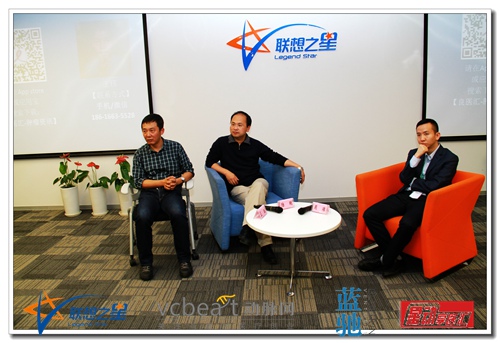
Event Name:Xingdong Xiangyi HuiIssue 1Open Course
Event Dates: November 7–8, 2015
Organizers: Legend Star, VCBeat, BlueRun Ventures
Guest Speaker:
Zhou QuanInvestment Director, Legend Capital
He has accumulated many years of outstanding investment experience in the healthcare sector at a renowned venture capital firm. The healthcare projects he has led in investing include Rich, Bonovo, Xingtong, JenaValve, Axonics, Zhuhai Deer, Shanghai Aohua, Hangzhou Yaen, and Oncology News.

Lu GangPartner at Legend Star
Joined Legend Holdings in 2004, engaging in venture capital and management. In 2009, joined Legend Star to oversee angel investment operations. Healthcare investments include Sunshine Yide, Tianjin MicroCore, Suzhou Pagoda, and Burning Rock Biotech.

Wang JueCEO of Oncology News
Previously held positions at renowned pharmaceutical companies such as Eli Lilly, Roche, GlaxoSmithKline, and Sanofi. Responsible for marketing oncology drugs, launching new products, and other related tasks. Committed to promoting charitable projects for anti-cancer medications and the digitalization of pharmaceutical marketing. In 2015, founded "Liangyi Hui - Oncology Information," a new media platform dedicated to providing scientifically authoritative information services for oncologists and patients.
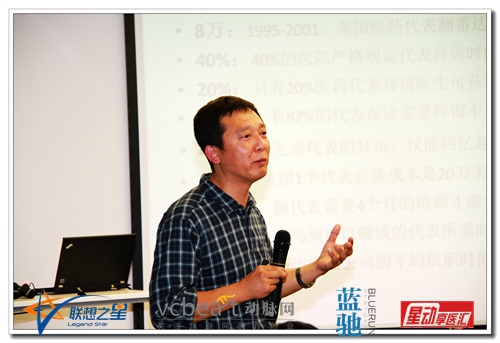
Below, we dive directly into the engaging dialogue with our guests. For the full speeches, please follow VCBeat’s WeChat account (vcbeat) to watch.
Zhou Quan
1. Legend Capital was formerly known as Legend Investment. Established in 2001, the firm has always operated within the Legend Holdings system, specializing in venture capital. We began investing in healthcare projects in 2008 and established a dedicated healthcare investment team by the end of 2010. I joined Legend Investment in 2010, starting as part of a two-person team alongside Ouyang Yi. Today, our team has grown to seven professionals focused exclusively on healthcare investments. Initially, our investments were concentrated in traditional sectors such as pharmaceuticals, medical devices, diagnostics, and hospitals. Leveraging our collective medical backgrounds, we have invested in approximately 40 projects to date. Currently, two of our colleagues, Wang Jianfei and Qi Fei, are leading our research efforts in the field of mobile health.
2. Mobile health projects are indeed emerging across various niche sectors, with many stakeholders proposing excellent ideas and highly innovative models. I recall that when I joined Lenovo in 2010 to begin my investment career, one of the first books I read was "Who Should Be Consulted for Medical Care?" written by Professor Zhou Qiren in 2005. The book cites a statistic showing that from 1978 to 2005, total healthcare expenditure increased nearly 80-fold, whereas the number of hospitals and physicians only grew two- to threefold. This indicates a highly inefficient market, as an effective market mechanism would typically ensure that supply increases correspondingly with demand. The persistence of this disparity points to severe systemic issues within the healthcare sector. First, there is a serious imbalance in supply; the current system fails to attract top-tier talent to pursue careers as physicians. Many well-trained doctors leave the public system, resulting in a significant mismatch between supply and demand. Second, amid this severe supply-demand imbalance, the allocation of limited high-quality medical resources is highly uneven, posing serious configuration problems, with a large concentration of top doctors residing in Grade A tertiary hospitals.
3. My Personal Perspective on What Constitutes a High-Quality Mobile Health ProjectFirst, the existing system should allow physicians to practice independently, thereby restoring medicine to a respected profession where doctors can earn income openly and with dignity. Second, it should enhance both the efficacy and efficiency of physicians. By “efficacy,” I refer to physicians’ academic and clinical competence; by “efficiency,” I refer to the implementation of a tiered diagnosis and treatment system, wherein true specialists manage truly complex and difficult cases, while minor ailments are handled by lower-tier medical institutions, thereby improving both the efficacy and efficiency of physicians. In my view, projects that focus on the supply side are promising, whereas those that merely amplify demand have limited efficiency.
4. Based on our understanding of the healthcare industry, we believe that there are greater opportunities for projects that focus on vertical, end-to-end solutions within specific niches. At the time, we assessed that among the twenty to thirty clinical specialties, the oncology drug market, with an annual value reaching RMB 100 billion, was the largest pharmaceutical sub-sector. The annual marketing expenditure related to oncology drugs was estimated to exceed RMB 10 billion, approaching RMB 20 billion. Consequently, this sector offered relatively more opportunities. Secondly, we identified the pain points of oncologists. In mobile health initiatives, the primary focus should be on addressing physicians' pain points rather than those of patients, as physicians are our actual customers. The typical pain points include: first, limited legitimate income; second, heavy workload; and third, the need for academic advancement. We found that oncologists generally do not lack financial resources; however, they do face substantial workloads and require improved efficiency. Notably, their demand for academic development is the highest among all specialties. This is why we initially favored the "Oncology News" project, as it provided frontline physicians with high-quality academic information services. In the future, using academic content as an entry point, we can expand into adjacent and deeper segments of the value chain. Additionally, the Oncology News team is exceptionally strong. Its two founders, Wang Jue and Bing Ge (a respectful nickname), each have 10–20 years of experience working at multinational oncology pharmaceutical companies, possessing extensive industry expertise and a proven track record of successful entrepreneurship.
Wang Jue
1. In healthcare, physicians are the ones creating value; however, in China, it is no longer viable to generate profits directly from physicians. The value of their professional services has been significantly undervalued, meaning that sustainable business models should not be built around extracting revenue from physicians.
2. Another key player is the pharmaceutical industry. Historically, pharmaceutical marketing focused on selling drugs through hospitals and physicians. For a long period, 90% of their efforts were directed toward physicians, as they are the ones who prescribe medications. Consequently, patients did not receive particular attention. Pharmaceutical companies employed various methods to convey information to physicians, such as through medical representatives and academic conferences.
3. Traditional methods used by pharmaceutical companies to convey information to physicians have certain drawbacks.
First, medical representatives do not fully understand complex conditions such as cancer. The cost for pharmaceutical companies to train a medical representative is high. Under the current model, while there is a need to increase the number of medical representatives, output value continues to decline. Qualified medical representatives are scarce, and sales talent training fails to meet existing demands, making it increasingly difficult to manage medical representatives.
Secondly, regarding conferences, pharmaceutical companies bear all associated costs, resulting in high expenditures. While physicians have a strong willingness to learn, their learning efficiency at these events is low. Academic conferences have reached a dead end. The sheer volume of conferences has left physicians exhausted from constant travel. There is little novel content presented, and homogenization is severe. Furthermore, strict compliance regulations, along with restrictions on venue and format, have limited the organization of academic conferences. It is lamentable that such inefficient practices persist in the internet era.
Furthermore, Chinese pharmaceutical companies exhibit relatively weak marketing capabilities. They also underutilize new media and suffer from a severe shortage of other marketing tools and talent.
Meanwhile, the state imposes stringent regulations on pharmaceutical companies, as evidenced by the “No Entry for Pharmaceutical Sales Representatives” signs posted at the entrances of many hospitals.
4. Physicians have a strong demand for knowledge. For a long period, academic conferences sponsored by pharmaceutical companies were the primary means for physicians to expand their knowledge. In 2015, data on online learning among Chinese physicians showed a substantial increase in time spent on digital education: on average, physicians dedicated one day per week to online activities, with half of that time devoted to learning. Physicians across China, including those in third- and fourth-tier cities, are leveraging online platforms for education. The use of new digital channels for information acquisition now accounts for half of all knowledge sources accessed by physicians. This shift reflects a significant change in physicians’ behavioral habits.
5. After disseminating information, how can it be converted into sales? Previously, sales were generated primarily within hospitals. Now, however, they can be shifted to the internet. Patients have become accustomed to obtaining disease and medication information online, and their decision-making power and voice are increasing. Physicians are reluctant to recommend specific brands, and with the impending deregulation of online sales of prescription drugs, the only remaining hurdle is whether medical insurance can integrate these components. Once these elements are in place, there will be significant room for pharmaceutical companies to expand their digital marketing efforts.
6. What Kind of Platform Can Serve as an e-Marketing Platform for Pharmaceutical Companies? First, it must be an independent third-party platform. Additionally, the platform should demonstrate high activity levels, with frequent visits from physicians and patients. There should be ample interaction on the platform, ensuring that browsing by physicians and patients is meaningful. Furthermore, the platform should be capable of supporting the entire process or key stages of medical activities. Finally, the platform should facilitate convenient, anytime-anywhere communication with pharmaceutical companies.
Q&A
Question: Who will be the future payers in mobile healthcare?
Lu Gang: In the healthcare sector, payment sources have traditionally included insurance and out-of-pocket expenditures. From the manufacturers’ perspective, these represent revenue streams closely tied to their core business, as profitability hinges on them. Whether selling pharmaceuticals or medical devices, or even transitioning devices into service-based models, such shifts reflect evolving strategies; however, the fundamental objective remains product sales.
Regarding insurance, the difficulty in achieving profitability for mobile health services is closely tied to the dynamics between insurance payers and patients’ payment habits. Since patients largely pay out-of-pocket, their proportion of total expenditure is not particularly high, and their willingness to pay is relatively weak. A major challenge for the insurance sector is that China’s social medical insurance accounts for over 90% of coverage. The operation of this public insurance system is rather rudimentary—inefficient and arguably uneconomical. Consequently, strategies commonly employed in the United States, such as enhancing efficiency and improving mechanisms, are not readily applicable in China. As a result, the system has resorted to measures like centralized bidding and aggressive price suppression. This has perpetuated the model of “subsidizing healthcare with pharmaceutical revenues,” wherein drug prices are slashed annually, typically dropping by 10% after each bidding cycle. Many pharmaceutical manufacturers ultimately find themselves unable to cover their costs. While there is hope for gradual reform, this transition is expected to be a lengthy process.
Secondly, regarding support for social healthcare, patients’ access to better medical services is closely linked to their out-of-pocket expenses. Currently, many people perceive the public healthcare system as offering poor service and a subpar experience, leading them to prefer private hospitals. Private hospitals play a certain role in promoting commercial health insurance.
The third payer is the manufacturer. Regarding manufacturer payments, there is a substantial profit margin between the ex-factory price of a drug and the final price paid by patients. Currently, a portion of pharmaceutical companies’ profits is used to support the government in maintaining the physician workforce. Manufacturers are inclined to eliminate this portion of the profit, using part of it to compensate physicians directly, while the remainder would require improving the efficiency of medical representatives. Of course, information asymmetry and pharmaceutical e-commerce also offer some room for maneuver. However, frankly speaking, it is relatively clear which is greater and which is smaller when comparing this remaining margin with the cost of substituting for the government in paying physicians.
How Can Mobile Healthcare Actually Make Money?There is no room for profit in the portion paid by the government. Physicians are already reluctant to participate; if compensation is further reduced, their willingness will diminish even more. Moreover, due to frequent doctor-patient disputes and high psychological stress, there is little margin for physicians either. So where can revenue be generated? The answer lies in improving efficiency. But how can efficiency be enhanced? The entry point of the business model and its future evolutionary path are being gradually explored. If the right entry point is identified, the industry chain will extend accordingly. Of course, this also depends on the evolution of external conditions. The greatest uncertain marginal condition in China is the uncertainty surrounding healthcare reform plans and the effectiveness of their implementation.
The very first lecture today focused on policy and our understanding of China’s healthcare ecosystem, which is arguably the most critical aspect. As those with a background in economic management know, policy governance is paramount; in the medical industry, policy exerts substantial influence, necessitating a profound understanding.
Furthermore, regarding the source of funds, it is essential to identify legitimate channels. The revenue previously derived from kickbacks via pharmaceutical sales representatives is certainly unsustainable; while such income may persist for one, three, or five years, it cannot endure in the long term. With many pharmaceutical sales representatives currently facing regulatory crackdowns, it is imperative to promptly transition to compliant practices.
Third, how to disrupt this matter is related to the profit model. In some other traditional industries, whether it is education, finance, or tourism, we can disrupt them, but mobile healthcare is difficult to disrupt.
Zhou QuanWe identified the oncology information project as a strategic opportunity, emphasizing the first two characters, “oncology,” rather than the latter two, “information.” Our initial investment thesis was that niche markets offer greater potential. Within these specialized segments, we believe oncology holds particularly strong prospects. Disruption requires specific conditions. The healthcare sector comprises 30 distinct specialties, each with its unique “landscape” and dynamics; attempting to disrupt all 30 specialties with a single approach is exceedingly difficult. By focusing on one domain—using oncology as our entry point—and leveraging oncology-specific information to address physicians’ demand for academic advancements, we can effectively engage this key audience, thereby enabling subsequent business initiatives. A direct, forceful market entry—such as having our ground sales team conduct door-to-door campaigns, distributing advertisements, or crowding outpatient clinics with pharmaceutical representatives urging doctors to scan QR codes—would face significant challenges. However, by employing this informational consultation approach, follow-on activities become relatively easier to execute. Of course, succeeding in this endeavor still demands highly capable talent.
Question: We have established clear communication channels for disseminating information to physicians. How do we conduct patient education and knowledge dissemination for patients? And how do we acquire patient users?
Wang Jue: While people outside the medical industry believe that acquiring physicians is a major challenge, attracting patients has also become difficult in the current landscape. It is hard to determine which approach is superior; however, understanding patient needs is the most critical factor in acquiring and retaining them.
Question: How does Oncology News obtain impartial and authentic information?
Wang Jue: I come from a medical background and have a medical team. We also collaborate with several medical journals. We trust our ability to evaluate information.
Question: What was Legend Capital’s investment thesis when it invested in this project?
Zhou Quan: At the time of investment, we did not position Tumor Information as a purely information-based platform; there were other considerations, but we are unable to disclose them at this moment.
To be a doctor who keeps pace with the times, you must follow the "Daifu" official subscription account.
Please scan the QR code below.
