

Xu Qian of Fosun Pharma Discusses Investment Logic Behind Internet Healthcare Unicorns (StarMed Talk Series 11)

BlueRun Ventures China
Venture Capital Institution
Event Name:StarMed HubIssue 1Open Course
Event Dates: November 7-8, 2015
Organizers: Legend Star, VCBeat, BlueRun Ventures China
Guest Speaker:
Xu QianDeputy General Manager, Investment Headquarters, Fosun Pharma
Focuses on investments in the healthcare sector, particularly in the field of internet healthcare. Possesses nearly 15 years of experience in the investment industry, having previously held positions at prestigious institutions such as CAS Holdings (the state-owned asset management company of the Chinese Academy of Sciences) and Tsinghua Xingye Investment. Has invested in projects including Guahao.com, Buchang Pharmaceuticals, and Mingyang Wind Power (NYSE: MY).
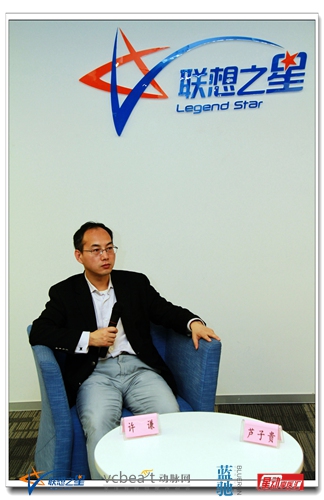
Mr. Xu Qian shared insights on the topic “Investment Logic for Internet Healthcare Unicorns.” Below are highlights from his speech. For the full presentation, please follow VCBeat’s WeChat account (vcbeat).

Investment Logic for Internet Healthcare Unicorns
1. WeDoctor Group (Guahao.com) is the first unicorn in the internet healthcare sector. In the investment industry, a "unicorn" refers to a startup company that is not yet publicly listed and has a valuation exceeding $1 billion. I have already invested in three unicorn projects; among them, Mingyang Smart Energy went public on the New York Stock Exchange. Another was Buchang Pharmaceuticals, although its valuation had already far exceeded $1 billion at the time of our investment. The organizers asked me to speak about improving operational efficiency. However, I feel that the internet healthcare industry as a whole is still in a phase of rapid expansion and market grabbing, and has not yet reached the stage of refined operations.
2. Let’s examine the venture capital investment landscape in internet healthcare in 2014.
(1) The basic concepts of Internet healthcare and mobile healthcare; the former is commonly referred to in China, while mHealth is the term used abroad.
(2) 2014 marked the inaugural year of internet healthcare. In both the United States and China, venture capital investment in the internet healthcare sector saw explosive growth, with the number of projects and investment amounts reaching several times those of previous years. The high growth in China was driven by two main factors: first, the proliferation of smartphones occurred faster than anticipated; second, internet giants such as BAT (Baidu, Alibaba, and Tencent) entered the investment landscape more rapidly than expected. Beijing remained the most popular city for investment. However, as the capital market cooled, private equity (PE) firms slowed their investment pace, and smaller angel investment institutions faced challenges in both fundraising and deploying capital. From a trend perspective, the impact on the investment chain is gradually transmitting to early-stage investments.
(3) The aggressive entry of China’s internet giants—Baidu, Alibaba, and Tencent (collectively known as BAT)—can be summarized by two traits: deep pockets and boldness. As publicly listed companies, they can quickly recoup their M&A and investment costs through stock price appreciation. Alibaba has shown strong interest in healthcare, launching its “Future Hospital” initiative via Alipay and acquiring CITIC 21 Century to penetrate the pharmaceutical sector, thereby pressuring Tencent and Baidu to accelerate their own efforts. Given that healthcare contributes a significant portion of Baidu’s revenue and profits—approximately 30%—the company is certain to intensify its focus in this area. Tencent, meanwhile, is strategically positioning itself through minority equity investments. In addition, Lei Jun’s ecosystem and JD.com are also making moves; for instance, Xiaomi’s Mi Band has carved out a distinctive niche in specific sub-sectors.
3. I began focusing on the internet healthcare sector in 2013, paying close attention to key figures such as Wang Hang of Haodafu, Li Tiantian of DXY, Zhang Rui of Chunyu Doctor, and Zhang Yusheng of Xingshulin. The investment institutions that entered the market early demonstrated commendable courage in their strategic positioning. In my view, major platforms have already taken shape. While new large-scale platforms will undoubtedly emerge in the future, it remains open to discussion at which stage and in what form they will appear. The industry will continue to evolve, but not through simple repetition. Launching projects similar to Guahao.com or Chunyu Doctor without innovation in business model or technology will make it extremely difficult to catch up with established players.
4. How to Invest in Internet Healthcare? This is a cross-disciplinary field. Investment decisions depend on the specific project, its founders, team DNA, and inherent characteristics. There is no hierarchy among entrepreneurs; all ventures hold value. The key lies in whether the development speed can meet expectations and established goals. Investors naturally prefer faster growth and tend to favor projects with strong internet attributes, as their asset-light models enable more rapid scaling and explosive growth. However, an asset-light model is a double-edged sword: if it is too light, barriers to entry are low, making the business easy to replicate and vulnerable to being overshadowed by tech giants such as BAT (Baidu, Alibaba, and Tencent). Conversely, heavier models, akin to traditional healthcare projects, exhibit slower growth but offer higher barriers to entry. Striking the right balance between these two approaches warrants careful consideration.
5. There are various business models: B2C targets patients, B2B targets doctors, and B2H targets hospitals. Recently, the most challenging segment has been B2VC, which involves facing investors. When evaluating projects from a profitability perspective—whether they are profitable or operating at a loss—some projects generate revenue from the outset. For instance, collaborations with Baidu to direct traffic and patients to private hospitals can be lucrative, though they also present certain challenges. A company’s valuation is not necessarily proportional to the founder’s background. While entrepreneurs with backgrounds in healthcare, pharmaceuticals, and related industries tend to have higher survival rates for their startups, I personally do not believe that physicians have a definitive advantage over other founders in the long run when launching internet healthcare ventures.
6. Why did Fosun Pharma invest in WeDoctor Group (Guahao.com)? During our communications with the company, we found that WeDoctor Group (Guahao.com) is playing a long-term strategic game, with layouts across healthcare, pharmaceuticals, and insurance sectors. Of course, there is still a long road ahead to turn many of these visions into reality. The highlights of WeDoctor Group (Guahao.com) include: the internet healthcare industry is in a period of explosive growth; it operates China’s largest real-name medical appointment platform; its core team possesses extensive management experience; its future business growth is promising; and it benefits from synergistic cooperation with shareholders such as Fosun and Tencent. For instance, WeDoctor Group (Guahao.com) and Fosun are exploring various collaborative opportunities: in the pharmaceutical sector, through Jinxing.com; in healthcare, through partnerships with United Family Healthcare and Foshan Chancheng Central Hospital; and in insurance, by developing health insurance products.
7. I believe that the internet healthcare sector holds significant opportunities in areas such as internet hospitals, the liberalization of electronic prescriptions, and the integration of commercial insurance with third-party payment systems.
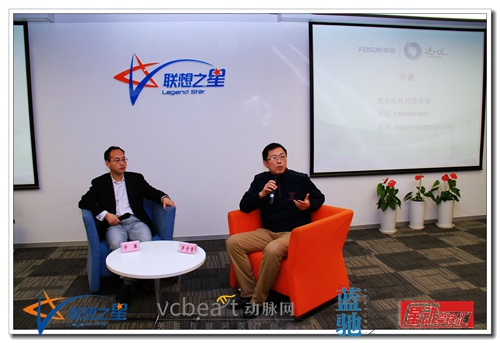
Q: How should the concept of "doctor time" be understood?
Lu Zigui: Physicians are arguably the most critical resource for business operations within the entire mobile healthcare sector. While there is no precise definition of “physician time,” from my personal perspective, it can be categorized into two types: regular working hours and off-duty hours. Currently, among entrepreneurs present here, some may focus on leveraging physicians’ off-duty hours by integrating them into their services. WeDoctor Group initially launched its appointment registration service by aligning with physicians’ working hours. This service allows patients to schedule appointments with specific physicians. Although shift schedules are arranged by hospitals, we have effectively established collaborative relationships centered around physicians’ professional working hours.
Appointment scheduling is arranged by the hospital itself for its physicians, with a dedicated pharmacy administration department responsible for managing doctors’ work schedules. This process integrates appointment registration services, thereby establishing a connection between physicians and patients through the scheduling system. Furthermore, leveraging the WeDoctor Group’s model, we also streamline offline communication and professional exchange time among physicians. Through this platform, patients can more precisely locate and consult with appropriate doctors.
Q: What characteristics does WeDoctor Group look for in vertical-sector projects for potential partnerships, and what would the collaboration models entail?
Lu Zigui: From the perspective of business collaboration, as a major business platform, WeDoctor has always sought high-quality partners to engage in in-depth discussions on business directions. Specific cooperation models, methods, and investment strategies may need to be analyzed on a case-by-case basis, including whether your product form aligns with WeDoctor’s processes, among other factors.
Xu Qian: I discussed this issue with Mr. Liao, CEO of WeDoctor, a couple of days ago. WeDoctor Group is primarily a platform, and as such, it seeks to collaborate with leaders in various specialized fields. If you have a close partnership with Tencent, communication would be easier. Of course, specific business details still need to be further discussed.
Question: How does WeDoctor Group implement tiered diagnosis and treatment?
Lu Zigui: Tiered diagnosis and treatment is, first and foremost, a concept. How this concept is defined and understood matters; our understanding of tiered diagnosis and treatment differs from the traditional notion of tiered care. First, while many perceive tiered diagnosis and treatment as a system or institutional framework, we view it as a service delivery system. Although the government-guided tiered diagnosis and treatment system and the internet-based tiered diagnosis and treatment system we have built share the same ultimate objective, their implementation pathways differ.
Why Is WeDoctor Group Capable of Implementing Tiered Diagnosis and Treatment? First, it leverages its years-accumulated nationwide appointment registration resources for Grade 3A hospitals. Second, it strengthens the patient-centered service system through academic leaders, team-based physicians, and assigned primary care physicians. This system has been built using internet technologies, rather than being imposed through administrative directives.
Through our platform architecture, we enhance the capabilities of primary care physicians. As specialists form medical teams, they transfer their professional expertise to primary care physicians, thereby gradually earning public trust. In addition to improving individual physicians’ skills, this approach effectively extends the expertise of top-tier specialists down to the frontline primary care level, ultimately achieving the goal of tiered diagnosis and treatment.
Question: What are the business and revenue models of mobile health? Guahao.com was a pioneer in the mobile health sector. I would like to ask what explorations WeDoctor Group has made in terms of its business and revenue models. From an investor’s perspective, how does Fosun evaluate projects in specific niche sectors?
Lu Zigui: In the healthcare sector, we are building a nationwide surgical center network and have established in-depth collaborations with pharmaceutical companies based on our platform. Regarding insurance, we have launched a pilot program in Shanghai in partnership with Taikang, focusing primarily on children’s insurance products. In the pharmaceutical segment, with the support of Fosun Pharma, we have entered Jinxiao Wang this year. The future rollout of policies governing electronic prescriptions and the online sale of prescription drugs is likely to present significant opportunities in the pharmaceutical e-commerce space. These three areas represent the major strategic pathways we are considering for our industrial layout.
Xu Qian: From my personal perspective, the internet healthcare industry is unlikely to be dominated by a single major platform. Given the extensive length of the industry chain and the numerous segments involved, it is plausible that three to five major platforms will emerge. Naturally, the scale of operations may vary across different segments. In vertically specialized fields, there are estimated to be over one hundred companies focusing on diabetes management in China, and I have interacted with the top 20–30 of them. Overall, I perceive this sector as a highly competitive “red ocean,” characterized by serious homogenization. Tang Yisheng (Diabetes Doctor) has successfully integrated with the medical insurance system in Tianjin, which is a significant milestone. However, I personally believe that scaling up nationwide would still face substantial challenges. If it can indeed achieve widespread adoption, I estimate it could become a unicorn company.
From Fosun’s perspective, since Wanbang Pharma, a subsidiary of Fosun Pharma, specializes in diabetes medications, it is certain that the company will establish a presence and make strategic moves in this field; however, there is still some discussion regarding which specific company to invest in.