

Arterial Breakfast Select – November 10: China-US Remote Healthcare Launch, Google Enters Cardiology, and 3D Finger Scanner for Early Arthritis Diagnosis
Today's Headlines:
International Healthcare Investment & Financing Briefing
Five Departments Jointly Issue Document to Curb Unreasonable Growth in Medical Expenses at Public Hospitals
Scanadu Founder Says the Healthcare System Will Be Completely Reshaped
First China-US Chinese Physician Telemedicine Collaboration Project Launched in Beijing
Google and the American Heart Association Jointly Fund $50 Million for Heart Disease Research
HIV Drug Genvoya Approved in the US
3D Finger Scanner Enables Early Diagnosis of Arthritis
World’s First Case of Leukemia Cured Using Gene Therapy
1. Briefing on Overseas Healthcare Investment and Financing
Data-Driven Health Insurance CompanyCloverSecured $100 Million in Equity and Debt Financing
Customizable Cancer Treatment Plan Service CompanyCure ForwardSecured $15 Million in Financing
Home Care CompanyHonorSecured $20 Million in Financing
Behavioral Health Solutions CompanyLyra HealthSecured $35 Million in Financing
2. Five Departments, Including the National Health and Family Planning Commission, Require Control over Unreasonable Growth in Medical Expenses at Public Hospitals
On the 6th, the National Health and Family Planning Commission announced the “Several Opinions on Controlling Unreasonable Growth in Medical Expenses of Public Hospitals,” jointly issued with the National Development and Reform Commission, the Ministry of Finance, the Ministry of Human Resources and Social Security, and the State Administration of Traditional Chinese Medicine, requiring effective implementation.Reducing the Burden of Medical Expenses on the Public。
Relevant officials from the National Health and Family Planning Commission stated that in recent years, with socioeconomic development, China’s healthcare sector has entered a phase of rapid growth, accompanied by a swift rise in medical expenses. Meanwhile, certain irrational factors persist in the structure and growth of pharmaceutical and medical costs. These include the substantial proportion of urban public hospitals’ expenditures within total pharmaceutical and medical spending, the rapid increase in the volume of medical services—particularly inpatient services—and the high share of revenue derived from pharmaceuticals, examinations and treatments using large-scale medical equipment, and medical consumables. To effectively alleviate the financial burden of seeking medical care on the public, ensure the sustainability of health insurance funds, and enhance the overall effectiveness of deepening healthcare reform, it is necessary to issue national-level guidance documents to control the unreasonable growth of medical expenses in public hospitals.
The Opinions set forth specific requirements in eight areas, primarily including standardizing the clinical practices of medical personnel, with a focus on strengthening oversight of prescription drug use, medical consumables, and large-scale medical examinations; reinforcing internal control systems within medical institutions to improve operational efficiency; strictly controlling the scale of public hospitals, prohibiting debt-financed construction, and rigorously enforcing construction standards; reducing artificially inflated prices of drugs and medical consumables, improving centralized bidding and procurement for pharmaceuticals, and implementing transparent procurement processes for high-value medical consumables; advancing reforms in health insurance payment methods, and establishing intrinsic incentive mechanisms to encourage standardized clinical practices among medical institutions and personnel; dismantling"Drug-Subsidized Healthcare", establish a scientific compensation mechanism for public hospitals; buildTiered Diagnosis and Treatment System, improve the overall efficiency of the healthcare service system; implement nationwide health promotion and health management to control the growth of medical costs at the source.
To ensure that cost containment in medical care yields tangible results, the Opinion requires the establishment of correspondingAssessment and Accountability MechanismandCost Monitoring System, regularly rank and publicly disclose the status of cost control. Meanwhile, cost control performance shall be linked to public hospitals’ infrastructure investment, equipment procurement investment, annual performance assessment and tenure-based evaluation of hospital directors, as well as performance-based evaluations for medical staff, including awards, recognitions, promotions, appointments, and distribution of performance-based salaries.
3. Walter de Brouwer: The Healthcare System Will Be Completely Reshaped
On the afternoon of November 8, Tencent held “2015 WE Conference”held in Beijing.ScanaduFounder Walter de Brouwer pointed out that completely reshaping the healthcare system will be the headline of the 21st century.
In the U.S. and European healthcare industries, the current focus is on delivering an integrated healthcare system that spans hospitals, physician clinics, and ultimately home-based care, while patients increasingly demand mobile healthcare services.
A U.S. company has developed a technology that can be described as a complete emergency room in the palm of your hand. It can accurately monitor vital signs such as heart rate and blood pressure. As a data acquisition device, it represents the future—where healthcare challenges will ultimately be addressed through data.
Moreover, data will also become a source of revenue. For instance, PlayStation 5 collects game completion data, feeds it into algorithms, and ultimately enables the development of more and better games. The key lies in determining what data to develop, what data to sell, and what types of data streams consumers are willing to purchase, so as to enrich the collected data and increase sales.
In the future, a company’s valuation may not depend on its current activities, but rather on the quality of its learning algorithms—an intriguing perspective that will influence the entire industry.
4. First Chinese International Telemedicine Project Launched in Beijing
Professor, Houston Methodist Hospital System, during last year's ThanksgivingMa XinWe received such an email from Beijing, China. It was a letter from the family member of an 18-year-old patient. After two years of treatment, the patient was nearly at the end of his life, and his family, with no other options, brought him to the United States to seek help from Ma Xin. After six months of treatment, he made a full recovery.
Ma Xin stated, “This story exemplifies the value of China-U.S. telemedicine. When patients were in despair, they found hope for survival on online platforms, thereby extending their lives.”
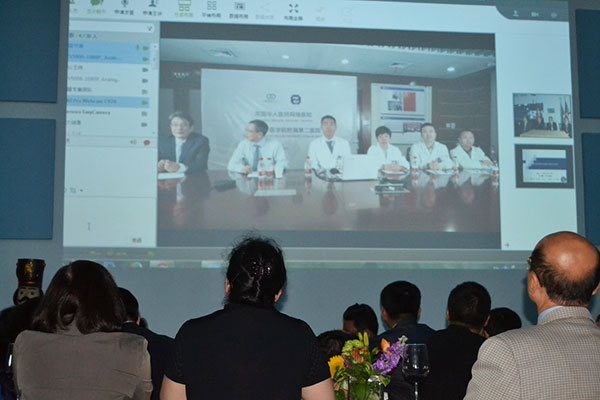
On the 7th, jointly conducted by China-Japan Friendship Hospital and the American Chinese Physicians Network HospitalChina-US Chinese Physicians Telemedicine Collaboration ProjectLaunched in Beijing. As the world's firstWen International TelemedicineMedical Project: This initiative will provide international telemedicine services to patients in China and the United States. Chinese patients can schedule appointments with Chinese-American physicians in the U.S. simply by calling a toll-free hotline.
As planned, the Chinese American Physicians Network Hospital and China-Japan Friendship Hospital will each establish teleconsultation rooms to create a reciprocal telemedicine platform. In China, patients can schedule remote consultations with Chinese American physicians by simply calling a toll-free number. Similarly, Chinese patients in the United States and Canada can contact the call center of the Chinese American Physicians Network Hospital by phone to book appointments with licensed physicians in China for remote medical consultations. When Chinese patients are confirmed to require medical care through these consultations, they can be referred to any of the more than 1,000 partner hospitals within China-Japan Friendship Hospital’s existing telemedicine network for remote consultations, with remote guidance provided by Chinese American physicians. For complex cases requiring multidisciplinary consultation, the platform will invite additional renowned physicians worldwide to provide diagnostic and treatment recommendations.
5. Google and the American Heart Association Jointly Fund $50 Million for Heart Disease Research
Google Life Sciences and the United StatesHeart AssociationRecently announced a deep collaboration to jointly combatCardiac Diseases. Google and the American Heart Association will each contribute $25 million over the next five years to help research cures for heart disease.
6. Genvoya, an HIV Drug, Approved in the United States
According to U.S. media outlet 6abc, the U.S. Food and Drug Administration has recently approved an anti-HIV drug manufactured by Gilead Sciences. Genvoya. It is reported that Genvoya is a fixed-dose combination of elvitegravir, cobicistat, emtricitabine, and tenofovir alafenamide. The FDA requires that the drug be limited to patients aged 12 years and older who weigh at least 35 kilograms. Four clinical trials approved by the FDA included a total of 3,171 participants. The results indicated that, in comparison, Genvoya significantly reduces viral load in patients.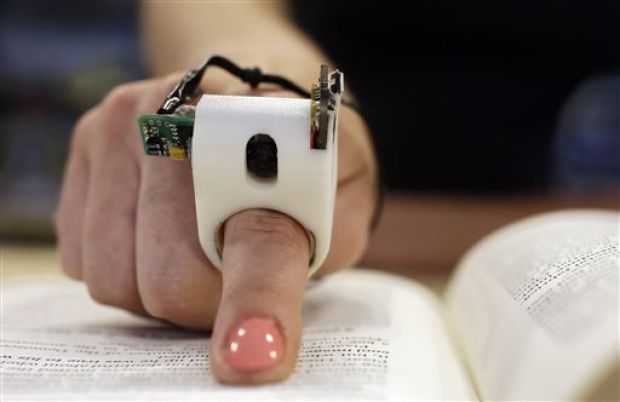
7. 3D Finger Scanner Enables Early Diagnosis of Arthritis
ArthritisIt is difficult to cure, but earlier diagnosis facilitates pharmacological treatment. Led by the Fraunhofer Institute for Biomedical Engineering in Germany,EU Project IACOBUSA finger scanner has been developed to address the challenge of early diagnosis of arthritis.
This newly invented3D Finger Scanner, can replace magnetic resonance imaging for the early diagnosis of arthritis. The finger scanner employs photoacoustic imaging technology; patients simply place their fingers in the device, where they are briefly exposed to laser pulses. This causes slight heating and expansion of the finger tissues, allowing the scanner to visualize joint inflammation through images, similar to Doppler ultrasound examination.
To enable more precise examinations, researchers have also developed a hyperspectral imaging system that illuminates the finger with intense white light. As inflamed tissues absorb specific wavelengths, analysis of the backscattered wavelengths can confirm the progression of arthritis. Experts believe that combining ultrasound imaging with hyperspectral imaging systems will fully enable the early diagnosis of arthritis.
8. World’s First Case of Leukemia Cured Using Gene Therapy
According to foreign media reports, a young girl named Layla Richards received a brand-new treatment at Great Ormond Street Hospital (GOSH) in central London.Leukemia Treatment. Scientists, with the aid of a brand-newGene Editing Technologyto manipulate immune cells to combat diseases.
This therapy had previously been tested only on laboratory mice. Doctors described the treatment’s efficacy as nothing short of miraculous and highly surprising. Experts stated that this could represent a major breakthrough in the field of leukemia treatment.
Richards stated, “Even though I have fully recovered at this point, we still do not know what the future holds. I still need to undergo a bone marrow examination once a month, and I may need to take medication indefinitely.” His father remarked, “I believe we are extremely fortunate to have obtained a small vial of these cells in the right place at the right time. Fortunately, Layla is going to recover, and more children may benefit from this truly novel therapy.”