

Johnson & Johnson Bolsters Hepatology Portfolio with Novira Acquisition; 'Healthy China' Strategy Gains Momentum
Today's Highlights:
Acquiring Novira: Johnson & Johnson Makes a Strong Entry into Liver Disease Treatment
Proton Holdings Raises RMB 950 Million to Bolster Medical Devices and Other Businesses
Mobile Health Company Yitikang Completes RMB 30 Million Series A Investment
Lumo Bodytech Raises $10 Million, Launches Health Tracking Platform
2015 Global mHealth Conference Held, Wearables Steal the Spotlight
Adhesive Bandage-Style Thermometer: Measure Temperature with a Single Patch
Full Implementation of Intelligent Monitoring for Medical Service Practices
China's Online Healthcare Market Size Expected to Exceed RMB 17 Billion This Year
Goldman Sachs: “China Investment Framework” Under the “New Normal,” with Healthcare and Technology as the Core
Foreign Pharmaceutical Companies Target the "Healthy China" Strategy
Ping An Securities: Bullish on Healthcare in the Long Term, Focus on Fosun Pharma
Mergers and Acquisitions

Acquisition of Novira: Johnson & Johnson Makes a Strong Entry into Liver Disease Treatment
Johnson & Johnson recently announced that it has reached an acquisition agreement with Novira Therapeutics. Through this transaction, Johnson & Johnson will acquire NVR3-778, a hepatitis B drug developed by Novira, along with a portfolio of other antiviral drug candidates.
Johnson & Johnson did not disclose the specific financial terms of the agreement, stating only that the acquisition is expected to close in the fourth quarter of this year. NVR3-778 will also become part of Johnson & Johnson’s extensive product portfolio. The drug has completed Phase I clinical trials and works by targeting the viral capsid protein to disrupt the virus’s replication process.
This also marks another major move by Johnson & Johnson in the field of antiviral drug development since its $1.75 billion acquisition of Alios BioPharma last year.
With the addition of Novira, Johnson & Johnson’s R&D capabilities in this field will be further strengthened.
Investment and Financing
Pulutong Raises 950 Million Yuan to Bolster Medical Devices and Other Businesses
Proton (002769) announced today that the company plans to issue no more than 19.38 million shares through a private placement, at an issue price of no less than RMB 49.01 per share, raising no more than RMB 950 million. After deducting issuance expenses, RMB 700 million will be used to increase capital in Qianhai Ruitai to carry out financial leasing business, further providing financial support for the medical device financial leasing business planned by Qianhai Ruitai, while the remaining RMB 250 million will be used to supplement liquidity. The company's stock will resume trading from the market opening on November 11, 2015.
In addition, the Company announced an incentive plan, granting 2.4826 million restricted shares at a grant price of RMB 24.655 per share. Furthermore, 176,300 restricted shares were reserved for two additional incentive recipients at a grant price of RMB 27.23 per share. The incentive recipients under this plan comprise a total of 38 individuals, including senior management and core technical (business) personnel.
Public information indicates that the company has successfully expanded into supply chain management services in the medical device sector in recent years, achieving rapid growth. In 2014, the value of goods handled by the company’s medical device supply chain management business reached USD 61.08 million, a year-on-year increase of 73.89%. From January to September 2015, the value of goods handled by its medical device supply chain management projects had already reached USD 85.56 million, with the full-year figure projected to exceed USD 110 million, representing a year-on-year growth of over 80%. The company has currently established cooperative relationships with internationally renowned medical device manufacturers, including GE, Philips, Siemens, and Varian, providing a significant business and customer foundation for the implementation of its medical device financial leasing projects.
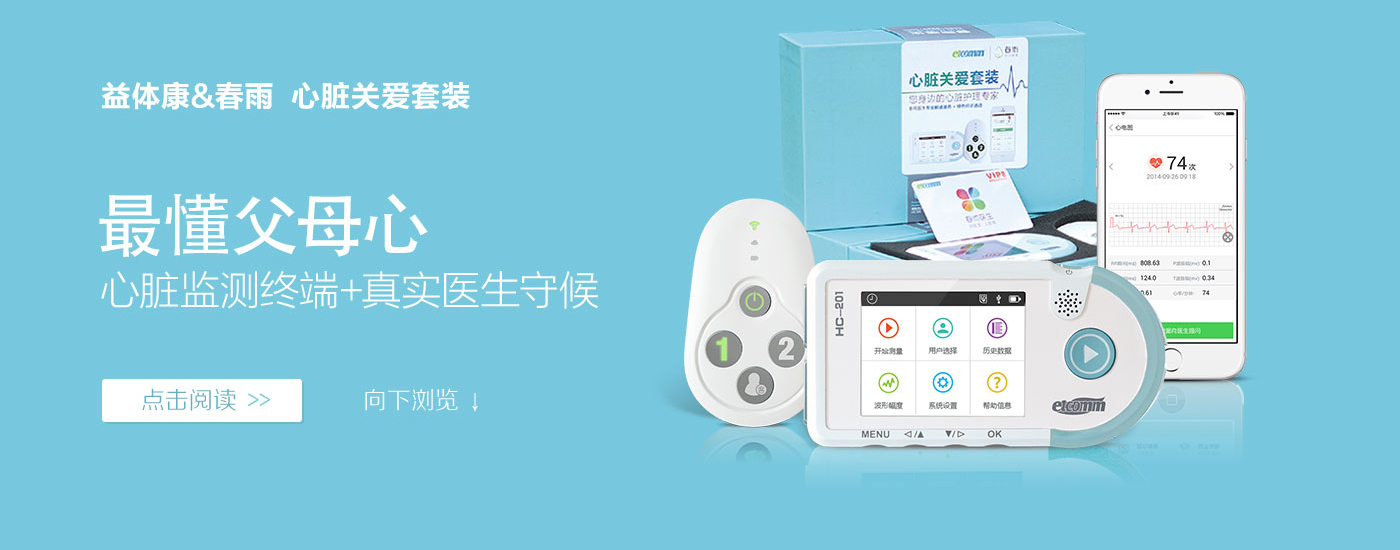
Mobile Health Company Yitijiankang Completes RMB 30 Million Series A Financing
The investor is Matrix Partners China, with Zero2IPO serving as the financial advisor. Founded in 2007, Yitikang has been dedicated to providing a diverse range of medical and health terminal products and data transmission solutions. To date, the company has launched 13 smart health terminals into the market. In the past two years, Yitikang has begun its transformation by integrating its product and technology offerings, leveraging its hardware platform to expand into software and services, and focusing on corporate health management services, community healthcare, and rural healthcare.
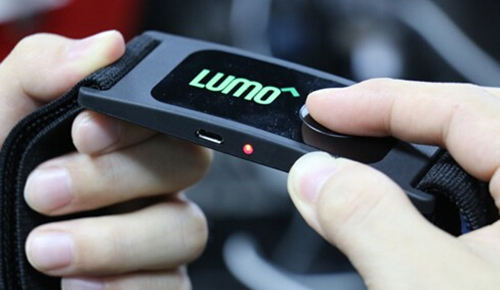
Lumo Bodytech Raises $10 Million, Launches Health Tracking Platform
Lumo Bodytech, a Palo Alto, California-based company specializing in activity-tracking devices, recently announced a new round of financing totaling $10 million. The round was led by WuXi Healthcare Ventures, with participation from Madrona Venture Group, Innovation Endeavors, AME Cloud Ventures, and Innovalue Capital.
This has enabled the company to raise a cumulative total of over $16 million in financing. Lumo had previously raised approximately $2 million through crowdfunding.
It is understood that Lumo will use this funding to establish its new B2B service—the Lumo Platform. Lumo will offer a white-label version for the health, fitness, and workplace safety industries. Other companies can leverage a variety of services on the Lumo Platform, including storage and predictive analytics; the Lumo Toolkit API, which connects data from hardware to the cloud; Lumo algorithms for measuring biological activity; and Lumo hardware.
Of course, Lumo has not strayed from the consumer market. A few weeks ago, Lumo launched a new wearable device, Lumo Run, which consists of athletic shorts or leggings with sensors embedded in the waistband. It tracks running-specific health metrics such as cadence, vertical oscillation, ground contact time, braking, stride length, and pelvic rotation. Lumo also monitors distance, time, speed, and running routes, providing post-run summaries and recommendations via the user’s smartphone. Additionally, the app delivers real-time voice coaching through the user’s headphones.
Lumo was founded in 2011 and completed its most recent round of financing in December 2012. In its early years, the company launched a crowdfunding campaign on Kickstarter to introduce its first device—a posture-sensing garment worn on the back. Subsequently, in early 2014, Lumo released its second product, a smaller posture sensor named “Lumo Lift.” The Lumo Lift is designed as a wearable device for the upper body, secured via magnetic clasps.
Industry Trends

2015 Global mHealth Conference Held, Wearables Steal the Spotlight
The annual mHealth Summit was held in the United States on the 10th. A preview session focused on wearable devices was held on the 9th. This year’s summit continues to center on innovation and delivering superior mobile health solutions.
According to reports, only 16% of the U.S. population currently owns wearable devices for monitoring health and fitness data. This figure is projected to double by 2018, rising from fewer than 40 million this year to 87 million, indicating that the market is still in its nascent stage. This year, U.S.-based wearable device company Fitbit successfully went public. To date, a total of six mobile health companies have completed their initial public offerings (IPOs), making it the sub-sector most favored by capital markets.
According to market estimates by a Qualcomm executive, the global remote medical monitoring market is valued at $36 billion. Home-based care will serve as the ultimate solution for chronic disease management, addressing a $3.9 trillion market, while the wearable devices market holds significant promise.
Furthermore, an analysis of premium expenditures by U.S. health insurance companies reveals a significant shift in recent years: while pharmaceutical costs previously accounted for the majority of spending, there is now a growing trend toward mobile health expenditures. Against the backdrop of broader efforts to control healthcare costs, mobile health is poised to play an increasingly important role.
New Technologies

Band-Aid-Style Thermometer: Measure Body Temperature with a Single Patch
According to Japanese media reports, a Japan-U.S. research team recently announced the successful development of a film-like thermometer. The report stated that researchers from the University of Tokyo in Japan and the University of Texas in the United States published this finding on the online edition of the Proceedings of the National Academy of Sciences (PNAS) on the 10th of this month. The announcement indicated that they have successfully developed a thin, lightweight, soft, and flexible film-like thermometer. It is reported that individuals can obtain an accurate body temperature reading immediately by simply applying this thermometer to the skin.
Takao Someya, a professor of electronic engineering at the University of Tokyo, stated, “By adhering to the skin like a bandage, it enables continuous, gentle monitoring of infants and wounds.”
The research team fabricated a circuit that functions as a temperature sensor using a special resin on a 0.015-mm-thick plastic sheet. Upon contact with the skin, the resin undergoes slight thermal expansion in response to body temperature, and the resulting change in electrical resistance of the sensing circuit is converted into a temperature reading.
Healthcare Reform

Intelligent Monitoring Will Be Fully Implemented for Medical Service Practices
Recently, Jiangsu Province launched intelligent monitoring of medical insurance services. By the end of this year, 80% of the pooling areas across the province are required to implement such monitoring, and by the first half of 2016, all pooling areas in the province will have rolled it out, gradually achieving comprehensive oversight of both monitored entities and medical service behaviors.
“Intelligent monitoring provides comprehensive oversight of healthcare service delivery, aiming to safeguard the interests of insured individuals and ensure the security of healthcare funds,” said relevant experts. Key focus will be placed on major processes, including data collection and transmission, data reconciliation, violation screening, detailed claim review, investigation and verification, handling of violations, and evaluation and analysis, thereby further standardizing evidence collection and the management of various documents. Efforts will be strengthened to integrate intelligent monitoring with contractual management, tiered management, the administration of designated medical practitioners under medical insurance, and global budget payment systems. Monitoring outcomes will be linked to medical expense settlements, annual performance assessments of designated healthcare institutions, and global budget indicators. A standardized, efficient, orderly, and practical operational workflow for intelligent monitoring will be established to fully leverage its regulatory role.
It is reported that the implementation of intelligent monitoring will effectively curb non-compliant medical service practices, such as the unreasonable growth of medical expenses.
Trends

China's online healthcare market size is expected to exceed RMB 17 billion this year
iResearch released the “2015 China Online Healthcare Industry Research Report.” Statistical data show that the market size of online healthcare in 2014 reached RMB 10.88 billion, demonstrating rapid development and a sustained high-growth trend. The market size is projected to exceed RMB 17 billion in 2015.
According to data from the national health authorities, 80% of China’s medical resources are concentrated in major cities, with 30% allocated to large hospitals, resulting in severe regional disparities in the distribution of healthcare resources. Zhou Shenglai, Director of the Tsinghua University Center for Healthy China Leadership Research, stated that the traditional healthcare system urgently requires reform and adjustment. Regulatory authorities, hospitals, and physicians must shift away from conventional mindsets and leverage new tools—such as the internet, big data, artificial intelligence, and cloud platforms—to establish a novel healthcare ecosystem, thereby achieving a truly patient-centered approach.

Goldman Sachs: “China Investment Framework” Under the “New Normal,” with Healthcare and Technology as the Core
In its latest report, “Investing in China’s Economy Under the ‘New Normal,’” Goldman Sachs stated that as China’s economic growth slows and the drivers of growth shift toward consumption and the services sector, traditional investment frameworks for China are no longer effective in tracking the country’s “new normal.” Instead, the new economy, dominated by healthcare and technology sectors, represents the “pulse” that investors need to closely follow.
Goldman Sachs pointed out that the "new normal" means China's economic growth rate will drop from 10% to 5%-6%.
Over the past 30 years, China’s average economic growth rate has been 10%, primarily driven by its cost competitiveness (in labor, land, environmental compliance, and exchange rates), dividends from reforms (including the 1979 rural reforms, Deng Xiaoping’s 1992 Southern Tour reforms, the 1998 state-owned enterprise reforms, and the 2001 accession to the WTO), and strong government leadership.
This growth model has now reached its limits: cost competitiveness has vanished, the efficiency of state-owned enterprises has declined, leverage ratios have soared, and recent turbulence in asset markets has exposed the inadequacy of government policy interventions.
We anticipate that China’s economic growth rate will undergo a volatile downward trend over the medium to long term. Over the next five years, China’s potential GDP growth rate is projected to decline to 5.8%, and further drop to 5.1% in the following six to ten years.
However, from a historical cross-sectional perspective, even with slowing growth rates, China's economic growth rate remains at a very high level.
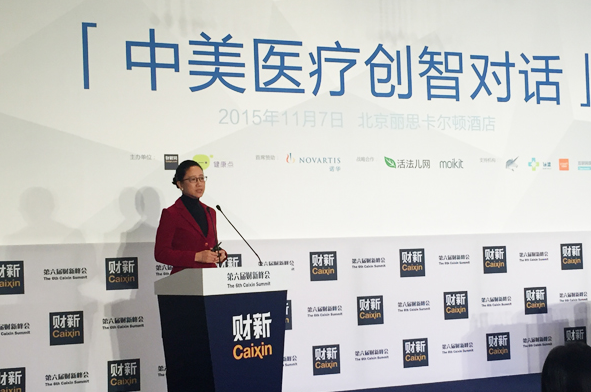
Foreign Pharmaceutical Companies Target the “Healthy China” Strategy
The proposals of the 13th Five-Year Plan elevated “Healthy China” to a national strategy, making the healthcare and medical sector an immediate focal point of public attention.
“China’s healthcare industry is undergoing significant transformations, and all stakeholders need to adjust their development directions and strategies to meet the evolving healthcare demands,” said Xu Haiying, President of Novartis China, in an exclusive interview at the Health Point sub-forum of the 6th Caixin Summit held recently. She stated that, in response to the changing healthcare landscape and policies in China, Novartis is adapting to industry shifts through strategies that include a continued focus on innovation and supporting primary care.
Foreign-Funded Enterprises Focus on Pharmaceuticals and Medical Insurance
Key initiatives highlighted in the Recommendations for the 13th Five-Year Plan, such as advancing healthcare reform and refining population strategies, are all aimed at aligning medical resources with the current healthcare environment and enhancing the level of medical services across society. The development of the healthcare industry has always been closely tied to national policies. As a foreign pharmaceutical company operating in China, Novartis pays close attention to China’s healthcare policies.
“In the pharmaceutical sector, Xu Haiying expressed hope for shortening the approval timeline for innovative drugs. ‘The same drug typically reaches the Chinese market five to six years later than it does in the United States. Furthermore, updates to the National Reimbursement Drug List are relatively sluggish, preventing many new drugs from being included in the reimbursement system. Limited reimbursement opportunities reduce drug accessibility, thereby compromising the quality of diagnosis and treatment. Although the government is advancing relevant reforms with clear strategies and frameworks, full implementation is expected to take time,’ said Xu Haiying.”
Healthcare Investment Analysis
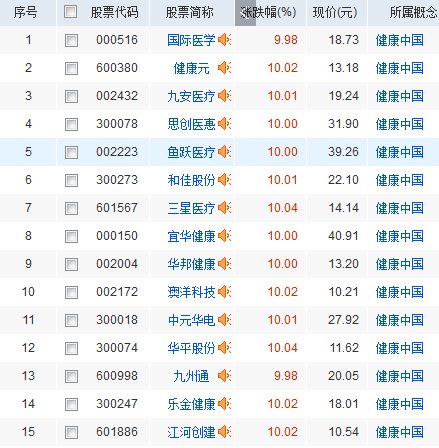
Ping An Securities: Bullish on Healthcare in the Long Term, Keep an Eye on Fosun Pharma
With the completion of third-quarter report disclosures, listed pharmaceutical companies reported a year-on-year revenue growth of 14.01% and a 17.73% increase in net profit after deducting non-recurring items. While growth rates continued to slow, they showed signs of stabilization. Meanwhile, divergence intensified across subsectors and among individual companies: medical services stood out, chemical preparations and pharmaceutical commerce remained stable, traditional Chinese medicine was impacted by policy changes, and active pharmaceutical ingredients (APIs) and medical devices were constrained by industry cycles.
From January to September this year, the revenue of the pharmaceutical industry increased by 9.03%, and profits rose by 13.64%. Amidst the trends of bidding price reductions and medical insurance cost containment, the growth rate of revenue in the pharmaceutical manufacturing sector will continue to face pressure and decline further. In this macro environment, Ping An Securities believes that investment opportunities will primarily lie in non-pharmaceutical sectors, while the pharmaceutical sector will focus on innovation, internationalization, and transformation.
From a medium- to long-term perspective, Ping An Securities believes that against the backdrop of an aging population structure, elevating "Healthy China" to a national strategy is an inevitable necessity driven by current circumstances. The firm maintains a bullish long-term outlook on the healthcare sector and recommends actively investing in four key themes within the healthcare sector after each market correction: beneficiaries of reforms (benefits from healthcare reforms for medical services and retail pharmacy industries, as well as benefits from state-owned enterprise reforms for related companies), cloud-based internet healthcare, innovation, and M&A.
In November, given that the broader market has already rebounded significantly from its lows, investment recommendations should prioritize safety. We recommend focusing on two portfolios:
1) High-quality blue-chip stocks with ample margin of safety and positive fundamental changes. Yunnan Baiyao (state-owned enterprise reform, Shenzhen-Hong Kong Stock Connect); Hengrui Medicine (fourth blockbuster innovative drug, overseas market expansion).
2) Leaders in niche segments representing new industrial directions and models. Anke Biotechnology (a new leader in precision medicine, with a favorable competitive landscape in its core business and growth outpacing the industry), Dongcheng Pharmaceutical (a leader in nuclear medicine, with significant room for future consolidation in the nuclear medicine industry), Yuwell Medical (to engage in deep cooperation with Alibaba, focusing on chronic disease management), Lepu Medical (chronic disease management, active M&A), Furuipharm (chronic liver disease management), as well as Kunming Pharmaceutical and Qianhong Bio-pharma.
Regarding Hong Kong stocks, the "13th Five-Year Plan" announced recently serves as a key investment theme, with "Healthy China" emerging as a new focal point. Analysts suggest that the healthcare industry is expected to surpass RMB 10 trillion during the 13th Five-Year Plan period. Integrated pharmaceutical companies with strong management backgrounds, such as Fosun Pharma (02196-HK), as well as certain branded drug manufacturers, are worth watching.