

Medical and Elderly Care Sector Gains Momentum as Industry 'Sweet Spot'
Today's Overview:
France Launches “White Plan”: 23 Hospitals in Paris Participate in Treatment
Jiangsu to Cancel Outpatient Infusions at Large Hospitals Next Year
Medtronic Partners with Sequoia to Launch First Overseas Early-Stage Innovation Fund, Primarily Investing in Chinese Healthcare Startups
Da Te Bao Crosses Over into Internet Healthcare: China’s First Fully Online Diabetes Insurance Launched
Following Novo Nordisk, Roche Announces 1,200 Job Cuts
“Jinge,” the First Generic of Viagra, Marks One Year Since Launch with Sales Surpassing 700 Million Yuan
The Dawn of Cancer Cure: CAR-T Therapy
U.S. Wearable “Artificial Kidney” Poised for Market Launch in Two Years
Pillow Talk Bracelet: A Wristband That Lets You Listen to the Heartbeat of Your Loved One
Accenture Releases 2015 Internet Healthcare Trends Report
Industrial Securities: Increased Support for Elderly Care Policies During the 13th Five-Year Plan Period Brings Development Opportunities to Medical and Elderly Care Services
The world is currently in a state of high uncertainty, just likeParis Terrorist AttacksJust as it is profoundly affecting the people there, everything is quietly changing, but please believe that,“Evil cannot triumph over good”!
Current Affairs

France Launches "White Plan": 23 Hospitals in Paris Participate in Patient Care
According to French media reports, multiple shootings and explosions occurred in central Paris on the evening of November 13. The Bataclan theatre in Paris, which was attacked, became the site with the highest number of casualties, with more than 100 people confirmed dead.
French President Hollande stated that the series of shootings and explosions that occurred in Paris on the 13th were France’s “Unprecedented Terrorist Attack", and declared a state of emergency throughout France.
It is reported that Paris, France, activated the “White Plan” at 10:30 p.m. local time on Friday. Twenty-three hospitals, all affiliated with the Assistance Publique–Hôpitaux de Paris (AP-HP), have joined the emergency response efforts. Meanwhile, the chairman of the French Doctors’ Union announced the suspension of all strikes, mobilizing all physicians and medical resources to support rescue operations.
Management of Mass Casualty Incidents isSAMU(Emergency Medical Services in France, Emergency Medical Assistance Services) One of the tasks beyond daily operations. The "White Plan" was also specifically established by the French government to respond to disaster preparedness plans.
The core component of the “White Plan” is the physician-led on-site rescue team. This initiative is activated following initial reconnaissance by the SAMU rapid response unit. Within this team, patients and casualties are triaged and provided with Advanced Life Support (ALS), while their transport and hospital admission are closely coordinated with the dispatch center. Hospitals notified by SAMU stand by to receive patients; those requiring the highest priority are transported directly to the surgical ICU, while others are admitted to the emergency department.
Paris is taking action, and China will not remain on the sidelines.
In the next 10 months, some unexpected events may also occur in China. Of course, I do not wish for bad things to happen, but rather for unexpectedly good ones.
As aMedical Information Service Provider, in the current context of a turbulent world and China’s rising prominence,VCBeatWhat we can do is strive to deliver the most cutting-edge and in-depth information and analysis on healthcare entrepreneurship, contributing our share to the growth of China’s healthcare industry.
Healthcare Reform
Jiangsu to Cancel Outpatient IV Infusions at Large Hospitals Next Year
Headaches and Colds? IV Drips in Outpatient Clinics Will Become a Thing of the PastThe common practice of receiving intravenous (IV) drips for minor ailments such as headaches and colds at hospital outpatient clinics is coming to an end. Yesterday, the Health and Family Planning Commission of Jiangsu Province issued a notice outlining new regulations on outpatient IV therapy. Starting July 1 next year, all hospitals at the secondary level or above across the province, with the exception of children’s hospitals, will completely cease administering intravenous antibiotics to outpatients. By the end of next year, these same hospitals will halt all intravenous infusions for outpatients. This means that IV medications and infusions will no longer be prescribed in outpatient settings; patients will need to seek treatment through emergency departments or hospitalization instead.
Jiangsu's New Regulations: By the End of Next Year,Major Hospitals Eliminate Outpatient Intravenous Infusions.
The Jiangsu Provincial Health and Family Planning Commission stated that, in accordance with national requirements, Jiangsu has strengthened the management of intravenous administration of antimicrobial drugs in outpatient and emergency departments. In addition to continuing routine monitoring and implementing effective measures to reduce both the proportion and volume of use, the province will gradually and comprehensively cease intravenous infusion of antimicrobial drugs for outpatients. Effective July 1, 2016, all hospitals at or above the secondary level across the province, excluding children’s hospitals, will completely stop intravenous infusion of antimicrobial drugs for outpatients; by the end of 2016, these same institutions, again excluding children’s hospitals, will fully discontinue all intravenous infusions for outpatients.
Investment and Financing

Medtronic Partners with Sequoia to Launch First Overseas Early-Stage Innovation Fund, Primarily Investing in Chinese Healthcare Startups
Recently, Medtronic announced a partnership withSequoia Capitalcollaborate to jointly establish the Medtronic-Sequoia China Healthcare Technology Early-Stage Innovation Investment Fund (the “Fund”), seeking promising opportunities in global markets with a focus on the Chinese marketMedical Technology Sectorstart-ups, providing them with strategic resources such as equity investment and a bundle of value-added services. In addition, Suzhou BioBAY will join this fund as a limited partner and strategic partner.
According to the introduction, the Medtronic-SeqChina Healthcare Technology Early Innovation Fund has raised a total of $60 million in its first closing. The fund is primarily dedicated to investing in startups rooted in local Chinese innovation whose products and business models possess global potential. It also focuses on introducing medical technologies and products developed by overseas innovators that meet the unique needs of the Chinese market, while assisting them with localization and commercialization in China.
Industry Trends

Datbao Crosses into Internet Healthcare, Launching China’s First Fully Online Diabetes Insurance
Datexbao, an Internet Insurance Service Platform, Launched China’s First Fully Online Diabetes Insurance Product in Shanghai “Tui Tang Gu”, designed to provide health coverage for diabetic patients who have already developed the disease, with coverage encompassing four high-incidence complications: sequelae of stroke, end-stage renal disease, amputation, and blindness.
According to 2013 health sector statistics, China had 114 million people with diabetes, accounting for one-third of the global diabetic population. This vast patient pool, coupled with a high incidence of complications, translates into an equally high probability of insurance claims, resulting in a market gap for diabetes-specific insurance and leaving these 114 million individuals without adequate coverage for an extended period. For people with diabetes, the greatest challenge lies in health management and preventing complications, creating an urgent need for targeted medical protection. This was the original intent behind Da Te Bao’s launch of “Tui Tang Gu.”
As a representative chronic disease, diabetes is particularly challenging to manage due to its prolonged course, the need for patients’ daily self-management, and the requirement for frequent doctor-patient communication. Traditional hospital-centric treatment models are clearly inadequate to meet these needs, creating opportunities for mobile health solutions. By providing services such as risk screening, data recording, physician consultations, and follow-up assessments, mobile health helps patients manage their own health, integrating prevention with treatment to slow disease progression. However, if complications still arise despite health management efforts, patients face substantial medical costs. The introduction of insurance can enable diabetes management platforms to form a comprehensive system fromFrom Prevention to Treatment to Healthcare Coveragea closed-loop service system to help alleviate patients' financial burden. Meanwhile, patients can utilize the platform's diverse service resources toSelf-Health Management, will also significantly reduce the incidence of complications, helping to lower insurers' expenditures.
It is reported that Da Te Bao will collaborate with a domestic diabetes health management platformLow SugarEngage in deep collaboration and launch a “Comprehensive Service Package” for users, signifying that commercial insurance is no longer limited to providing single-coverage protection but has begun to participate in patients’ daily health management.
Following Novo Nordisk, Roche Announces Layoffs of 1,200 Employees

On November 13, Roche announced the closure of four small-molecule drug production facilities in the United States, Ireland, Italy, and Spain, resulting in 1,200 job cuts. The employee severance packages are estimated to cost approximately $600 million, with total expenditures for Roche amounting to $1.6 billion.
Roche is a long-established pharmaceutical giant, initially known for the benzodiazepines invented by Leo Sternbach.Small-Molecule CNS DrugsRenowned, it later began to increasingly rely on Genentech’s antibody drugs. This move today reflects the survival pressures currently facing traditional small-molecule drugs.
Traditional small-molecule drugs refer to oral medications targeting common diseases in the general population, which once served as the flagship products supporting the pharmaceutical industry. However, the emergence of antibody-based therapeutics over the past two decades has begun to challenge the market share of small-molecule drugs.
What is more likely to disrupt the traditional pharmaceutical business model is the currently emergingCell and Gene TherapyCompared with these post-2010s drugs, not only do the post-1980s small-molecule drugs appear like unearthed artifacts, but even antibody drugs seem out of step.
Of course, new opportunities continue to emerge for small-molecule drugs. Recent medical discoveries, such as the new blood pressure control targets identified in the SPRINT trial, may create a new niche for small-molecule antihypertensive agents. However, it is undeniable that future therapeutics will become increasingly diverse. To survive and thrive, small-molecule drugs must make greater efforts; those offering merely marginal benefits, such as slightly reducing urinary frequency, no longer have a place in the market.
"Jinge," the First Generic of Viagra, Marks One Year on Market with Sales Exceeding 700 Million Yuan

On November 15, Guangzhou Baiyunshan held a celebration marking the first anniversary of the launch of “Jinge,” the first domestically produced sildenafil citrate (commonly known as Viagra) in China. Wang Wenchu, Chairman of the Pharmaceutical Sales Co., Ltd. and Executive Deputy Director of Baiyunshan Pharmaceutical General Factory, announced that Jinge’s sales revenue had exceeded RMB 700 million at market retail price and surpassed RMB 300 million at ex-factory price (including tax) during its first year on the market.
Public data indicates that in 2014, the market size of anti-erectile dysfunction (ED) drugs in China (based on retail sales) was approximately RMB 1.88 billion. It is projected to exceed RMB 2.57 billion this year, representing a growth rate of over 36.7%. This growth stands out prominently in the pharmaceutical industry, which has currently entered a phase of slow growth. Meanwhile, approximately 40% of adult males in China have suffered from ED, either chronically or temporarily. Furthermore, the prevalence increases with age: the ED prevalence rate among men aged 40–49 is approximately 32.8%, whereas it rises significantly to 74.2% among those aged 60–69.
Currently, Jinge is available in the market in five pack sizes: 1-tablet, 2-tablet, 5-tablet, 10-tablet, and 20-tablet packs. Although its price is lower than that of Viagra, it remains relatively expensive. Furthermore, according to Guangzhou Pharmaceutical Holdings’ Baiyunshan branch, Jinge has initiated drug registration processes in multiple countries, and its annual sales are projected to exceed RMB 1 billion by 2017.
New Technologies

Founder Securities: The Dawn of a Cancer Cure—CAR-T Therapy
Based on the breakthrough progress already achieved in clinical trials for hematologic malignancies, we believe that CAR-T therapy has become a cancer treatmentThe Fifth Major Treatment ModalityThis is a high-probability event. The potential annual market size for hematologic malignancies in the United States is projected to reach $48 billion (calculated at $300,000 per patient), while the potential market size for hematologic malignancies in China is estimated at RMB 25 billion (calculated at RMB 100,000 per patient).
CAR-T is a highly personalized therapy, and its product supply model differs fundamentally from that of traditional pharmaceuticals. Therefore, achieving standardization of CAR-T products is a top priority; such standardization ensures controllable efficacy and manageable risks. The future market will undoubtedly belong to enterprises capable of specializing CAR-T cells and refining and standardizing treatment processes. Hospitals or companies currently engaged in extensive, non-refined development will inevitably be eliminated in the future.
CAR-T therapy is highly technical and easily replicable, differing significantly from traditional new drug development. For China, where new drug research and development is still in its early stages, this presents an opportunity to achieve leapfrog advancement. Currently, there are 19 CAR-T clinical trials underway in China, second only to the United States, marking the first time that China has reached the forefront of the international arena in new drug R&D.
Currently used in cancer treatmentOrdinary Immune Cells(NK cells, DCs, CIK cells, etc.) will gradually phase out of clinical treatment in the future. However, as these immune cells can objectively enhance human immunity and are all expanded from autologous cells with low risk upon reinfusion, they are expected to capture a significant market share in the fields of health wellness and adjunctive therapy.
Risk Warning: For CAR-T therapy developers, risks stem from unfavorable clinical progress; for general immune cell therapy companies, risks arise from stricter regulatory oversight and healthcare cost containment measures.
U.S. Wearable “Artificial Kidney” Expected to Hit the Market in Two Years
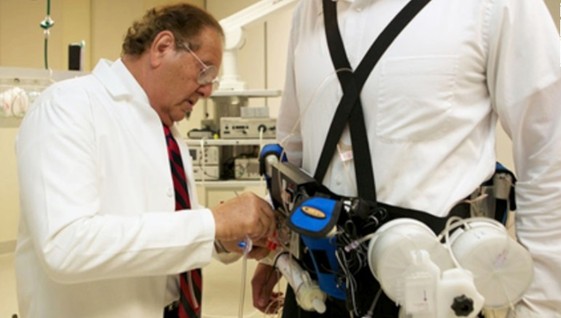
Researcher Victor Gura Fits Patients with Artificial Kidneys
According to a recent report by CNN, the U.S. Food and Drug Administration (FDA) has announced that it will accelerate the approval process for small wearable “artificial kidneys.” Research institutions have stated that, with sustained and stable research funding, patients with kidney failure could be using this artificial kidney within two years.
The WAK operates on principles similar to those of conventional dialysis machines, removing metabolic waste and impurities from the patient’s blood and then returning the purified blood to the body to compensate for impaired renal function, thereby completing the dialysis process. However, while traditional dialysis machines are comparable in size to a cabinet, and even the most advanced models are as large as a printer, the current WAK device weighs only about 4.5 kg (9 jin), with researchers striving to further reduce its weight to approximately 2.25 kg (4.5 jin).
Patients wearing the WAK need to replace the filter once a week and add chemicals daily to purify the filtered water. In addition, the battery-powered WAK, which runs on a 9-volt battery, operates automatically. According to Associate Clinical Professor Victor Gura from the University of California research team, patients participating in the clinical trials were able to sleep while wearing the WAK, and there should be no issues with showering and other normal activities.
However, this device has a significant drawback: due to operational malfunctions, two of the seven patients had their WAK removed within 24 hours. After the research team resolved this issue, they will proceed with a clinical trial involving one week of WAK wear.
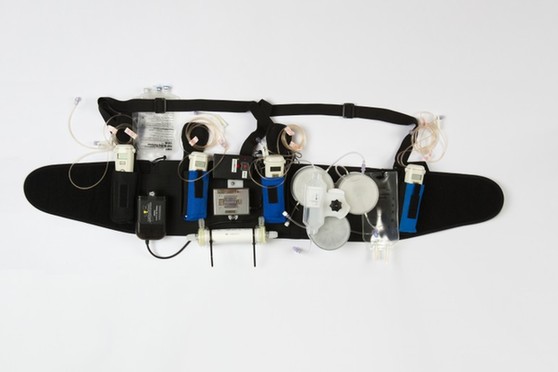
WAK Artificial Kidney
The Distress of Patients with Kidney Failure:
If renal function fails and the kidneys can no longer operate normally, they cannot effectively filter waste products from the blood, ultimately leading to systemic toxicity; therefore, patients must undergo blood purification therapy.
One widely adopted blood purification technique is renal dialysis, also known as the artificial kidney, hemodialysis (abbreviated as HD), or simply “kidney washing.” It can alleviate patients’ symptoms and prolong survival. However, even the best renal dialysis treatments remain less than ideal. Patients must undergo treatment via a dialysis machine at home or in a hospital, sometimes requiring sessions every four hours. Conventional dialysis machine therapy is not only costly but also imposes significant constraints on patients, depriving them of the freedom to lead normal lives and engage in work.
Pillow Talk Bracelet: A Bracelet That Lets You Listen to the Heartbeat of Your Loved Ones

If your partner is thousands of miles away, you can stay in touch by calling, texting, or emailing them, but these methods do little to convey a sense of “intimacy.” This is precisely the problem Pillow Talk aims to solve. Leveraging Apple Watch functionality, it allows you to share your heartbeat, designed to help you maintain a connection with your loved one through this shared physiological signal.
You and your partner wear the Pillow Talk wristbands, then place the speaker under your pillow, allowing you both to hear each other’s real-time heartbeats through the pillow. The company behind the wristband states, “By sharing something so intimate with each other, you will feel connected to your partner in a unique way.”
The companion smartphone app handles all technical issues; simply activate the wristband and place the speaker under your pillow, and you’ll be connected to your loved one—that’s what truly matters.

Pillow Talk is currently crowdfunding on Kickstarter, with a goal of £75,000 and 28 days remaining until the campaign ends. You can currently secure one wristband and one speaker for £52 (approximately RMB 503). Admittedly, you will need two sets. However, the combined cost of two sets is still lower than that of an Apple Watch, although it should be noted that the Apple Watch offers many other features beyond heart rate sharing. The Pillow Talk development team is based in London, UK.
Trend
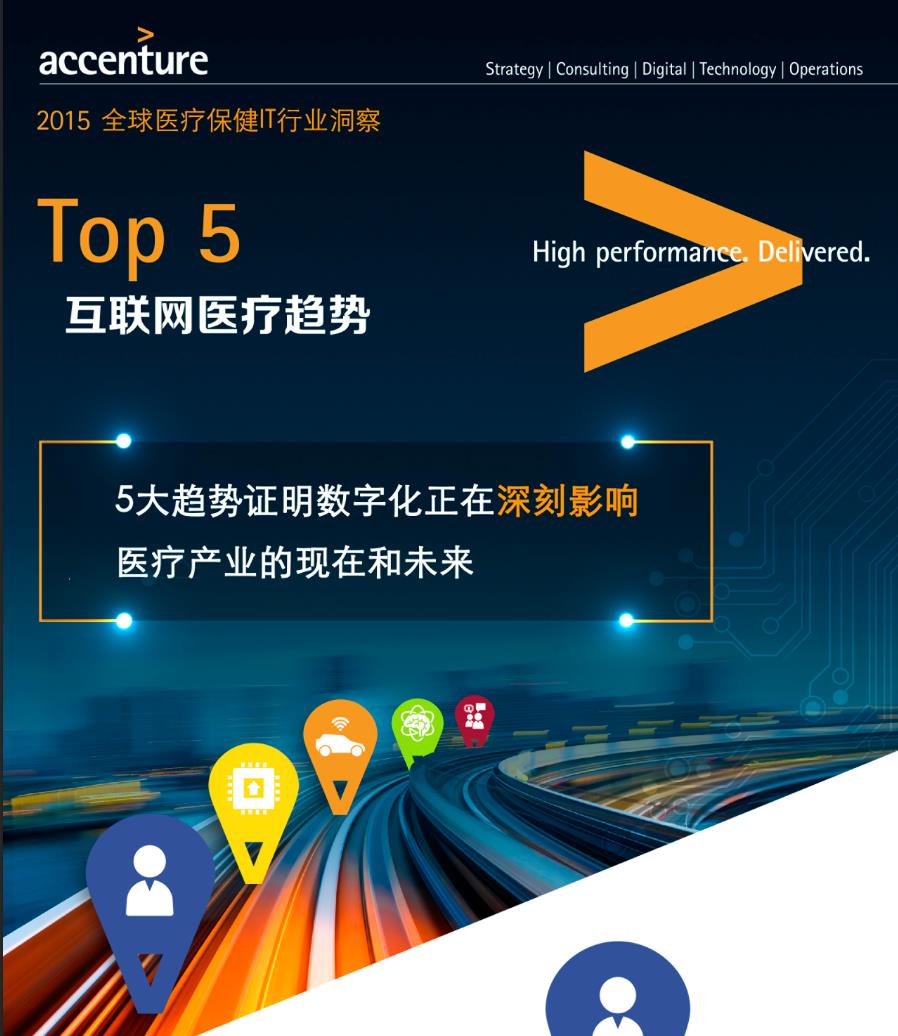
AccentureReleased in 2015Internet Healthcare TrendsChart, which elucidates the five major trends profoundly impacting the present and future of the healthcare industry:
Achieving Personalized Medicine Through the Internet
Reducing Healthcare Costs Through Hardware Devices
Optimizing Healthcare System Processes, Reimagining the Patient Experience
Medical Big Data and Information Systems Make Healthcare Smarter
Digital Technology Empowers Healthcare Professionals by Reducing Burdensome Workloads.
For the detailed report, please refer to:"Infographic: Five Major Trends Profoundly Impacting the Healthcare Industry's Present and Future"
Healthcare Investment Analysis

Industrial Securities: Intensified Elderly Care Policies During the 13th Five-Year Plan Period Create Development Opportunities for Medical and Elderly Care Services
Recently, the State Council executive meeting decided to promote the integration of medical and health services with elderly care. Specific measures include facilitating the coordination of medical and elderly care services, encouraging social forces to establish institutions that combine medical care with elderly care or rehabilitation nursing, strengthening support for investment, financing, and land use, expanding government procurement of elderly care services, broadening pilot programs for integrated medical and elderly care, and innovating long-term care insurance.
Elderly care, as part of the "Healthy China" initiative, has been elevated toNational Strategic Level。
Some institutions estimate that the current size of China’s elderly consumer market is approximately RMB 2.7 trillion, and that by 2020, the total consumption potential of the elderly population in China will reach RMB 11.5 trillion.
Healthcare consumption among the elderly is inelastic. Gradually promoting long-term care insurance and integrating medical and elderly care institutions into the basic medical insurance system are expected to enhance seniors’ payment capacity, drive the expansion of the medical and elderly care market, and spur rapid growth in the elderly care industry. In the future, as aging accelerates, leading to higher incidence rates of chronic diseases and shifts in disease patterns, the expansion of the chronic disease medication market is a definitive trend, while internet-enabled chronic disease management will also seize development opportunities. Compared with purely daily caregiving services, medical-integrated elderly care offers higher profit margins, making it a viable profitability model to enter the elderly care sector through healthcare services.Tiered Diagnosis and Treatmentin the broader context of,Rehabilitation Nursing FacilityIt is also expected to enter a period of rapid development.
From an investment perspective, the elderly care services sector holds immense growth potential, necessitating careful selection of A-share companies undergoing transformation whose market expectations remain underappreciated. Across the entire elderly care industry chain, driven by sustained demand growth and continuous policy support, the primary blue-ocean opportunities for future development lie inElderly Care ServicesThis niche subsector.
Investment Recommendation: First, given the current development stage of the healthcare and elderly care industry, there are few listed companies involved, and most are in the early stages of transformation. At this point, financial performance is not the primary focus for investors; rather, the scarcity of these targets and the “hazy allure” of their niche sectors stand out. Second, although the industry still faces certain challenges, it boasts immense growth potential, continuous emergence of new business models, and frequent favorable policy supports. It is possible that the thematic investment trajectory seen in sectors such as new energy vehicles and sports industries could be replicated here. Furthermore, so far, related stocks have performed well after entering the elderly care sector. Acquiring and building nursing homes and rehabilitation hospitals is significantly less difficult than establishing general hospitals, making it likely that more enterprises will pivot toward elderly care, thereby creating a sector-wide effect in the secondary market.