

Spotlight on Surgical Robotics: Key Players and Recent IPO Filings

In recent years, robots have not only been used in the industrial sector but have also been widely adopted in healthcare systems. For instance, although the renowned Surgical Robot has been on the market for merely a decade, it has already achieved significant progress. Currently, research on the application of robots in the medical field mainly focuses onSurgical Robots, Rehabilitation Robots, Nursing RobotsandService Robotsaspect. Among them, surgical robots are currently the most widely used and hold the greatest promise, as their powerful capabilities overcome issues inherent in traditional surgery, such as poor precision, prolonged operative times, surgeon fatigue, and the lack of a three-dimensional visual field.
In fact, a surgical robot is a combined device consisting of a set of instruments. It typically comprises aEndoscope(Probe),Surgical Scissorssurgical instruments,Micro CameraandJoystickassembled from such components. According to foreign manufacturers, the currently deployed surgical robots operate on the principle of wireless teleoperation: the surgeon sits before a computer monitor, carefully observes the patient’s internal lesions via the display and an endoscope, and then precisely excises (or repairs) the lesions using a scalpel held by the robotic arms.
This type, named by foreign scientists asMISThe system serves as the foundation for designing all surgical robots. Taking the da Vinci Surgical System, currently used in hospitals worldwide, as an example, a tiny incision is made on the patient’s skin to insert a probe into the body, allowing visualization of the lesion’s location; the robotic arms then precisely excise the affected tissue using surgical instruments.
Furthermore, surgical robots can also perform highly delicate procedures such as organ repair, vascular anastomosis, and bone grinding. In recent years, surgical robots have been utilized forGene Transplantation, NeurosurgeryandRemote Surgery...and other critical surgical procedures, thereby significantly improving the survival rate of critically ill patients.
So, how is the development of these highly advanced surgical robots progressing? Which companies are involved in their R&D? What are the key subsectors? What is the current landscape in China? And what does the future hold? Stay tuned as I walk you through it.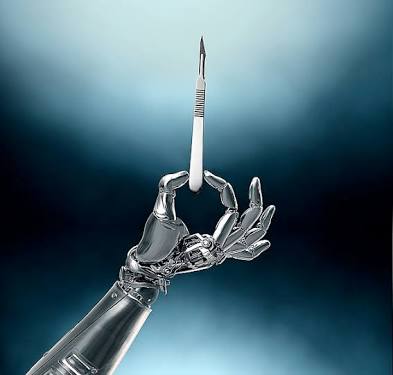
Emerging Forces
This YearEarly March, a recent announcement by Google reveals that the company has entered into a collaboration agreement with medical device manufacturer Johnson & Johnson to jointly develop a robotic platform designed to assist physicians in performing surgical procedures.
It is reported that this robotic surgical platform will help advance minimally invasive surgical techniques, addressing patient concerns such as scarring, pain, and prolonged recovery periods. Google will integrate visual systems and image analysis software into the robotic platform, providing surgeons with enhanced visual-spatial awareness and facilitating access to other relevant information.
ArrivedMid-MayAt that time, Boshi Shares announced that the company plans to invest RMB 100 million to establish a wholly-owned subsidiary, Boshi High-End Medical Equipment Co., Ltd., and also intends to make investments through Boshi Shares or its subsidiaries.Minimally Invasive Surgical Robotand intelligent device projects.
2015July 31At that time, RIVERFIELD Inc., established by the Tokyo Institute of Technology and Tokyo Medical and Dental University, announced that its endoscopic surgery-assist robot, “EMARO: EndoscopeMAnipulatorRObot,” would be launched in August 2015.
EMAROThis is a system that allows the lead surgeon to operate the endoscope independently through head movements, eliminating the need for an assistant (the physician holding the endoscope). It took approximately 10 years from the initiation of research to the market launch of EMARO by Professor Kenji Kawashima of the Institute of Biomaterials and Bioengineering at Tokyo Medical and Dental University, Associate Professor Kotaro Tadano of the Precision and Intelligence Laboratory at Tokyo Institute of Technology, and their colleagues.
As a surgical assistance robot, it adopts pneumatic drive for the first time. By utilizing proprietary pneumatic control technology, it achieves flexible movements and ensures high safety, such that it can “avoid exerting force even upon contact with humans” (Tadano). Compared with existing motor-driven endoscope holding robots, another major feature is that the entire system is lighter and more compact. Under normal circumstances, the system is operated by the lead surgeon using a gyroscope sensor mounted on the head; in emergencies, it can also be operated manually via buttons on the control panel attached to the unit.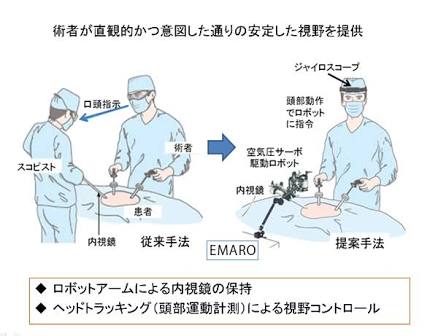
This technology emerged against the backdrop of the growing prevalence of minimally invasive endoscopic surgeries in recent years, which aim to replace open surgeries that impose a significant burden on patients. The goal is to enable “completion of the entire procedure through an incision no larger than a 1-yen coin” (as stated by Ikuo Morita, Director and Vice President of Tokyo Medical and Dental University). A typical example is laparoscopic surgery, in which forceps and an endoscope are inserted through small incisions in the patient’s abdomen to resect cancers and other lesions. The da Vinci Surgical System, developed by the U.S.-based Intuitive Surgical and widely regarded as synonymous with surgical assistance robots, is also a system designed to assist endoscopic procedures.
Although endoscopic surgery is becoming increasingly prevalent, securing the necessary “assistants” remains a challenge. In particular, assistant shortages are reported to be a serious issue in small and medium-sized hospitals. The introduction of EMARO aims to address this problem.
Reportedly, RIVERFIELD’s robotic forceps system has been undergoing experiments on animals and simulated internal organs, with its seventh-generation product currently in development. It was scheduled for market launch in 2019. Initially intended for the same diseases and surgical procedures as the da Vinci system, Mr. Haraguchi confidently stated, “We also aim to expand into areas where the da Vinci system falls short.” A Japanese-made robotic system surpassing the da Vinci has emerged. EMARO will serve as the first litmus test.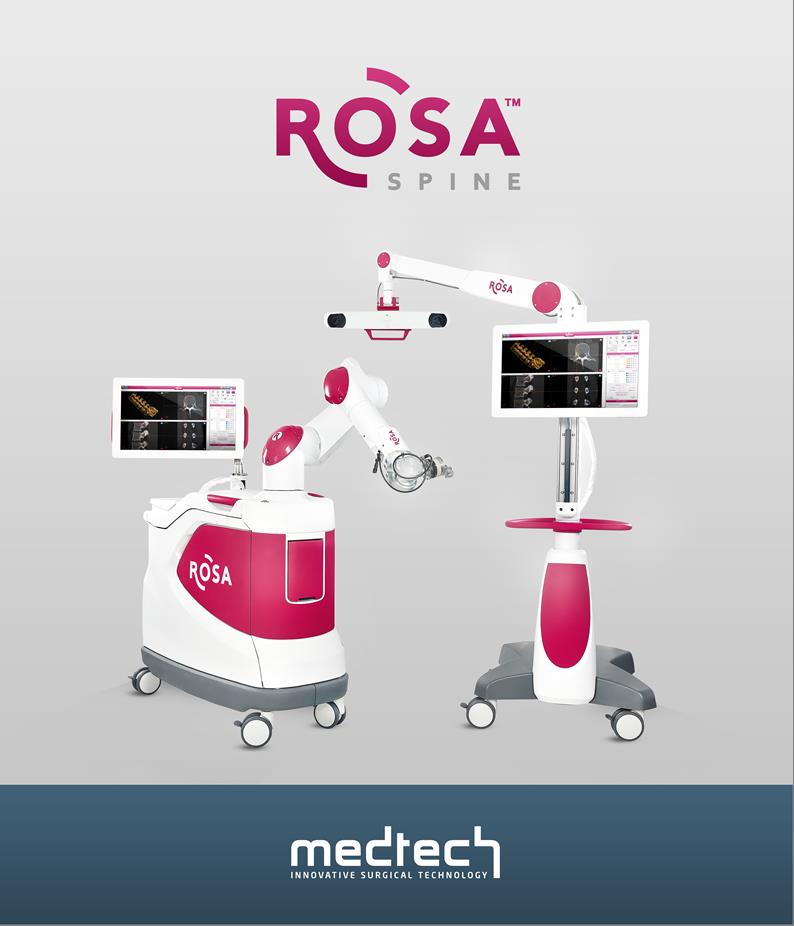
November, Ally Bridge Group, a fund focused on cross-border healthcare investments, announced that it would invest in the French company through convertible bonds and warrantsMedtech SA$15 million investment. Medtech is an innovative developer of surgical robotic systems, currently listed on Euronext (ticker: ROSA).
Medtech SA, founded in 2002 and headquartered in Montpellier, southern France, is a global leader in the research and development of surgical assistance robotic systems. The company’s flagship product, the ROSA Brain robot, has received regulatory approval in Europe, the United States, China, Canada, and Australia. In July 2014, the ROSA Spine robot also obtained CE Mark certification, with U.S. FDA approval expected shortly.
To date, the company has installed 51 surgical systems worldwide, deployed in leading neurosurgical centers across the globe, including the Cleveland Clinic and Massachusetts General Hospital. Currently, four top-tier neurosurgical hospitals in China have also installed the ROSA robotic surgical system.
In 2013, the company was recognized by the global growth consulting firmFrost & SullivanNamed “European Company of the Year” in the Neurosurgical Robotics Category
With the rapid development of the robotics industry, the advancement of medical robots has garnered significant global attention, and the United States has alreadySurgical robots, prosthetic robots, rehabilitation robots, psychological rehabilitation assistive robots, personal care robots, and intelligent health monitoring systemsIdentified as the six major research directions for future development. The European plan aims to establish a “Robotics for Health-care” network to promote the development and application of medical robots in Europe.
Every development has its origins. Before delving further into surgical robots, let us first review their evolutionary journey from the AESOP system to the da Vinci Surgical System.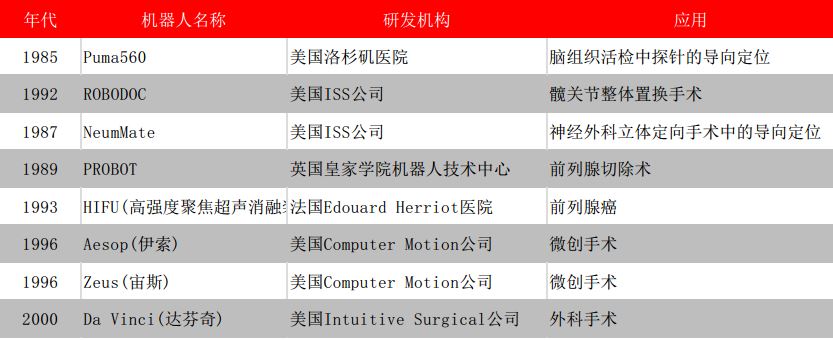
From Aesop to Da Vinci
Introduced in 1994, AESOP was designed to receive instructions from surgeons and control laparoscopic cameras. Its three product iterations—AESOP 1000, AESOP 2000, and AESOP 3000—fully embody the characteristics of interventional surgery. The system mimics the function of a human arm, features voice-activated controls, eliminates the need for an assistant to manually manipulate the endoscope, provides more precise and consistent camera movements than manual control, and offers surgeons a direct, stable field of view. By 2014, surgeons using AESOP had performed over 75,000 minimally invasive procedures worldwide.
In early 1996, building upon the AESOP robot, a powerful vision system was developed, and the Zeus robot for master-slave teleoperation was introduced. The Zeus robot is divided intoSurgeon-side SystemandPatient-Side SystemThe surgeon-side system consists of a pair of master manipulators and a monitor, allowing the surgeon to sit while operating the master controls and view the patient’s internal anatomy via an endoscopic feed displayed on the console monitor. The patient-side system comprises two robotic arms for positioning and one robotic arm for controlling the endoscope’s position.
The da Vinci Surgical System is currently the most successful and widely used surgical robot worldwide. It also represents the highest level of contemporary surgical robotics. The system primarily consists of three components: 1. the surgeon console; 2. the 3D high-definition vision system; and 3. the patient-side cart, which comprises robotic arms, a camera arm, and surgical instruments. During surgery, the operating surgeon does not have direct physical contact with the patient. Instead, the surgeon controls the procedure through a 3D visual system and motion-scaling technology, with the robotic arms and surgical instruments mimicking the surgeon’s technical movements and operative maneuvers.
Investment Outlook
Building on previous-generation models such as the AESOP and ZEUS robots, the da Vinci Surgical System, developed by Intuitive Surgical, is currently the most widely used and technologically advanced surgical robot worldwide. As of the end of 2014, a total of 3,266 da Vinci Surgical Systems had been installed globally, with approximately 570,000 procedures performed.
Globally, the industrialization and technological breakthroughs of surgical robots are in a sweet spot, with outstanding tech companies like Da Vinci and ReWalk emerging. Meanwhile, some domestic automation enterprises, leveraging resources such as collaborations with research institutes and the introduction of foreign technologies, are actively developing medical robot products and remain in the early stages of industrialization. Industry insiders believe that although the absolute market potential for surgical robots is greater, the excessively high share of foreign companies and their absolute monopoly position create a competitive landscape that is unfavorable for domestic enterprises in the short term.
However, given the vast market prospects and high technological barriers, it is advisable to view domestic surgical robot manufacturers through the lens of technology stocks, with a particular focus on companies that are actively engaged in R&D and investment in this field and are building medical robotics platforms.
In fact, compared with surgical robots, other categories of medical robots that are permeating all aspects of healthcare delivery are more worthy of investment. These include orthopedic robots, gastroscopic robots, diagnostic robots, dental assistance robots, and nursing care robots. Such product categories are replacing physicians’ experience-based decision-making and manual caregiving across various domains, thereby improving medical efficiency and precision, and giving rise to a cohort of startups specialized in specific niche segments.
Sub-sectors
Orthopedic surgical robots represent a specialized segment within the broader field of surgical robotics. Notable examples include those from 1992,ROBODOCSurgical system, released by Integrated Surgical Systems, a company now part of CUREXO Technology Corporation.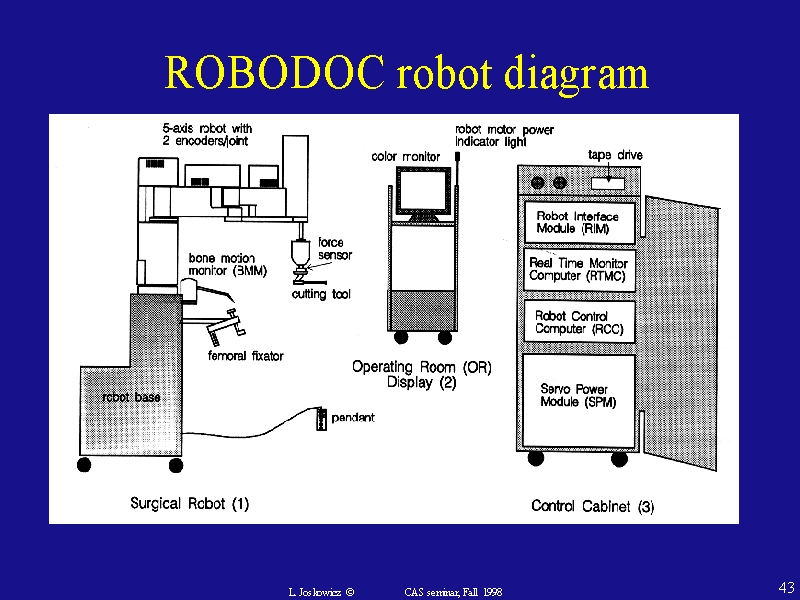
The system is capable of performing a range of orthopedic procedures, such as total hip arthroplasty and total knee arthroplasty (THA & TKA), and has also been utilized for revision total knee arthroplasty (RTKA). It comprises two components: an ORTHODOC® computer workstation equipped with proprietary 3D preoperative surgical planning software, and the ROBODOC® Surgical Assistant, a computer-controlled surgical robot designed for precise cavity preparation and surface processing in hip and knee arthroplasty.
This device has been widely used in over 20,000 surgical procedures worldwide. In 1997, Orto Maquet of Germany launched the CASPAR surgical system, which is utilized for bone milling in total hip arthroplasty (THA) and total knee arthroplasty (TKA), as well as for locating tunnel entry points in anterior cruciate ligament reconstruction. The system achieves a milling precision of 0.1 mm and has been adopted by some hospitals in Europe.
Dental assistance robots represent another niche segment of the surgical robotics market. Currently, there areCosmetic Dentistry RobotandDenture Robot。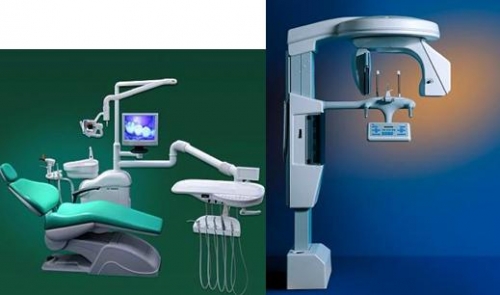
The denture robot utilizes image and graphics technologies to generate computer models of the oral soft and hard tissues of edentulous patients, employs a self-developed non-contact 3D laser scanning measurement system to acquire geometric parameters of the edentulous jaw morphology, and uses expert system software to perform computer-aided statistical analysis for the artificial dentition of complete dentures.
The Sinora Dental Carving Robot is a representative dental aesthetic robot that breaks through traditional tooth restoration methods. By leveraging a digital dental restoration network platform and direct design via a 3D intelligent digital technology system, it eliminates errors caused by materials or manual operations, preventing issues such as improper mixing of materials, inaccuracies in impressions, or discrepancies in setting times. The entire process—from diagnosis, imaging, and design to fabrication and trial fitting—is completed seamlessly within a single area. For instance, all-ceramic crowns that previously required one week to fabricate can now be completed in approximately one hour, with "pure" milling time taking only 8–10 minutes. It is currently the most effective and safest dental aesthetic technology available.
Gastroscopy robots and surgical robots both belong to the category of medical robots; they simply perform “surgical” procedures in different ways. Currently, gastroscopy robots are primarily represented by capsule endoscopy robots. Patients need only swallow a capsule endoscopy robot comparable in size to a standard oral medication capsule, enabling physicians to examine the stomach and small intestine. This remotely controlled capsule endoscopy robot integrates a variety of sensors and employs proprietary magnetic field control technology, transforming the capsule endoscope into a robot with “vision and mobility.” Due to its compact size, it causes no sensation of foreign body presence or discomfort upon entering the body, thereby alleviating patients’ tension and anxiety and significantly improving their tolerance for the examination.
Global R&D Landscape
According to a report by WinterGreen Research, the surgical robot market size was $3.2 billion in 2014, and the report stated that currentlyNorth American MarketCurrently the largest market, with increased government healthcare spending, healthcare system restructuring, and growing public awareness of minimally invasive surgery, the future market focus will gradually shift towardAsian MarketMetastasis. Furthermore, with the release of next-generation devices, systems, and instruments, surgical robots will expand from their current role in major open surgeries to encompass minute areas within the body. The market is projected to reach $20 billion in 2021.
Over the past two decades, accompanied by technological breakthroughs and advances in medical care, surgical robots have undergone three major upgrades, fromAESOP Single-Arm RobottoThree-Arm Robot Zeus, up to the most advancedFour-Arm Da Vinci Robot. The da Vinci system was developed and manufactured by Intuitive Surgical (ISRG) in the United States. It received European CE market certification in 1999 and was formally approved by the FDA for clinical use the following year. Initially, this surgical system was primarily used for minimally invasive urological procedures, such as prostatectomy. It is now increasingly being applied to minimally invasive surgeries in cardiac surgery, gynecology, and pediatric surgery.
According to statistical data released by the International Federation of Robotics (IFR), global sales of surgical assistance robots totaled $1.495 billion in 2013, with the da Vinci Surgical System accounting for $633 million, or 42.43% of the market. By the end of 2014, a total of 3,266 da Vinci systems had been installed worldwide, including 2,223 in the United States, 549 in Europe, and 350 in Asia. Mainland China had a total of 29 units, nine of which were located in Beijing.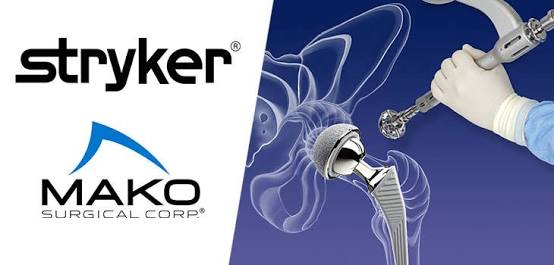
Surgical Robot System Developers, Besides the United StatesIntuitive SurgicalBeyond the company, there are also established medical companies that have just entered the surgical robotics field.Stryker. Stryker Corporation is one of the largest companies in the global $35.6 billion orthopedic market, ever sinceHomer StrykerSince the physician developed and manufactured the first product in 1941, the company has grown to operate 30 modern manufacturing facilities. The company’s product portfolio spans joint replacement, trauma, craniomaxillofacial, spine, surgical equipment, neurosurgery, ear, nose and throat (ENT), interventional pain management, minimally invasive surgery, navigated surgery, smart operating rooms and network communications, biotechnology, medical beds, and emergency stretchers. Due to its strong performance, Stryker Corporation has been recognized by the renowned U.S. magazines Fortune and BusinessWeek as a Fortune 500 company and one of the Top 50 Healthcare Companies in the United States. In 2014, the company reported revenue of $9.675 billion, a year-over-year increase of 7.25%, and operating profit of $2.226 billion, a year-over-year increase of 5.50%. Furthermore, the company’s R&D investment has steadily increased, accounting for 5%–6% of its total revenue.
In 2013, Stryker acquired Mako Surgical Corp. and its core technologies for $1.65 billion. Headquartered in Florida, Mako’s flagship products include the MAKOplasty Total Hip Replacement System. The MAKOplasty system comprises the highly precise RIO Robotic Arm Interactive Orthopedic System and an innovative hip and knee implant system. These components overcome the limitations of traditional instruments, enabling minimally invasive surgery with precise implant placement to restore natural hip and knee function. The MAKOplasty Knee System is designed for patients with early-to-mid-stage osteoarthritis of the knee, allowing for unicompartmental or multicompartmental knee resurfacing. It enables surgeons to adjust knee alignment and soft-tissue balance in real time during the procedure. Through its minimally invasive approach, the system preserves more bone and tissue, facilitating faster patient recovery. In MAKOplasty total hip replacement surgery, the robotic arm precisely controls the depth, direction, and angle of the acetabular reamer, thereby enhancing surgical precision and safety.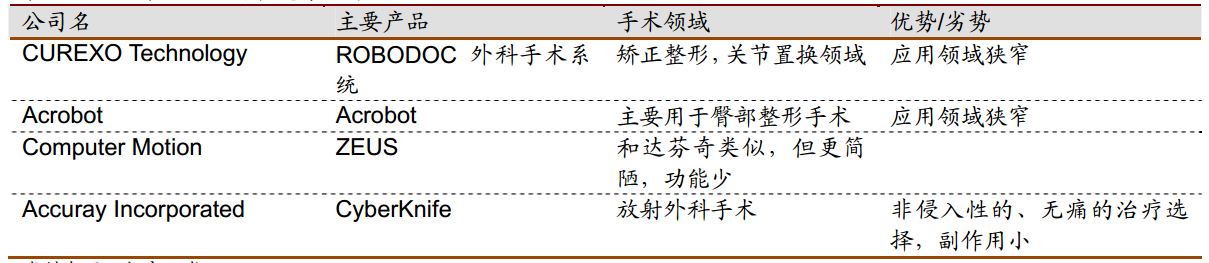
In addition, some international companies have begun to focus on fields not yet dominated by the da Vinci Surgical System, such as ophthalmology, neurosurgery, and orthopedics. Examples include CUREXO Technology’s ROBODOC surgical system and the surgical medical system developed by the UK-based company Acrobot. Due to limitations such as niche market specialization and high equipment costs, the aforementioned surgical robots have not attracted significant market attention; nevertheless, they represent successful cases of commercialization in the field of surgical robotics.
Domestic R&D Status
Due to the technological and market monopolies held by current surgical robot manufacturers, the acquisition, procedural, and maintenance costs of surgical robots remain high. This has directly resulted in a significantly lower penetration rate of surgical robots in Chinese hospitals compared to those in Europe and the United States, as well as neighboring Asian countries such as Japan and South Korea.
Currently, researchers in China are accelerating the development of various surgical robots and their auxiliary equipment and consumables. In the long run, the current technological and market monopoly of surgical robots is likely to be broken, and a decline in the cost of using surgical robots is an inevitable trend. China’s independent research and development in the field of surgical robots started relatively late and remains in the experimental stage. The main research institutions include:
a. Robotic System Jointly Developed by the Navy General Hospital and Beihang UniversityCRAS(Computer and Robot Assisted Surgery, CRAS). As a pioneer in domestic surgical robot systems, CRAS has completed the development and clinical application of its fifth generation. The system employs PUMA 260 and 262 robots as the executive mechanisms for assisted operations. The first-generation robot was first applied clinically in May 1997. The second generation, successfully developed in 1999, achieved frameless stereotactic surgery. In addition to incorporating the features of the previous four generations, the fifth-generation robot features more advanced automatic positioning capabilities, including visual automatic positioning, which minimizes surgical errors and makes surgical procedures faster and safer. The system enables remote surgery via the Internet. On December 12, 2005, two stereotactic surgeries were successfully performed remotely between Beijing and Yan'an using the Internet. Nevertheless, there are still many issues to be resolved regarding the expansion of the scope of application and practicality of CRAS surgical robots.
b. In November 2013, the project funded by the National “863” Program—“Minimally Invasive Abdominal Surgical Robot System”, developed by the Robotics Institute of Harbin Institute of Technology, and passed the acceptance review by the expert group of the National “863” Program. According to researchers at the Robotics Institute of Harbin Institute of Technology, the domestically produced minimally invasive laparoscopic surgical robot system possesses independent intellectual property rights in China. Researchers have achieved significant breakthroughs in key technologies such as mechanical design, master-slave control algorithms, three-dimensional (3D) laparoscopy, and system integration, targeting various minimally invasive surgical procedures, and have applied for multiple national invention patents. This project’s breakthrough is regarded as breaking the technological monopoly held by the imported da Vinci Surgical System, accelerating the realization of domestically produced minimally invasive surgical robots for assisted surgeries.
c. April 2014,The Third Xiangya Hospital of Central South UniversityThree cases of surgery using a domestically produced robotic system were successfully completed, marking the first clinical application of China’s independently developed surgical robot system. This system is the “Miao Shou S,” a minimally invasive surgical robot with independent intellectual property rights, developed by Tianjin University. The “Miao Shou S” system boasts three technical advantages over similar foreign products. First, it employs a multi-degree-of-freedom wire-drive decoupling design for minimally invasive surgical instruments, resolving motion coupling issues and ensuring fixation, anti-slip, and anti-loosening properties, thereby better maintaining precision. Second, it implements reconfigurable layout principles and technologies for the operator console, making the robot’s “arms” lighter and more adaptable to surgical requirements. Third, it utilizes heterogeneous isomorphic control model construction technology to ensure consistency among hand, eye, and instrument movements in a stereoscopic visual environment. It is reported that the “Miao Shou S” surgical robot system is expected to enter production within three years.
According to the "Analysis Report on Market Demand Forecast and Investment Strategic Planning for China's Medical Device Industry (2015-2020)" released by Qianzhan Industry Research Institute, the total size of the domestic medical device market in 2014 was nearly RMB 255.6 billion. However, the import value of imported medical devices accounted for 40% of the overall market share, with foreign manufacturers dominating almost the entire mid-to-high-end segment, holding a share of over 70%. Currently,Domestic Surgical RobotsMost are still in the research and development or clinical trial stages, remaining some distance away from commercial rollout.
Viewing the Future Through History
Since the inception of the first surgical robot, automated surgery has progressed for nearly 30 years. When the first surgical robot in 1985Puma 560When first manufactured, the company that produced this robot had prohibited its use in surgeries due to safety concerns. However, today’s most advanced surgical robotic systems perform tens of thousands of various procedures annually. It is truly remarkable how rapidly medical technology has advanced.
Now, we remain curious: what will the future of robotic surgery look like?
Now, doctors around the world are eagerly anticipating advances in telemedicine and telesurgery, which would enable a surgeon to operate on patients located in another city, state, or continent. This means we could establish surgical centers in different parts of the world, where surgeons can sit at control consoles in one center while patients are situated in another; by simply operating robotic systems, surgeons could perform procedures on these remote patients.
In fact, in 2001, a remote surgery was performed via robotics between New York and Strasbourg, France. This pioneering procedure was known as “Lindberg Procedure”. Although the surgery was successfully completed, delays in image transmission and surgical manipulation occurred, making remote surgery difficult to perform. However, with increasing internet speeds and more affordable bandwidth, latency issues will undoubtedly improve.
I believe that in the future, we will have the infrastructure for telemedicine, enabling surgeons to operate on patients located elsewhere in the world. I do not consider this an unattainable scientific fantasy; rather, I am confident it will become a reality within my lifetime. Furthermore, the advancement of telemedicine will intensify competition among physicians at a higher level. This will raise the entry barriers for surgeons, compelling them to achieve unparalleled excellence in their respective specialties.
Another possibility is that in the future, we may be able to perform surgery on patients through a single incision, perhaps by inserting a snake-like robotic arm through the umbilicus. Currently, however, several small incisions are required on the patient’s body to facilitate the entry of the robotic arms.
The continued development of this technology means that doctors will only need to make a small incision in the patient’s body and insert a snake-like robotic arm. That would be a truly disruptive technology, potentially transforming the nature of surgery forever. These advancements are really cool, aren’t they?