

Forbes Unveils Top 10 Largest U.S. Biotech Companies by Market Cap
Today's Highlights:
Major Positive News: Traditional Chinese Medicine Formula Granules May Be Fully Deregulated!
LBX Pharmacy: Plans to Acquire 65% Equity Stake in Lanzhou Huiren for RMB 348 Million
Largest Chemical Acquisition in History: Merck Acquires Sigma for $17 Billion
UnitedHealth Group Plans to Exit Obamacare
Forbes: Top 10 Largest Biotech Companies in the U.S.
Foreign Investors Bullish on China’s Medical Tourism Prospects, Accelerating Integration with the Chinese Market
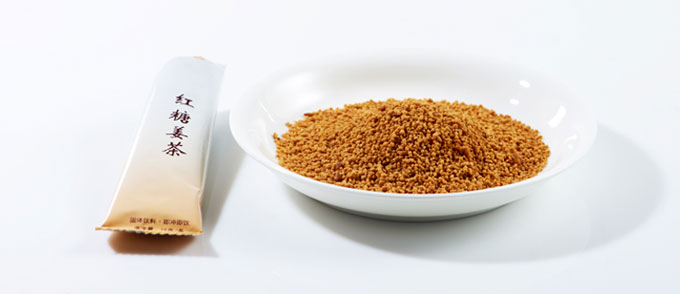
Major Positive News: TCM Formula Granules May Be Fully Deregulated!
Recently, Saimailan learned from informed sources that the “Administrative Measures for Traditional Chinese Medicine Formula Granules (Draft)” (hereinafter referred to as the Draft for Comment) is currently undergoing intensive consultation within the industry and may be released soon.
Filing-Based Management Significantly Lowers Entry Barriers
Chinese Herbal Formula Granules are a product of the reform of traditional Chinese medicine (TCM) decoction pieces in recent years. As an increasing number of people dislike the decoctions prepared by boiling raw TCM pieces, the national output of TCM decoction pieces has been decreasing at a rate of 14%–28%. Chinese Herbal Formula Granules are granular preparations made through extraction and concentration from single-ingredient TCM decoction pieces, intended for clinical TCM prescription compounding. They represent a new dosage form that involves special processing of crude Chinese medicinal materials and their decoction pieces, offering enhanced portability, ease of administration, and significantly improved therapeutic efficacy. Due to their convenience, which aligns with modern lifestyles, they have gained widespread popularity.
According to industry estimates, the market size in 2013 was approximately RMB 5 billion, with an annual growth rate of 40–50%. Based on this estimate,Traditional Chinese Medicine Formula GranulesAnnual sales are projected to reach RMB 10 billion. Although the market for traditional Chinese medicine (TCM) formula granules is substantial, only six companies currently hold the necessary qualifications, as the sector was previously limited to pilot programs.
The draft for public comments indicates that regulatory authorities will liberalize the market for traditional Chinese medicine (TCM) formula granules. TCM manufacturers may produce TCM formula granules after obtaining approval from the provincial-level food and drug administration in their locality and adding “TCM formula granules” to the scope of production specified in their Drug Manufacturing License. Subsequently, they may submit filing materials for TCM formula granules to the local provincial-level food and drug administration in accordance with the Detailed Rules for the Filing Management of TCM Formula Granules, upon which production may commence.
Filing requirements include having obtained the production scope for granules, possessing complete production capabilities for processing, extraction, concentration, drying, and granulation of traditional Chinese medicine decoction pieces, and complying with Good Manufacturing Practice (GMP) standards; additionally, there must be quality supervision personnel who conduct drug testing, along with a commitment to assume liability for risks.
LBX Pharmacy: Plans to Acquire 65% Equity Stake in Lanzhou Huiren for RMB 348 Million
Recently, Laobaixing Pharmacy announced that the company plans to use part of the funds raised from its 2015 non-public offering of A-shares to acquire a 65% equity stake in Lanzhou Hui Ren Tang Pharmaceutical Chain Co., Ltd. (hereinafter referred to as “Lanzhou Hui Ren”) for RMB 348.4 million.
According to the announcement, on November 18, Laobaixing Pharmacy signed a conditional Equity Transfer Agreement with Zhang Hu and Zhang Fenglan, the two shareholders of Lanzhou Huiren. Under the agreement, Laobaixing Pharmacy will acquire a total of 65% equity interest in Lanzhou Huiren from Zhang Hu (25%) and Zhang Fenglan (40%) for a consideration of RMB 348.4 million. Upon completion of the acquisition, the Company will hold a 65% equity interest in Lanzhou Huiren and thereby indirectly control Lanzhou Huiren Changqing Pharmaceutical Co., Ltd. (hereinafter referred to as “Lanzhou Huiren Changqing”).
According to the announcement, Lanzhou Huiren was established in November 2002 with a registered capital of RMB 30 million. The company is primarily engaged in the retail business of prescription drugs and over-the-counter (OTC) medications. As of the end of August, its net assets (after consolidating Huiren Changqing) amounted to RMB 31.7169 million. For the first eight months of the year, the company reported operating revenue of RMB 361 million and a net profit of RMB 16.9031 million.
The Largest Chemical Acquisition in History: Merck Acquires Sigma for $17 Billion
German pharmaceutical and chemical giant Merck KGaA recently announced the successful completion of its $17 billion cash acquisition of the world’s largest producer of chemical reagents—Sigma-Aldrich, USA(Sigma-Aldrich, hereinafter referred to as “Sigma”), marking the successful conclusion of this historically massive chemical industry acquisition, which finally closed after receiving final approval from the European Commission (EC) last week, with a total duration of one year and two months. This acquisition aims to strengthen the laboratory consumables business of Merck Millipore, a subsidiary of Merck, while expanding Merck Millipore’s global reach and enhancing its presence in North America and the rapidly growing Asian markets. With the completion of the acquisition, Merck will have nearly 50,000 employees across 72 production sites in 67 countries worldwide.
To ensure a smooth integration, Merck has made corresponding adjustments to its integration planning for the new businesses: globally, these new businesses will operate under the name Merck; while in the United States and Canada, they will operate under the name MilliporeSigma.
The acquisition of Sigma-Aldrich also marks a milestone in Merck’s “Transformation 2018” journey, transforming its three core businesses into platforms for sustainable growth: Healthcare, Life Science, and Performance Materials.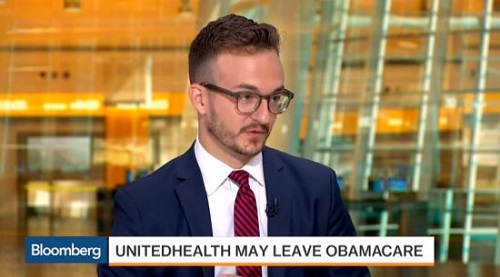
UnitedHealth Group Plans to Exit Obamacare
Recently, UnitedHealth Group, the largest healthcare company in the United States, is considering withdrawing in 2017.Obamacare(Obamacare), having incurred massive losses from participating in the program. Its withdrawal would deal a blow to the achievements of President Obama’s domestic policy.
UnitedHealth Group’s move to consider withdrawing from the Affordable Care Act (ACA) exchanges was highly unexpected. As recently as October, the company had announced plans to expand its ACA exchange participation to 34 states in 2016, adding 11 new states.
UnitedHealth Group has reduced its marketing spending on individual health insurance plans this year and plans to exit the Affordable Care Act, championed by President Obama, in 2017.
UnitedHealth Group also lowered its 2015 profit forecast. The group will hold an investor conference on December 1.
UnitedHealth Group stated that, given the millions of Americans enrolled in Obamacare plans, the company could not absorb the losses. “We truly cannot subsidize an unsustainable market.” The group projected that Obamacare plans would result in a $500 million loss in 2016.
Mizuho Securities analyst Sheryl Skolnick stated that, given UnitedHealth Group’s slower pace in marketing ObamaCare plans compared to its competitors, it is reasonable to infer that other insurers are also facing significant challenges.
Forbes: Top 10 Largest Biotech Companies in the U.S.
1. Gilead Sciences
Market Cap: $154.3 billion
Net sales for the past 12 months: $20.7 billion.
5-Year Average Sales Growth: 14.6%.
2. Amgen
Market Cap: $119.9 billion.
Net Sales for the Past 12 Months: $19.7 Billion.
5-Year Average Sales Growth: 4.7%
3. Celgene Corporation
Market Capitalization: $91.9 billion.
Net sales over the past 12 months: $7.3 billion.
5-Year Average Sales Growth: 24.4%.
4. Biogen Idec
Market Cap: $82.7 billion.
Net Sales for the Past 12 Months: $9 billion.
5-Year Average Sales Growth: 10.1%
5. Regeneron Pharmaceuticals
Market Cap: $40.2 billion.
Net sales over the past 12 months: $2.6 billion.
5-Year Average Sales Growth: 52.3%
6. Alexion Pharmaceuticals
Market Cap: $36.4 billion.
Net sales over the past 12 months: $2.1 billion.
5-Year Average Sales Growth: 43%.
7. Vertex Pharmaceuticals
Market Capitalization: $29.8 billion.
Net sales over the past 12 months: $787 million.
5-Year Average Sales Growth: 77.4%
8. Illumina
Market Capitalization: $27.9 billion.
Net Sales for the Past 12 Months: $1.7 Billion.
5-Year Average Sales Growth: 19.8%
9. BioMarin Pharmaceutical
Market Cap: $13.9 billion.
Net Sales for the Past 12 Months: $667.8 Million.
5-Year Average Sales Growth: 13.8%
10. Agilent Technologies
Market Capitalization: $13.7 billion.
Net sales over the past 12 months: $7 billion.
5-Year Average Sales Growth: 8.7%.
Foreign Investors Bullish on China’s Medical Tourism Prospects, Accelerating Integration with the Chinese Market
Experts and business leaders from the medical tourism and rehabilitation service industries in Europe and the United States recently stated that, driven by multiple favorable factors such as the advancement of healthcare reform, supportive policies from local governments, and increased openness to foreign investment, China’s medical tourism industry is poised for rapid growth over the next decade. Overseas capital and advanced medical service providers should accelerate their integration with the Chinese market.
At the just-concludedAsia-Pacific Expo of the World Medical Tourism and Global Health CongressAt the Third China (Guilin) International High-End Forum on Innovative Development of the Health and Wellness Service Industry, Renée Stephano, Chair of the World Medical Tourism & Global Healthcare Congress, stated that many foreign commercial and medical institutions are willing to assist China in leveraging its advantages in health preservation and natural resources, fully tapping into the market potential of this sector, and jointly establishing China as a premier global destination for medical tourism.
A report by a UK-based consulting and research firm shows that foreign investors are optimistic about the prospects of China’s healthcare reform,Private HospitalThe trend of rapid growth will continue, and foreign institutions will find it more convenient to enter the medical device and services sectors. These favorable developments will drive the growth of medical tourism. Peter Reed, CEO of the organization, stated at the forum that this year marks “Year One” for foreign investment in China’s healthcare sector. “China’s healthcare market has opened its doors to investors worldwide, with increasing capital flowing into private healthcare institutions and entering China’s health industry through equipment leasing,” he said.
Reed further stated that private hospitals in China have experienced rapid growth in recent years, with their current number exceeding 10,000 and approximately 400 new establishments added annually. This trend not only ensures better fulfillment of residents’ healthcare needs but also provides foundational support for the medical tourism industry.