

Data, Data, and More Data: IBM Watson's 2015 Focus on Healthcare Transformation

A Strange Conversation
Robot: What seems to be the problem?
Patient: Fever
The robot generated over 200 diagnostic results.
Patient: The highest temperature was over 39°C.
The AI system removed over a dozen diagnoses, leaving more than 190.
Robot: Do you have a fever in the morning, afternoon, or evening?
Patient: The symptoms are most pronounced in the evening, with little to no fever in the morning.
The AI system deleted another dozen diagnoses, leaving over 170 remaining.
Robot: Do you have a cough?
Patient: No cough
The robot deleted another dozen or so diagnoses, leaving more than 160 remaining.
…………
After describing the symptoms, W listed a total of 48 diagnoses.
Robot: Understood. Please now undergo the following tests for differential diagnosis: complete blood count, urinalysis, stool routine examination, liver function tests, renal function tests, blood glucose, serum electrolytes, coagulation profile, high-sensitivity C-reactive protein (hs-CRP), procalcitonin, comprehensive immune panel, antinuclear antibodies (ANA), anti-neutrophil cytoplasmic antibodies (ANCA), erythrocyte sedimentation rate (ESR), four-item infectious disease screening, blood culture, sputum culture, urine culture, head CT, chest CT, and upper abdominal CT.
Patient: I @! ¥! %@%! Do you have any medical ethics left?
Robot: Also administer the SCL-90 scale.
Patient: I'm asking, do you have any medical ethics?
Robot: Warning! Undefined words!
Patient: @¥!@¥@¥!@%!@%
I am Watson.
Diagnostic and therapeutic robots are diagnostic and therapeutic tools that exist in the form of robots or expert system software. In simple terms, they are robots that can be used to diagnose diseases. Diagnostic and therapeutic robots are equipped with an automatic diagnostic system capable of acquiring the medical knowledge required for diagnosis through their subsystems.
The origins of its initial development can be traced back to around 1970, during the golden age of artificial intelligence. Researchers at the University of Pittsburgh in the United States developed “Quick Medical Reference” (QMR), a software program designed to diagnose complex conditions in general internal medicine. This medical diagnostic expert system compiled 4,300 clinical manifestations and was capable of diagnosing more than 600 diseases, leveraging systematic computational algorithms to enhance the likelihood of rapid diagnosis.
The most renowned diagnostic and therapeutic robot is IBM’s Watson, which began development in 2007. By leveraging vast amounts of clinical case data, Watson can analyze potential outcomes within a short timeframe and assist physicians in formulating treatment recommendations, thereby significantly reducing the likelihood of medical oversight. Watson not only provides real-time reference for diagnosis and treatment strategies and conducts in-depth inquiries into potential diseases, but also effectively mitigates medical disputes and minimizes diagnostic errors.
2015: Strategic Layout
In 2015, IBM continued to build on its healthcare initiatives launched in 2014.
In late Januaryannounced a major breakthrough, signing a $500 million service contract with Anthem, a leading cloud company. Under the agreement, IBM will build a hybrid cloud environment for Anthem to transform its IT infrastructure. IBM recently established its Cloud Business Division, integrating service teams, software, development, and research solutions to further drive IBM's market momentum and accelerate time-to-market innovation.
March, IBM established a new Internet of Things (IoT) division and entered into an agreement with The Weather Company. The core provision of the agreement involved leveraging The Weather Company’s data and sensors, integrating them with IBM’s analytics capabilities and the Watson platform. Subsequently, IBM acquired the startup AlchemyAPI to enhance its Watson artificial intelligence system using AlchemyAPI’s tools. Headquartered in Denver, United States, AlchemyAPI was a provider of cognitive computing technologies, offering application programming interfaces (APIs) and deep learning services.
ArrivedApril, after establishing Watson Health at the beginning of the month, IBM successively acquired several smaller healthcare data companies and formed partnerships with Apple, Johnson & Johnson, and Medtronic.
Meanwhile, IBM has partnered with Medtronic to improve diabetes disease management. By leveraging Medtronic’s devices, care management products, therapies and coaching, as well as IBM’s Watson Health Cloud platform (WatsonHealth Cloud platform) to optimize patient treatment outcomes and health economics. In addition, the two companies plan to develop real-time, dynamic, personalized diabetes treatment and management solutions that will provide decision support for physicians and patients, thereby improving the efficiency of diabetes care and management and enhancing clinical outcomes.
Subsequently, IBM announced two acquisitions of startups:Explorys(an analytics company that can access 50 million U.S. patient records) and Phytel (which provides cloud-based software capable of processing various types of health data to deliver data analytics for physicians. Meanwhile,PhytelIt also sells its software to help medical personnel master patient information, with the aim of strengthening its business capabilities in health data analysis. The IBM team stated that the two acquisitions would facilitate IBM’s application of advanced analytics and cognitive computing technologies among primary care providers, large hospital systems, and physician networks, thereby improving the quality of healthcare and treatment outcomes.
The ensuingMayThere were two key developments: one in early May, when IBM announced that its Watson computer system would be deployed across 14 cancer centers in the United States and Canada to select appropriate treatment regimens based on patients’ tumor genomics.
Second, in mid-month, IBM successfully partnered with Talkspace, an online psychotherapy startup. Leveraging machine learning, natural language processing, and user personality analysis technologies, IBM Watson will utilize therapist-matching data generated by Talkspace’s human professionals to assist users in decision-making and help clinicians devise optimal treatment plans.
Julywhen IBM researchers recently launched IBM Watson Tone Analyzer, it can comprehend textual information and analyze the intended tone.
The technology behind Watson Tone Analyzer is similar to the language analysis techniques employed by IBM Watson Personality Insights. By providing a text sample to Tone Analyzer, it can identify elements of emotional tone, writing style, and social style within the content.
August, IBM began to make a strong push by purchasing a pair of eyes worth billions of dollars for Watson Health Cloud, so that it could better examine patients.
On August 6, IBM announced its acquisition of medical imaging company Merge Healthcare for $1 billion, integrating it with the newly established Watson Health. This integration will enable Watson not only to interpret medical images but also to perform analytical diagnostics leveraging a vast database of electronic health records. This move marks another disruptive advancement by Watson in the healthcare industry.
By acquiring Merge Healthcare, a Chicago-based global pioneer in medical imaging, IBM has enhanced its ability to collect and distribute imaging data—a critical step toward diagnosing diseases through machine learning.
IBM's blockbuster acquisition ofMerge Health, the entire process was swift and decisive. However, the question remains: how efficient is this technology in successfully analyzing images? And will insurance companies embrace it? These uncertainties have made this $1 billion acquisition a high-stakes gamble for the Blue Giant.
Subsequently, IBM and CVS, the second-largest pharmacy chain in the United States, jointly announced that Watson, the world’s most powerful artificial intelligence system, would collaborate with CVS to predict individuals’ health status by analyzing relevant metrics and user behaviors.
In this collaboration with CVS, CVS will grant Watson access to vast amounts of patient behavior information, clinical data, prescription medication data, and insurance data. By analyzing users’ medical health records, pharmacy data, and other information, the system can predict users’ risk of developing diseases and provide them with information on nurse practitioners, physicians, and relevant health insurance plans, thereby formulating an optimal solution for their health concerns. CVS and IBM aim to jointly address the issue of missing patient medical records and historical treatment data.
Currently, both parties are focusing their Phase I collaboration on the field of chronic diseases, including hypertension, heart disease, diabetes, and obesity. This represents one of the largest market segments in the healthcare industry. In the United States, total national healthcare expenditure amounts to $2.9 billion annually, with 86% of this spending attributed toChronic Disease Treatment。
CVS, the second-largest pharmacy chain in the United States and ranked 11th among the world’s most valuable retail brands in 2015, with annual revenues of $139.37 billion, is partnering with IBM. This collaboration will encompass CVS’s 7,600 retail pharmacies and 1,000 MinuteClinic locations, reaching a population of over 70 million—accounting for 22% of the U.S. population. The roles of pharmacists, retail clinic physicians, primary care providers, and specialists will be fundamentally transformed.
SeptemberWatson has shown initial promise in dementia research. Since 2012, IBM Research has been collaborating with academic and medical institutions to identify faster and more accessible methods for detecting the potential risks associated with this condition. The platform they have chosen is smartphones and tablets.
Currently, the primary methods for detecting dementia include magnetic resonance imaging (MRI), blood tests, and urine tests, all of which require potential patients to visit a hospital for examination. However, many elderly individuals are often resistant to going to hospitals. By the time family members manage to persuade them to seek medical attention, the opportunity for early detection has often been missed.
To detect dementia symptoms as early as possible, researchers have decided to simplify and streamline the testing process. Their approach involves using a mobile app and IBM’s artificial intelligence system, Watson.
Currently, IBM’s technology is already being utilized by European physicians participating in the research. However, to become a genuine commercial product, it must still undergo rigorous legal and regulatory review. Nevertheless, this development demonstrates advances in machine cognitive capabilities—specifically, the ability to recognize declining human cognitive functions—which serves as a profound metaphor for artificial intelligence.
OctoberInitially, IBM announced the formation of a new business division to pursue large-scale commercialization of Watson technology. This newly established division is named “Cognitive Business Solutions“(Cognitive Business Solutions),” which will be led by Stephen Pratt, a former executive at the Indian outsourcing firm Infosys, where he oversaw consulting-related affairs. The new division will have 2,000 employees and provide enterprises with advisory services on how to leverage IBM’s artificial intelligence software.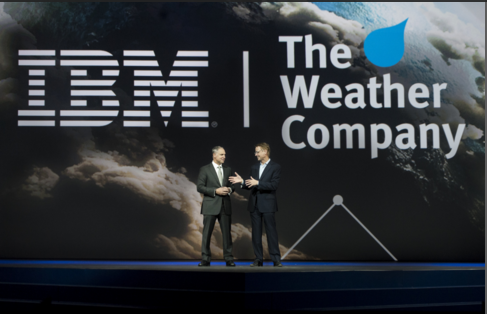
AtLate Octoberat that time, IBM suddenly announced that the company had reached a final agreement to acquire The Weather Company’s B2B, mobile, and cloud-based web assets, including WSI, weather.com, Weather Underground, andThe Weather CompanyBrand. The television division, namely The Weather Channel, will not be acquired by IBM but will license weather forecasting data and analytical capabilities from IBM under a long-term agreement. The combination of the two companies’ technologies and expertise will lay the foundation for new Watson IoT devices and the Watson IoT cloud platform. This acquisition is part of IBM’s commitment announced in March to invest $3 billion in developing IoT technology.
The proposed acquisition will combine IBM’s powerful cognitive and analytics platform with The Weather Company’s dynamic cloud data platform, which operates the fourth most-used mobile app in the United States and processes 26 billion cloud service queries daily. This acquisition will extend the reach of IBM’s cloud data services while expanding The Weather Company’s business capabilities to attract more consumers globally. The Weather Company’s cloud-based data platform will provide IBM with more diverse and rapidly updated global datasets; by storing, analyzing, and disseminating these data, IBM will enable the Watson platform to gain richer and deeper insights.
Upon completion of the transaction, IBM will acquire The Weather Company’s product and technology assets, including its world-leading experts in meteorological data science, precise forecasting capabilities, and a high-capacity cloud platform that collects, processes, analyzes, and disseminates massive datasets in real time on a large scale. The Weather Company’s operational model enables the daily analysis of data from three billion weather forecast reference points, over 40 million smartphones, and 50,000 aircraft flights, delivering a broad range of data-driven products and services to more than 5,000 clients across the media, aviation, energy, insurance, and government sectors.
The acquisition is currently underway, subject to the satisfaction of certain customary closing conditions and pending regulatory approvals. The transaction is expected to be fully completed in the first quarter of 2016.
Arrived.Early DecemberAt that time, IBM extended Watson's cognitive language processing capabilities toPrenatal Nutrition Consultationin the field, and collaborated with prenatal nutrition consultant Nutrition to develop a nutrition query app that leverages Watson’s natural language processing andNutritioncombined with a maternal nutrition database to provide personalized dietary recommendations and 24/7 nutritional data inquiry services for new mothers.
The U.S. National Institutes of Health estimates that nearly four million women give birth annually in the United States. According to a study published in a health journal in 2014, most women do not have access to adequate nutritional education during pregnancy. It is estimated that 10,000 nutrition-related studies are published exclusively in English each year, making it difficult for individuals to develop personalized nutrition plans accurately.
IBM was well aware of this, so it approached a professional U.S. nutrition consulting platformNutrition. Of course, the prerequisite for the app’s effectiveness is that Watson has already learned sufficient food nutrition data and personal historical information of pregnant women. I believe this is also one of the reasons why IBM chose Nutrition as a partner. Nutrition’s extensive database of pregnant women’s personal information will help unlock Watson’s potential in the field of prenatal consultation. In fact, this should be a win-win collaboration for both parties and for societal development.
With this, IBM Watson’s 2015 chapter is also drawing to a close, but what exactly was it rushing to achieve?
I have always considered IBM to be a highly visionary and innovative company, as evidenced by its illustrious history. After years of development, Watson has undoubtedly acquired a vast amount of relevant knowledge. While some argue that IBM’s rush to commercialize Watson stems from financial constraints, I would contend that this is only a minor factor.
A look at IBM’s century-long history reveals that it has always viewed itself as a leader in the information age. Its failure to keep pace with the previous wave of mobile technology was already a significant source of frustration. Now, with Google beginning to invest in quantum computing and Apple closing in, IBM must take decisive action to maintain its position and avoid falling behind. Therefore, from both a strategic perspective and in light of its core competencies, the most urgent priority for IBM is to collaborate with enterprises and promote Watson.
To further understand IBM’s true ambitions, it is also necessary to gain insight into Watson’sThree Major Wishesand its diverseCommercial Applications。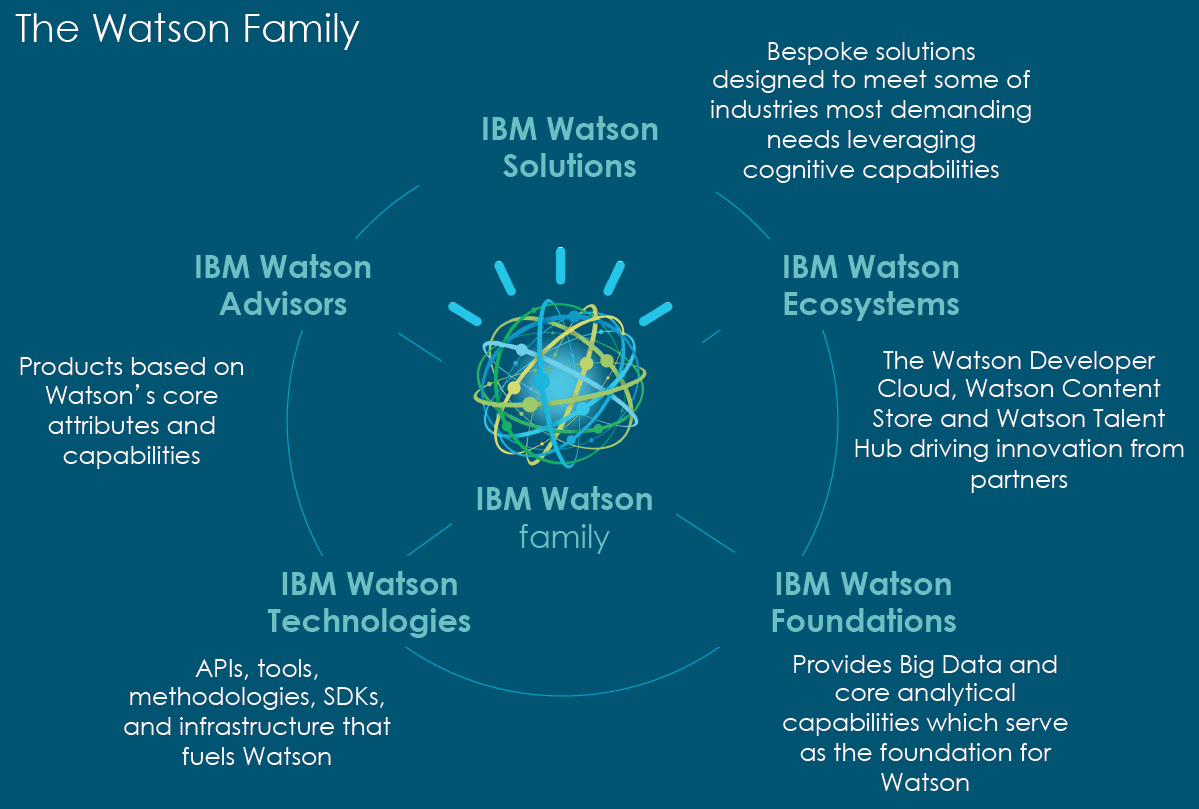
Three Major Wishes
In IBM’s vision, Watson can be divided into three capabilities, each corresponding to a specific service offered by IBM:
Watson Discovery Advisor is designed to identify correct answers within data through natural language processing and provide human-like interaction.
Watson Analytics allows users to explore big data insights through visualizations without the need for advanced analytics training.
Watson Explorer is designed to help users discover and share data-driven insights through a unified view.
The Watson Group, established by IBM, will make Watson technology available through the Watson Developer Cloud, enabling third parties to access Watson capabilities via RESTful APIs to design, develop, and deploy cognitive applications.
IBM charges companies that use Watson for their services, with the price list showing:
Machine-driven conversations cost approximately $0.02 per minute,
Decision support (e.g., selecting beer) costs approximately $0.03 per instance,
Personality trait testing costs $0.60 per session.
To help Watson collect large amounts of data, IBM will refund developers $3 for each training session provided to Watson.
14 Major Business Applications
To date, IBM Watson’s commercial footprint has spanned fourteen major sectors. Let’s take a closer look:
1. New Jersey'sPoint of CareThe Watson system was adopted at an early stage. Employees of Point of Care trained Watson to learn the thousands of questions that healthcare professionals might encounter when diagnosing and treating scleroderma, diabetes, and lung cancer. It took Watson 12 weeks to understand the diagnostic and treatment processes for specific diseases. Upon completion of the training, the company’s app automatically integrates the latest research findings on these diseases.
2. Toronto'sRoss IntelligenceDedicated to leveraging the Watson system to serve legal professionals. For complex issues in bankruptcy cases that are difficult to resolve, they pose questions to Watson and receive responses that include relevant statutory provisions and precedents from prior case law.
3、CogniToysIt is an intelligent dinosaur toy powered by the Watson system. The toy can engage in real-time, personalized conversations with children and continues to evolve as the child grows.
4. Houston, TexasWine4meAn Apple application developed using the Watson system can recommend wines to customers based on their taste preferences, budget, and food pairings.
5. A company namedUnitesUsJob recruitment websites are using Watson’s personality analysis service, which can assess a candidate’s suitability for a position by analyzing the content they post on social media.
6、VineSleuthThe company plans to apply Watson’s language classification and translation services to product recommendations, enabling the system to automatically recommend products based on customer preferences and purchase history.
7. IBM and Online Psychotherapy StartupsTalkspace Through this collaboration, IBM Watson will leverage machine learning, natural language processing, and user personality analysis technologies, based on the latter’s manually generated psychiatrist matching data, to assist users in decision-making and help physicians devise optimal treatment plans.
8. IBM collaborated with VCBeat to develop early detectionDementia Symptoms...application. This app displays image prompts, asks users questions, and records their voice responses. The tasks include repeating previously heard sentences, counting backward, and describing images. Watson analyzes this data to assess the user’s risk of dementia.
9、CVSPartnering with IBM to Assist Chronic Disease Patients and Prevent Critical Incidents. CVS’s nationwide retail pharmacies will utilize Watson, IBM’s latest cognitive computing technology, to predict whether chronic disease patients are at risk by analyzing behavioral warning signs.
10. IBM Japan andInstitute of Medical Science, The University of TokyoAnnounced that, as an application of the cognitive computing technology “IBM Watson” in the healthcare sector, “Watson Genomic Analytics” will be utilized to conduct cancer research. This marks the first time Watson genomic analysis has been adopted by a medical research institution outside North America.
11. IBM Acquires Medical Imaging CompanyMerge Healthcarethe company and merge it with the newly established Watson Health. At that time, Watson would not only be able to interpret medical images (CT scans, mammograms) but also perform analytical diagnostics based on a vast database of electronic health records.
12. The Watson supercomputer has been upgraded to assess an individual’s personality. By providing a dialogue or article of at least 100 words, users can leverage Watson to gain insights into themselves and others. A Mashable reporter used singer Taylor Swift’s open letter to Apple as test input, and Watson generated an analysis within seconds: Taylor Swift exhibits mild obsessive-compulsive tendencies, is compassionate, empathetic, highly self-aware, energetic, and enjoys a fast-paced lifestyle. Her choices are driven by a pursuit of recognition; she prefers working independently, has clear goals, disregards tradition, and focuses more on her chosen path.
13. IBM researchers have recently launched the IBM Watson Tone Analyzer, which can comprehend textual messages and analyze the intended tone. The technology behind Watson Tone Analyzer is similar to the linguistic analysis techniques employed by IBM Watson Personality Insights. By providing a segment of text to the Tone Analyzer, it can identify elements related to emotion, writing style, and social style within the content.
14、Cognitive CookingThis is a Watson project that leverages culinary ingredient data and human food cravings to create recipes previously unimaginable. Examples include Creole Shrimp-Lamb Dumplings, Baltic Apple Pie, and Cayman Islands-Style Plantain Dessert.
A Brief History of Watson
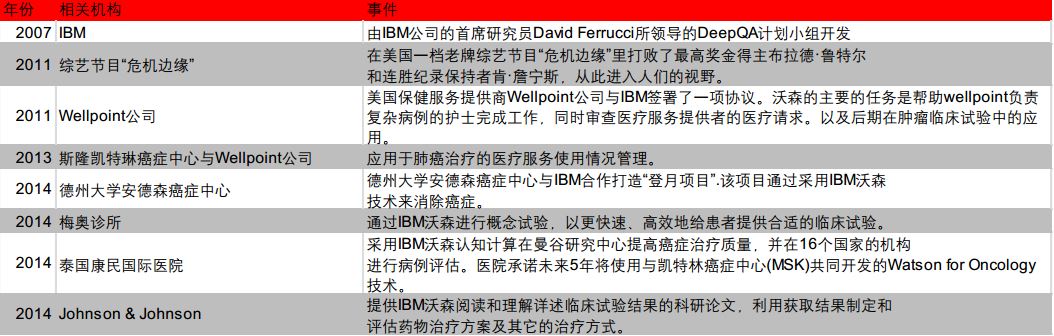
From 2011 to the present, we can observe the development timeline of Watson:
2011: Getting Started, Winning the Intellectual Competition
In 2011, the Watson robot was released and defeated human contestants to win the U.S. quiz show *Jeopardy!*. However, merely winning a quiz competition does not constitute a highly effective business model, nor is it sufficient to justify investment in the Watson system.
Subsequently, Watson secured its first job, assisting nurses at WellPoint in managing complex cases while reviewing medical requests from healthcare providers, and was later applied in oncology clinical trials.
2012: Testing completed, but no profitability achieved
In 2012, through a collaboration with Memorial Sloan Kettering Cancer Center, IBM leveraged medical textbooks, oncology research, and patient medical records (with patient consent) to work alongside physicians in providing personalized diagnostic and treatment recommendations for patients. At that time, Watson had successfully completed its application testing but had not yet become profitable.
2013: Emerging Prominence, First Commercial Application
In February 2013, IBM announced the first commercial application of its Watson robot, which was deployed for utilization management in lung cancer treatment services through a collaborative effort between Memorial Sloan Kettering Cancer Center and WellPoint. According to Manoj Saxena, CEO of IBM Watson Commerce, 90% of nurses in the field now follow Watson’s recommendations.
2014: Widespread Adoption and Accelerated Commercialization
In 2014, IBM began to widely apply its Watson robot across various fields. The company allowed enterprises to create and promote applications developed on the Watson system. Currently, approximately 350 companies have signed agreements with IBM, a figure expected to rise as IBM unveiled a new set of development tools on September 24. These tools enable personnel from non-partner companies to develop commercial applications for Watson.
2015: Major Acquisition and Establishment of a New Business Division
The newly formed department, named “Cognitive Business Solutions,” will be led by Stephen Pratt, who previously served as an executive at the Indian outsourcing firm Infosys, overseeing consulting-related affairs. This new division will comprise 2,000 employees and provide enterprises with advisory services on how to leverage IBM’s artificial intelligence software.
Action, Never Stopped
After a busy period spanning most of 2015, IBM has essentially completedMobile Health Strategic Layout:
On the patient side, Watson and the mobile patient care system genieMD have partnered with CVS, the largest pharmacy chain in the United States, to provide targeted care services.
On the physician side, Watson has partnered with the case-sharing platform Point of Care to help doctors provide patients with optimal medical advice.
In the insurance sector, Welltok leverages Watson to help insurers provide users with personalized health guidance.
In the wearable sector, IBM has partnered with Apple, Johnson & Johnson, and Medtronic to leverage Watson for collecting health data and related preventive measures.
In terms of data, IBM acquired Explorys, a medical data company specializing in predictive analytics, and heavily invested in acquiring Merge Healthcare, an image analysis company. This signals IBM’s intention to delve deeply into specialties such as oncology, ophthalmology, orthopedics, and dermatology, with the ultimate goal of completely replacing human physicians in all aspects of the diagnostic and treatment process.
In the realm of the Internet of Things (IoT), IBM has partnered with The Weather Company, the fourth most widely used mobile app provider in the United States, to apply Watson’s cognitive computing capabilities to the IoT sector. This initiative aims to uncover new operational models and empower enterprises, institutions, and individuals to make more informed decisions.
In fact, humanity has never ceased exploring the application of artificial intelligence in medicine. From its origins in shamanism and alchemy to modern times, medicine has undergone rapid advancements driven by the comprehensive development of physics, chemistry, biology, information technology, and network technologies. The emergence of numerous instruments and equipment has indeed enhanced our understanding of diseases. The advent of Watson, regardless of its outcomes, mirrors its early systemsIBM System 360...will undoubtedly leave an indelible mark on the history of internet healthcare.