

Comprehensive Review of 19 'TCM + Internet' Startups That Secured Funding: Business Models, Product Insights, and Recent IPO Filings
Capital’s expectation for internet healthcare is to discover the next Alibaba, while the medical community’s expectation is that internet healthcare can reshape the healthcare service system and its value through digital connectivity.
Compared with the explosive popularity and rapid development of internet healthcare, traditional Chinese medicine (TCM) appeared relatively sluggish in the early stages of this sector’s growth. However, over the past year or so, the high degree of untapped potential in this niche has led to a rush of capital swiftly moving in to seize opportunities and snap up TCM-themed internet healthcare projects. Let us take stock of this trend together with the VCBeat Internet Healthcare Research Institute.
19 projects involved approximately 300 million in venture capital.
Between 2014 and 2015, numerous internet startups focused on traditional Chinese medicine secured financing. VCBeat has compiled publicly available information to present the following list.
VCBeat compiled data on investable internet-based traditional Chinese medicine (TCM) projects with confirmed funding, yielding the following information:
1. Among the 19 projects that secured financing, 10 belong to the tuina and massage sector, and 9 fall under the category of traditional conventional TCM;
2. Among them, the majority of projects adopt the O2O model, totaling 10; followed by the O+O model, which integrates online and offline operations, with a total of 6 projects;
3. Internet-based TCM projects primarily generate revenue through service sales, accounting for 72% of the total number of projects, with 13 such projects in total. Projects focused solely on product sales are scarce, with only one such project.
4. In 2014, internet-based traditional Chinese medicine (TCM) projects began to emerge, with 50% of such projects established in that year. The trend continued in 2015, when 28% of the projects were founded;
5. Currently, project financing is primarily concentrated in the angel round, accounting for 50%. Projects that have secured Series A financing also represent 39%, with funding amounts ranging from RMB 10 million to USD 10 million, and an average of approximately RMB 50 million.

Digital Transformation of Traditional Enterprises + Influx of New Models from Startups
Internet Transformation of Traditional Enterprises:Traditional transformation can be divided into the digitalization of traditional TCM clinics and the digitalization of traditional Chinese herbal medicine enterprises.
1. Digital Transformation of Traditional TCM ClinicsTo some extent, the transformation and innovation of traditional TCM clinics in the internet era can be regarded as their second entrepreneurial venture. As early as 2009, Hu Qing Yu Tang, a century-old brand based in Hangzhou, began experimenting with e-commerce by establishing flagship stores on platforms such as Tmall, JD.com, and Yihaodian, primarily selling its own products.
2. Traditional Chinese Medicine (TCM) Enterprises + InternetSimilar to how Western pharmaceutical companies are actively expanding into medical services, TCM enterprises are also leveraging the internet to enter the field of TCM services. Taking Kangmei Pharmaceutical as an example, it operates platforms such as the Kangmei TCM Network and the Kangmei Cloud Health Service Platform. Notably, Kangmei Hospital has obtained qualifications as an online hospital, enabling it to provide remote medical services.
Kangmei Pharmaceutical: Steadily Practicing “Internet+”In March 2015, the Office of the National Administration of Traditional Chinese Medicine (NATCM) issued to the company the “Letter from the Office of the National Administration of Traditional Chinese Medicine on Approving Kangmei Pharmaceutical Co., Ltd. as a Pilot Unit for the NATCM’s Informatized Medical Service Platform” (Guo Zhong Yi Yao Ban Yi Zheng Han [2015] No. 45), approving the company as a pilot unit for the NATCM’s informatized medical service platform. As the first approved pilot unit, Kangmei Pharmaceutical seized the early-mover advantage in building an informatized platform for traditional Chinese medicine (TCM) medical services. This approval signifies that the state permits and encourages Kangmei to develop TCM medical service informatization initiatives, including virtual (TCM) hospitals, online appointment scheduling, chronic disease management, and virtual pharmacies, as well as to explore internet finance services such as online payment through “Kangmeitong.” These components constitute the main framework of Kangmei’s current “Kangmei Health Cloud Service Platform.” According to a research report by Guosen Securities, Kangmei Pharmaceutical’s “Big Health + Big Platform + Big Data + Big Service” architecture is becoming increasingly clear, and its prudent layout in “Internet Plus” will drive a significant rise in the company’s valuation, with promising future growth prospects.
Guosen Securities analyst Deng Zhouyu stated that the company has elevated its “Internet Plus” strategy to a position of critical importance and will devote full efforts to building an internet healthcare ecosystem, creating a comprehensive platform integrating “internet healthcare + e-commerce + internet finance.” Kangmei Chinese Herbal Medicine Network is currently the largest online service platform for traditional Chinese medicine (TCM) materials in China. The Kangmei Health Cloud Service Platform integrates B2B, B2C, and O2O operations and has formed strong strategic partnerships with internet giants to rapidly attract user traffic. As a bulk trading e-commerce platform for TCM materials, E-Yaogu has listed 22 standardized products to date, with cumulative transaction volume reaching 1.5 million tons and electronic trading value exceeding RMB 80 billion; the Matthew Effect is gradually establishing the company’s commercial barriers. Kangmei Hospital has obtained qualifications as an online hospital. Meanwhile, the company is collaborating with Guangdong Provincial Hospital of Traditional Chinese Medicine to advance smart pharmacy initiatives, with pilot programs scheduled for launch in Guangzhou, Shenzhen, Beijing, and Chengdu in 2015. Furthermore, the company has already assembled a research and development team for its telemedicine service platform.

New Models for Startup Projects Flood In:Riding the wave of “Internet Plus,” some startup teams have adopted currently popular business models to tap into the traditional Chinese medicine (TCM) market, including O2O (online-to-offline) models, online consultation, and remote diagnosis.
1. O2O ModelIn the field of Internet-based Traditional Chinese Medicine (TCM), the Online-to-Offline (O2O) model has become particularly prominent. Notably, since late 2014, on-demand Tui Na (therapeutic massage) services have emerged rapidly. Industry statistics indicate that nearly 100 O2O companies specializing in Tui Na have been established since late 2014, with total financing exceeding $70 million since 2015. Starting in 2015, O2O platforms providing diagnostic and treatment services also began to rise. For instance, “Kan Zhongyi,” a platform offering at-home TCM services, completed an angel round of financing worth RMB 8 million this August. The practice of house calls has long been part of TCM tradition; thus, the application of the O2O model in the TCM industry represents a continuation and inheritance of this customary practice.

2. Online Consultation and DiagnosisAfter entering 2015, the number of online consultation and diagnosis platforms for Traditional Chinese Medicine (TCM), such as Dongri Zhongyi and Babamai, began to increase, and all of them have secured angel-round financing. Given the inherent characteristics of TCM, these online consultation platforms primarily target common and general ailments that are manageable and treatable by most individuals. Meanwhile, most of these platforms also offer appointment registration services. While Dongri Zhongyi delivers all its services entirely online, Babamai additionally provides offline referral services for its users.

3. Smart Hardware Smart hardware represents a model within the traditional Chinese medicine (TCM) industry in the realm of internet-based healthcare. Most such devices are developed based on TCM principles. A notable example is Breo Health Technology’s launch of the WOWO Smart Massage Glove at the 2015 GMIC conference.

WOWO Smart Massage Gloves
The WOWO Smart Massage Glove massages the hands of individuals who spend long hours working—such as those suffering from “mouse hand,” “keyboard hand,” or “digital hand”—by applying air pressure to acupoints in the hand, thereby relieving stress. In addition, like other smart hardware devices, WOWO incorporates social features that allow users to send intimate interactive commands such as “nudge,” “touch,” and “press” to one another. Users can also share beauty and wellness tips and experiences within the WOWO community. However, in recent years, there has been a rise in mobile internet products integrated with Traditional Chinese Medicine (TCM), sparking considerable debate over their distinctive features and scientific validity.
4. Overseas Companies’ Attempts in Traditional Chinese Medicine ProjectsIn addition to Chinese startups developing TCM-related products, some foreign companies are also striving to carve out a niche in the field of Traditional Chinese Medicine (TCM) or by applying TCM principles within internet healthcare.A UK-based company specializing in human healthcare products has manufactured an anti-motion sickness wristband called Sea-Band. This wristband operates on the TCM principle of acupoint stimulation; pressing and massaging the Neiguan point (PC6) can alleviate various symptoms such as motion sickness (including car, sea, and air sickness), as well as nausea and vomiting during pregnancy.Ovatemp, an application under a US company, is currently launching ONDO, an electronic thermometer designed to measure the ovulation period. Its underlying principle is that a woman’s fertility cycle can be predicted by measuring basal body temperature, a method grounded in both traditional TCM practices and the Fertility Awareness Method (FAM).

Ovatemp Application with ONDO Electronic Thermometer
Currently, ONDO is available for purchase on the official Ovatemp website, Amazon, and Walgreens. The device is priced at $149, and the Ovatemp app is free.
Business Model: Capable of Selling Both Services and Pharmaceuticals
The business models of internet healthcare have long attracted significant attention from the industry. Although some mobile health companies occasionally claim to have achieved stable and sufficient revenue, a mature business model that has gained widespread industry recognition has yet to emerge. Continuous cash burn remains a common characteristic of the internet healthcare sector. Compared with projects based on Western medicine frameworks, what are the advantages of the business models adopted by startups in the field of internet-based Traditional Chinese Medicine (TCM)?First, service fees constitute one of the primary revenue sources for most existing startup projects. Given the characteristics of TCM, whether in wellness sectors such as O2O (Online-to-Offline) tuina massage or in medical services like home visits for consultations, the service-oriented nature is particularly pronounced. In other words, each home visit generates a service fee. Therefore, for most startups in the internet TCM sector, a relatively accessible path to profitability lies in taking a commission from these service fees.
Seeing a TCM Practitioner: Retaining More Paying UsersKan Zhongyi is an application designed to address sub-health issues, offering users access to traditional Chinese medicine (TCM) consultations with comprehensive treatment efficacy tracking throughout the process. Kan Zhongyi uses TCM consultation appointments as its entry point to build a mobile TCM diagnosis and treatment platform. (For more details, please refer to the article on VCBeat.)"Seeing a TCM Doctor: Returning to Traditional Chinese Medicine, Creating Medical-Grade Products") Currently, the Kan Zhongyi platform has amassed over 4,600 paying users, with an average daily transaction volume exceeding 200 orders. “Once a user becomes a paying customer, they will make repeat purchases; each user utilizes our product at least twice a week,” introduced Luo Feng. The Kan Zhongyi product was launched on July 20. Subsidies were provided to users in August, but these were discontinued in September, by which time the product had already achieved break-even.
Currently, users primarily access the “Kan Zhongyi” (See a TCM Doctor) service by searching for its official WeChat account and entering the H5 booking page; its dedicated mobile app is also set to launch soon. Upon logging in, users first complete a questionnaire to receive a personalized constitution report. They can then choose from five therapeutic modalities—tui na (therapeutic massage), cupping, acupuncture, gua sha (scraping therapy), and moxibustion—and book an appointment with a suitable Traditional Chinese Medicine (TCM) practitioner. Physicians review the patient’s constitution report to determine whether the symptoms are appropriate for treatment before deciding whether to accept the appointment. The platform also features a standardized user management system. After each consultation, users can provide online ratings of the physician’s services. Additionally, the company conducts 100% telephone follow-ups with users, covering aspects such as the physician’s treatment techniques, communication, and recommendations. In the future, the company plans to offer tailored services to individual users and enterprises, expand into communities to promote private doctor and wellness doctor services, and gradually roll out the platform in other cities with a strong TCM culture.

Secondly, any discussion of Traditional Chinese Medicine (TCM) must include Chinese herbal medicine. In the healthcare services sector, medical practice and pharmaceuticals are inextricably linked, and TCM is no exception. Therefore, another avenue for internet-based TCM initiatives to achieve profitability lies in the sale of Chinese herbal medicines. However, current business models incorporating Chinese herbal medicines require platforms to possess stronger medical attributes, which in turn imposes higher requirements on safety and risk management for the services provided.
Winter TCM: Consultation + Herbal Medicine DeliveryLi Zuyun, CEO and founder of Dongri TCM, told VCBeat that Dongri TCM is an internet-based app for TCM consultations and herbal medicine delivery, launched by Xiamen Dongri Nuanyang Network Technology Co., Ltd. (For details, please refer to the article on VCBeat.)"Winter TCM: Traditional Chinese Medicine Is More Suited for Mobile Healthcare Than Western Medicine")
Li Zuyun stated that Dongri TCM has achieved the separation of medical services and pharmaceutical sales. Traditional TCM practices, which rely on drug sales for profitability, are prone to issues such as the prescription of exorbitantly priced medications and even the promotion of health supplements. In contrast, Dongri TCM adopts a model where physicians charge consultation fees, while medications are centrally procured by Dongri TCM from Tongrentang, Pien Tze Huang, and a supplier of Tongrentang, thereby ensuring drug quality.

In fact, the sale of traditional Chinese medicine (TCM) products is a core offering of TCM e-commerce platforms. Currently, many projects in the internet-based TCM industry rely on e-commerce for profitability.
Pulse Check: Dipping a Toe into E-commerceBaba Mai is a platform dominated by light medical services of traditional Chinese medicine. The product was officially launched in July this year. Currently, the platform has accumulated 400 physicians and more than 25,000 users. (For details, please follow the article on VCBeat)"Taking the Pulse: Making Traditional Chinese Medicine a Lifestyle") On the Bamai platform, tools, services, community, self-media, and e-commerce form a closed loop. Among them, tools and services are used to attract users; the “Ask” community and the “Bamai Hall” self-media platform are used to increase user stickiness; while the “Bamai Street” e-commerce segment is designed to generate revenue.
“Bamai Street” online mall targets the light medical and health consumer market, selling TCM healthcare products such as medicinal diets, herbal plasters, herbal teas, herbal paste formulations, and medical devices, thereby generating positive cash flow. Recently, a “1-yuan purchase” promotion for Biaoting products launched by Bamai ahead of the Double 11 shopping festival went viral on WeChat Moments, sparking considerable curiosity among netizens. This marked a significant e-commerce initiative for Bamai.

Furthermore, founders of numerous internet-based traditional Chinese medicine (TCM) startups have highlighted the mining and utilization of big data in their business model concepts. However, they have offered few novel insights into specific implementation methods, with most efforts still concentrated on electronic health records, health management, and precision marketing targeted at specific populations.
Why Did “TCM + Internet” Once Become a Hot Favorite?
Traditional Chinese Medicine (TCM) + Internet Gains Popularity; The Huge Market Size in This Field Is Clearly the Primary Reason. According to statistics from relevant authorities, the market size of China’s TCM industry had already exceeded RMB 600 billion in 2013, with an annual growth rate of over 30%. The proportion of total TCM outpatient and emergency visits to the national total also saw a significant increase: 9% in 2005, rising to 21% in 2009, further increasing to 23.12% in 2012, and reaching 24% in 2013. However, the level of internet integration in this substantial market remains very low, thereby providing ample room for imagination and opportunities for pioneering internet companies taking the lead.
In the field of internet healthcare, online light consultations, represented by Chunyu Doctor, were the first to emerge, providing online health consultation services for common ailments. Subsequently, some startups began to explore niche segments, such as dermatology, maternal and child health, and diabetes management, naturally extending into the specialized market of Traditional Chinese Medicine (TCM). Compared with conventional Western medical diagnosis and treatment, TCM possesses distinct advantages that facilitate the establishment of more viable business models.
1. Traditional Chinese Medicine (TCM) leans more toward the management of chronic diseases and health preservation, making it easier to establish long-term, in-depth doctor-patient relationships.
2. Consumers are more accustomed to paying out-of-pocket for certain diagnostic and therapeutic services with traditional Chinese medicine (TCM) characteristics, as well as for TCM medicinal materials.
3. The pricing for TCM diagnostic and treatment services as well as medicinal materials exhibits high elasticity, making it easier to establish premium service models.
In addition, the field of Traditional Chinese Medicine (TCM) has received a certain degree of policy support. In May 2015, with the approval of the State Council, the Chinese government website released the Development Plan for TCM Health Services (2015–2020). The document specifically mentions the development of intelligent TCM health service products using information technologies such as cloud computing, mobile internet, and the Internet of Things (IoT). As the guiding document for the development of China’s TCM health service industry over the subsequent five years, it was also the first national-level development plan in this field. Furthermore, TCM occupied a significant position in several major documents issued in 2015. For instance, the assessment criteria for tiered diagnosis and treatment set a mandatory requirement that TCM consultations must account for no less than 30% of the total patient visits at primary healthcare institutions. It also required that all community health service centers and township health centers possess TCM service capabilities by 2020.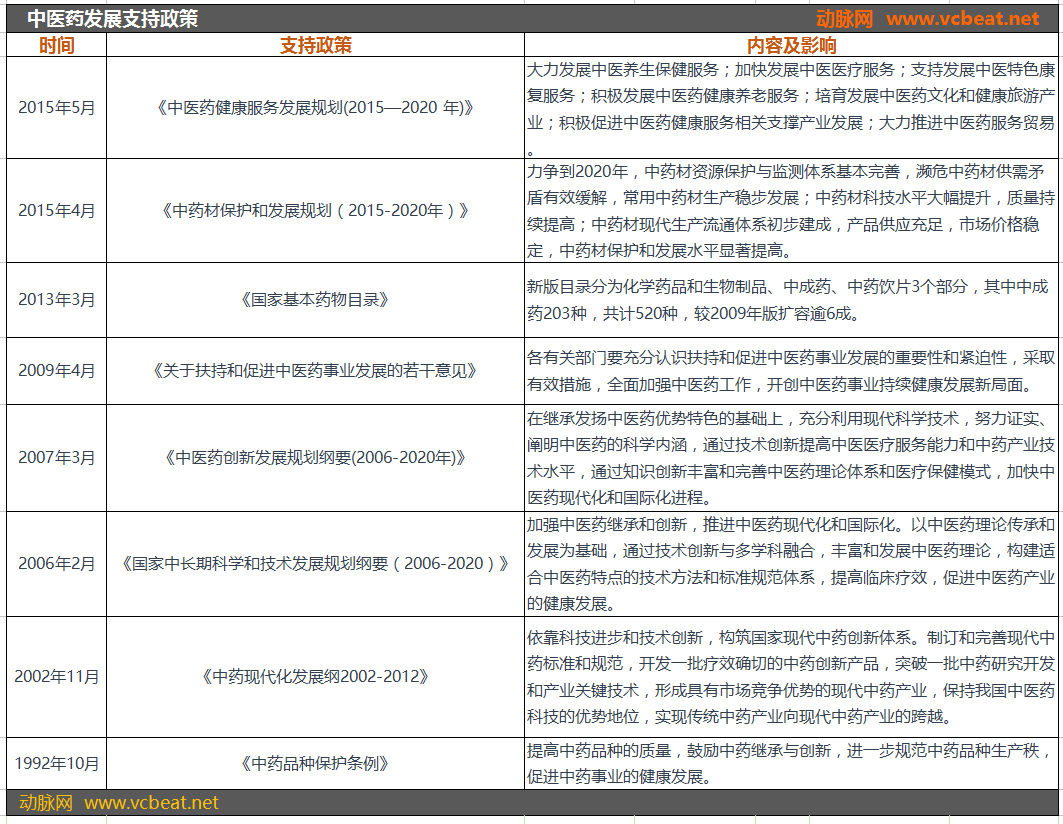
Four Major Challenges: Talent Shortage, Chaotic Herbal Materials, Lack of Trust, and Limited Pathways
Although entrepreneurship in the field of internet-based Traditional Chinese Medicine (TCM) has been quite active recently, most startups are still in their early stages. Even within the emerging sector of digital health, internet TCM startups remain relatively small compared to the industry giants that have already reached valuations in the hundreds of millions. Moreover, the future growth of internet TCM startups faces several challenges:
First, how to acquire high-quality TCM talent is a major challenge for internet-based TCM projects.In the development of the healthcare industry, the issue of medical talent has always been a focal point. With the rise of internet healthcare, fierce competition for physician resources is a recurring phenomenon. Like most internet healthcare initiatives, talent acquisition has garnered significant attention in the growth of startups specializing in internet-based Traditional Chinese Medicine (TCM). To ensure service safety and quality, stringent criteria must be applied in the selection of TCM practitioners. Although startups do not currently perceive significant pressure from talent shortages, the overall landscape of China’s TCM industry reveals a pronounced scarcity of TCM professionals.
In 2011, the State Administration of Traditional Chinese Medicine (TCM) released the results of the first national survey on the basic status of TCM. The results showed that there were approximately 5 million practitioners of Western medicine in China, while TCM practitioners numbered only around 400,000 (a 20% decrease compared to the 1950s). There were 16,800 Western medicine hospitals, whereas TCM hospitals numbered only 2,600. The number of licensed TCM physicians per 10,000 people nationwide was merely about three. According to 2013 statistics from the National Health and Family Planning Commission, the number of licensed TCM physicians in China reached 311,000 in 2012, accounting for only 14.5% of all licensed physicians that year.Since the Third Plenary Session of the 11th Central Committee of the Communist Party of China, following the rectification of past errors, research in TCM and integrated traditional Chinese and Western medicine has seen some recovery and development. By the end of 1982, 45 municipal-level or higher TCM research institutes had been established nationwide, with nearly 7,000 full-time researchers. Institutes, departments, or groups dedicated to TCM and integrated medicine were also set up in certain medical colleges and hospitals, initially forming a research system for TCM and integrated medicine. Nevertheless, a significant gap remains compared to the development of Western medicine.According to statistics from the TCM Strategic Research Group of the Institute of Scientific and Technical Information of China, in 1949, when China’s population was under 500 million, there were 500,000 TCM practitioners. By 2003, as the population grew to nearly 1.3 billion, the number of licensed TCM physicians was 490,000. However, among them, fewer than 30,000 could truly diagnose and treat patients using TCM principles, and these individuals were almost exclusively senior practitioners over the age of 50. Additional statistics indicate that the number of renowned TCM experts in China has plummeted from over 5,000 in the 1980s to fewer than 500 today. This demonstrates that TCM in China is facing a crisis of heritage transmission.From this perspective, as internet-based TCM companies expand their scale and business operations in the future, competition for TCM talent will inevitably intensify.
Secondly, ensuring the authenticity of Chinese herbal medicines is also a critical issue.
Collaboration with traditional Chinese medicine (TCM) pharmaceutical enterprises is one of the key revenue models for internet-based TCM companies. However, due to factors such as resource scarcity and ecological crises, it may become increasingly difficult to source authentic TCM materials in the future. Publicly available data indicate that among the 398 endangered plant species listed in the China Plant Red Data Book, 168 are medicinal plants, accounting for 42%. Of the 300–400 commonly used TCM herbs primarily derived from wild plants, more than 100 have experienced a sharp decline in resource availability. Currently, the Fourth National Census of TCM Resources is underway. Available data suggest that both the quantity and quality of TCM material resources have declined compared to those of 30 years ago.
Furthermore, users' limited trust in Traditional Chinese Medicine (TCM) has resulted in a relatively small user base for TCM-related projects.
An online survey conducted by the Social Survey Center of China Youth Daily, in collaboration with Minyi China and Wenjuan.com, included 2,001 respondents. Among the participants, those born in the 2000s accounted for 0.5%, those born in the 1990s for 26.8%, those born in the 1980s for 47.3%, those born in the 1970s for 17.8%, those born in the 1960s for 6.1%, and those born before the 1960s for 1.4%.
A survey shows that when seeking medical care, 24.3% of respondents prefer Traditional Chinese Medicine (TCM) as their first choice, 30.0% opt for Western medicine, while 45.6% believe it depends on the situation and is not fixed. In daily life, when dealing with minor ailments, 48.4% of respondents tend to take proprietary Chinese medicines, 46.2% choose Western medications, injections, or intravenous infusions, 23.4% seek out herbal decoctions, 20.2% consume medicinal diets, 19.7% adopt TCM therapies such as gua sha (scraping) and massage, and 6.3% choose other methods. Regarding TCM treatments and remedies, 66.7% of respondents believe they have fewer side effects and are effective in regulating bodily functions; 64.0% consider them effective for treating chronic diseases; and 59.7% view them as trustworthy due to their long history. However, 34.3% of respondents feel that TCM acts slowly and requires a long treatment cycle; 21.0% point out the uneven quality of TCM practitioners; 14.1% regard TCM merely as an adjunctive therapy incapable of achieving a radical cure; 15.2% find Chinese herbal medicines inconvenient to take; and 4.1% consider TCM too abstruse and unscientific.Luo Feng, founder of Kan Zhongyi (See TCM), told VCBeat that before developing their product, the Kan Zhongyi team conducted random street interviews. Among the 100 passersby interviewed, 70 responded to the team’s questions. “Only 20 of them had ever consulted a TCM practitioner. The rest, who had never experienced TCM, consistently spoke negatively about it. I found it puzzling: how could they conclude that TCM is ineffective without ever having tried it?”Luo Feng believes that many people misunderstand TCM, judging it negatively without firsthand experience. To address this, his solution is to “let you try it directly.” “For TCM, if 10 patients visit an ordinary outpatient clinic, approximately six will return for follow-up or repeated visits,” Luo stated. He added that if six out of ten patients return, then sixty out of one hundred will do the same.
Therefore, to increase the patient base for Traditional Chinese Medicine (TCM), it is only necessary to enhance its visibility and encourage more users to try TCM services. Li Zuyun, founder of Dongri TCM, also stated that in order to retain users and foster greater trust in TCM products, Dongri TCM has abandoned the traditional mobile internet healthcare business model of “pay first, consult later.” Instead, it emphasizes a “free consultation first, pay later” approach. Users can initially consult doctors for free via text, images, voice messages, or videos. Once a relationship of trust is established through communication between the doctor and patient, the patient then pays for the doctor’s services, conditioning plans, and guidance. Furthermore, patients may request an unconditional refund at any time during the service process. Li Zuyun told VCBeat, “Patients generally do not request refunds unless the doctor’s attitude or the prescribed conditioning plan truly fails to help them, because they feel that the medical consultation provided good value.”Regarding the issue of user skepticism toward TCM, Xia Tianyu, founder of Baba Mai, noted that users can be categorized into three groups: those who fully trust TCM, those willing to try both TCM and Western medicine, and those who completely distrust TCM. Baba Mai primarily targets the first two groups and does not expend excessive time or effort on the third group.
Finally, Traditional Chinese Medicine lacks standardized treatment pathways.
Clinical pathways establish a standardized model and procedure for the treatment of a specific disease, encompassing diagnosis, treatment, rehabilitation, nursing, patient education, and outcome evaluation, along with schedules and roadmaps for completing these tasks. Guided by evidence-based medicine and clinical guidelines, this approach organizes medical activities and disease management on a per-hospital-day (or workday) basis, ultimately resulting in the establishment of a standardized treatment model.
The significance of implementing clinical pathways is mainly reflected in four aspects: First, reducing medical costs. The primary objective of implementing clinical pathways is to standardize diagnosis and treatment behaviors. Its prominent role lies in the rational allocation of healthcare resources, guiding physicians to provide reasonable and standardized care, thereby avoiding excessive prescriptions and unnecessary tests that lead to over-treatment. Second, promoting rational drug use. Clinical pathways standardize, normalize, and proceduralize the diagnosis and treatment processes for various diseases, enhancing the appropriateness of medical services while reducing and controlling unnecessary interventions. Detailed regulations on medication usage help minimize unnecessary and irrational drug use, thereby promoting the clinically rational application of pharmaceuticals. Third, strengthening doctor-patient communication. Clinical pathways provide a comprehensive and generalized medical and nursing plan, allowing patients and their families to understand the treatment plan during hospitalization in advance and prepare psychologically for their disease management. This maximally satisfies patients’ right to informed consent. Furthermore, through standardized health education, popular science dissemination, and diagnostic and nursing care, medical personnel enable patients to acquire more knowledge about disease prevention and control, receive more scientific diagnosis and treatment as well as more comprehensive and meticulous nursing care, accelerate patient recovery, improve patient satisfaction and trust in medical staff, thereby facilitating effective doctor-patient communication and reducing the likelihood of medical complaints or disputes. Fourth, reducing medical errors. Standardization of Traditional Chinese Medicine (TCM) is a crucial task. However, in the process of promotion, it is essential to balance one relationship: vigorously advancing the standardization process while avoiding excessive emphasis on standardization that might erase the individualized characteristics of TCM.
Wang Guoqiang, a member of the National Committee of the Chinese People's Political Consultative Conference and former Director of the State Administration of Traditional Chinese Medicine (SATCM), once stated that the Legal and Supervision Department of the SATCM was formulating a development plan for the standardization of Traditional Chinese Medicine (TCM). This plan provides a comprehensive roadmap for promoting TCM standardization in China through 2020 and beyond.TCM emphasizes syndrome differentiation and individualized treatment, which differs significantly from Western medicine’s more standardized protocols (e.g., using fixed regimens A, B, or C for colds). In TCM, herbal prescriptions for wind-cold colds differ from those for wind-heat colds. Under such circumstances, standardizing TCM is no simple task. Nevertheless, TCM is not incapable of standardization. For instance, Zhang Zhongjing’s Treatise on Cold Damage Disorders contains over 200 classic formulas that have been passed down to modern times. Each formula was summarized over an extended period based on observations across different populations and conditions, specifying which patients’ syndromes could be treated with particular remedies. This process itself constitutes a form of standardization.The path toward TCM standardization is lengthy and involves substantial work. It requires a systematic process of organizing knowledge, clinical practice, and continuous summarization of theories and methods from various regional schools across northern and southern China. During the standardization process, it is essential to maintain clear direction, adopt steady yet proactive steps, and actively solicit opinions from all stakeholders.