

Pfizer to Split Post-Mega Merger with Allergan: Strategic Separation into Innovative and Off-Patent Businesses
Today's Headlines:
Pfizer’s Next Move After Completing the Mega-Merger of the Century: Spin-Off!
BGI Group Strategic Adjustment: U.S. Subsidiary Undergoes Large-Scale Layoffs
Fire Sale! AstraZeneca Sells Gastrointestinal Drug Entocort to Perrigo for $380 Million
Roche Acquires U.S. Biotech Firm, Targeting Immune Protein Cadherin-11
World’s Largest “Cloning Factory” Settles in Tianjin: Animal Cloning Laboratory Assembly Line to Be Built
Anke Biotechnology Acquires Zhongde Meilian for 450 Million Yuan to Accelerate Precision Medicine Expansion
2016 Investment Strategy for the Medical Device Industry: Policy Support Drives the Rapid Growth of Domestically Produced Medical Devices
Pfizer’s Next Move After Completing the Merger of the Century: Spin-off!
PfizerIn a press release issued on Monday, the company formally announced its merger with Allergan and further stated that, following the merger and subsequent integration, Pfizer now expects to decide by the end of 2018 whetherSplitMake a decision.
In fact, investors familiar with Pfizer should not be surprised by this, as the company indicated at the time of spinning off its animal health division, Zoetis, in 2013 that it would pursue further business divestitures. Following that spin-off, Zoetis conducted an independent initial public offering (IPO), raising $2.2 billion. This marked the largest asset-stripping listing on the New York Stock Exchange since Man Group PLC, a UK-based hedge fund, raised $2.9 billion in its IPO in 2007.
Thus, just as it had previously exited the nutritional supplements and veterinary pharmaceuticals sectors, Pfizer split into two types of enterprises, oneContinue to specialize in patented drugs, while the other is a determined effort to strengthen the long-neglected segment, given the increasing R&D difficulties in recent years and the strong momentum of the generic drug market.Generic Drug BusinessPfizer intends to completely spin off the two businesses in areas such as product development, marketing strategy, and financial management, to avoid mutual interference between the distinctly different patented drug and generic drug operations.
Pfizer’s patent-protected portfolio currently includes products such as the smoking cessation drug Chantix, the hemophilia medication BeneFIX, and the pneumococcal vaccine Prevnar. In the third fiscal quarter of this year, total revenue from its patent-protected business reached $6.75 billion, while revenue from its off-patent (generic) business amounted to $5.2 billion. U.S. drug patents typically have a term of 20 years; however, pharmaceutical companies must invest hundreds of millions of dollars in continued research and development during 10 to 12 of those years, leaving only 8 to 10 years to generate profits before generics enter the market. Once generic drugs are launched, pharmaceutical companies’ sales often plummet by more than 90%.
Although Pfizer’s acquisition of Allergan was more aboutTax Avoidanceidea, but if it serves the company’s overall strategy and growth objectives, it could achieve multiple benefits. Alex Arfaei, a securities analyst at BMO Capital Markets in Canada, pointed out that adding Allergan’s product portfolio would significantly expand Pfizer’s scale of patent-protected products, making the spin-off more attractive.
BGI Group’s Strategic Shift: Halting Revolocity Launch and Implementing Large-Scale Layoffs at U.S. Subsidiary
Latest News: BGI Decides to [Take Action Against] Its SubsidiaryComplete GenomicsMass Layoffs, Revolocity SuspendedHigh-Throughput Human Genome Sequencing Systemcommercialization.
This move is part of BGI’s strategic shift, as it prepares to transform Complete Genomics into a research and development (R&D) entity to support BGI’s products and clinical trials, particularly its recently launched desktop sequencer, the BGISEQ-500.
Complete Genomics launched its commercial DNA sequencer, named Revolocity, this June. Priced at $12 million, the instrument is capable of sequencing 10,000 human genomes per year. Revolocity currently has three customers: Radboud University Medical Center in Nijmegen, the Netherlands; Mater, an Australian healthcare services provider; and Epilepsy Action in the United Kingdom. These three clients were originally scheduled to receive the Revolocity systems in the first half of 2016.
It is reported that Complete Genomics is currently negotiating with these three clients to identify a solution. However, delays in the installation of the Revolocity system are certain. Complete Genomics has ceased accepting new orders for Revolocity. Looking ahead, Complete Genomics will assist in launching the desktop sequencing platform BGISEQ-500, which BGI expects to begin delivering in early 2016, initially only in China. Both Revolocity and the BGISEQ-500 were released this year and are developed based on Complete Genomics’ core sequencing technology.
Fire Sale! AstraZeneca Sells GI Drug Entocort to Perrigo for $380 Million
UK Pharmaceutical GiantAstraZeneca(AZN) recently announced that it has reached an agreement with Perrigo to transfer a gastrointestinal drugEntocort (Budesonide)the U.S. commercialization rights were sold to Perrigo for $380 million, with the transaction expected to be completed by the end of 2015. In July of this year, AstraZeneca sold the rights to Entocort outside the United States for $215 million toZeriaUnder the GroupTillottsPharmaceutical Company.
Entocort is indicated for the treatment of mild-to-moderate Crohn’s disease and ulcerative colitis. The drug has been marketed in more than 40 countries worldwide; in the U.S. market, Entocort generated $89 million in sales during the first nine months of 2015.
Currently, the gastrointestinal field is no longer within AstraZeneca’s strategic focus areas. The divestiture of Entocort is part of AstraZeneca’s “externalisation” strategy, which aims to sell non-core products to help offset short-term sales declines caused by patent expirations of legacy drugs, while raising capital to invest in new drug pipelines, enabling the company to concentrate more on its three key therapeutic areas (Cancer, Respiratory, Diabetes), and further simplify its supply chain.
AstraZeneca stated that it is more than happy to collaborate with Perrigo to ensure that patients in the United States continue to benefit from Entocort, an important gastrointestinal medication. As a leading global supplier of consumer health products and the largest manufacturer of over-the-counter (OTC) medicines and nutritional products, Perrigo indicated that the acquisition of Entocort aligns well with its strategy to strengthen its prescription drug portfolio. Regarding Perrigo, the biggest news this year was the failed three-way acquisition saga involving the generic drug giants Mylan and Teva—a complex maneuver where one party sought to take advantage of another’s efforts, only for a third to prevail. After months of back-and-forth negotiations, the deal ultimately fell through.
Roche Acquires U.S. Biotech Firm, Targeting Immune Protein Cadherin-11
SwitzerlandRoche(Roche) acquired a U.S. biotech company based near San Francisco for a total of $580 million (approximately CHF 557 million) to strengthen its immunology research.Adheron Therapeutics。Adheron TherapeuticsShareholders received $150 million in cash, with the remaining $475 million to be paid upon the achievement of specific targets, so-called milestones.
Through this acquisition, Roche Pharmaceuticals has gainedAdheronResearch Plan: SDP051, which specifically targets a protein called Cadherin-11, has successfully completed a Phase I study. In the process of targeting via immune cells, the protein Cadherin-11 plays an important role. Adheron hopes to achieve success with this new formulation in the treatment of autoimmune diseases, such as rheumatoid arthritis.
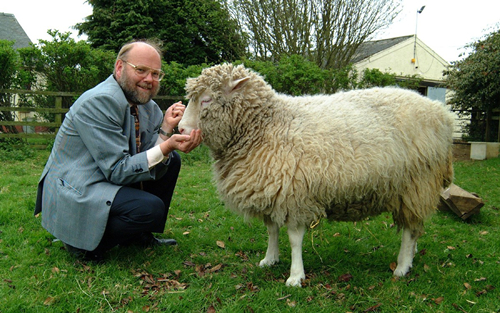
World’s Largest “Cloning Factory” Sets Up in Tianjin: To Build Assembly-Line Animal Cloning Laboratory
A veterinarian in Louisiana, USA, once spent $100,000 to clone his beloved dog, Melvin, successfully producing two identical little “Melvins.” Recently, the Administrative Committee of Tianjin Economic-Technological Development Area andYingke Boya Gene Technology(Tianjin) Co., Ltd. signed a strategic cooperation agreement, and the world’s largest “cloning factory” will be established in TEDA. The project plans to invest RMB 200 million to build the world’s only assembly-line animal cloning laboratory, a top-standard cloned animal center, a biodiversity gene resource bank, and a science and education exhibition center.
According to reports, Yingke Boya Gene Technology (Tianjin) Co., Ltd., established by the Boya Group in the Development Zone, has jointly built the world’s largest “cloning factory” in collaboration with the Peking University Health Science Center, the Tianjin International Joint Academy of Biomedicine, and the Sooam Biotech Research Foundation in South Korea. The facility will engage in cloning services for high-quality working dogs, pet dogs, non-human primates, premium beef cattle, and top-tier racehorses, thereby accelerating the application of cloning technology in modern livestock breed improvement and the provision of animal models for specific diseases.
Yingke Boya Gene Technology (Tianjin) Co., Ltd. is a subsidiary of Boya Holdings Group and serves as the project operating entity for the “Cloning Factory” initiative in Tianjin. Boya Holdings Group established a commercial cloning enterprise through a joint venture with Sooam Biotech Research Foundation in South Korea. By the end of 2015, the company had provided 550 cloned dogs to multiple countries worldwide, including China, for specialized duties at airports, customs, and police forces.
Anke Biotech Acquires Zhongde Meilian for 450 Million Yuan to Accelerate Precision Medicine Expansion
Anke Biotechnology, which had originally planned to acquire a 25% equity stake in Zhongde Meilian this July to expand its precision medicine portfolio, has changed its strategy four months later from a minority investment to full ownership. The company intends to spend RMB 450 million in cash to acquire Zhongde Meilian in its entirety. Based on the previous valuation of RMB 112.5 million for a 25% stake, the current price of RMB 450 million remains consistent with the valuation from four months ago.
Regarding this acquisition, Anke Biotechnology stated that the transaction will facilitate the company’s research and development and industrialization of gene sequencing technologies, expand its core business into the target company’s precision medicine sector, and accelerate the realization of its diversified development strategy.
According to available information, Zhongde Meilian was established in 2006. Led by Dr. Zheng Weiguo, a nationally appointed distinguished expert, the company is a leader in the field of nucleic acid testing for forensic applications. It has built a comprehensive forensic DNA testing technology platform and successfully developed the world’s most complete series of forensic DNA fluorescent detection kits. Currently, its forensic products are sold to more than 320 laboratories across China, including public security criminal investigation departments, courts, and universities.
Yesterday (November 24), after a one-week trading suspension, Anke Biotechnology announced that it had signed a framework agreement to acquire 100% equity interest in Zhongde Meilian. The company intends to pay RMB 450 million in cash for the full acquisition. Based on this acquisition price, the valuation of Zhongde Meilian reflects neither a premium nor a discount compared to its valuation four months ago. Meanwhile, the former shareholders of Zhongde Meilian have committed that the company’s net profits for the years 2015 to 2017 will be no less than RMB 20 million, RMB 26 million, and RMB 33.8 million, respectively. Any shortfall will be compensated by the former shareholders, while 30% of any excess net profit will be awarded to Zhongde Meilian’s management team and core technical personnel. Given Anke Biotechnology’s full-year net profit of RMB 109.85 million in 2014, the committed net profit for Zhongde Meilian in 2015 represents 18.21% of Anke Biotechnology’s net profit for the previous year.Building a Comprehensive Precision Medicine PlatformThe shift from a minority stake to a full acquisition is viewed by the industry as a move driven by Anke Biotechnology’s optimism about the future prospects of Sino-German-American United. This significant capital increase and acquisition of 100% equity marks another important strategic layout for the company in the field of precision medicine.
Southwest Securities stated in its research report that Anke Biotechnology’s announcement to change its stake in Zhongde Meilian from a minority investment to a full acquisition reflects strong confidence in Zhongde Meilian’s growth prospects. Currently, Zhongde Meilian has collaborated with Zhejiang University, the Ministry of Public Security, and other institutions to successfully develop new products such as rapid prenatal diagnostics, paternity testing, and canine STR-DNA analysis, while actively expanding into new fields including healthcare, reproductive medicine, and agriculture. In the future, leveraging Zhongde Meilian’s leading advantages in genetic testing, Anke Biotechnology will advance the research and development of gene sequencing technologies and their clinical applications, with the industry chain expected to extend into personalized diagnosis and treatment as well as precision medicine.
An anonymous private equity investor stated that the chairman of Anke Biotechnology, who comes from a technical background, has sufficient enthusiasm for research and development. However, this established biotechnology company had previously received less attention than rising stars such as Daan Gene. Anke Biotechnology has been highly active this year. In the first half of the year, it restructured and acquired 100% equity in Soho Yiming, entering the upstream peptide drug industry chain; shortly thereafter, it launched a collaboration with Boyoung Ji on CAR-T cell therapy. Now, it is converting its minority stake in Zhongde Meilian into a full acquisition, aiming to make significant strides in the field of precision medicine.
On the other hand, according to Guosen Securities, in addition to its forensic medicine business, Zhongde Meilian has also accumulated capabilities in molecular diagnostic technologies for tumors, with corresponding clinical products currently in the regulatory approval stage. It is expected that after being integrated into Anke Biotechnology, the subsequent technology commercialization process will be accelerated by leveraging the resources of the listed company.
2016 Investment Strategy for the Medical Device Industry: Policy Support Propels the Rise of Domestically Produced Medical Devices
From the perspective of policies throughout 2015, the state’s approach toMedical DevicesThe industry has received substantial government support, with its status and importance significantly elevated. Import substitution has become the primary trend in industry development, while regulations and policies have been frequently introduced, aligning with international standards as regulatory oversight continues to tighten. We anticipate that this trend will persist in 2016, with the state’s support for the medical device industry remaining unchanged.
From January to September this year, the medical device industry achieved cumulative operating revenue of RMB 169.346 billion and cumulative total profits of RMB 14.612 billion, with year-on-year growth rates of 11.63% and 6.99%, respectively. The administrative expense ratio and selling expense ratio showed an upward trend. The medical device industry is expected to maintain steady overall growth in 2016.
Past 12 MonthsMedical Device SectorAs of November 20, over a 12-month period, the Medical Devices Index rose by 60.36%, outperforming the CSI 300 Index by 17.89 percentage points and the Biopharmaceutical Index by 11.08 percentage points, ranking second among the sub-sectors of biopharmaceuticals, trailing only the Pharmaceutical Services sector.
Investment Recommendation: Maintain over the next twelve months,Medical DevicesIndustry “Overweight” Rating: Consider the Following Investment Targets: 1) High-performance medical device manufacturers with strong expectations for import substitution, such asCR Wandon, Edan Instruments; 2) Growth-oriented companies with predictable growth trajectories, strong capabilities in external M&A, and a strategic shift toward platform-based development, such asKaitai; 3) Companies expected to benefit from policies under the “13th Five-Year Plan,” such as those in the elderly care and two-child policy sectors, e.g.,Yuwell Medical, David Medicaletc.; 4) some hot topics in technological innovation, such asHigh-end Imaging Equipment, Medical Robots, Fully Bioresorbable Vascular Stents, Mobile Healthcareand other concepts.