

Rumors of Merger Between iKang Healthcare and Meinian Onehealth Spark Denial from iKang Chairman
Today's Highlights:
Samsung to Invest $740 Million in New Biopharmaceutical Plant
iKang and Meinian Onehealth to Merge? iKang Chairman Zhang Ligang Denies Acquisition
Taikang Invests RMB 100 Billion in Integrated Medical and Elderly Care; First Rehabilitation Hospital Opens in Beijing
Forget Pfizer-Allergan; Teva Is the Next Investor Darling!
eDoctor, Focused on Digital Medical Marketing, Secures $10 Million in Series A Funding from Honghui Capital to Bring Education and Marketing into Doctors’ Living Rooms
Johnson & Johnson Develops First Blood Glucose Meter Supporting Apple HealthKit
JACS: Paper-Based DNA Diagnostics with Accuracy Rivaling PCR
Distribution Map of 157 Gene Sequencing Institutions in China
2015 World Robot Conference: Medical Robotics Session – Rehabilitation Medical Robots Are Experiencing Accelerated Growth
Samsung to Invest $740 Million in New Biopharmaceutical Plant
According to The Wall Street Journal’s online edition, Samsung Group’s new biopharmaceutical plant announced on Friday that it will invest $740 million to build a new facility in South Korea, which will double the plant’s production capacity upon completion. The company expects the project to be completed in 2018.
Samsung Biologics Co., Ltd.Founded in 2011, 97% bySamsung ElectronicsWith a controlling stake, Samsung Biologics is poised to become the world’s largest upon completion of its new plant.Contract Manufacturing Organization (CMO). Currently,Samsung BiologicsWith one production workshop already in operation, the second facility, scheduled for completion next year, will be five times larger than the first. The newly planned third facility targets an annual production capacity of 180,000 liters. These expansion plans underscore Samsung’s ambitious aspirations in biopharmaceutical technology.
Analysts suggest that as smartphone business growth slows, biopharmaceutical technology represents Samsung Group’s next potential growth driver. Samsung has stated its intention to leverage the success of its semiconductor manufacturing operations to advance its biotechnology production capabilities.

Is iKang Merging with Meinian Onehealth Healthcare? iKang Chairman Zhang Ligang Denies Acquisition
Jiangsu Sanyou Group Co., Ltd. announced on the 29th that it had joined a buyer consortium in issuing a non-binding preliminary privatization proposal (the “Proposal”) to the Board of Directors and its Special Committee of iKang Healthcare Group, Inc. (iKang Healthcare Group Co., Ltd.) (NASDAQ: KANG, “iKang Guobin”). Members of the buyer consortium include Meinian Onehealth, Shenzhen Ping An Decheng Investment Co., Ltd. (“Ping An”), Taiping Guofa (Suzhou) Capital Management Co., Ltd. (“Taiping”), Huatai Ruilian Fund Management Co., Ltd. (“Huatai Ruilian”), Beijing Sequoia Kunde Investment Management Center (Limited Partnership) (“Sequoia”), and Cathay Private Equity Investment Fund (“Cathay”), among others. It is evident that, apart from Meinian Onehealth, all the financial investors are well-established companies in the industry.
The buyer consortium’s offer price reflects a highly attractive premium. Based on the submitted preliminary offer, the buyer consortium will acquire all outstanding ordinary shares and American Depositary Shares (ADSs) of iKang Healthcare Group, Inc. (“iKang”) in cash at a price of $22 per ADS or $44 per ordinary share. This offer represents a 36.9% premium over the unaffected closing price on August 28, 2015 (the last trading day before iKang received the privatization proposal from its internal buyer consortium), and also represents a 23.6% premium over the acquisition price previously offered by iKang’s internal buyer consortium.
The broader health and wellness sector is a key area of focus and investment for all members of the buyer consortium. The consortium unanimously agrees that Meinian Onehealth and iKang Guobin are both industry leaders in China’s rapidly growing preventive health examination market. Should this transaction be successfully completed, and if the two companies can subsequently leverage their respective strengths through a strategic alliance, they will establish an industry leader in China’s fragmented health management market. This consolidation will significantly optimize the industry landscape, promote standardized, orderly, and healthy development, deliver greater convenience to customers, and create enhanced value for shareholders of both parties.
However, iKang Guobin is clearly not inclined to be brought under the wing of Meinian Onehealth. Zhang Ligang, its CEO, explicitly denied the feasibility of the acquisition on iKang Guobin’s official WeChat account and reaffirmed his determination to pursue privatization. If iKang Guobin’s privatization process proceeds as planned, the competitive landscape dominated by the two giants in China’s health checkup industry will remain unchanged for a considerable period.
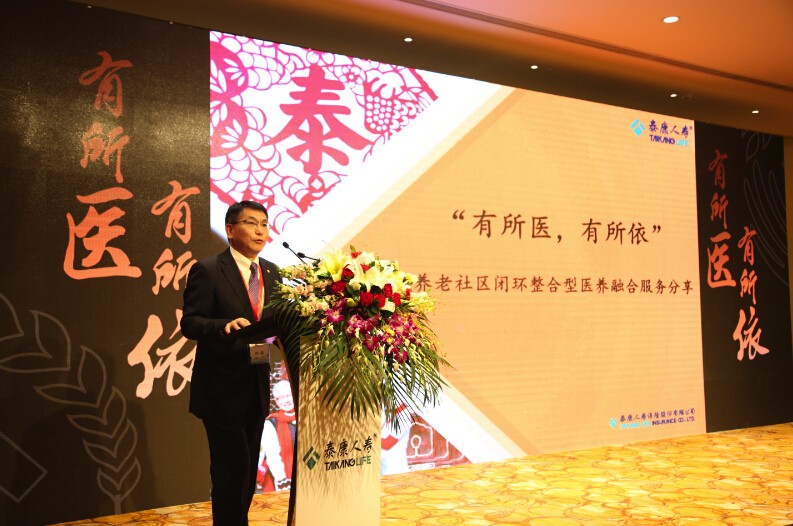
Taikang Invests RMB 100 Billion in Integrated Medical and Elderly Care; Its First Rehabilitation Hospital Opens in Beijing
Currently, Taikang Rehabilitation Hospital has taken the lead in establishing an electronic medical record (EMR) sharing system within the community, comprehensively documenting the health status of residents and providing personalized diagnosis and treatment for patients. Centered on the “EMR Sharing System,” the rehabilitation hospital has established six major operational centers, including: the Medical and Elderly Care Integration Innovation Center, the Community Resident Health Management Center, the Geriatric Rehabilitation Treatment Center, the Community Resident Polypharmacy Management Center, and the Expert Specialist...
During the 13th Five-Year Plan period, Taikang will complete the layout of elderly care communities in seven cities—Beijing, Shanghai, Guangzhou, Sanya, Suzhou, Chengdu, and Wuhan—becoming China’s largest chain of integrated medical and elderly care communities.
On November 28, Taikang Yan Garden Rehabilitation Hospital, the first secondary-level specialized geriatric hospital invested in by Taikang Life Insurance, was completed and opened within the Taikang Community · Yan Garden elderly care community in Changping District, Beijing. With a total investment of RMB 290 million, the hospital covers a construction area of approximately 13,000 square meters and has an initial capacity of 100 beds, and will gradually open its services to the public.
Taikang’s First Rehabilitation Hospital—Yanyuan Rehabilitation Hospital Completed
In June this year, the “Taikang Community·Yanyuan” elderly care community, which took eight years to build, officially commenced trial operations. The completion of Yanyuan Rehabilitation Hospital has truly realized Taikang’s strategy of integrating medical and elderly care services.
Not a Simple Combination of "Rehabilitation Hospital + Elderly Care Community"
He Chao, Deputy General Manager of the Medical Division at Taikang Community Investment Co., Ltd. and Dean of Yanyuan Rehabilitation Hospital, introduced that Yanyuan Rehabilitation Hospital is a modern secondary-level rehabilitation hospital equipped with advanced medical devices and technologies. With geriatrics and rehabilitation medicine as its key development focuses, the hospital integrates four core functions: primary community care, preventive health services, emergency management, and geriatric rehabilitation. It continuously provides comprehensive medical services to residents at various stages of life within the retirement community. “These services include basic medical care such as polypharmacy management, emergency response, single-disease patient management, and home healthcare, ultimately serving as a central hub for communication among patients, families, community medical providers, and caregivers.”
The integration of medical and elderly care is not a simple combination of "rehabilitation hospitals + elderly care communities," but rather a comprehensive system integrating emergency referrals, long-term care, preventive healthcare, and rehabilitation treatment, with long-term health management as its goal and geriatrics at its core.
“Human care must be continuous, whereas the current medical system is fragmented. Individuals are left to determine for themselves whether they are ill or not, without dedicated professionals to assist with medical planning and guidance. This situation stems from the absence of family physicians, general practitioners, and community-based medical services within China’s healthcare structure. Inconsistencies in physician training have further exacerbated gaps in medical service delivery.” He Chao, former President of Sir Run Run Shaw Hospital affiliated with Zhejiang University School of Medicine, has a clear understanding of the shortcomings in the current healthcare system. “From a medical perspective, the greatest significance of Taikang’s integrated medical and elderly care communities lies in providing continuous and consistent observation of individuals, along with comprehensive, whole-person guidance throughout their entire health journey. This approach fundamentally overturns the traditional concept of treating symptoms reactively—addressing headaches only when they occur and foot pain only when it arises—and instead emphasizes proactive prevention. Whether through community education, psychological intervention, or nutritional assessment, the aim is to maintain health by preventing serious adverse outcomes, utilizing better and more effective strategies that minimize medication use and rely on minimal medical interventions.”
Taikang’s senior living communities encompass five major sectors: independent living, assisted living, skilled nursing, memory care, and a secondary rehabilitation hospital. Currently, Taikang Rehabilitation Hospital has taken the lead in establishing an electronic medical record (EMR) sharing system within the community to comprehensively document residents’ health status and deliver personalized diagnosis and treatment. Centered on this EMR sharing system, the rehabilitation hospital has established six operational centers, including: the Medical-Care Integration Innovation Center, the Community Resident Health Management Center, the Geriatric Rehabilitation Therapy Center, the Community Resident Polypharmacy Management Center, the Specialist Consultation Center, and the Emergency Care Center. Leveraging these six operational centers, the rehabilitation hospital will conduct assessments of residents’ activities of daily living (ADL) and develop personalized health guidance plans based on their physical conditions.
Guided by the integrated philosophy of “medical care, elderly care, rehabilitation, and nursing,” Taikang has entered into a cooperation agreement with Peking Union Medical College (PUMC) to establish the “PUMC–Taikang Geriatrics Teaching and Training Program” within community settings. The two parties will provide services including bidirectional patient referral, remote consultations, and remote teaching. As a demonstration base for rehabilitation and long-term care under the Department of Geriatrics at PUMC, the program aims to explore and formulate standards for geriatric rehabilitation and long-term care services tailored to China’s national conditions.
Furthermore, building on the “Global Medical Direct Connect” service launched last year between Taikang and Johns Hopkins Medicine in the United States, Taikang has now partnered with Changping District Hospital of Traditional Chinese Medicine, Tsinghua Changgung Hospital, Peking University International Hospital, and Beijing Anzhen Hospital (Special Needs Department) to introduce a Green Channel for medical care, comprehensively enhancing the efficiency of medical diagnosis and treatment within Taikang’s senior living communities.
Invest Another 100 Billion Over the Next 5 to 8 Years
On November 11, the State Council Executive Meeting proposed new policies to promote the integration of medical care and elderly care. Subsequently, nine ministries and commissions, including the National Health and Family Planning Commission, jointly issued the “Guiding Opinions on Promoting the Integration of Medical and Health Services with Elderly Care Services,” explicitly calling for the integration of medical, rehabilitation, elderly care, and nursing resources through various measures such as establishing medical-elderly care consortia. The policy also supports elderly care institutions in providing medical services.
“One Community, One Hospital” is Taikang’s integrated medical and elderly care strategy. Driven by favorable national policies, Taikang has drawn on and introduced the U.S. “Kaiser Model” by building rehabilitation hospitals adjacent to its senior living communities. Through this “senior living community + rehabilitation hospital” model, it provides residents of these communities and surrounding areas with a closed-loop, integrated suite of medical and elderly care services spanning prevention, treatment, rehabilitation, and long-term care, thereby comprehensively safeguarding their health. During the 13th Five-Year Plan period, Taikang will complete the rollout of senior living communities in seven cities—Beijing, Shanghai, Guangzhou, Sanya, Suzhou, Chengdu, and Wuhan—achieving coordinated operations across these seven cities and becoming the company with the largest chain of integrated medical and elderly care communities in China.
“The seven planned communities span a total of 1.23 million square meters, comprising 13,000 residential units, and will be fully launched to the market within the next two to three years,” said Liu Tingjun, Vice President of Taikang Life Insurance and CEO of Taikang Community.
“Taikang’s integrated medical and elderly care projects have already attracted investments exceeding RMB 5 billion, with an additional RMB 100 billion to be invested over the next five to eight years, reflecting a sustained development trajectory. Taikang currently holds RMB 800 billion in assets, so from an asset-liability matching perspective, achieving this goal is entirely feasible,” said Chen Dongsheng, Chairman and CEO of Taikang Life Insurance. “The elderly care and healthcare industries align well with the characteristics of insurance funds: although they involve long investment horizons and slower returns, they offer stable yields. These two aspects precisely match the nature of insurance capital.”
Forget Pfizer-Allergan; Teva is the next investor darling!
For months, the biopharmaceutical market has been caught up in the fervor surrounding Pfizer’s acquisition of Allergan. Countless analysts have been speculating on whether this historic, largest-ever biopharma deal will create an unprecedented industry giant or accelerate Pfizer’s business divestiture. However, a different narrative has recently emerged in the capital markets, urging investors to look beyond Pfizer and Allergan and focus on a more noteworthy target: Teva Pharmaceutical Industries.
Currently, twenty investment institutions have rated the company as a “Buy,” even more than Allergan, which is currently in high demand. As the world’s largest generic drug manufacturer, Teva Pharmaceutical Industries has now become the most promising investment target in the eyes of investors. Earlier this year, Teva acquired Allergan’s generic drug business for $41 billion, further consolidating its advantage in this field. Influenced by this, the company’s stock price reached a record high of $72. However, shortly thereafter, the stock price fell by approximately 13%.
What has driven investors into a frenzy is that the company’s price-to-earnings (P/E) ratio has reached 11.04, a figure that makes Teva Pharmaceutical Industries appear to be an untapped goldmine in the eyes of investors. Statistics show that 69% of institutional investors currently recommend buying Teva’s stock.
In recent months, Teva Pharmaceutical Industries has been highly active. First, its investigational rare-disease drug SD-809 was granted Breakthrough Therapy Designation by the U.S. Food and Drug Administration (FDA). Then, just a few days ago, the company partnered with University College London (UCL) in the United Kingdom to leverage brain imaging technologies and open new frontiers in neurodegenerative disease research. Additionally, Teva has collaborated with Heptares Therapeutics on a joint research and development project focused on migraine treatments. It is conceivable that Teva may well become the new darling of the biopharmaceutical investment community in the years ahead.

eDoctor Focuses on Digital Medical Marketing, Secures $10 Million in Series A Funding from Honghui Capital, Aims to Bring Education and Marketing into Doctors’ Living Rooms
Digital Healthcare Marketing Firm eDoctor Completes Series A Financing, Securing Multi-Million-Dollar Investment from Honghui Capital
eDoctor is a well-established company with an 11-year history, founded in 2004, and has grown to a workforce of 240 employees. eDoctor has always focused on digital marketing in the pharmaceutical industry, facilitating effective communication among pharmaceutical companies, doctors, and patients, as well as managing medical representatives.
eDoctor’s success stories include a podcast platform in the field of surgery featuring videos and MOOCs, online open courses in oncology; a surgical education platform based on medical 3D technology, a medical visualization platform; and a patient management platform leveraging mobile internet technologies. To date, it has served over 500,000 physicians.
From the perspective of eDoctor’s marketing model serving pharmaceutical companies, its business model is not difficult to understand. Currently, the company has achieved annual revenues exceeding RMB 100 million. Such a revenue scale is relatively rare in the internet healthcare sector, which is also an important reason why Honghui Capital chose to invest in eDoctor.
“In the current volatile pharmaceutical market environment, we strongly recognize the trend toward digital marketing in the pharmaceutical industry. eDoctor is a leading enterprise in the sector, boasting not only a mature revenue model but also an outstanding team,” said Wang Hui, Managing Partner of Honghui Capital.
Following the completion of this round of financing, eDoctor will make significant breakthroughs in enhancing its medical education service capabilities. “Through our previous collaborations with pharmaceutical companies, we have tapped into extensive resources among physicians at major hospitals,” said Huang Yingfeng, founder of eDoctor. “These physicians from top-tier hospitals in first- and second-tier cities are also the primary target audience for our future expansion of continuing medical education.”
Huang Yingfeng hopes to attract physicians, enhance stickiness, and extend their dwell time on the platform by providing more high-quality content in the future.
Furthermore, in September 2015, eDoctor entered into a strategic partnership with IMS Health Market Research Consulting to further enhance its capabilities in data mining and data analysis within the professional healthcare sector.
Following Honghui’s completion of the investment, eDoctor will also engage in business collaborations with two of Honghui’s portfolio companies: Quyi Network, which operates mobile hospital solutions, and Antai Technology, which specializes in telemedicine. Clearly, the business activities of these two companies will help eDoctor further expand its reach and influence among physicians.
Johnson & Johnson Develops First Blood Glucose Meter Supporting Apple HealthKit
There are 400 million people with diabetes worldwide, and blood glucose meters are commonly used devices for monitoring blood sugar levels. However, companies have traditionally focused on making data acquisition simpler, cheaper, and more convenient, rather than enhancing the utility of the data to enable patients and healthcare providers to access and analyze monitoring results more easily. How can we make this diabetes data more “useful”? Johnson & Johnson offers a different perspective.
In the current U.S. market, major blood glucose monitoring manufacturers adopt varying approaches. Companies such as Dexcom, Medtronic, Insulet, and Glooko export blood glucose monitoring data via mobile apps and electronic health records to provide analytical insights. Philips has also recently launched a diabetes program aimed at collecting diabetes-related and associated data through a comprehensive mobile application.
Johnson & Johnson has taken an unconventional approach by partnering with Apple to become the first manufacturer to directly support the synchronization of blood glucose monitoring data with the Apple HealthKit app. The OneTouch Verio Sync meter, designed by LifeScan, a subsidiary of Johnson & Johnson, can wirelessly connect to its own mobile app. Now, these data can be directly synchronized to Apple’s HealthKit app, enabling the integration of diabetes data with more comprehensive health information.
HealthKit is an app launched by Apple in June 2014 that focuses on users’ holistic health. It integrates seven major categories of information—body metrics, fitness, personal details, nutrition, lab results, sleep, and organ function—to comprehensively display users’ personal health data. In simpler terms, HealthKit is an open software platform for third-party developers, providing data storage and aggregation services. Users can collect physical and physiological data through compatible hardware devices and submit it to the platform for analysis.
This initiative is also part of Johnson & Johnson’s plan to integrate its resources in the diabetes field. The company owns LifeScan, a manufacturer of blood glucose monitoring devices; Animas, an insulin pump manufacturer; and Calibra Medical, a developer of three-day wearable insulin patches. It also established the non-commercial educational and advocacy organization, the Johnson & Johnson Diabetes Institute, in 2007.
JACS: Paper-Based DNA Diagnostics with Accuracy Rivaling PCR
DNA analysis is crucial for the diagnosis and monitoring of many diseases. The most common and reliable method for DNA testing is the Polymerase Chain Reaction (PCR), which offers high specificity, high sensitivity, and ease of operation with time efficiency; however, it still requires specialized equipment in a laboratory setting. If more convenient and cost-effective methods for DNA analysis were available, goals such as reducing the financial burden on patients and increasing early screening rates for certain diseases would be easier to achieve.
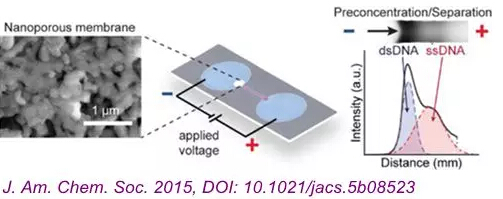
Recently, David Sinton and colleagues from the University of Toronto in Canada utilized paper-based devices to perform direct DNA analysis via ion concentration polarization (ICP) under an applied electric field. This study was published in J. Am. Chem. Soc.
The ion concentration polarization method, invented by Sinton last year (Anal. Chem., 2014, DOI:10.1021/ac502597v), can control the movement of charged molecules on wet paper. His research group has now applied this technique to manipulate the flow direction of DNA.
First, they print wax onto paper to define a reservoir and a long, narrow channel. At the edge of the reservoir, they coat a small area of the paper with positively charged Nafion polymer. Dye-labeled DNA is then injected into the reservoir. By applying an electric field across the paper, the negatively charged DNA accumulates in the Nafion-coated region. The polarity of the electric field is then reversed, causing the DNA to migrate down the channel and separate based on differences in molecular weight and charge. By comparing the results with those of standard DNA samples, the type of DNA under investigation can be identified. This process is somewhat similar to gel electrophoresis of DNA samples, but according to Sinton, this method is simpler and more cost-effective, with each test strip costing only a few cents.
Sinton et al. subsequently conducted tests on clinical samples. Within just ten minutes, the preconcentration, separation, and detection of hepatitis B virus (HBV) DNA in human serum samples were completed. Moreover, this technique achieved a limit of detection for HBV DNA of only 150 copies/mL, thereby eliminating the need for prior viral amplification and making it sufficient for the early diagnosis of hepatitis B. The team also employed this method to analyze the proportion of fragmented DNA in human semen samples to assess sperm viability. The results obtained with this method were consistent with those from the classic Sperm Chromatin Structure Assay (SCSA). In all cases, the conclusions derived from this paper-based method matched the final PCR-based clinical diagnostic conclusions, achieving a 100% clinical diagnostic accuracy rate.
Currently, the team is planning to design a portable device that provides the appropriate voltage for this paper-based technology and allows for direct observation of the results.
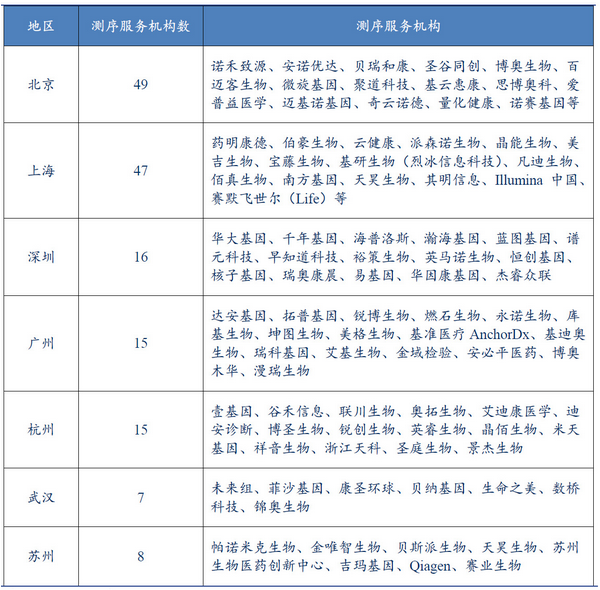
Distribution Map of 157 Gene Sequencing Institutions in China
The gene sequencing industry has developed rapidly, with next-generation sequencing (NGS) as the mainstream technology. Currently, first-generation gene sequencing technology can no longer meet the needs of research applications due to its low throughput and long sequencing time. Next-generation sequencing technology, characterized by high throughput and low cost, is currently the most widely used sequencing technology, with significantly reduced sequencing time compared to first-generation technology. As an important component of precision medicine, gene sequencing has experienced rapid development in recent years driven by technological advancements and declining costs. The market size grew from $794 million in 2007 to $4.5 billion in 2013, representing a compound annual growth rate (CAGR) of 33.5%. It is expected to maintain rapid growth in the coming years, reaching $11.7 billion by 2018, with a CAGR of 21.1%.
The upstream segment of the industry chain is dominated by European and American enterprises, while Chinese companies are primarily concentrated in the mid-to-downstream sequencing services sector, with a growing trend of extending upstream. Currently, China’s gene sequencing firms are mainly focused on mid-to-downstream sequencing services, whereas the upstream supply of gene sequencing equipment and consumables involves high technical barriers and is essentially monopolized by foreign companies. As core gene sequencing technologies remain firmly controlled by Western manufacturers of sequencing instruments, reagents, and consumables—represented by Illumina—China’s genetic testing industry lacks full pricing power and remains constrained by European and American firms. To change this situation, Chinese companies are beginning to extend their presence upstream in the industry chain.
The gene sequencing application market boasts substantial growth potential, with China currently focusing on four primary directions. The downstream clinical applications of gene sequencing approved by the China Food and Drug Administration (CFDA) fall into four categories: diagnosis of genetic diseases, prenatal screening and diagnosis, preimplantation genetic diagnosis, and tumor diagnosis and treatment. Non-invasive prenatal screening is currently the most mature product with the highest consumer acceptance. Furthermore, with the relaxation of China’s two-child policy, the market is poised for further expansion. Tumor diagnosis and treatment represent the application segment with the greatest development potential. Cancer has become the second leading cause of death globally, and with the advent of an aging society in China, its incidence rate is expected to rise further. Consequently, the application of next-generation sequencing (NGS) in oncology holds immense potential for growth.
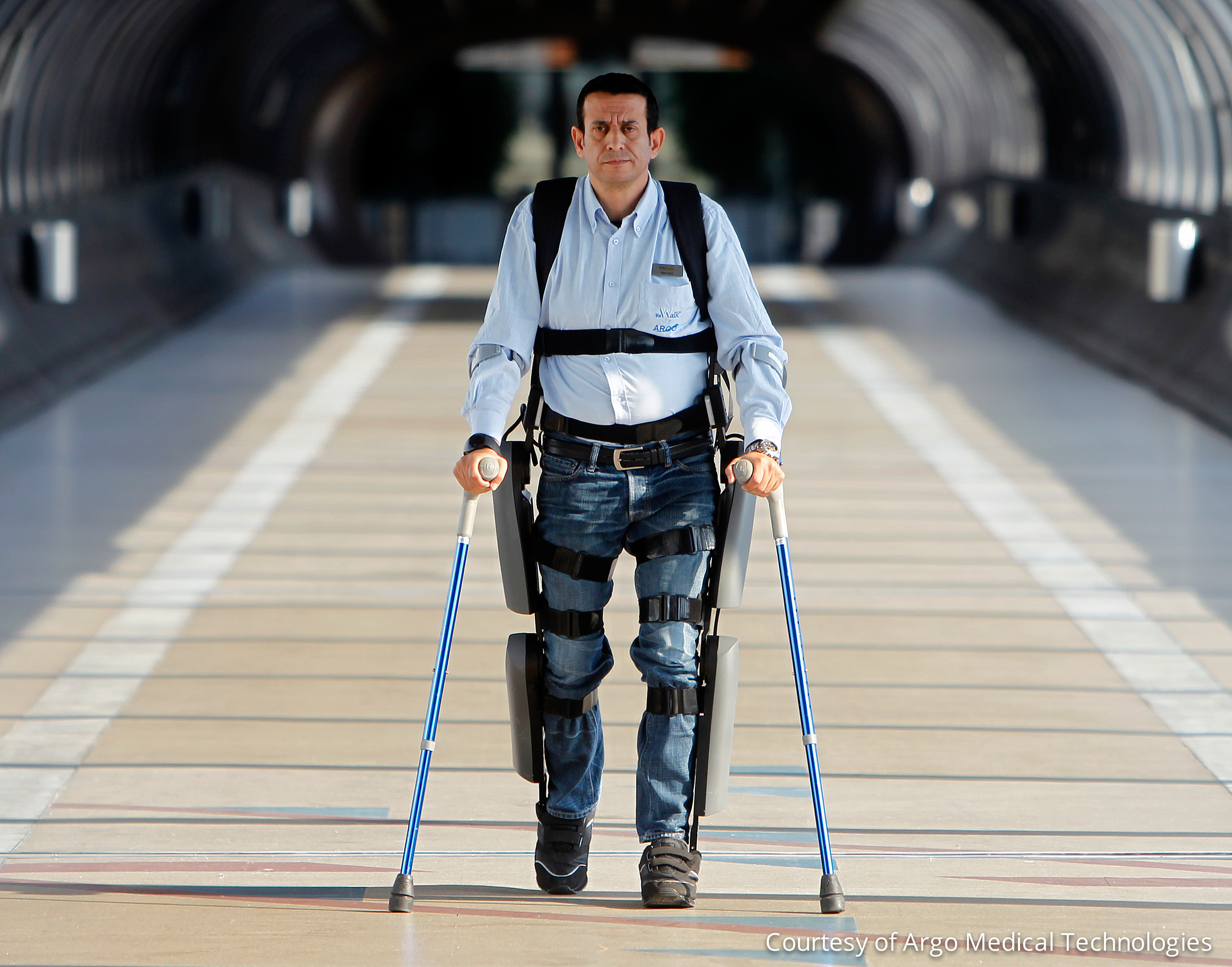
2015 World Robot Conference: Rehabilitation Medical Robots Are Experiencing Accelerated Growth
Medical robots, as a niche segment of the robotics industry, hold broad application prospects in disease diagnosis and treatment, precision surgery, rehabilitation, and the healthcare services sector. The advent of population aging will further heighten health awareness among both society and individuals, creating significant opportunities for the development of the medical and health industry. Medical robots are categorized into surgical robots and rehabilitation robots. The emergence of surgical robots aligns with the trend toward precision surgery, while China’s social security system also presents opportunities for the development of domestically produced rehabilitation robots. The medical robot sector in China faces challenges such as long research and development cycles; historically, the disconnect between medicine and other disciplines has resulted in a lack of multidisciplinary support for R&D. Medical robot products require precise positioning and a focus on the development of core technologies or products, which necessarily entails the integration of medicine with other disciplines. The core principle is to develop practical solutions targeted at specific diseases, while continuously improving products based on feedback from doctors and patients/users. Industry standards should be jointly established by academic organizations and the industrial sector.
Medical robots are high-end medical device products, used in disease diagnosis and treatment,Precision Surgery, rehabilitation, and healthcare services hold broad application prospects. The advent of population aging will further raise health awareness among both society and individuals, bringing significant opportunities for the development of the medical and health industry. Medical robots are categorized into surgical robots and rehabilitation robots. According toWinter-Green ResearchData shows that the market sizes of surgical robots and rehabilitation robots were $3.2 billion and $220 million, respectively, in 2014, and are projected to reach $20 billion and $3.2 billion, respectively, by 2021, with compound annual growth rates (CAGRs) of 30% and 47%. In terms of market size, surgical robots hold greater value, but rehabilitation robots will experience faster growth.
Surgical RobotsThe emergence of surgical robots aligns with the development trend of precision surgery. Surgical robots have become powerful tools to assist surgeons in performing operations. For instance, the da Vinci Surgical System has been deployed in 300 hospitals worldwide, bringing significant benefits to patients due to its minimal trauma, reduced blood loss, and faster recovery. 1) A surgical robot is not merely an instrument; as an information platform, it connects various information systems; 2) The advent of surgical robots supports the goal of achieving precision in surgery. Surgical navigation systems can provide surgeons with real-time 3D scanned images. If transparent imaging of human tissues can be achieved, damage to internal organs during surgery will be minimized to the greatest extent possible; 3) In the era of big data, surgical robots may be pre-programmed to reduce surgical risks. With the application of minimally invasive surgery, telemedicine, and 3D printing technology in the medical field, the demand for surgical robots will continue to grow. Improvements are needed in hand-eye coordination for surgeons operating via screens, instrument constraints, and the dexterity of instrument endpoints.
China’s social security system also creates opportunities for the development of domestically produced rehabilitation robots.Rehabilitation RobotThere are two primary objectives: functional recovery training and functional substitution for neurological disorders. In China, the mortality rate of cardiovascular and cerebrovascular diseases stands at 16%, while the disability rate is 80%, significantly higher than the 30% observed in developed countries. China sees 2 million new stroke cases annually. As individuals with disabilities in China often belong to socially vulnerable groups with limited economic resources, and given the imperfections in China’s social security system, they are unable to afford expensive foreign rehabilitation robots. This situation creates opportunities for the development of domestically produced rehabilitation robots.