

China's Pharmaceutical Sector Growth Expected to Slow to Around 10% Annually in Coming Years
Today's Highlights:
WeDoctor Group Secures $300 Million in Investment
Internet Dental Management Project “Love Teeth Plan” Secures Millions in Angel Funding
iKang Guobin Releases Fiscal Second Quarter 2015 Financial Results, with Net Profit of $11.6 Million
Global Medical Device Giants Release Q3 Earnings (Net Profit)
Johnson & Johnson and Huawei Join Forces to Make a Major Push into the Mobile Health Market
Silent Partner Smart Anti-Snoring Patch: Active Noise Reduction Starting from the Sound Source
Wearable Technology Decodes Body Language, Becoming a Personal Translator for the Deaf and Mute
New Research Discovery: Humans Have Evolved Genes to Resist Alzheimer’s Disease
The 13th Five-Year Plan for the Pharmaceutical Industry Prioritizes Innovation
Female Health Devices: Innovative Technologies Hold Market Potential
The overall growth rate of the pharmaceutical industry will slow down to around 10%.
Investment and Financing

WeDoctor Group Secures $300 Million in Investment
VCBeat recently learned that Shanghai Fosun Pharmaceutical (Group) Co., Ltd. disclosed in its announcement on external investments, showingFosun Pharmawith its wholly-owned subsidiaryRegal Gesture Limitedas the main entity, invested US$65 million in WeDoctor Group, accounting forWeDoctor Groupa 4.33% equity stake. Based on calculations from the announcement, WeDoctor Group’s valuation in this round has reached $1.5 billion. The announcement indicates that a total of seven companies invested in WeDoctor Group, among whichHillhouse GH-II Holdings Limited、Broad Street Investments Holding (Singapore) Pte., Ltd.、Yangzi River Investment LimitedRepresenting Hillhouse Capital, Goldman Sachs, and Tencent Investment respectively, the total investment amount reached $300 million. To date, WeDoctor Group has secured nine rounds of financing. In late September 2015, Guahaowang held a press conference to publicly announce its renaming as WeDoctor Group.
Internet Dental Management Project “Love Teeth Plan” Secures Millions in Angel Funding
Recently, a domestic internet-based dental management project, “Love Teeth Plan,” secured an angel round of financing amounting to several million RMB. This round was led by Dewo Fund. According to the Love Teeth Plan team, the funds will be used to strengthen risk control and enhance member experience, and willLove Teeth PlanMember services have expanded to other cities across China.
It is reported that the "Love Teeth" initiative has completed its internal beta testing in Beijing’s Wangjing area and will now consider a new round of financing. The project aims to provide customers with free routine oral healthcare services at mid-to-high-end clinics through online management and appointment scheduling, as well as a certain amount of free treatment coverage in the event of oral diseases.
Industry News

iKang Healthcare Group Releases Fiscal 2015 Second Quarter Financial Results, with Net Profit of $11.6 Million
Recently, iKang Healthcare Group (NASDAQ: KANG) released its unaudited financial report for the second quarter ended September 30, 2015. The report showed that iKang’s net revenue for the quarter was $98.6 million, a year-on-year increase of 23.9%; net profit was $11.6 million, a year-on-year decrease of 24.9%.
From the perspective of iKang Healthcare Group’s business operations, the segment with the largest revenue growth was dental services, which generated net revenue of $1.6 million, representing a year-on-year increase of 109.8%. This was followed by health examination services, with net revenue reaching $83.6 million, a 22.4% increase from $68.3 million in the same period last year. Net revenue from other services amounted to $6.4 million, up 20.8% from $5.3 million in the corresponding period of the previous year. According to the company, the growth was primarily driven by increased revenue from outpatient services, medical consultation services, and other medical services.
It is worth mentioning that yesterdayMeinian OnehealthThe Chairman expressed his desire to collaborate with iKang Guobin, which is currently undergoing privatization.

Global Medical Device Giants Release Q3 Earnings (Net Profit)
The Americas
GE (General Electric Company) reported a net profit of $652 million in the third quarter.
Johnson & Johnson reported a net profit of $3.36 billion in the third quarter.
Abbott Laboratories reported a net profit of $580 million in the third quarter.
Bristol-Myers Squibb reported third-quarter earnings of $706 million.
Europe
Philips Reports Net Profit of €253 Million in Third Quarter
Siemens Achieves Net Profit of €696 Million in Q3
Novartis Reports Net Profit of $1.81 Billion in Third Quarter
Roche reported a net profit of CHF 11.9 billion in the third quarter.
Bayer AG reported a net profit of €999 million in the third quarter.
Allergan PLC reported a net profit of $5.3 billion in the third quarter.
China
Mindray Reports Net Profit of $51 Million in Q3

Johnson & Johnson and Huawei Join Forces to Make a Major Push into the Mobile Healthcare Market
Recently, Huawei officially launched its latest flagship product, the Mate 8, at the Shanghai World Expo Center. The most refreshing aspect of this launch event was the introduction of a new built-in "Sports and Health" application management platform, which provides users with dual services for exercise monitoring and health management. The highlight of this application is its collaboration with medical device giant Johnson & Johnson Medical to create a comprehensive personal blood glucose management system. Leveraging nearly 30 years of global experience in blood glucose monitoring and management, LifeScan, Johnson & Johnson’s blood glucose monitoring brand, is expanding into mobile healthcare. By connecting patients, doctors, customer service representatives, and hospitals through a cloud-based data center, it establishes a closed-loop communication system that enables real-time remote services, offering more efficient solutions for blood glucose management.
Huawei's "Health" platform is similar to Apple'shealth-Kitand Samsung'sS-health, but it offers a superior operational experience that better aligns with the usage habits of Chinese users. First, users can easily have their exercise data—such as steps, distance, and calories burned—automatically recorded on this platform, and they can even view activity data for specific days or time periods. Additionally, the platform helps users track more complex health metrics, including blood pressure, blood glucose, weight, and sleep patterns. By collaborating with major international healthcare brands to build a “cloud-based” health management platform, Huawei enables users to synchronize measurement data to the platform simply by using a compact medical accessory. This data is organized into daily, weekly, and monthly views, facilitating a more intuitive understanding of health trends. With a focus on chronic disease management, the device meets core needs for long-term tracking of exercise, blood pressure, blood glucose, weight, and ECG data, offering exceptional multifunctionality in a single device!
As a home blood glucose management consultant, Johnson & Johnson LifeScan officially announced on the same day a strategic partnership with the Huawei Health Platform to jointly build “Home Blood Glucose Management Cloud Platform”. This collaboration leverages the Blood Glucose Data Transfer Device recently launched by Johnson & Johnson LifeScan:SteadyCare Assistant. By simply using a small interface, the precise blood glucose readings from the Johnson & Johnson OneTouch glucometer can be transmitted to the Huawei Health platform. The Huawei Health app then performs comprehensive assessment and analysis, providing users with the most scientifically grounded self-management plans for blood glucose through intuitive statistical data. Currently, Huawei has already partnered withGuahao.com, Chunyu Doctorhave launched a collaboration. For mobile users, this is more than just simple service integration; more importantly, they can share their health data recorded on the platform with these service providers and physicians, and receive advice on health management and medical care.
New Technologies

Silent Partner Smart Anti-Snoring Patch: Active Noise Cancellation at the Source
Noise-canceling headphones are a common sight; wearing them can filter out much ambient noise, including the snoring of roommates. However, Silent Partner has taken a different approach this time by targeting the sound source rather than the receiver, developing an intelligent anti-snoring patch.Silent PartnerActive noise cancellation technology is employed, which emits anti-phase sound waves to counteract and attenuate the original sound waves, thereby achieving noise reduction.
In terms of appearance, this smart anti-snoring patch closely resembles the nasal strips commonly seen in daily life. Its flexible design ensures a snug fit for various face shapes. Additionally, the patch utilizes medical-grade adhesive, allowing it to be repeatedly applied to the user’s nose and making it suitable for all skin types. Weighing only 0.83 grams and equipped with a built-in lithium-ion battery, it offers reliable overnight performance and can be easily recharged in the morning.
However, it can be used for no more than one month. The package also includes 14 months' worth of replacement units. The usage process is very simple: place the anti-snoring strip on the bridge of the nose, secure it in place, and then turn on the switch.
The anti-snoring patch is priced at $99 and is currently being crowdfunded.
Wearable Technology Decodes Body Language, Becoming a Personal Translator for the Deaf and Mute
There are currently 70 million deaf and mute people worldwide. As a special group, they can use body language to communicate with others; however, if they encounter individuals who do not understand body language, normal communication between the two parties becomes impossible. RecentlyTexas A&M University(Texas A&M University) has developed a new type of wearable technology that may break down communication barriers between deaf-mute individuals and those who do not understand sign language in the future.
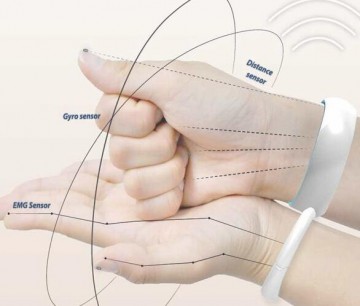
Similar to other wearable devices, this device also relies on sensors to function. These include sensors that track the hand gestures of deaf and mute individuals, as well as sensors that capture electromyography (EMG) signals generated by their muscles during sign language communication. The system can identify and analyze these signals to “interpret” what they are saying.
Professor of Biomedical Engineering, Texas A&M UniversityRoozbeh Jafaristated that this new wearable device system can “Decoding"Muscle movements captured from the wrist, some of which are obtained indirectly by tracking finger movements. For instance, deaf-mute individuals sometimes use fists for body language, and such muscle activity differs from arm movements."
For researchers, this disparity posed the greatest challenge in developing the system. In real-world scenarios, deaf and mute individuals employ a wide variety of communicative gestures, requiring the system to accurately process and translate these diverse signals in real time—a task that demands robust algorithmic support.
Another challenge is that even when two deaf-mute individuals perform the same gesture, their executions are not identical. This indicates that there is no unified standard for these body languages, thereby increasing the difficulty of system recognition. However, researchers have enabled the system to “learn” from users through programmed algorithms.
“When you first use this wearable device, there may be some operational errors in the system. However, as you use the device more frequently, the system will gradually learn user behavior and establish its own learning model centered around the user,” said Jafari.
Currently, the device remains a prototype that relies on Bluetooth connectivity to computers or smartphones to transmit translated body language. However, the team has stated that they plan to miniaturize the device in the future, enabling users to wear it on their wrists similar to a smartwatch.
New Research Finding: Humans Have Evolved Genes That Protect Against Alzheimer’s Disease
As the saying goes,"An Elder in the Home is a Treasure"Researchers at the University of California, San Diego have discovered that humans have gradually evolved unique genetic variants that protect the elderly from neurodegenerative and cardiovascular diseases. The study was published in the November 30 issue of the Proceedings of the National Academy of Sciences (PNAS).
In the standard model of natural selection, individuals should die once they surpass their reproductive age. This is because natural selection strongly favors genetic variations that enhance reproduction, even at the cost of adverse effects in later life, which constitutes a major cause of human aging. Nearly all vertebrates conform to this rule, with humans (and certain whale species) being the exception; humans can survive for decades beyond their reproductive years.
In fact, older adults make significant contributions to human society, not only by helping younger generations care for children but also by transmitting important cultural knowledge. Age-related cognitive decline poses a major threat to the health of older adults, impairing their ability to live independently. Throughout the long course of evolution, many human genes have undergone specific changes. “To our surprise, humans have acquired genetic variants that protect against Alzheimer’s disease,” said Professor Ajit Varki, who led the study.
CD33 is a key receptor on the surface of immune cells that regulates immune responses to prevent autoimmunity and reduce unnecessary inflammation. Previous studies have shown that a specific variant of CD33 can inhibit the accumulation of beta-amyloid in the brain. The accumulation of beta-amyloid is considered a hallmark of late-onset Alzheimer’s disease, a condition unique to humans that occurs after the reproductive period.
Researchers investigated CD33 regulation in humans and chimpanzees to understand the CD33 variant that protects against Alzheimer’s disease. They found that levels of the protective human CD33 variant are four times higher than those in chimpanzees. In addition, many other genes harbor variants associated with the prevention of cognitive decline that are unique to humans, such as APOE. The ancestral form of this gene, APOE4, is a notorious risk factor implicated in Alzheimer’s disease and cerebrovascular disease. This study demonstrates that the APOE2 and APOE3 variants confer protection against dementia.
“Older adults play a vital role in raising offspring and transmitting knowledge and culture, making significant contributions to the continuity of human society. The evolution of protective variants in genes such as CD33 and APOE is likely associated with these factors,” said Associate Professor Pascal Gagneux.
Policy Trends

December 1, 2015, marked the 28th World AIDS Day. Recently, Li Keqiang, Member of the Standing Committee of the Political Bureau of the CPC Central Committee and Premier of the State Council, issued important instructions on strengthening HIV/AIDS prevention and control efforts.
The instructions pointed out that, in response to the new characteristics of the HIV/AIDS epidemic, efforts should be accelerated to formulate the “13th Five-Year” Action Plan for Curbing and Preventing HIV/AIDS. Meanwhile, investment should be further increased to ensure funding for prevention and control, with priority support given to areas with severe epidemics and impoverished regions in central and western China, while improving the compensation mechanism for designated hospitals for HIV/AIDS prevention and treatment.
Furthermore, the instructions pointed out that the AIDS Prevention Fund should play a guiding role, with active support for the participation of social organizations. According to the instructions, efforts should be accelerated in the research and development, approval, production, and supply of drugs for HIV/AIDS prevention and control; the list of free antiretroviral therapy medications should be adjusted; and policies regarding medical security, social assistance, and other forms of care and support should be implemented to alleviate the burden on people living with HIV and AIDS patients. The aim is to maximize the identification of infected individuals and reduce transmission, thereby sustaining China’s HIV epidemic at a low prevalence level.
Li Keqiang stated that HIV/AIDS prevention and control are vital to the health of the population and to social harmony and stability, constituting a key component in building a Healthy China. While China has achieved significant progress in HIV/AIDS prevention and control, the task remains arduous.

The 13th Five-Year Plan for the Pharmaceutical Industry Prioritizes Innovation
The pharmaceutical industry’s eagerly anticipated 13th Five-Year Development Plan is about to be unveiled. Recently, the China Pharmaceutical Enterprise Management Association hostedThe 28th China Pharmaceutical Industry Development Summit ForumAt the event, leaders from relevant national ministries and commissions revealed several key highlights of the 13th Five-Year Plan compared to the 12th Five-Year Plan, with promoting innovation being a major component.
It is understood that, in the 《Made in China 2025》The formulation of the 13th Five-Year Plan for the pharmaceutical industry under the broader national framework constitutes a national strategic plan. Jointly developed by the Ministry of Industry and Information Technology and other relevant departments, this plan pools industry expertise to guide sectoral development. During the 13th Five-Year Plan period, the pharmaceutical industry must align closely with the goal of building a moderately prosperous society, achieve upgraded development, further meet multi-level and diversified health needs, and serve the advancement of healthcare undertakings.
According to interpretations by relevant leaders of the Ministry of Industry and Information Technology,Pharmaceutical IndustryIt is essential to advance the services for building a Healthy China while also contributing to GDP growth and overcoming the middle-income trap. Adhering to the laws of industry development requires achieving upgraded development, which entails both expanding new growth areas and optimizing existing assets. To effectively expand new growth areas, the focus must be on strengthening innovation capabilities in the pharmaceutical sector. During the 13th Five-Year Plan period, the key to achieving upgraded development in the pharmaceutical industry lies in implementing an innovation-driven development strategy. Innovation must be placed at the core of the overall development of the pharmaceutical industry, with enhanced technological prowess serving as the strategic pillar for building a strong pharmaceutical nation, thereby boosting the innovation capacity of the pharmaceutical industry. Meanwhile, it is crucial to fully leverage tools such as the internet and big data to enhance innovation capabilities, organize collaborative innovation among diverse innovation entities, and achieve optimal allocation of innovation resources.
Last year, China confirmed the need to accelerate the implementation of the existing 16 National Major Science and Technology Projects, which include the creation of new drugs. Building on this foundation, with 2030 as the target horizon, a new batch of major science and technology projects reflecting national strategic intentions will be selected. These include areas such as quantum communication, intelligent manufacturing and robotics, and health security, within which another set of major science and technology projects will be deployed. Among these, the area relevant to the pharmaceutical industry is health security. This clearly demonstrates that the state will increase investment to support innovation.
Made in China 2025》 as a key area for development. Within the strategic emerging industries, the pharmaceutical sector ranks in the second tier; however, under the "Made in China 2025" initiative, pharmaceuticals have become a priority and are positioned in the first tier. This demonstrates the continuously rising status of the pharmaceutical industry, reflecting unprecedented national attention. Furthermore, during the 13th Five-Year Plan period, preferential policies in areas such as fiscal and taxation will be introduced to actively support Made in China 2025, including the intelligent manufacturing roadmap for the pharmaceutical industry.
From the perspective of industry insiders, intelligent manufacturing in the pharmaceutical sector is a powerful lever and a primary focus for achieving transformation and upgrading in the pharmaceutical industry. Among listed companies, Chengyitong, Jianan Technology, and Truking Technology are high-quality targets representing Pharmaceutical Industry 4.0. They will play a significant role in the industrial upgrading of the pharmaceutical sector and the strategic transition toward sustainable growth. Furthermore, these companies are expected to achieve breakthroughs in orders during the “13th Five-Year Plan” period, benefiting from new opportunities driven by industry innovation.

Women’s Health Devices: Innovative Technologies Hold Market Potential
Research Consulting FirmGlobalDataA recent report indicates that the global women's health devices market is projected to grow at a compound annual growth rate (CAGR) of 3.7% over the coming years, rising from $1.8 billion in 2014 to $2.4 billion in 2021.
GlobalData stated in its report that the growth trend of the global women's health device market will mainly appear in the following 10 major markets, namely the United States, India, Brazil, China, France, Germany, Italy, Spain, the United Kingdom, and Japan. Among them, the main factors driving the growth of this market include doctors' and patients'Minimally Invasive TechnologyGrowing awareness, an increasing number of women seeking treatments for conditions related to reproductive and pelvic health, and rising incidence rates of these conditions.
GlobalData Medical Device AnalystPremdharanMeyyanIt was stated that the number of patients seeking treatments for reproductive and women’s health-related conditions is steadily increasing, a trend largely attributed to growing awareness of the significant impact these conditions have on women’s quality of life.
Meyyan points out that people are beginning to recognize that women’s quality of life can be significantly improved through new technologies, while also realizing that a range of alternative therapies—such as endometrial ablation and uterine artery embolization—are minimally invasive compared with traditional surgery. For women suffering from uterine abnormalities such as heavy menstrual bleeding and uterine leiomyomas, these new technologies undoubtedly provide a safe and effective treatment option for patients who wish to avoid invasive surgical procedures.
Analyst Meyyan stated that competition in the women’s health market is intensifying as more women seek treatments for uterine health issues and urinary and fecal incontinence, further demonstrating that these new technologies have achieved certain therapeutic efficacy and meet safety standards.
Meyyan continued, “Although emerging technologies hold the potential to revolutionize the women’s healthcare market, more robust clinical data must be established before the women’s health device sector can achieve sustainable expansion. Furthermore, during the forecast period, the high cost of these new therapies may also pose a barrier to their market growth.”
The overall growth rate of the pharmaceutical industry is expected to slow to around 10% in the coming years.
Xiamen, Fujian Province, recently hosted the 28th China Pharmaceutical Industry Development Summit. At the conference, relevant authorities announced that they would accelerate the review and approval process for innovative drugs aimed at preventing and treating certain major diseases, as well as for pharmaceuticals included in the National Science and Technology Major Projects and the National Key R&D Programs.
Participants generally agreed that the pharmaceutical industry reached a turning point in 2015,The growth rate of the pharmaceutical industry will slow down to around 10% in the coming years, making it difficult for broad-based opportunities to reemerge.. But on the other hand,Demand remains inelastic, with substantial long-term growth potential. With the acceleration of new drug approvals and the introduction of supportive policies, innovative drugs will become the main investment theme in the pharmaceutical and biotechnology industry.
Slowdown: The Era of High Growth in the Pharmaceutical Industry Is Over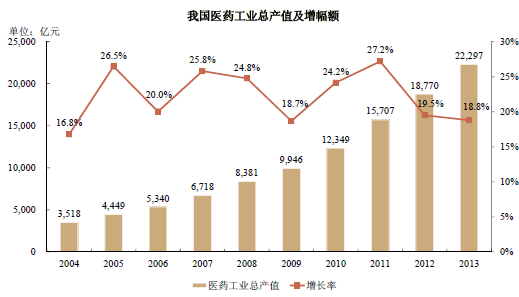
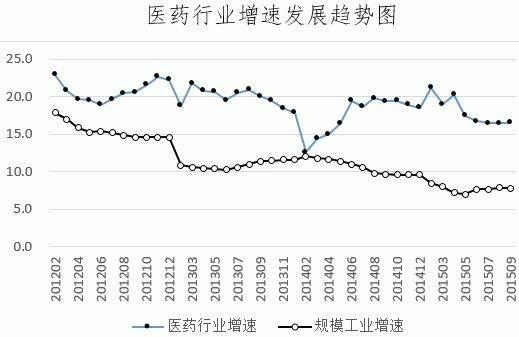
Yu Mingde, President of the China Pharmaceutical Enterprise Management Association, stated at the conference that in recent years, revenue from pharmaceutical production and sales has been growing steadily, with the total volume increasing, but the trend of slowing growth has become very clear. “The first 30 years of reform and opening-up brought rapid growth to the pharmaceutical industry. Last year, the figure reached 2.45 trillion yuan, and this year it is expected to reach 2.7 trillion yuan, an all-time high in absolute terms. However, it is particularly worth noting that the growth rate has been slowing down in recent years, and the deceleration is becoming more pronounced.” He indicated that this trend has been evident since 2011, when the growth rate began to decline from20%、18%、13%decrease to9%approximately 9.1% or 9.2% is expected for this year.
A research report released by GF Securities at the conference also suggests that with the current medical insurance coverage rate exceeding 90%, industry growth has slowed significantly against the backdrop of cost containment measures and price reductions through tendering. Over the past decade, the pharmaceutical industry in China experienced extensive growth; however, the previous model, which relied on the rapid expansion of profit-driven products such as traditional Chinese medicine (TCM) injections and adjuvant drugs, is no longer sustainable. The terminal drug market reached approximately RMB 1.25 trillion in 2014, representing a year-on-year increase of 13%, with the industry’s compound annual growth rate projected at 10% over the next five years. On the other hand, demand remains rigid, and the outlook continues to be promising. The proportion of the population aged 60 and above rose from 7.5% in 1950 to 14.9% in 2015. For major therapeutic areas including malignant tumors, cerebrovascular diseases, heart disease, hypertension, and diabetes, individuals aged 65 and older account for 49% of all cases across age groups. According to World Bank projections, by 2030, China’s aging process will drive a 40% increase in the disease burden associated with chronic conditions.
In addition to rising demand, the state’s unprecedented emphasis on the pharmaceutical industry is another major boon. Wu Haidong, Deputy Director of the Consumer Goods Department under the Ministry of Industry and Information Technology, stated at the conference that pharmaceuticals have been listed asStrategic Emerging Industriesand its status continues to rise among the key development areas of “Made in China 2025.”
“The pharmaceutical industry maintained a positive performance trend in the first three quarters of this year, laying a solid foundation for the start of the 13th Five-Year Plan,” said Wu Haidong. Since the beginning of this year, downward pressure on the national economy has continued to intensify; against this backdrop, the pharmaceutical industry has sustained its favorable operational momentum. From January to September,Value-Added of Pharmaceutical IndustryYear-on-year growth reached 10%, exceeding the average for all industrial sectors by 3.8 percentage points and GDP growth by 3.1 percentage points. He suggested that during the "13th Five-Year Plan" period, innovation capacity should be strengthened by increasing investment and improving efficiency. This would enable the approval and market launch of a number of innovative drugs and high-performance medical devices, actively promoting China's strategic transition from follow-on imitation to independent innovation.