

Morning Brief: Top 10 Pharma M&A Deals of 2015, Robot Medical Assistants, and Holographic Medicine
Today's Highlights:
VCBeat Activity: Auditions for the Maternal and Child Mobile Healthcare Innovation and Entrepreneurship Project – Who Is the Top Contender?
Women’s App Meiyou Announces Completion of Series D Funding
One-Stop Medical Service Platform “Yikang Juyi” Secures Tens of Millions in RMB Investment
196 Million! World’s First Bioengineered Cornea AixinTong Secures Major Contract
Medtronic Acquires Aircraft for $110 Million, Targeting Video Laryngoscopes
Top 10 Pharmaceutical M&A Deals of 2015
A Roundup of 10 Robots Capable of Replacing Physician Assistants
Smart Inhalers to Aid in the Treatment of Asthma and COPD
Insensitivity to Pain: Super Analgesics to Help the Human Body Say Goodbye to Pain
"Touchable" Hologram Technology Debuts, to Be Used in the Medical Field
Australia Launches 100,000 Genomes Project; South Korea Unveils 10,000-Person Initiative
Cellular Immunotherapy Emerges as a Breakthrough, Opening Up the Blue Ocean of Precision Medicine

VCBeat: Open Auditions for Maternal and Child Mobile Health Innovation and Entrepreneurship Projects – Who Is the Top Contender?
On December 6, the Beijing leg of the open auditions for the 2015 Maternal and Child Mobile Health Innovation and Entrepreneurship Carnival was officially launched. It is reported that the 2015 Maternal and Child Mobile Health Innovation and Entrepreneurship Carnival was initiated by Jianmeng and the Mobile Innovation Center of Shanghai First Maternity and Infant Hospital, with joint support from Baidu, Alibaba, Tencent, 360, Beilian, Chunyu Yisheng, Haodf, WeDoctor, Honghui Capital, and Sequoia Capital China. The event is dedicated to showcasing startup projects and solutions that are best suited to China’s national conditions and the needs of hospitals and physicians, possess the greatest innovative value and commercial potential, and are highly practical and grounded in real-world applications.
The Beijing event was jointly organized by VCBeat, Xunyi Wenyao Network, and Health Intelligence Valley. Previously, the Shanghai preliminary rounds were held on November 4 and 26. The Beijing preliminary round is not merely a showcase of projects; it also features one-to-many interactions with a panel of judges and mentors—comprising hospital administrators, clinicians, expectant and new mothers, entrepreneurial service platforms, and investment institutions—and serves as a gathering for professionals across the upstream and downstream sectors.
# Pay Attention to Your Baby: We keep a close eye on your baby and will proactively provide one-on-one reminders for vaccinations, nutritional care, early education, local social activities, expert tips, and exclusive purchase offers.
Smart Parenting: Centered on video courses and a Q&A community, it aims to become the premier platform for millions of parents to learn, share, and showcase their parenting expertise.
Sunshine Women and Children: Strive to build an internet-based maternal and child health hospital through the joint efforts of all parties.
Angel Doctor Perinatal Health Management System: By leveraging Internet and Internet of Things (IoT) technologies, customized perinatal health management tools are developed for hospitals and obstetricians/gynecologists to enhance physicians' work efficiency and improve hospital-level management of perinatal care. This aims to reduce the incidence of gestational hypertension, hyperglycemia, and macrosomia, thereby improving birth outcomes and quality of life during pregnancy.
Hyacinth: The Fu'er Private Doctor APP is a women's health service platform trusted by 200,000 obstetricians and gynecologists.
Woodpecker Doctor: Pediatric healthcare doctors provide home-based services, including health checkups, laboratory tests, and one-on-one consultations.
JianmengThe Beijing leg of the Carnival’s open auditions featured a judging and mentoring panel comprising founder Shen Yiqing, child healthcare expert Li Yueping, pediatric orthopedics specialist Ren Gang, VCBeat Chief Medical Officer Liu Hui, and Jiang Tianjiao, General Manager of the Strategic Development Division at Haoyf.com. The panel shared their insights on the participating projects. They noted that, from an investor’s perspective, the era of securing funding through storytelling alone has passed; a viable profit model is crucial. What entrepreneurs perceive as user “pain points” may not necessarily be the most critical issues from a physician’s standpoint. There are significant barriers to entry in healthcare entrepreneurship, where resources are core, and policy and institutional frameworks must be carefully considered. The two key pillars for building a community-based economy are shared values and an interconnected value chain. The judges expressed strong interest in seeing entrepreneurial ventures that best understand physicians’ needs.
Ultimately, the outstanding projects from this event and the previous Shanghai stop will make a grand appearance at the Maternal and Child Mobile Healthcare Innovation Carnival Gala on December 27.
Women's App Meiyou Announces Completion of Series D Financing
December 8 Evening News, Female AppMeiyouAnnounced the completion of its Series D financing, although the specific amount was not disclosed. This round was led by the Sino-French Innovation Fund under Cathay Capital, with Matrix Partners China participating as a co-investor. Previously, Meiyou had secured $35 million in Series C funding from SIG Asia Investments in 2014. Reportedly launched in April 2013, Meiyou is a mobile application designed for women in China, strategically addressing diverse needs across menstruation, pregnancy, childcare, and weight management, while integrating utility tools, community features, and e-commerce into a unified platform. According to official figures, the app boasts over 5 million daily active users. Chen Fangyi, CEO of Meiyou, stated that following this financing round, the company will continue to scale sales revenue and increase investment in talent and technology.
One-Stop Medical Service Platform “Yikang Jiuyi” Secures Tens of Millions in RMB Investment
Recently, the one-stop medical service platform “Yikang Medical” announced that it had secured tens of millions of RMB in investment. This marks another large-scale financing round in the mobile health sector since 2015, underscoring the capital market’s continued optimism toward the industry.
Yikang Medical was established in March 2015. Its flagship product, the “Yikang Medical” app, is an O2O healthcare service platform based on mobile internet technology. Unlike the “asset-light” models adopted by many mobile health companies, Yikang Medical provides a one-stop, end-to-end service experience once patient needs are identified. This includes appointment scheduling, pre-consultation reminders, dedicated car pick-up and drop-off, advance issuance of laboratory test orders, medical accompaniment, medication pickup and delivery, and post-consultation care. The company emphasizes not only online user experience but also high-quality offline services.
He Peng, founder of Yikang Medical Consultation, holds a Ph.D. in Basic Medical Sciences from Peking University. He stated that the goal of Yikang Medical Consultation is to help patients identify hospitals and physicians best suited to their specific conditions, thereby improving patient-provider matching and enhancing the patient experience.
Yikang Medical’s business model follows the clinical pathway standards established by Harvard University and Peking Union Medical College Hospital. Patients can schedule appointments via a mobile app or telephone, where healthcare professionals conduct initial assessments and triage, recommend and select appropriate medical resources, arrange consultations, provide full-process accompaniment, and handle all administrative procedures on their behalf.
It is reported that Yikang Medical is building a heterogeneous integration platform for medical big data, including raw clinical diagnosis and treatment databases, dynamic patient data, and secondary medical health cloud databases generated from services. With this data support, industry efficiency will be further enhanced.
He Peng stated that since the launch of the Yikang Employment APP three months ago, it has achieved nearly 1.5 million downloads and a GMV of RMB 21 million, with cumulative orders exceeding 3,000, indicating a rapid surge in overall business metrics.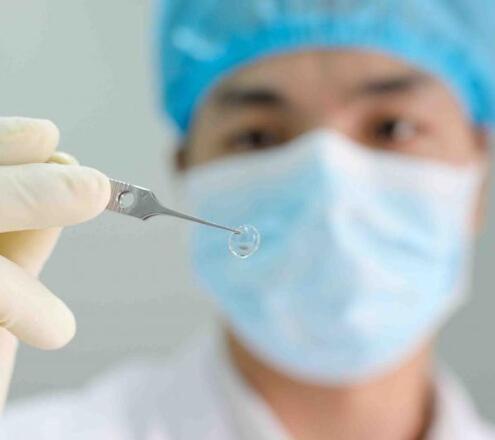
196 Million! World’s First Bioengineered Cornea AixinTong Signs Major Deal
It is reported that,China Regenerative MedicineAnnounced on December 1, includingChina Medical Devices, Sinopharm Shaanxi, Guangdong Sanxin, Tianjin Bio, Zhejiang Weicai, Jiangsu Huaihaihas entered into strategic agreements with renowned pharmaceutical companies to officially launch nationwide sales of “Aixin Tong,” the world’s first bioengineered cornea developed and manufactured by the company.
Media reports from China’s regenerative medicine sector indicate that the agreement requires 22 distributors to develop 108 hospitals across 22 provinces or municipalities directly under the central government in China for the sale of “Aixintong” by December 31, 2018. As of December 31, 2016, the total contract value of the cooperation agreement was approximately RMB 196 million.
Publicly available data indicate that China is one of the countries with the largest blind population in the world. According to the World Health Organization’s 2010 Global Data on Visual Impairment, China had 8.248 million blind individuals, accounting for 18% of the global blind population—a figure that long ago surpassed the total populations of countries such as Denmark, Finland, and Norway. Among various causes, corneal diseases are one of the leading causes of blindness. In developing countries, they rank as the second leading cause of blindness after cataracts and are the primary reason for enucleation (surgical removal of the eye). The Statistical Results of the Second National Sample Survey on Disability conducted in 2006 showed that approximately 4 million people were blinded due to corneal diseases, with 85% of these cases attributed to infectious keratitis. Furthermore, there are an estimated 100,000 new cases of corneal blindness each year.
However, constrained by traditional beliefs, China faces a severe shortage of corneal donors. With only slightly over 3,000 corneal donations annually nationwide, the donation rate is less than one-tenth of that in the United States. Many patients suffer blindness due to the inability to receive timely corneal transplants, and some are even forced to undergo enucleation, permanently losing any hope of vision restoration.
Professor Zou Liuhe, an ophthalmology expert at Beijing Tongren Hospital, stated that the most significant feature of bioengineered corneas is their excellent biocompatibility, as the acellular corneal stroma integrates seamlessly with the human eye. In contrast, some currently available artificial cornea products abroad, primarily made from materials such as silicone, often cause significant rejection reactions in patients.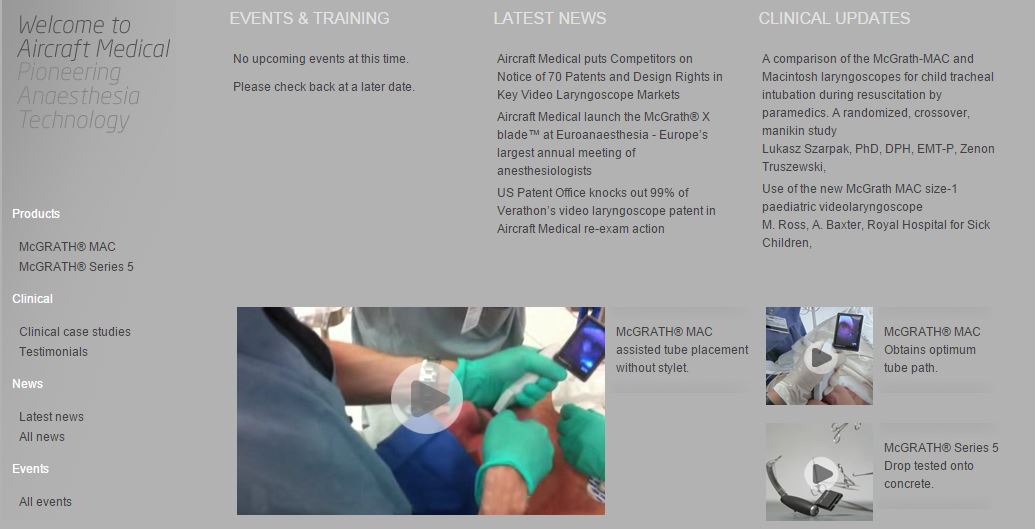
Medtronic Acquires Aircraft for $110 Million, Targeting Video Laryngoscopes
Medtronic Recently Announces AcquisitionAircraft Medical(hereinafter referred to as “Aircraft”) Company. Aircraft is a privately held medical device company headquartered in Edinburgh, Scotland, that produces affordable, high-quality handheld video laryngoscopes to meet the intubation needs of anesthesia and emergency care professionals. The acquisition of Aircraft Medical was an all-cash transaction totaling USD 110 million. Other terms of the acquisition were not disclosed.
This acquisition not only expands Medtronic’s portfolio of solutions for managing difficult airways, but also provides additional strategies to address preventable issues in respiratory dysfunction—such as respiratory insufficiency, respiratory failure, and respiratory arrest—which are highly likely to lead to adverse patient outcomes and increase healthcare costs. In the United States, these issues rank second among the most common preventable safety adverse events, and the cost of treating them has rapidly risen to third place in hospitalization expenses.
Aircraft’s products enable clinicians to clearly visualize the patient’s vocal cords, thereby facilitating rapid and effective endotracheal intubation. Video laryngoscopes increase intubation success rates by providing superior glottic views; in patients with difficult airways, the first-attempt success rate is significantly higher than that achieved with direct laryngoscopy. For patients requiring intubation, video laryngoscopy can improve first-attempt success rates and reduce adverse effects associated with the use of multiple intubation devices.
Steve Blazejewski, Senior Vice President of Medtronic’s Minimally Invasive Therapies Group and President of the Respiratory & Monitoring Solutions business, stated, “Aircraft Medical’s devices are a perfect complement to Medtronic’s portfolio, enabling us to better commit to reducing adverse events and potential complications in the global treatment of respiratory impairment. Their laryngoscope product line will play a significant role within Medtronic’s airway management offerings, providing a highly meaningful innovative therapy to improve patient outcomes.”
Top 10 Pharmaceutical M&A Deals of 2015
Pfizer$160 Billion Acquisition of Allergan Targets Novartis
Actavis Acquired for $66 BillionAllergan, next stop: looking to acquire GSK
AllerganSelling generic drug business for $40.5 billion, acquiring Naurex for $560 million to pivot to innovative drugs
$7.2 Billion Revenue for Receptos, Celgene WinsAstraZenecain the field of autoimmune diseases
$5.9 Billion Acquisition of Dyax: Who Can Compete in the Rare Disease Space?Shire
$4 Billion Acquisition of Ranbaxy,Sun PharmaBecoming the World's 5th Largest Generic Drug Manufacturer
$3.2 Billion Targeting the CNS Disease Research Field,TevaAcquiring Auspex
$2.1 Billion Acquisition of Kythera, Aircraft CarrierAllerganNew “Weapon” Added: Kybella
Indian Pharmaceutical Companies: Committed to Generic Replication of Patented Brand-Name DrugsCiplaAcquisition of Two U.S. Pharmaceutical Companies
$1.25 billion acquisition of Flexus,BMSExpand Immuno-Oncology R&D Capabilities

A Review of 10 Robots Capable of Replacing Physician Assistants
1.Vasteras Giraff
The Västerås Giraff serves as a mobile communication device, enabling elderly individuals to stay connected with the outside world. This unit, equipped with wheels, a camera, and a display, can be operated via a remote control. It also features two-way video calling capabilities similar to Skype.
2. Robotic Patients
Robotic patients enable medical students to boldly apply their knowledge in practice. The use of robots for physician training is well-established, and with technological advancements, their capabilities have expanded significantly. These robotic patients feature beating hearts, moving eyes, and even the ability to breathe, allowing them to train medical students in accurately measuring blood pressure and other vital signs. Such simulators are even available in specialized versions, including pregnant women and infants.
3.AethonTUG
This “cube” robot can perform tasks such as delivering meals and medications, tidying patients’ bed linens and soiled trays, and collecting hospital waste, all configured through system settings. By leveraging the hospital’s Wi-Fi signal to communicate with the central system, the TUG can avoid obstacles and take elevators. The Aethon TUG enhances hospital operational efficiency.
4. Disease Diagnosis Robot
Disease diagnosis is the most critical component of medical practice. However, subtle abnormalities may occasionally go unnoticed by physicians during blood tests or chest fluoroscopy. These robots can provide more specialized diagnostic capabilities.
5.RP-VITA
RP-VITA is a telemedicine robot jointly developed by iRobot and InTouch Health. Designed as a telehealth assistant, it enables physicians to remotely monitor patients’ conditions in real time. Consequently, diagnostic equipment such as ultrasound devices and electronic stethoscopes are integrated into the robot. RP-VITA is controlled via an iPad application.
6. Surgical Robots
Robots can also perform surgeries, as their movements are more precise, thereby reducing surgical risks. Due to this precision, incisions can be made smaller, which lowers the risk of infection and accelerates the recovery process. Such robots include NeuroArm and Heartlander.
7.Bestic
Bestic is a small robotic arm with a spoon at its end. Bestic is primarily designed for patients who prefer to eat independently without burdening others. Users can easily control the movement of the spoon to choose which food to eat from the table.
8. Rehabilitation Robots
For patients who require long-term physical therapy and need to regain mobility as soon as possible, rehabilitation robots are the optimal choice. These robots can accelerate the recovery process through assisted rehabilitation training.
9. Nursing Robots
Cody is a nursing assistant that utilizes a Direct Physical Interface (DPI), allowing nurses to control the robot through direct physical contact, such as holding its hand to guide its movement. Equipped with cameras and laser rangefinders, Cody can assist in bathing patients.
10. Limb Replacement
Robots have been used to replace people’s damaged limbs or other body parts. In addition, scientists are developing new technologies that use robots to create human hearts or other organs. Artificial jellyfish have already been created, and the next goal is human organs.
Smart Inhalers to Aid in the Treatment of Asthma and COPD
With the advancement of technology, “intelligentization” is increasingly coming into public view. When traditional medical products are combined with “intelligentization,” they give rise to an entirely new generation of more precise and effective medical products. Recently, British pharmaceutical giantGlaxoSmithKlineThe company announced that it will collaborate withPropellerHealthcollaboration with the company, integrating custom sensors provided by the latter into those developed by GSKEllipta InhalerClinical Studies for the Treatment of Asthma and Chronic Obstructive Pulmonary Disease (COPD).
Researchers aim to track patients’ use of inhalers, along with data on safety and efficacy. This data will also be transmitted to GSK researchers for analysis. Dave Allen, Senior Vice President of Respiratory R&D at GSK, spoke highly of the role that Propeller Health’s products will play in GSK’s future respiratory disease business. He believes that the information collected through these smart inhalers will enable researchers to better develop related medications.
In addition, this smart inhalation device offers another benefit: it enables clinicians to monitor whether patients are using their inhalers correctly in terms of technique, frequency, and duration. Unlike medications, patients often have insufficient understanding of how to properly use medical devices, a gap that can lead to resource waste and even jeopardize patient health. Some industry experts estimate that such issues result in up to $300 billion in annual waste within the healthcare system. Therefore, remote collection of patient treatment data is particularly important.
In fact, leveraging the momentum of wearable devices, many medical device developers are striving to make their products smarter. For instance, The Scripps Translational Science Institute has just launched a clinical trial involving 6,100 patients that uses a “smart patch” to monitor heart rate data in cardiac patients; Biogen has introduced a wearable device to collect data as a replacement for the commonly used 25-foot walk test in multiple sclerosis research; and Roche has developed a mobile app for use in clinical studies on Parkinson’s disease.
It is foreseeable that both clinical research and medical products will become increasingly intelligent in the future.

Insensitivity to Pain: Super Analgesics Will Enable the Human Body to Bid Farewell to Pain
According to a report by the UK’s Daily Mail, scientists have for the first time replicated in the laboratory a rare genetic disorder characterized by congenital insensitivity to pain. This breakthrough could pave the way for “super analgesics,” benefiting thousands of people.
Due to the absence of relevant neural pathways, some individuals do not perceive pain in their limbs. Scientists have replicated this physiological mechanism in mice. The study combined drugs that block pain receptors with low-dose opioid analgesics, which researchers believe may constitute a “secret formula” for eliminating pain in humans.
When the human body is injured, electrical signals of pain are transmitted to the brain via channels on the neuronal cell membrane. A sodium ion channel known as Nav1.7 plays a particularly critical role in pain conduction. Individuals with congenital Nav1.7 channel dysfunction are unable to perceive pain but retain normal tactile sensation. When drugs that block this channel take effect, even healthy individuals experience near-complete analgesia.
However, researchers at University College London have found that individuals with a congenital deficiency in the Nav1.7 channel can produce higher levels of opioid peptides than the general population. This class of chemicals is closely associated with potent analgesics such as morphine.
Researchers conducted experiments on genetically modified mice and subsequently administered naloxone, an opioid antagonist, to a 39-year-old woman with congenital insensitivity to pain, enabling her to experience pain for the first time in her life. This marks the first time scientists have identified such a link between neural pathways and opioids.
“Touchable” Hologram Technology Debuts, to Be Applied in the Medical Field
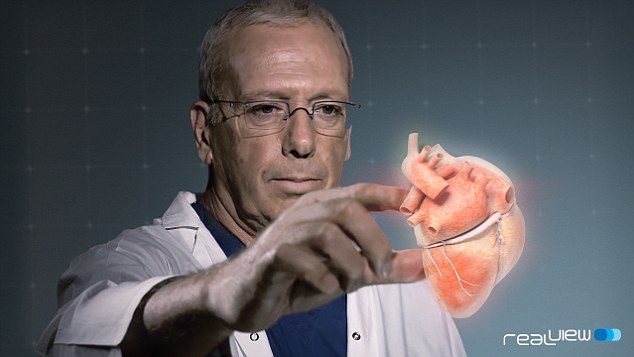
The biggest challenge currently facing virtual reality technology is its inability to allow users to “touch” the scenes within it; we can only see with our eyes and hear with our ears. However, Japanese researchers have developed a newHolographic Technology, its greatest highlight is that it can be “Palpation”。
This tangible holographic technology, known as “Fairy Lights,” enables users to interact with holograms. It can be applied in the medical field; for instance, holograms can be used to visualize surgical procedures.
Holograms are created using femtosecond lasers, which can stimulate physical objects to emit light in a 3D form. These lasers can generate high-frequency pulses (ranging from 1,000 to 200,000 pulses per second, depending on the laser type). According to Reuters, these laser pulses can provide feedback in response to human "touch," enabling people to interact with holograms suspended in mid-air.
“If we use a larger laser in a bigger space and allow people to interact with these lasers, our daily lives will be transformed. Furthermore, we can apply this new technology in special settings, such as construction sites and medical facilities, enabling 3D forms of communication,” said project researcher Yoichi Ochiai in an interview with the media.
However, there have been previous failures with tactile holograms. Earlier attempts to develop similar technologies aimed at creating touchable holograms ultimately resulted in burns to the testers’ skin.
Ochiai stated that if people could project images in 3D and physically interact with these scenes, it would create a more realistic virtual reality experience.
Australia Launches 100,000 Genomes Project; South Korea Unveils 10,000-Person Initiative
Large-scale genomic sequencing and analysis have laid the foundation for the prediction, prevention, diagnosis, and treatment of major human diseases. In response, an increasing number of countries have launched their own genomics initiatives. Today, Australia and South Korea have also joined these efforts.
Australia Plans a Four-Year Initiative to Emulate the UK’s 100,000 Genomes Project by Establishing a Domestic Program. By sequencing the genomes of patients with rare diseases and cancer, it aims to create a large-scale Australian national genomic database, advance further research and development of related therapeutics, and build a new healthcare service system based on genomics.
The United Kingdom’s implementation of the 100,000 Genomes Project (100KGP) aims not only to safeguard public health but also, crucially, to secure substantial economic benefits from world-class genomic research. Genomics England, the company responsible for the 100KGP, has signed a memorandum of understanding with the Garvan Institute. Just as the 100KGP receives dual support—from the government on one hand, and from companies such as Illumina providing material, equipment, and expertise on the other—the Garvan Institute similarly seeks multi-faceted support.
Australia is not the only country to have recently launched a national genomics initiative. In late November, the Ulsan National Institute of Science and Technology (UNIST) in South Korea announced the launch of the Korean 10,000 Genomes Project. According to UNIST, the project will obtain genome sequencing data from both healthy individuals and those with compromised immune systems; it will be used to study genetic diversity within the Korean population, build a standardized database of genetic variants to identify rare mutations, annotate genomic data, and promote the growing genomics market.
It is evident from the successive launch of national genome projects that integrating genomics data with medical knowledge not only helps safeguard public health and advance medical science, but also drives the prosperous development of the genomics industry. This lucrative market is expected to attract an increasing number of participants.
Cellular Immunotherapy Emerges as a Breakthrough, Unlocking the Blue Ocean of Precision Medicine
China Securities Network reports that the International Forum on Frontier Precision Medicine and Future Health will be held in Shanghai on December 9. The conference will comprehensively showcase research achievements in precision medicine and future health, with particular attention focused on precision medicine and personalized healthcare. Additionally, according to recent announcements from the National Health and Family Planning Commission, China is currently formulating a strategic plan for “precision medicine,” which may be included as a major science and technology special project in the 13th Five-Year Plan. With the rapid development of the precision medicine sector and the rising global incidence of cancer, precision medicine is attracting increasing market attention. In particular, cellular immunotherapy, as a key breakthrough in oncology precision medicine, is expected to bring about rapid growth opportunities for related industries.
Cellular immunotherapy is a novel treatment modality that has emerged following surgery, chemotherapy, radiotherapy, and targeted therapy. Referred to as the “fifth major therapy” for cancer, it harnesses the power of the patient’s own immune system to combat tumors. Among tumor immunotherapies, CAR-T therapy is the most renowned, demonstrating significant therapeutic efficacy against various types of leukemia that are resistant to conventional chemotherapy. CAR-T therapy is characterized by strong technical attributes and high reproducibility, marking a distinct departure from traditional new drug development. Currently, China has launched as many as 19 CAR-T clinical trials, second only to the United States. This represents the first time that China has taken a leading position on the international stage in the field of new drug development.
The treatment of oncological diseases has evolved from conventional therapies to targeted therapies, and most recently, to cellular immunotherapy. Currently, immunotherapies in China are predominantly non-specific, with widespread technological homogenization. Immunotherapy represents a future trend; while it is currently mostly applied to patients with advanced-stage cancer, it is poised to become a first-line treatment modality, akin to chemotherapy. With the rapid advancements in gene sequencing, molecular biology, imaging technologies, and big data, precision oncology will see substantial progress and emerge as the primary model for comprehensive cancer care in the future.
Precision medicine in China is currently experiencing rapid development. Driven by increasingly favorable policies, the related industries are poised for significant growth opportunities. Fields such as cellular immunotherapy and gene sequencing will become key focus areas for the future development of the healthcare sector. Among A-share listed companies, Vcanbio, New Kaiyuan, and Daan Gene are involved in precision medicine-related businesses.