9 Prominent Speakers at the World Internet Conference Highlight the Critical Role of Digital Health

The 2nd World Internet Conference will be held in Wuzhen, Zhejiang Province, from December 16 to 18. The theme of the conference is “Interconnectivity and Shared Governance—Building a Community with a Shared Future in Cyberspace.”
Although no entrepreneurs or experts from the healthcare industry appeared in the group photo at the opening ceremony, the theme of “healthcare” still captured the attention of nearly all attendees, holding significant weight. According to incomplete statistics by VCBeat, guests mentioned terms related to “healthcare” more than 60 times.
Below is a summary by VCBeat of the perspectives on “healthcare” discussed by nine speakers at the 2nd World Internet Conference.
1.Xi Jinping: The changes, including the emergence of online hospitals, areA Microcosm of China's Internet Innovation and Development
Having worked in Zhejiang for many years, I have visited Wuzhen on numerous occasions. Returning here today, I feel both a sense of familiar warmth and a refreshing novelty. Last year, the inaugural World Internet Conference was held here, spurring the rapid development of online makerspaces, internet hospitals, and smart tourism, thereby imbuing this millennium-old town with its characteristic white walls and black-tiled roofs with new charm. The digitalization and smart transformation of Wuzhen serve as a vivid testament to the integrated development of tradition and modernity, as well as of humanities and technology. It stands as a microcosm of China’s innovative progress in the internet sector and vividly embodies the concept of shared development in the global internet landscape.
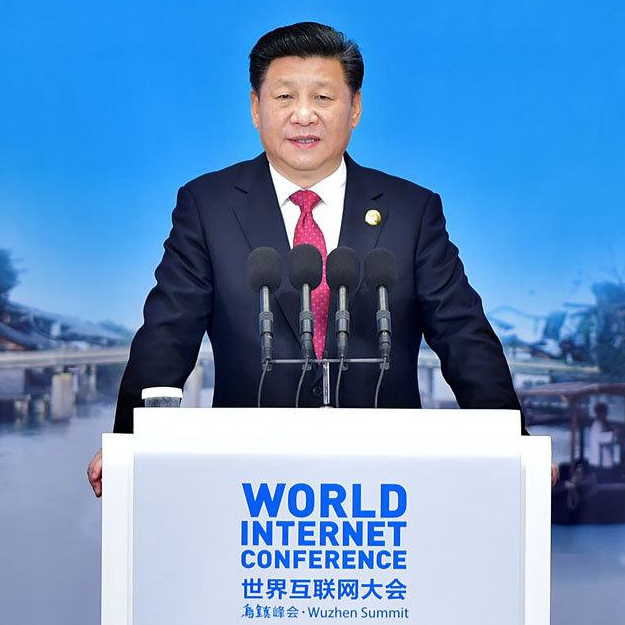
2. Ma Huateng: Internet Hospitals Are a Key Manifestation of the Internet’s Connectivity Power
We have also observed increasingly extensive connectivity opportunities in the health sector, particularly at the intersection of the internet and healthcare. For instance, in Wuzhen, China’s first internet hospital offers services provided by a company in which we have invested.
—Ma Huateng, Chairman and CEO of Tencent, cited the Wuzhen Internet Hospital as an example when discussing “Internet connectivity.”
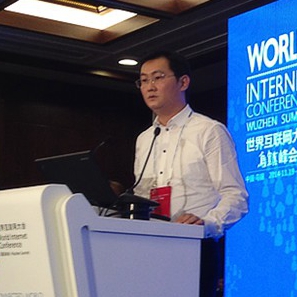
3. Li Yanhong: Big Data Can Validate the Feasibility of Traditional Chinese Medicine Theories
We are witnessing the emergence of numerous new opportunities in big data and artificial intelligence. Some of these opportunities may seem largely irrelevant to the general public; for instance, many people may not immediately recognize the significant potential for integrating big data with healthcare and medical services.
I have recently been paying close attention to Traditional Chinese Medicine (TCM). I observe that various TCM colleges and hospitals are attempting to emulate Western medicine by adopting the same paradigm: “treating disease when people fall ill.” However, TCM theory places greater emphasis on health preservation and wellness. It frequently references the teachings of the Yellow Emperor’s Inner Canon (Huangdi Neijing), examining which aspects of its theoretical framework are valid and which are not. These assertions can be validated using big data, allowing for the application of numerous technical approaches. Currently, whole-genome sequencing costs approximately $1,000 per individual. Since most diseases result from an interplay between genetic factors and environmental exposures, big data analytics can also help identify specific genetic predispositions associated with particular diseases.
—Robin Li, Chairman and CEO of Baidu, made this remark when discussing the relationship between big data and health.
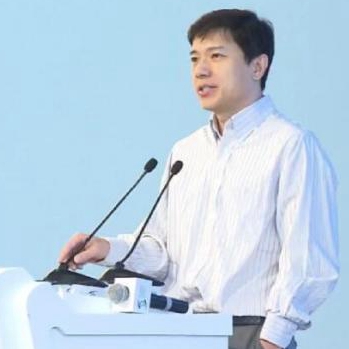
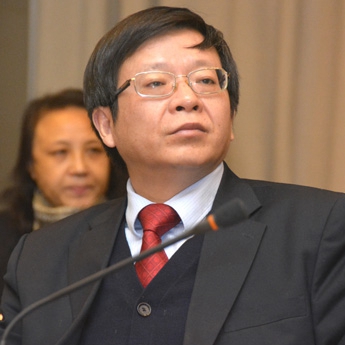
4. Deng Feng: If medical big data can be shared, it will benefit more people and more countries
Precision medicine involves tracking individuals’ behavioral patterns on a large-scale basis, enabling predictive analytics and early diagnosis. It facilitates personalized medication and treatment regimens tailored to individual characteristics. These approaches are intrinsically linked to comprehensive behavioral profiling and daily data acquisition; without such data collection, achieving personalized precision therapy would be exceedingly difficult.
The issue we encountered today is the lack of data sharing. You may have access to data from one hospital but not from others. If such data were shared, it would first help address the shortage of qualified physicians in ordinary areas of China, especially in rural regions, by enabling AI-driven diagnostic assistance for patients. Second, sharing this data with developing countries could play a significant role in the Belt and Road Initiative. By fostering robust international cooperation in healthcare, we can leverage cutting-edge technologies to benefit people in many countries.
—Deng Feng, Founder and Managing Director of Northern Light Venture Capital, emphasizes the importance of sharing when discussing medical big data
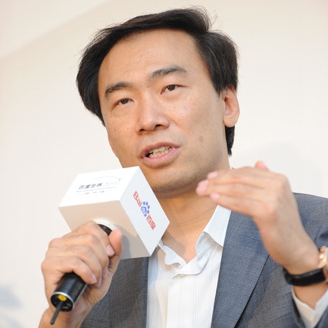
5. Zhang Rui: Smart City Systems Should Place Greater Emphasis on Groundbreaking Innovations
For a mobile internet company like ours, especially an innovative one, what is it that we enjoy doing most and that best ignites our entrepreneurial drive and technological passion? It is the journey from 0 to 1.
Take the field of mobile healthcare, for example. We have assisted more than ten cities in promoting initiatives such as mobile appointment registration and optimization of existing clinical workflows, which have yielded positive results. However, we aim to advance other areas, such as AI-powered intelligent robots and cancer targeted therapy based on precision medicine. In our view, these domains have not received sufficient attention within the current smart city framework.
— Zhang Rui, Founder and CEO of Chunyu Doctors, said when discussing the construction of smart cities

6.Lu Ziyue: Ningbo Established China’s First “Cloud Hospital”
In the realm of smart healthcare, we have implemented electronic health records and online appointment registration, establishing China’s first “Cloud Hospital” to enable residents to “consult cloud-based doctors from home and access renowned specialists within their communities.”
——Lu Ziyue, Mayor of Ningbo City
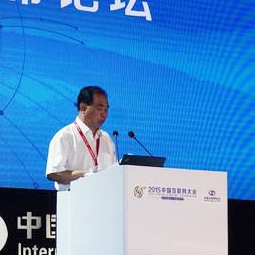
7. Li Situo: In a Programmable World, People’s Health and Everything Else Will Be Interconnected
In a programmable world, we evolve from foolishness to intelligence, from chaos to collaboration, and from waste to optimization. Interconnectivity will expand dramatically, linking everyone together and connecting billions of devices, including cars, home appliances, mobile phones, wearable products, and health trackers.
— Nokia CEO Rajeev Suri atmentioned in his speech at the “Digital Silk Road · Win-Win Cooperation” Forum
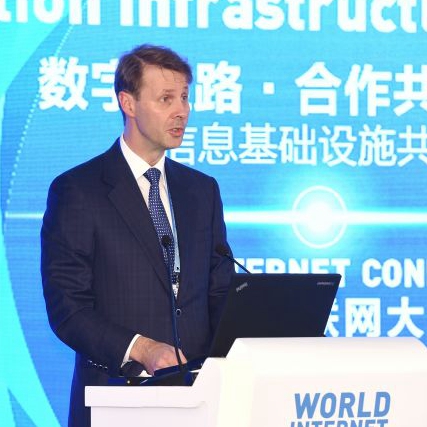
8. Liu Yanshen: The development of smart cities will significantly drive growth in healthcare and other sectors
The development of smart cities will significantly drive the growth of strategic emerging industries, including next-generation information technology, energy conservation and environmental protection, biopharmaceuticals, high-end equipment manufacturing, new energy, new materials, and new energy vehicles. Furthermore, smart city initiatives have a pronounced catalytic effect on various sectors, such as e-government, public safety, education, healthcare, science and technology, social security, energy, environmental protection, transportation, logistics, real estate, finance, industry, agriculture, and tourism.
— Professor Liu Yanshen, Deputy Head of the Expert Group for the Design of the National Public Security Science and Technology Development Plan, said when discussing smart city construction
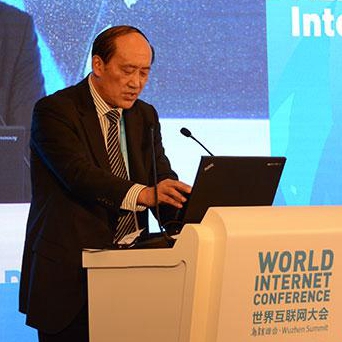
9. Cheng Xu: Hoping the Information Revolution Will Bring Opportunities for Achieving Equity in Education and Healthcare
We hope that the information revolution will enable us to leverage digitalization to achieve what traditional methods cannot, particularly in promoting equity in education and healthcare, thereby creating opportunities to narrow the economic gap.
—Cheng Xu, Assistant to the President of Peking University, on the Equity of the Information Revolution