

Samsung's Strategic Pivot: Aiming to Replicate Its Semiconductor Success in Biopharmaceuticals
Today's Highlights:
Samsung to Invest 4.7 Billion Yuan to Build World’s Largest Biopharmaceutical Plant
Medtronic and Samsung Electronics Expand Partnership to Jointly Develop Health Solutions Connecting Neuromodulation Patients with Healthcare Providers
Doctor Review Website Vitals Secures $41 Million in Funding
Qilekang Brings Former JD.com Vice President into Mobile Healthcare
Fosun Pharma Plans to Spin Off Yaneng Bio for Hong Kong Listing
iResearch, iiMedia, and Analysys: Chunyu Yisheng Leads the Mobile Healthcare App Market
Monash University Develops New Bionic Eye System
LifeVest: Wearable Cardiac Device Designed for Pediatric Patients with Heart Disease
Year-End “Pharma” Outperforms “Dairy”: Gene Sequencing and Precision Medicine Show Strong Momentum
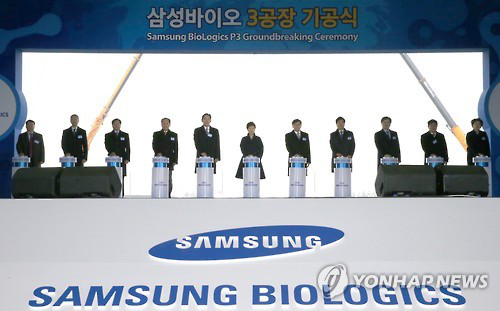
Samsung to Invest 4.7 Billion Yuan in Building the World’s Largest Biopharmaceutical Plant
Samsung announced at an event held in Incheon, South Korea, on December 21 local time that it isChip ManufacturingandSmartphoneof business and technology to a new venture, namelyBiopharmaceutical Manufacturing. On that day, Samsung's legal heir Lee Jae-yong joined hands with the South Korean PresidentPark Geun-hyeTheir joint appearance at the event underscored Samsung’s commitment to entering new industries, with the company declaring its ambition to become the world’s largest biopharmaceutical manufacturer. Biologic drugs, composed of living cells and blood components, are replacing traditional chemical pharmaceuticals and can be used to treat a wide range of conditions, from cancer to arthritis. Samsung plans to invest 850 billion Korean won (approximately RMB 4.7 billion) in building the world’s largest biologics manufacturing facility in Songdo, Incheon.
On the day of the event, Samsung Biologics held a groundbreaking ceremony for its third plant at its headquarters in the Songdo International Business District. The third plant is reported to have an annual production capacity of 180,000 liters, making it the largest single-site manufacturing facility globally by annual output. It is scheduled to be completed in 2017 and commence commercial operations in 2018.
In fact, Samsung has long been preparing in the pharmaceutical sector. Not long ago, Samsung registered a product named “Earcle” trademark, hinting that Samsung will launch hearing aid devices. Now a model withSM-R790The device has already appeared in the Bluetooth Special Interest Group (SIG) database, and it is rumored to be released soon. The documentation describes the device as the “Samsung Bluetooth Hearing Aid,” indicating that its launch is all but confirmed.
Meanwhile, Samsung is currently developing multiple hearing aid software features. One of them, named “Sound Radar,” allows users to select a sound source and amplify it, similar to the radar speed guns used by police. It remains unclear whether Samsung’s hearing aid devices will support this feature, but this at least confirms that Samsung is actively working on its development.

Medtronic and Samsung Electronics Expand Partnership to Jointly Develop Health Solutions Connecting Neuromodulation Patients with Healthcare Providers
Medtronic andSamsung Electronics(The United States) recently announced the launch of a broader strategic collaboration to accelerate the development of digital health solutions, thereby enabling neuromodulation therapies to benefit tens of thousands of patients suffering from chronic pain, movement disorders, urinary incontinence, and other conditions. Both patients with these conditions and their healthcare providers require convenient, rapid-access mobile technologies to better manage their health. Medtronic is committed to developing a portfolio of future-oriented solutions to deliver personalized care and improve clinical outcomes.
The news of this collaboration was officially announced at the Scientific Annual Meeting of the North American Neuromodulation Society in Las Vegas, USA. Samsung will leverage its profound expertise in consumer and mobile technologies to develop-basedAndroidAdvanced applications of the operating system enhance patient-physician engagement and extract relevant data from Medtronic’s clinically validated neuromodulation systems. Through collaboration with Samsung Electronics, Medtronic aims to provide physicians and patients with real-time health data, enabling more effective therapy management, symptom tracking, and remote monitoring of data transmitted from Medtronic implanted devices.
“Medtronic“We have always been committed to addressing various challenges in the healthcare sector. Through this collaboration, we aim to enhance communication efficiency between patients and healthcare providers by enabling real-time information exchange,” said Tom Tefft, Senior Vice President of Medtronic and President of the Neuromodulation Business within the Restorative Therapies Group. “Medtronic has long been dedicated to delivering meaningful innovations for patients. This partnership marks a first step toward providing personalized medical care services and offering the best consumer technology experiences for both patients and physicians.”
Medtronic and Samsung will jointly commit to helpingImplantationPatients with neuromodulation devices can useConsumer Electronics, including smartphones, wearable devices, or tablets, to securely and remotely transmit real-time data from their devices to their physicians. This approach to connecting patients and doctors offers numerous potential benefits, including enabling physicians to make more comprehensive, data-driven treatment decisions more rapidly.

Doctor Review Website Vitals Secures $41 Million in Funding
We are accustomed to using platforms like Dianping and Meituan to check the reputation of target restaurants. The healthcare sector also has similar platforms that allow patients toPhysician Reviewservices and operational capabilities.
Vitals is one such company. Founded by Mitch Rothschild in 2007, it offers a comprehensive suite of information and analytical tools to help consumers, healthcare providers, and health plans better track the price and quality of healthcare services. Patients can post reviews of doctors on Vitals, regardless of whether they have personally received care from those physicians; they can also search for other patients’ reviews to find suitable doctors. Studies have shown that six out of ten patients consult online doctor reviews before choosing a physician.
Researchers from the University of Michigan in the United States published in 2014 in "JAMAA study published in the Journal of the American Medical Association (JAMA) showed that among 2,000 respondents, only a small proportion posted comments online, while approximately 25% consulted online physician rating websites; of these, more than one-third chose to see or avoid a particular physician based on these ratings.
Each month, Vitals’ 9 million users conduct 250,000 searches on Vitals.com for information related to the U.S. healthcare system. Users can browse 6 million patient reviews covering more than 1 million physicians—a volume that surpasses other comparable platforms such as ZocDoc, Healthgrades, and RateMDs.com. Vitals also provides web tools and analytics services to healthcare providers, helping them streamline workflows, attract patients, and foster patient loyalty. Additionally, Vitals offers health insurers a platform to connect with patients and guide them toward high-quality, cost-effective care.
Vitals announced its Series D financing round of $41 million on December 9. Since its founding in 2008, Vitals has raised a total of $86.32 million from eight investors. This round was led byGoldman Sachs Merchant Banking DivisionLed by Goldman Sachs’ Merchant Banking Division, with participation from existing investors. The proceeds from this financing round will be used to expand Vitals’ platform and products.

Qilekang Brings Former JD.com Vice President On Board to Enter Mobile Healthcare Sector
As “major powers” carve up the mobile healthcare industry, another pharmaceutical e-commerce company has announced its entry into the market. On December 22, the pharmaceutical e-commerce platform Qilekang announced the appointment of a former JD.com vice presidentJiang HaidongAs the CEO of 7leKang, he oversees all of the company’s business operations, encompassing both online and offline segments. Meanwhile, 7leKang also announced that its mobile health application, “Da Bai Yun Zhen,” has entered the mobile healthcare sector.
It is understood that “Da Baiyun Clinic“Launched as early as August, the platform has undergone small-scale testing. According to Qilekang’s positioning, this initiative is a ‘public-benefit project’ that leverages mobile internet technology to provide patients with health consultation and management services through multiple channels, including text-and-image and voice-based interactions. In this regard, Jiang Haidong, upon assuming his role, will prioritize and lead the operations of ‘Da Bai Yun Zhen’ (Big White Cloud Clinic), aiming for the application to play a positive role in optimizing the government-led healthcare ecosystem. However, Qilekang has not disclosed extensive details regarding its specific operational and profitability models.”
According to the "2015 China "Internet+" Healthcare Research Report》shows that the number of users in China's mobile healthcare market will reach 138 million this year, and the market size may reach tens of billions by 2017. Given the vast market and promising returns, BAT giants such as Baidu, Alibaba, and Tencent have successively invested in mobile healthcare. Facing the mobile healthcare market being contested by various wealthy players, Jiang Haidong revealed that Dayun Baiyun Clinic started small-scale pilots in August, initially opening only a portal for doctors. However, it has already aggregated more than 60,000 doctor resources. Currently, Qilekang is riding the wave of mobile healthcare and still holds "great potential" for the future.
It is reported that Jiang Haidong joined JD.com in 2009, where he proposed and implemented the “JD Logistics 211 Project.” After joining Vipshop in 2014, he built the company’s supply chain system. Qilekang stated that following Jiang Haidong’s appointment, in addition to the existing core team, new talent will join the company, including professional managers from JD.com and Vipshop.
Fosun Pharma Plans to Spin Off Yian Biologics for Hong Kong Listing
Fosun Pharma announced today that its board of directors reviewed and approved the proposal regarding its controlled subsidiaryYaneng BiotechnologyProposal on the Overseas Listing Plan of (Shenzhen) Co., Ltd. (hereinafter referred to as Yaneng Bio), approving the submission to the General Meeting of Shareholders for approval of Yaneng Bio’s initial public offering of H shares and its listing on the Main Board of The Stock Exchange of Hong Kong Limited.
The announcement stated that Yaneng Biology plans to issue new shares representing no less than 25% of its enlarged share capital, and to grant the underwriters an over-allotment option for up to 15% of the H shares issued in such offering. The expected number of shares to be issued is 40 million, accounting for approximately 25% of its enlarged share capital; if the over-allotment option is exercised in full, the number of newly issued shares will be 46 million, accounting for approximately 27.7% of its enlarged share capital.
According to available information, Yaneng Biotechnology is a wholly foreign-owned enterprise invested and established in Shenzhen by Hong Kong’s Yaneng Group in 2001. In 2010, Yaneng Biotechnology became a controlled subsidiary under Fosun Pharma’s medical diagnostics and medical devices segment, with Fosun Pharma holding a 51% equity stake; consequently, its shareholder structure shifted from wholly foreign-owned to a Sino-foreign joint venture. Yaneng Biotechnology is primarily engaged in the research, development, and production of in vitro diagnostic reagents. Its main products include HPV genotyping assay kits and thalassemia gene detection kits, which are mainly used for early screening of diseases such as cervical cancer and thalassemia.
Fosun Pharma stated in its announcement that the intended use of proceeds from Yneng Biotech’s H-share offering is primarily forCapacity Expansion, Product R&D, and Sales Channel DevelopmentandM&A Servicesetc., specifically including the following aspects: acquisition of land and construction of production facilities, R&D investment in molecular diagnostic products, expansion of sales channels, mergers and acquisitions of molecular diagnostics-related businesses and assets, and supplementation of working capital. After the specific issuance size is determined, if the raised funds are insufficient to meet the funding requirements of the projects, Yaneng Biotech will address the shortfall through other means.
Fosun Pharma stated that all of its business segments are currently maintaining a positive development trajectory. Given the high degree of operational independence between Yaneng Bio and other business segments of the Group, Yaneng Bio’s overseas listing will not have any material impact on the ongoing operations of the Group’s other business segments.
Meanwhile, if Yaneng Biotech successfully lists overseas and secures an independent financing platform, it will also facilitate direct financing by other business segments through Fosun Pharma, thereby fostering their further development.

iResearch, iiMedia, and Analysys: Chunyu Doctor Leads the Mobile Healthcare App Market
It is once again the season for year-end rankings. Several major consulting firms have successively released industry reports on the mobile health sector, which was the most vibrant in 2015. Monitoring data shows that, regardless of metrics such as the number of app downloads, total activated users, total monthly active users, user coverage, and penetration rate,Spring Rain DoctorThe App outperforms its peers, establishing itself as the undisputed pioneer and leader in the mobile healthcare industry.
On December 18, the long-established consulting firm iResearch updated and released its “2015 Research Report on China's Online Healthcare Industry”, as one of the flagship annual reports in the industry, iResearch has conducted a detailed analysis of China’s entire online healthcare sector. Monitoring data from iResearch’s iUserTracker and mUserTracker show that in 2015, the monthly usage frequency of online healthcare apps was significantly higher than that on PC terminals. Specifically, from January to June, the average monthly usage per user on the app side fluctuated around 20 times, whereas on the PC side, it hovered around 2.8 times.
In the appointment and consultation sector, monitoring data indicates that Chunyu Doctor leads its competitors in user penetration among appointment and consultation apps, with a monthly active user share exceeding 5%. Apps such as Guahao.com/WeDoctor, Haodf, and Quick Ask Doctor have monthly active user shares ranging from 1% to 5%. Together with Chunyu Doctor, they capture the vast majority of traffic in this field, forming an overall landscape characterized by “one dominant player and several strong contenders.” According to official data from Chunyu Doctor’s website, the platform currently has 92 million activated users and resolves over 200 medical inquiries per minute.
Prior to this,TestinAppBase, iiMedia Research, Analysys IntelligenceReports released by third-party monitoring agencies also show that Chunyu Yisheng (Spring Rain Doctor) App leads other apps in the industry in terms of download volume, monthly active users (MAU), user coverage, and user penetration rate. The report in question is the November Mobile Healthcare App Ranking published by Testin AppBase. AppBase boasts the world’s largest comprehensive benchmark database covering app markets, operations, products, and R&D. Monitoring results indicate that Chunyu Yisheng App ranked first in overall competitiveness among mobile healthcare apps in November. It was followed by Kuaisu Wen Yisheng (Quick Ask a Doctor), Yihaoyaodian (No. 1 Pharmacy), and Haodaifu Online (Good Doctor Online).
Subsequently, on November 26, Analysys Intelligence released a review of user data for mobile health apps in the third quarter of 2015. Monitoring data from Analysys’ self-developed Qianfan system indicated that consultation-oriented apps, represented by Chunyu Doctor, accounted for nearly half of all mobile health app users, comprising 40.9% of total active users. Among these, Chunyu Doctor led all mobile health apps with a user penetration rate of 14.2%, more than double that of the second-ranked app. Analysys Intelligence analyzed that as a well-established mobile health app, Chunyu Doctor enables timely online communication between doctors and patients, and its increasingly refined offline services have contributed to high user engagement and a leading user penetration rate compared to other apps.
The “Q3 2015 China Mobile Health Market Monitoring Report,” released by iiMedia Research on December 9, also shows that among users who had used mobile health applications in the first three quarters of 2015, Chunyu Doctor, Dayima, and Meiyou ranked top three with app coverage rates of 24.6%, 14.3%, and 13.1%, respectively. iiMedia Research believes that Chunyu Doctor entered the Chinese mobile health market at an early stage and, through long-term accumulation and promotion, has established a strong reputation and high brand awareness among users.
On the same day, Analysys Think Tank also released “Special Research Report on China's Mobile Medical Consultation Services Market, 2015》, in the Mobile Consultation App Strength Matrix constructed by this report, Chunyu Doctor has emerged as the industry leader, leveraging significant advantages such as a large user base, robust medical resources, and an increasingly comprehensive industrial chain layout. Meanwhile, sampling monitoring data from Analysys Intelligence also shows that Chunyu Doctor’s total monthly active users are significantly higher than those of other online consultation apps, firmly solidifying its position as the leading brand in mobile healthcare.
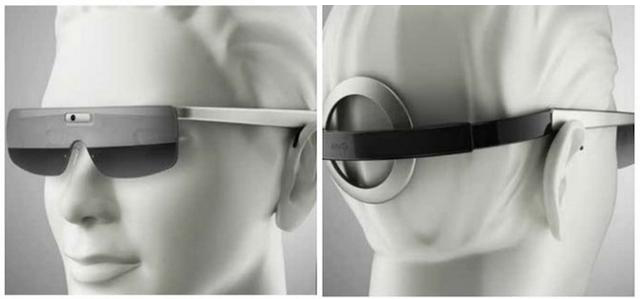
Monash University Develops New Bionic Eye System
Scientists have recently developed a bionic eye system capable of directly converting images into signals, which are thenBrain-Implanted ChipsReceiving feedback stimulates brain regions, enabling blind individuals to perceive faint images of objects.
According to foreign media reports, scientists have developed a new technology that installs miniature cameras on a pair of glasses, capable of restoring vision in some blind patients. Developed by Monash University, this technology transmits images directly to the brain and will benefit individuals with fully functional optic nerves and ganglion cells, which are responsible for transmitting visual information from the retina to the optic nerve.
At a fundamental level, the system embeds a digital camera into a pair of glasses, while a computer processor and a chip are ultimately implanted in the patient’s brain. When the camera on the glasses captures visual information from the external world, it transmits this data to a pocket-sized information processing device worn by the user. This device converts the images into signals and wirelessly transmits them to the chip implanted in the brain.
This chip itself is aMicrogrid, comprising 11 ceramic-like components, each equipped with 43 electrodes that interface with distinct brain regions associated with vision, including the forebrain, visual cortex, and occipital lobe. When the processor transmits digital signals to the chip and various brain regions, it stimulates these areas, enabling even blind individuals to “see” flashes of light. In fact, the system employs an 11-unit “ceramic tile” microgrid array to simulate a 500-pixel visual field. Over time, the human brain gradually learns to interpret each signal and associate it with corresponding object targets.
Currently, these images can only provide a blurred representation of the real world. According to Arthur Lowery from Monash University, the system is like a cartoonist, using limited information to present a complex situation. In the future, as the system continues to be upgraded, its resolution will improve. At present, researchers are focusing on camera data processing to obtain the clearest possible images within the brain's microgrid.
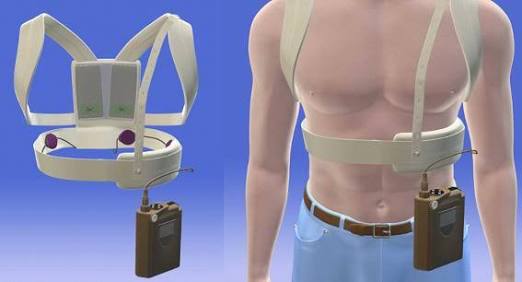
LifeVest: Wearable Cardiac Device for Pediatric Heart Disease Patients
U.S. Federal Health Officials Approve Wearable Defibrillator for Pediatric Patients with Fatal Arrhythmias
LifeVest is specifically designed for pediatric patients who require24/7 Cardiac Monitoring, but due to health issues or parental opposition, device implantation is not feasible. Cardiac defibrillators can deliver pulsed electrical currents through the heart to restore normal sinus rhythm.
Most adult patients who experience cardiac arrest have life-saving devices surgically implanted. External defibrillators are also used in emergencies, but they must be operated by another person.
LifeVest, which includes an electrode belt and a cardiac monitor, has been approved for use in adults. This device is designed for patients weighing more than 41 pounds.
U.S. Food and Drug Administration officials announced on Thursday that the device has been approved, allowing physicians to safely use it in pediatric patients.
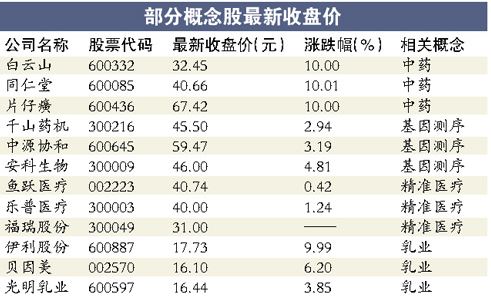
"Taking Medicine" Outperforms "Drinking Milk" at Year-End: Strong Momentum in Gene Sequencing and Precision Medicine
Within a single day, shares of “medical fraternity” companies surged in response. The Traditional Chinese Medicine (TCM) Law (Draft) was submitted for the first time to the Standing Committee of the National People’s Congress for deliberation yesterday, driving the TCM sector up by 3.29%, with multiple TCM stocks hitting their daily price limits. Meanwhile, the “universal two-child” policy is expected to take effect on New Year’s Day next year. Spurred by these developments, the gene sequencing sector posted strong gains, ranking second among conceptual sectors with a 3.32% increase, while the dairy industry followed closely in third place. Industry observers believe that the market rally driven by these two favorable policies may be short-lived after prior absorption of the news. Toward the end of the year, investors may consider modestly increasing exposure to pharmaceutical stocks (“taking medicine”), which are likely to outperform dairy stocks (“drinking milk”), as dairy companies continue to face earnings pressure.
On the 22nd, the traditional Chinese medicine (TCM) sector surged by 3.29%, with multiple TCM stocks hitting their daily upper limits, includingTongrentang, Pien Tze Huang, Baiyunshan, Dong-E-E-Jiao, Qizheng Tibetan Medicine, Qinghai Gelatinetc.
It is understood that the Draft Law on Traditional Chinese Medicine (TCM) represents a critical step in China’s legislative process for TCM. Upon passage, it will become the first national law dedicated to traditional Chinese medicine. The draft focuses on the inheritance and promotion of TCM, adhering to the principle of balancing support with regulation, strengthening policy backing, and establishing systems for the licensure of TCM practitioners and clinics, the administration of Chinese herbal medicines, and talent development, all tailored to the unique characteristics and developmental needs of TCM.
Furthermore, the draft explicitly encourages non-governmental entities to establish traditional Chinese medicine (TCM) medical institutions, with TCM services included in medical insurance coverage. Individuals with specialized expertise may obtain TCM physician qualifications through practical experience and performance assessments, and are permitted to operate TCM clinics.
Additionally, driven by favorable factors such as the full implementation of the two-child policy and the convening of the Gene Editing Summit, the gene sequencing sector demonstrated strong growth momentum, ranking second among conceptual sectors with a 3.32% increase on the same day, includingChiesan Medical Machinery, New Open Source, Anke Biotechnology, David Medical, Zhongyuan UnionConcept stocks have all seen significant gains.
Meanwhile, as an "emerging powerhouse," precision medicine has garnered strong endorsement from both policy makers and the capital market. It is reported that precision medicine will be included in the Major National Science and Technology Projects of the 13th Five-Year Plan, with investment in the field reaching RMB 60 billion by 2030. Under the Precision Medicine Initiative, China will develop a batch of domestically produced novel drugs and medical devices for prevention and treatment, and establish a set of disease diagnosis and treatment guidelines tailored to China’s needs and recognized internationally, thereby significantly enhancing the prevention and control of major diseases. It is understood that precision medicine will transform existing diagnostic and therapeutic models, bringing about a revolution in medical development.
“Gene Sequencing“Indeed, in certain areas of R&D and commercialization, we are at the forefront globally. Compared with the international performance of China’s chemical drugs, this is a source of genuine pride,” observers noted. They added that precision medicine, including technologies such as gene sequencing, is highly practical and can be rapidly translated into marketable products for commercial launch.
In contrast, although the dairy sector claimed the third spot in terms of gains among concept sectors yesterday, with a sector increase of 3.07%, only one stock, Yili Shares, hit the daily limit up. After “"Two-Child Policy for Couples Where Only One Parent Is an Only Child"“Market validation, coupled with the overall industry downturn, is leading capital markets to gradually lower their expectations for the impact of family planning policies on dairy stocks; the infant formula industry itself has responded lukewarmly to the ‘universal two-child policy.’” An industry insider revealed: “On one hand, breastfeeding is being vigorously promoted; on the other, the infant formula sector is currently characterized by oversupply, intense competition, declining profits, and price wars. Even with the full implementation of the two-child policy, dairy enterprises continue to face significant pressure.”