

Samsung Bets Big on Biopharma with $4.7 Billion Investment, Expanding Beyond Electronics
At the end of 2015, a news story pushed Samsung into the spotlight in a different way: On December 21, local time, Samsung announced at an event held in Incheon, South Korea, that it wasChip ManufacturingandSmartphoneof business technology to a new business, namelyBiopharmaceutical Manufacturing. and plans to invest approximately RMB 4.7 billion in building the world's largest biologics manufacturing facility in Songdo, Incheon.
Does this signal that Samsung is making a major push into biopharmaceuticals? It may be too early to say, but this strategic pivot is indeed quite surprising.
The Belated Biopharmaceuticals
As is well known, in recent years, Samsung has suffered setbacks in the mobile phone market, with its market share threatened and squeezed, while its once-proudSemiconductor BusinessIt has also faced overt and covert pressure from Qualcomm and MediaTek; relying on its chip business to turn the tide will likely take time.
Meanwhile, the global biopharmaceutical industry is flourishing. According to a London-based research firmEvaluateReleased data, by 2020,Global Biopharmaceutical ManufacturingDemand is set to triple, with the market size of the biotechnology sector expected to exceed $278 billion in the next five years, up from an estimated $184 billion this year. Some analysts believe that,BiopharmaceuticalsAs an emerging technological field, it will be Samsung’s next ticket to revival in this century.
Samsung is certainly aware of this; over the past four years, it has invested nearly $2.74 billion in production facilities and R&D laboratories on a warehouse scale. Now, it is redirecting resources previously allocated toChip ManufacturingandSmart Phonechanneling its drive into the manufacturing of biopharmaceuticals for the most renowned companies in the global pharmaceutical industry. Its goal is to become the world’s largest contract manufacturer of biopharmaceuticals.
For Lee Jae-yong, the new head of Samsung, aggressively pushing forward with investments in the biotechnology sector is a test. He believes that biotechnology is a rapidly developing field that can help boost the group’s profit growth. Earlier this year, Lee stated at a forum held in China, “We see the potential toInformation Technology, Pharmaceuticals, and BiologicsThe opportunities inherent in their integration.”
As the de facto controller of Samsung’s “business empire,” Lee Jae-yong possesses a global perspective, emphasizes technological innovation and globalization strategies, prioritizes relationships with key partners such as Lenovo, and aims to transform Samsung from the world’s largest technology company into the most innovative one.
To help Samsung establish a firm foothold in biopharmaceuticals, Lee made substantial investments. Within four years, the group invested $1 billion to build two facilities for manufacturing biologics on behalf of pharmaceutical companies, and another $1 billion to develop its own biotechnology R&D initiatives. According to available data,Samsung BiologicsFounded in 2011, it is 97% held by Samsung Electronics. In late November, Samsung Biologics announced that it would invest $740 million to build a new plant in South Korea, which would double its pharmaceutical manufacturing capacity upon completion. When the new facility is completed in 2018, combined with its two existing and under-construction production plants, Samsung is expected to becomeThe World's Largest Pharmaceutical Manufacturer。
However, things may not unfold as smoothly as anticipated. For Samsung, the pharmaceutical manufacturing process is far more complex and demanding than semiconductor fabrication. It is worth noting that even a single particle of dust can disrupt production. Furthermore, Samsung’sBiosimilars SectorAggressive expansion still faces headwinds from competition with major pharmaceutical companies such as Pfizer and Amgen, as well as an immature market. Although countries in Europe and Japan permit the sale of biosimilars, the United States has yet to issue specific regulations or approve any such biosimilar products for marketing.
Thus, in addition to biopharmaceuticals, Lee Jae-yong continues to actively leverage his network within the global elite circle to identify new areas for collaboration and investment, with the digital health industry being the latest focus.
In fact, as early as when Lee took over the Samsung empire, he was already considering the path forward for Samsung’s new era and harbored significant ambitions in the field of mobile healthcare. To understand this, one must look back at the rise of the Samsung empire and his life story.
Pre-Digital Era: From Feature Phones to Smartphones
The history of the Samsung Group dates back approximately 80 years, to 1938, when Lee Jae-yong’s grandfatherLi Bingzhe(Lee Byung-chul) founded a food trading company to conduct trade in certain daily necessities. Today, this corporate giant oversees 67 different business lines, with products ranging from apparel and theme parks to shipbuilding, washing machines, and financial services. Owing to its leading position in three major market segments—smartphones, memory chips, and televisions—Samsung ElectronicsIt is by far the most important subsidiary within the Samsung Group, accounting for two-thirds of the group’s total revenue, with an even higher share of its profits.
What helped Samsung achieve excellence isMobile Phone。
From a small company with fewer than 100 employees to the world’s leading smartphone brand, Samsung has created a legend. Of course, this enterprise with more than 50 years of history has not had an easy journey.
In 2011, SamsungFeature PhoneIts market share remained firmly in second place within the industry; however, it lagged far behind competitors such as Apple, BlackBerry, and HTC in the smartphone market. Meanwhile, Samsung was fortunate: Nokia’s Symbian smartphones became a target of widespread criticism, with their market shares declining year by year in both the feature phone and smartphone segments. At this juncture, Samsung began a low-profile transformation, focusing on Android development for newMobile Operating System。
Subsequently, Samsung’s strong performance on the Android 2.3 operating system propelled it past Apple to become the new dominant player in the global mobile phone industry, with Samsung Galaxy S III sales surpassing those of the Apple iPhone 4S and iPhone 5. This marked the first time in modern smartphone history that a single Android smartphone model outsold the iPhone, representing a milestone period in the evolution of smartphones.
WithThe Internet of Things EraWith the arrival of this new era, to meet the emerging challenges, Samsung Group, as a major contributor to South Korea’s economy, is quietly seeking new profit growth drivers while pursuing another significant transformation in its business domains. Among these,Intelligent Vehicles, Intelligent RobotsandIoT Batterybecame the bridgehead for Samsung Group's innovation.
New Century, New Exploration
And the first stop of this exploration isIntelligent Vehicles。
Samsung Group first entered the automotive sector in 1994 with the establishment of Samsung Motors. However, impacted by the 1997 Asian Financial Crisis, it was forced to sell its automotive business to France’s Renault in 2000. Fifteen years later, Samsung Group identified intelligent vehicles as a key strategic initiative for the future, marking its renewed entry into the competition for the automotive market.
In December 2015, the Samsung Group reorganized and newly established the former Automotive Electronics Division, appointingPark Jong-hwanThe Vice Chairman has been appointed as the new head of the Business Unit. The Electronics Components Business Unit reports directly to Kwon Oh-hyun, Vice Chairman of Samsung Electronics, who is specifically responsible for component projects such as semiconductors and displays, holding significant weight within the Samsung Group. Park Jong-hwan was previously assigned by Samsung Electronics Chairman Lee Kun-hee to work at Samsung Motors at the time and is regarded as the most suitable figure within the Samsung Group to oversee automotive projects. This restructuring marks the beginning of a new journey for the Samsung Group in the field of smart vehicles.
Except forSmart Cars, Samsung has also carved out an independent path to conquerArtificial Intelligence。
In early September 2015, Samsung Group stated that, as part of its entry into emerging industries, Samsung Group had, throughSamsung VenturesTo Emerging Robotics StartupsJIBOmade an investment. JIBO is a venture founded in 2012 by Cynthia Breazeal, a professor at the Massachusetts Institute of Technology (MIT) in the United States, together with her colleagues. Sales of the JIBO robot are scheduled to begin in April 2016. Samsung Venture Investment Corporation is an investment firm established by Samsung in 1999 to foster group-level growth drivers. Its major shareholders include Samsung Electronics, Samsung SDI, Samsung Electro-Mechanics, Samsung Securities, and Samsung Heavy Industries.
A Samsung Electronics representative stated that in its early years, Samsung Venture Investment Corporation invested in companies possessing semiconductor or display technologies, which drove the rapid growth of Samsung Electronics’ semiconductor and display projects. Currently, Samsung Venture Investment Corporation is shifting its focus to the intelligent robotics sector, a move that also reflects, to some extent, the group’s future strategic direction.
Meanwhile, Samsung Electronics’ semiconductor division is also undergoing internal adjustments to prepare for the era of intelligent robots. As chips lie at the core of AI-powered robots, Samsung Semiconductor is leveraging its traditional strengths to continuously advance its application processor (AP) projects responsible for computation, as well as its DRAM and flash memory businesses dedicated to data storage. A representative initiative undertaken to achieve this goal is the “Mongoose” project. The outcomes of this project are expectedExynosThe new product will incorporate Samsung Electronics’ technology, which was launched in 2016.GALAXY S7in smartphones. Once the “Mongoose Project” succeeds, Samsung will further reduce its reliance on Qualcomm in the mobile chip business and forge an independent path in the smart chip sector.
Not only smart cars and artificial intelligence, but also the core of the future—IoT Battery。
In 2015, Samsung SDI, another pillar company of the Samsung Group in the electronics sector, also underwent business integration. It sold its entire chemicals business toLotte GroupAfterwards, Samsung SDI decided to invest a total of 3 trillion Korean won by 2020 to expand its battery production capacity to approximately ten times the current level. Samsung SDI stated that the company’s operational resources are currently concentrated onOn-board Battery, proceeds from the sale of chemical sector companies will be directed toward the current automotive battery sector.
Meanwhile, Samsung SDI is preparing for the future, with its core focus being IoT batteries. The advent of AI robots and the IoT era has made batteries that can operate without a direct power connection essential for many smart devices. To this end, Samsung SDI has established a new Battery Materials Center, dedicated to enhancing the competitiveness of its batteries for electric vehicles, drones, and intelligent robots. In addition,Flexible, Bendable Battery TechnologyIt has also become a key focus for Samsung SDI.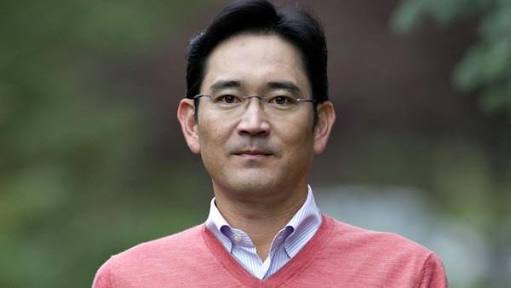
Lee Jae-yong's Ambition
From a mid-sized conglomerate to a global business giant, Samsung attributes this achievement to its late chairmanLi JianxiHe had strongly urged Samsung’s executives to make large-scale investments to achieve economies of scale and gain market share, rather than focusing excessively on short-term profits. However, the new leader did not endorse this approach, believing that only continuous innovation could enable Samsung to achieve broader growth in the new era.
So,Lee Jae-yongWhat kind of person is he, exactly? Can he truly help Samsung regain its vitality? For now, the answer is yes! He possesses everything Samsung needs. With a global perspective, fluency in both Japanese and English, and frequent international travel, he is well-equipped for the role. As Lee Jae-yong navigates between Asia and Western countries, his goal is to lead Samsung onto a broader stage, expanding beyond its domestic Korean market while preserving the core attributes that have driven its tremendous success.
In fact, Lee Jae-yong has spent his entire life preparing for Samsung’s future. He once attended South Korea’s most prestigious universitySeoul National UniversityStudy history. Like his father and grandfather, he studied in Japan and earned an MBA from Keio University, before laterHarvard Business SchoolHe pursued a doctoral degree, although he ultimately did not obtain the doctorate. In the early 21st century, during the dot-com bubble, Lee Jae-yong took charge of an entity namede-Samsungbusiness division, then assuming the role he was born to fulfill: learning at his father’s side and preparing to take over control of the Samsung Group.
Yet, shortly after he took the helm of the Samsung empire, it found itself caught in a pincer movement: in the high-end market, Apple began to erode Samsung’s profit margins, while in the low-end segment, competitors from China continually threatened its position. Furthermore, as a member of South Korea’s privileged chaebol club, Samsung now faces a domestic atmosphere markedly different from the past, as the country enters a new era characterized by a burgeoning shareholder rights movement and a sudden shift in public opinion.
Therefore, Samsung’s management is concerned that this tremendous success may be short-lived, particularly in the technology sector. Leadership in the tech market is often fleeting, as evidenced by Samsung’s declining share of the smartphone market in recent years.
To avoid meeting such a fate, Samsung initiated its strategic transformation early on, particularly in the field of digital healthcare, where itMedical Technology InnovationInvestment (focused on technological advancements capable of reshaping market dynamics) can be described as “frenzied.” Let us now examine how Samsung has gradually established a foothold in the digital health sector.
Follow-the-Leader Strategy: Samsung, the Low-Key Player in Healthcare
As previously mentioned, due to the various uncertainties in biopharmaceuticals, Samsung has long bet its future on another large market—mobile health—and has formulated highly ambitious plans. Currently, it has quietly “landed” on various frontiers of the mobile health sector, includingMedical Wearable Devices, Digital Health Platforms, Medical Diagnosis, Patient Information InteroperabilityLikewise, it never takes the initiative in the healthcare sector. Instead, it either embeds healthcare capabilities into other smart products or pursues vertical expansion through collaborations with industry giants, spanning from smartphones to mobile health. A follower strategy has been consistently employed. As is widely understood, even powerful outsiders cannot easily overcome entrenched local players, and making rash entries into new fields carries excessive risk.
Samsung’s moves in the digital health sector over the past two years can be represented by an equation, namelyDigital Healthcare Patents + Digital Healthcare Platform + Diabetes Management + Wearable Medical Smartwatches + Mobile Medical Vehicles + Smart Hearing Aid Market = Samsung Medison
At the Samsung Developer Conference in San Francisco at the end of 2014, the South Korean consumer electronics giant announced its digital health initiative and 24 partners, including 12 business partners and 12 R&D partners.
As early as two years ago, Samsung launchedGalaxy S3Samsung began exploring mobile healthcare with its smartphones. Now, the latest Note and Galaxy series smartphones are equipped with Gear Fit, a wearable smart device that can be described as a hybrid of a smartwatch and a fitness tracker.
But Samsung’s other intention is to create a digital “personal doctor” that accompanies everyone around the clock through the integration of software and hardware, which also includesDigital Case。
So how can data from various wearable devices be integrated into a single platform? Samsung has its own HealthKit brand, calledSAMI(Samsung’s Multi-Platform Interactive Infrastructure). It is reported that the SAMI platform will utilize cloud-based connectivity to support real-time data transmission between smartwatches and mobile health applications. Meanwhile, SAMI provides API software interfaces for third-party developers, allowing third-party teams or institutions to build an integrated platform for digital health data. Additionally, to encourage developers to make greater contributions in the fields of health tracking, sensor innovation, and data analysis and algorithm processing, Samsung plans to provide investments of up to $50 million to groups or institutions with significant contributions.
However, Samsung’s ambitions extend far beyond this. Its true goal is to become a global leader in mobile healthcare by integrating its mobile devices with its mobile services. In other words, for Samsung, mobile healthcare represents the consolidation of all its resources. To achieve this objective, its subsidiary, Samsung Medison Co., Ltd., has already invested significant effort.
ApprovedSamsung Medison Medical Device CompanyAlongside Samsung’s core electronics business, its operations in medical imaging and diagnostics, the medical cloud, and hospital interoperability for patient records are continuing to grow. Furthermore, Samsung is collaborating with the international health insurer CIGNA, although the details of the agreement signed by both parties in the fall of 2013 remain confidential to this day. The initial focus of their partnership is on leveraging Samsung’sS HealthThe application software publishes health-related advice and articles, with the ultimate goal of connecting individuals with caregivers, physicians, and hospitals to improve global healthcare and health outcomes.
By the end of 2014, Samsung had made steady progress in the mobile health sector. In 2015, it maintained a low profile while continuing to advance at a brisk pace.
In late March, at the Boao Forum for Asia, Samsung announced that it is exploring entry into the mobile health and healthcare market. The company plans to build its own capabilities by collaborating with IT industry players and medical institutions, leveraging IT tools.Health Management System, accelerating the arrival of the "digital health" era.
If this were merely a slogan, the subsequent series of announcements would indicate that Samsung indeed has long-term plans in the healthcare sector.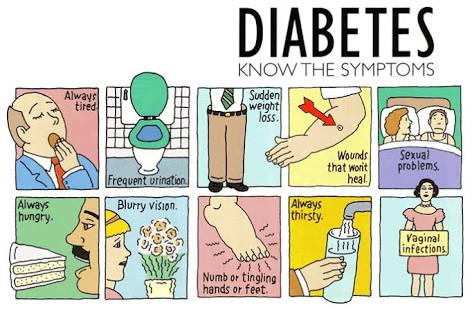
First, in diabetes management andMedtronicCollaboration to enhance the features of an Android-based mobile health management platform designed for diabetes patients and their healthcare providers. Reportedly, this powerful partnership will develop solutions that enable Samsung devices to integrate with Medtronic’sMiniMed ConnectAn internet-based mobile app paired with the platform connects patients with diabetes, insulin pumps, blood glucose monitoring systems, and healthcare service providers.
Clearly, the impact of this powerful collaboration is significant. This internet healthcare solution enables diabetic patients and their caregivers to monitor blood glucose levels in real time and manage insulin injections via mobile devices. Both in the short and long term, it substantially improves patients’ lifestyle habits and reduces costly and dangerous complications associated with diabetes treatment.
The alliance between industry giants is clearly not a one-off event; following their previous honeymoon period, the two companies have once again collaborated to developNeuromodulationimplantable app.
Reportedly, this solution enables doctors and patients to more conveniently manage treatment regimens, track symptoms, and wirelessly monitor data using Android smartphones and tablets. Typically, neuromodulation devices rely on dedicated controllers, and the process of downloading, analyzing, and sharing device-related data is highly complex. The original intent of this design was to allow the two companies to better streamline this workflow.
News of medical patent applications followed shortly thereafter.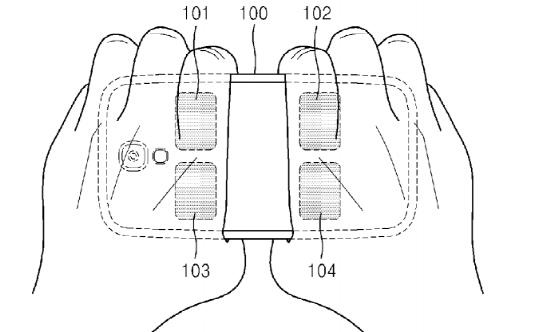
According to a new patent filed by Samsung mid-year, the company plans to use four sensors toMeasure User Body FatSpecifically, this involves implanting sensors into smartphones or in their immediate vicinity; the term “vicinity” here essentially refers to the smartphone case. ThisFour SensorsImpedance data can be measured simultaneously, generated by the contact or interaction between the sensor and the human body. Put simply, in the future, we will be able to determine our body fat percentage simply by holding a Samsung smartphone with both hands. If this technology is successfully implemented, it could become a killer feature for health and fitness applications on Samsung devices.
Not only measuring body fat, the hearing aid market is also under Samsung's consideration. Not long ago, Samsung registered in South Korea a product named "Earcle” trademark, suggesting that Samsung is indeed set to launch hearing aid devices. A device with the model number SM-R790 has now appeared in the Bluetooth Special Interest Group (SIG) database and is rumored to be released soon. Documentation describes this device asSamsung Bluetooth Hearing Aid(Samsung Bluetooth Hearing Aids), meaning this matter is already a done deal.
Meanwhile, Samsung is also developing multiple hearing aid software features. One of them is called “Sound Radar”, users can select a sound source and amplify it, similar to the radar speed guns used by police.
If body fat measurement, smart hearing aids, and digital health platforms are still merely audible yet intangible mirages, thenTeenHealthVanMobile medical clinics are tangible healthcare achievements that truly benefit the general public.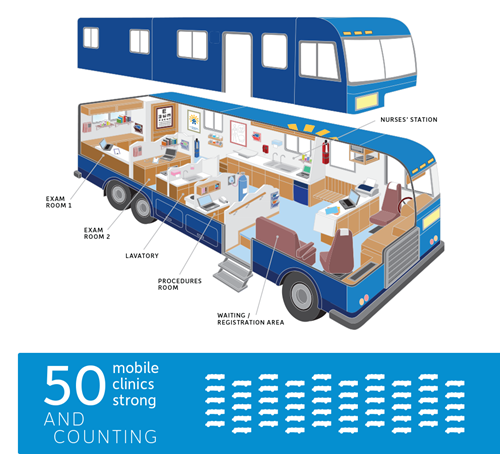
In mid-to-late October 2015, Samsung Group funded the newTeenHealthVanMedical Vehicle: The interior can be said to encompass all of Samsung’s most cutting-edge technologies. It features two examination rooms equipped with Samsung’sGalaxy Tablets, LED Displays, Wireless Printers, Flat-Panel Monitorssuch as the most advanced medical equipment, as well as various devices for examining the eyes, eardrums, and vital signs.Wearable Devices. However, the most appealing aspect is still itsTelemedicineandInteractionfunction.
The Teen Health Van also brings the latest telemedicine technologies to these adolescents. With only one physician on board who must address a wide variety of medical conditions, there are inevitably times when assistance is needed. In such cases, the physician can communicate in real time with remote specialists via telemedicine equipment. Using devices such as electronic stethoscopes, remote specialists can assess patients’ physical conditions and review test results just as effectively as the physician inside the van.
In addition, all the tablets used by these doctors not only storeHealth Information, along with interactive features. When explaining a patient’s condition, physicians can freely select relevant images and annotate them by drawing or circling areas of interest. The tablet is connected to a large wall-mounted display, ensuring that both the patient and the physician view identical content. This approach is far more practical than the anatomical charts posted on office walls or the small skeletal models placed on desks.
If a patient requires specialized treatment, the Teen Health Van will also assist with referrals, which are typically provided free of charge.
“Small in size, but fully equipped.” The medical services provided by the Teen Health Van are diverse, ranging from immunizations, physical examinations, and acute injury care to prenatal check-ups. Social workers also organize thematic educational sessions for adolescents. It can be said that the Teen Health Van offers this vulnerable population not only medical care but also substantial emotional support.
Isn't there a saying that goes:Those who are strong,help.(The strong help others.) Isn’t this exactly what Samsung Medical is doing?
Thus, Samsung willTrailing StrategyAdhering steadfastly to the modest approach of “letting others take the lion’s share while we settle for the remnants,” it has been quietly cultivating its presence in the digital health sector. Although Samsung has long been renowned for its smartphones and semiconductors, it is clearly not content with merely holding the title of “the world’s largest consumer electronics manufacturer.” What it strives for is “the pursuit of excellence.” It is precisely through repeated, prudent transformations that Samsung has consistently maintained its leading position in the industry.
But returning to Samsung Biologics, which we mentioned at the outset, can its unreserved strategic pivot truly propel Samsung into the future?
The Future of Samsung Biologics
Douglas MacArthur(Douglas MacArthur) once landed in Incheon, a western port city across the Yellow Sea, turning the tide of the Korean War; here, we can catch a glimpse of Samsung’s future.
In Incheon, the Samsung Group built a so-calledSamsung Biologics(Samsung Biologics)’s new business produces biopharmaceuticals for globally renowned pharmaceutical companies, including Roche Genentech and Bristol-Myers Squibb.
At least on the surface, this appears to be another “Rapid Mimicry“An example of strategy. Samsung Biologics manufactures highly complex drugs based on customer orders, akin to Foxconn’s contract manufacturing of mobile phones and computers for companies like Apple and Dell. Biopharmaceuticals are protein-based, which makes them more difficult to sterilize than traditional drugs derived from stable chemical formulations. At its continuously expanding facility in Incheon, Samsung has achieved a production capacity of 30,000 liters, with a second plant currently under construction.”
It is reported that Samsung Biologics is a project highly favored by Lee Jae-yong, embodying all the hallmarks of Samsung’s entrepreneurial spirit: large scale, multi-billion-dollar investments, and an evolution from specialized manufacturing expertise into a promising new enterprise.
However, investments in Samsung Biologics may take years to yield returns, even as Samsung seeks ways to monetize the venture. Samsung Biologics holds a 90% stake in Samsung Bioepis, which produces “biosimilars.” Samsung Bioepis recently announced plans for an initial public offering on the NASDAQ in the United States, with reports valuing the company at $7 billion. Samsung stated that its healthcare initiatives are merely one component of a broader strategy aimed at exploring synergies between the medical market and information technology.
In the early 1990s, Lee Jae-yong’s father recognized that Samsung’s corporate culture was too insular. Consequently, he launched a program to send 100 of the most promising mid-level managers abroad each year, allowing them to immerse themselves in local cultures during a one-year sabbatical and bring fresh perspectives back to Korea. Samsung continues to uphold this tradition today. The company’s Seoul headquarters also employs several hundred non-Korean MBA graduates to research international strategies, as Samsung believes that foreign talent can introduce entirely new ideas.
For a long time, Samsung has always been a company full of aspirations for the future and striving to seek opportunities. Under the leadership of the new chairman, Lee Jae-yong, Samsung will strive to achieve a transition from “The World's Largest Consumer Electronics Manufacturer"to"The World's Largest Biopharmaceutical Company” transition.
Chinese Enterprises in Transition
Samsung Group’s successive, remarkable transformations—from feature phones to smartphone systems, and further into artificial intelligence, the Internet of Things, and biomedicine—within a consistent cultural context, offer valuable lessons for Chinese enterprises, particularly private firms, that are grappling with transformational pressures.
In fact, a review of the growth trajectories of many internationally renowned companies reveals that most have undergone painful transformations during their expansion. There are essentially two paths for such transformation: one involves a complete shift from one domain to a new field, cultivating deep expertise in the new industry, strengthening the competitiveness of their products, and continuously expanding market share through corporate globalization, ultimately becoming an industry leader in that specific sector. An examination of the Fortune Global 500 shows that the vast majority of companies, particularly those from the United States and Europe, have followed this path. This approach can be summarized as “Vertical Transformation and Expansion”。
Another path is the so-called diversification strategy, which involves expanding into emerging industries that appear to be on the rise, or even into new sectors entirely unrelated to the company’s core business. This approach was once considered by modern corporate theory to contravene the principles of enterprise development, and many companies have failed in their attempts to pursue it. This path can be summarized as “Horizontal Expansion and Transformation”。
In China, it is indeed extremely difficult for enterprises to transition from traditional industries into modern industrial and high-tech sectors that are predominantly controlled by developed nations. An examination of Chinese companies that have entered the Fortune Global 500 reveals that the vast majority are state-owned enterprises in the resource and financial sectors, which have grown on the back of a massive domestic market and natural or administrative monopolies. Therefore, “horizontal transformation and expansion” is likely an inevitable path for large Chinese state-owned enterprises.
In contrast, some Chinese enterprises undergoing transformation fail to demonstrate the intrinsic interconnections among their various business segments in their transition pathways, and lack a cohesive integrating core. ByHengdaTaking Evergrande as an example, as a real estate enterprise, it has now ventured into the food and agriculture sectors amid the waning growth momentum of the real estate industry. Evergrande’s choice of “horizontal diversification and expansion” is, to some extent, driven by necessity. Leveraging its substantial financial strength and established brand foundation to enter the low-barrier fast-moving consumer goods (FMCG) industry appears to be a favorable yet inevitable option.
But in the long run, with the development of artificial intelligence and the Internet of Things, low-end manufacturing and the fast-moving consumer goods (FMCG) industry will be largely replaced by robots, while in relatively traditionalBiomedicalIn the field, digital doctors are also booming. Therefore, relying on brand strength and substantial capital to capture the low-end market, though a necessary choice, will inevitably lead to gradual obsolescence in the face of changing times. In contrast,HuaweiFrom switches to mobile phones, operations, and e-commerce, each successful transformation may appear as horizontal expansion, but the company has consistently pursued vertical growth within the ICT infrastructure sector, leveraging its R&D capabilities to move steadily upstream. This serves as a prime example: for enterprises striving for excellence, transitioning from the low end of the value chain toward upstream segments is indispensable. Although this journey can be painful, it is only after weathering the storm that one sees the rainbow.
It is not just Samsung; Sony, Apple, Amazon, Tencent, and others have also demonstrated through their transformations what constitutes the right path for enterprises.