

CES 2016 Preview: Everything You Need to Know About Smart Wearables, VR, and Digital Health Innovations

Held in Las Vegas from January 6 to 9, 2016International Consumer Electronics Show(CES) will become a platform integrating smart technology, wearable devices, and the Internet of Things.
As is customary, hundreds of exhibitors from around the world will bring their myriad gadgets to every corner of the Las Vegas exhibition halls. In 2016, the following companies will hold press conferences and keynote speeches at CES, including Faraday Future, NVIDIA, LG, Huawei, Panasonic, TCL, Qualcomm, Toyota, ASUS, Hisense, Samsung, ZTE, Dish, Kia, Sony, Intel, Netflix, General Motors, and YouTube.
At the 2016 CES,Online Streaming、AutomobileVirtual reality will be a hot topic at the exhibition. In the VR sector, CES organizers will expand the gaming and virtual reality exhibition area, where more than 40 exhibitors will showcase their virtual reality hardware, software, and accessories.
Additionally,Wearable ProductsThe collective launch will be a highlight of CES 2016. To date, smart wearable products have spanned multiple sectors, including health, medical care, and sleep monitoring, underscoring their significant development momentum.
In fact, wearable devices had already “taken off” early this year, and CES 2016 will be the showcase where they make significant inroads into the market. We have already witnessed high-end smartwatches, including the Apple Watch, and professional fitness bands such as the Microsoft Band 2 entering the mass market.
Although some previously argued that smartphones would render smartwatches obsolete, with theSmartwatchandFitness WristbandAs such products become increasingly prevalent, they are bound to emerge as a mainstream product form in the future. At CES 2016, more wearable devices will be showcased at various manufacturers’ booths.
At the 2015 CES, we sawPebble Steel. It is expected that Pebble will also unveil its new products at this year’s exhibition. Meanwhile, companies including Samsung, Sony, and LG will also launch a variety of new wearable devices, includingLG G Watch 、Urbane LTE、Gear S2andMoto 360successor. Of course, we may also see entirely new conceptual products at CES 2016 that have never been seen before.
At the upcoming Consumer Electronics Show, healthcare wearable products will be another major highlight. Back in 2015,Medical and Healthcare Wearable DevicesCapturing widespread attention, miniaturization has become a trend—this time, however, it is not only diverse but also penetrates deeper into every level of the human body.
So, what new trends and conceptual products are worth anticipating at the upcoming 2016 CES?
Medical-Grade Consumer Technology
Currently, there are numerous manufacturers of medical wearable devices. Due to the integrated research and development (R&D) of hardware and software, these products involve long R&D cycles, substantial capital investment, and severe homogenization. There are already dozens of diabetes-related products and applications alone. Although medical wearable devices can serve as substitutes for certain medical devices or medications, they lack proper market access approvals and regulatory oversight within the healthcare industry.
Whether from a private or public perspective,Digital Healthall represent a tremendous opportunity, and, byFrom Consumer-Grade to Medical-GradeThis will be an inevitable trend in the medical wearables industry. The advancement of consumer-grade medical technology will enable more precise and continuous individual biometric monitoring, employing more rigorous standards, which can not only save costs but also save lives. Therefore, the development of consumer-grade medical technology is beneficial to all; the only potential concern may be the risk of identity theft, yet overall, the benefits far outweigh the drawbacks.
Health Data Platform
Medical wearable devices have fully realized the connection between humans and objects, and partially achieved connections between humans and between objects, thereby endowing relevant data with accumulability and circulability. The new generation of information technology’sCloud Computing, Big Data, Internet of Things, Mobile Internet(abbreviated as “Cloud, Big Data, IoT, and Mobile”) is fully embodied in medical wearable devices.
Regarding data storage and application, most wearable device manufacturers adopt a self-built and self-operated strategy. Meanwhile, several platform-based companies have launched medical application data platforms to enable cross-application aggregation, storage, and utilization of personal health data on a per-user basis, as exemplified by Apple.Heath Kitplatform (June 2014), Google Fit platform (August 2014), Samsung Sami platform (May 2014), Tencent WeChat Hardware Platform (July 2014), Baidu Dulife Smart Health Device Platform (December 2013), etc.
Additionally, Apple's 2015 launch of theResearch kitGarnered widespread market attention, and it is believed that new developments will emerge at the 2016 Consumer Electronics Show.Health Data Management & Research Platform。
Medical Sensors
This year, the consumer wearables market is projected to continue growing by 290%, primarily driven bySmartwatchandHealth and Fitness Trackerdriven by strong momentum. Over the next four years, the scale of the Internet of Things (IoT) in the healthcare market will continue to grow at an annual rate of 59%.
Take fitness bands, for example. A few years ago, they were merely simple pedometers, but now they have evolved significantly, capable of monitoring heart rate and even the UV index. Undoubtedly, the integration of numerous sensors has made fitness tracking devices increasingly comprehensive and intelligent. So, what exactly are these sensors?
A standard fitness tracker typically includes:Accelerometer, Global Positioning System (GPS), optical heart rate monitor, galvanic skin response sensor、Ambient Light and UV SensorandBioelectrical Impedance Sensor. Clearly, thanks to the evolution of sensors, we are able to achieve more precise monitoring of physiological data, making fitness tracking devices more user-friendly. In the future, these sensors, combined with more advanced software algorithms, may help us obtain more accurate monitoring data and even share it with healthcare institutions to aid in disease prevention.
Undoubtedly, medical sensors will become the next growth driver, and many companies are already striving to capitalize on this rapidly evolving trend. At the 2016 Consumer Electronics Show (CES), it is expected that numerous companies will unveil their innovative new sensor concepts.
Low-Cost Wearable Devices
Wearable devices have begun to address design and functionality issues; the next challenge to tackle isCostQuestion.XiaomiIt has been proven that health trackers can be very affordable. Apple and TAG Heuer will compete in the high-end product segment, while more manufacturers, such as Samsung Electronics—which is comprehensively transitioning toward the medical sector—are expected to join the price war in the low-end market next year.
It is reported that,SamsungA wearable device with the model number SM-R150, codenamed “Triathlon,” is currently under internal development. It is a sports or health tracking product that offers features similar to those of the Xiaomi Mi Band. Positioned as an entry-level wearable, it is priced at just $15.
Furthermore, considering that the Triathlon model isGear Fit(SM-R350) is even lower, it may not have heart rate monitoring or other more advanced features. However, the lower price should be one of its advantages.
Now that we’ve covered the broader trends, let’s take a look at some interesting medical wearable products that may be launched soon.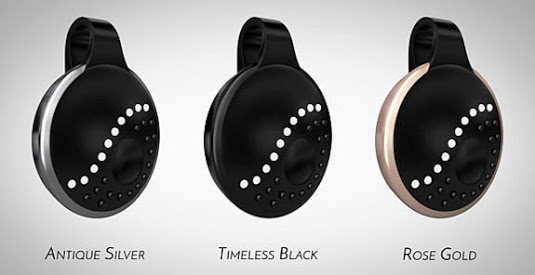
Life-Saving Wearable Devices
Wearable devices occupy a unique position on the human body; they are more personalized than previous devices, making them fully capable of saving lives.AthenaThe goal is to protect women through early warnings and GPS alerts. Sensors are becoming increasingly affordable, enabling tech companies to develop solutions suitable forDeveloping Countriesproducts. The devices can be used to store medical records and even provide early warnings for floods and earthquakes. Wearable devices in 2016 will differ from those of the past.
Under Armour's Return
Remember the acquisition for 475 million this yearMyFitnessPal...that guy? Money isn't to be spent casually; at the 2016 CES exhibitionUnder ArmourMaking a grand return, it will launch an offensive against the global sports goods market, with wearables serving as its weapon. Under Armour has partnered with HTC to develop Grip, and as early as February, Under Armour launched three fitness platforms.Endomondo、MyFitnessPalandMapMyFitness, its goal is to build the largestOnline Fitness Community。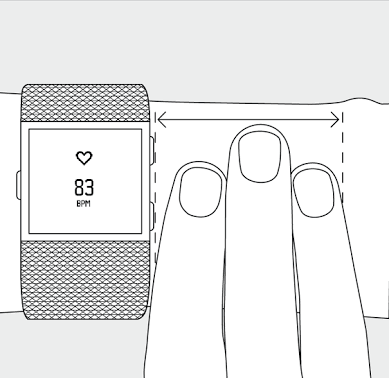
Pressure Detection Sensor
Fitbit’s best-selling wearable device in 2015 was its health tracker. Facing challenges from all sides, Fitbit’s goal for 2016 is to defend its crown.
In 2016, Fitbit products will be able to monitor ourStress Index, rather than merely recording our activities. Many companies are focusing on employee stress, and Fitbit aims to address this issue. Withings claims to have developed a method for assessing stress based on sensor data, and it will introduce this feature in its products showcased at the 2016 CES.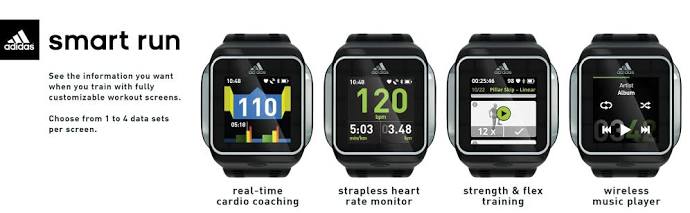
Adidas SmartRun
Adidas'SmartRunThe smartwatch and smart ball will be unveiled at CES in January 2016.SmartRunAs a high-end watch with a retail price of $300, it is designed by running coaches with the aim ofReal-Time Guidance Training Programto help runners improve. Other features include a strap-free continuous heart rate monitor, GPS for tracking speed and distance, workout review, wireless music player, and an eight-hour battery life. The smart ball is a soccer ball with integrated sensors that provide feedback on speed, spin, trajectory, and impact point; this data can be transmitted to your iPhone or Android smartphone.
Beyond the smartwatch, there are more surprises in store. Its executives have stated that consumers would see more sensors from the company in 2016. It is worth noting that in August 2015, Adidas launched a fitness tracking appRuntasticWith a $239 million investment, do you think this money will be wasted? Adidas is expected to unveil stunning products at CES.

Mysterious Enterprise Magic Leap
This is an enigmatic company with mysterious products; all we know is that we are eager to see its offerings as soon as possible. According to current reports, Magic Leap uses optical display technology to overlay 3D virtual images onto the real-world environment.
Truth or Lie? See You at CES 2016!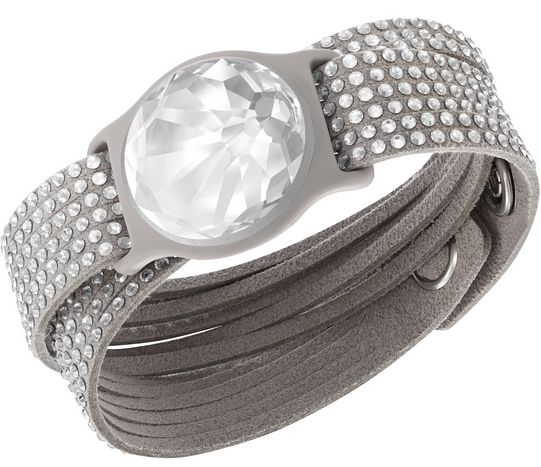
Women's Wearable Devices
What’s the best way to win over your goddess? Jewelry? Or more jewelry? Too naive! This year, you’d be too embarrassed to face your girlfriend without buying her a piece of female wearable tech.
2016 Will Be the Year Women Enter the World of Wearable Devices. Why? Because Companies Are Courting Them with Tailored Designs and Sizes.
At the 2015 CES, Misfit partnered with Swarovski to unveil a new wearable product—Swarovski Shine Collection. The transparent version features a Swarovski crystal dial, while the violet version introduces a feature called “Energy Crystal” technology. The former can be powered by a button battery for up to six months, while the latter utilizes solar charging technology. Notably, the Swarovski Violet Edition is the world’s first sports and sleep tracker that requires neither charging nor battery replacement; users can charge the bracelet by exposing it to sunlight, LED light, or halogen light. The crystal on its dial functions as a small solar panel, effectively collecting and storing solar energy to power the device.
By 2016, what do you think will be the new wearable for women? Smart rings!
Christina Mercando d’Avignon is the CEO and founder of Ringly, herSmart RingHas secured a new round of $5 million in investment. By integrating Mastercard’s mobile payment technology with an innovative ring, imagine simply flashing your sparkling ring—zap—and the payment is complete. The prospects for 2016 are limitless!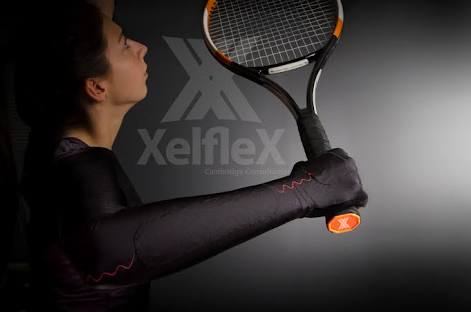
Smart Activewear
Currently, smart clothing already available on the market includesHexoskinandOMSignal, all throughTextile Sensormethods to monitor athletes' data, such as strapping sensors to their chests. Cambridge Consultants, on the other hand, takes a completely different approach.
At the 2015 CES, UK-based Cambridge Consultants launched a product namedXelfleXsmart clothing. Instead of embedding sensors into the fabric as is traditionally done, this garment integrates fiber-optic sensors directly into the special textile material. It tracks movement and leverages powerful algorithms to enable computers to construct a 3D motion model of the wearer. During physical activity, light pulses generated by electronic components travel along the optical fibers. A certain amount of light is continuously scattered within the fibers; bending of the fibers causes an increase in scattering and reflection. This incremental change can be measured to record behavioral data, which is then visualized by computer modeling.
The apparel can be used for fitness and sports coaching, such as “helping to refine tennis serves, golf swings, or skiing techniques, or as part of physical therapy to aid patients in recovering from injuries, surgeries, or neurological issues.”
This YearSmart ClothingEqually anticipated. Technology company Jabil previously proposed “Peak+“The project indicates that smart athletic wear will be launched in 2016. It also acquired Finland-based Clothing+, a company that primarily embeds sensors into devices for Adidas, Polar, Garmin, and Philips. Jabil now has the capability to integrate all these elements. It is poised to establish standards for embedding sensors into T-shirts and athletic apparel, enabling the capture of biometric data without compromising user comfort.”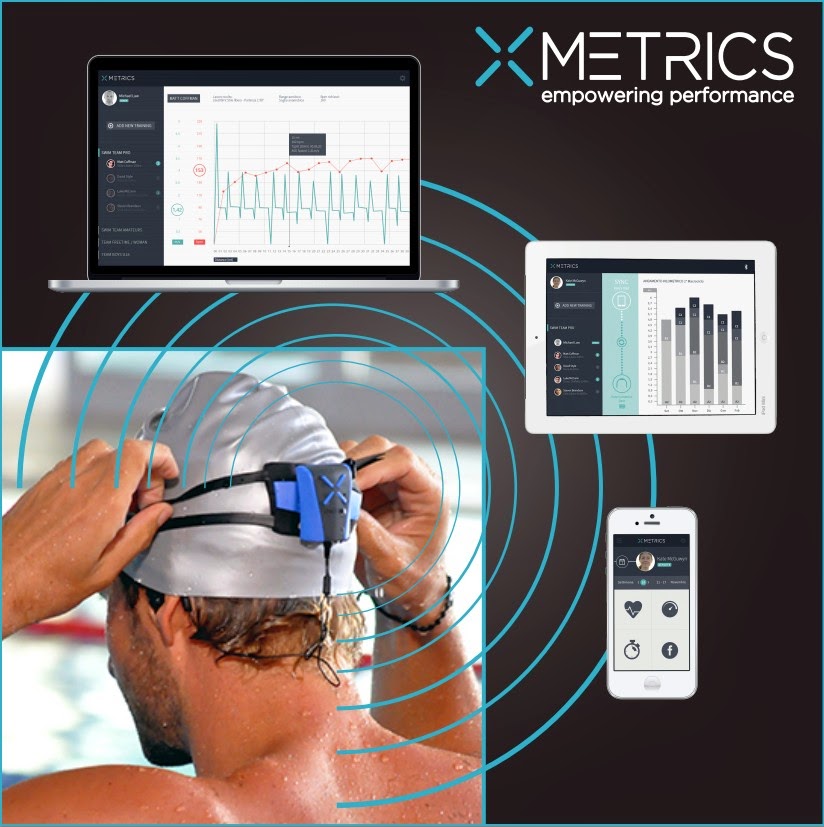
Smart Fitness: From Swimming to Workouts
To be Released at CES 2016XmetricsIt is a popular wearable swimming device designed for professional swimmers and swimming enthusiasts. Positioned at the back of the head to minimize drag, it primarily monitors the swimmer’s physiological signals, providing feedback to the user in audio format.
Additionally, asMoovCo-founder and CEO, Li Meng (phonetic) successfully raised funds through crowdfunding and rose to become a startup star in less than two years. Moov launched the smart fitness bandMoov NowWidely acclaimed, they may unveil a superior brand at the 2016 exhibition.
# Pay Attention to Your Ears
At the 2015 CES, Siemens launched its hearing aids.easyTekThis feature enables the microphone to connect with smartphones and focus on four directions: rear, front, right, and left. Depending on where the user’s hearing focus lies and where the most distracting background noise originates, they can adjust the levels for each of the four directions via the app. Alternatively, users can activate smart settings that automatically determine and adjust these levels. As the device is sold through hearing healthcare professionals, pricing information is not publicly available; however, the easyTek line appears to have been launched with a companion connectivity app.
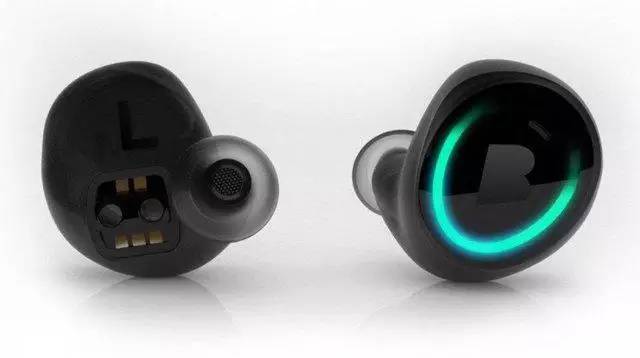
The ear is an ideal site for biometric monitoring and serves as the primary interface for virtual assistants from Google, Amazon, and Apple. Reports indicate that Microsoft is developing wearable devices designed for ear-worn use.Clip, will it be released at CES 2016? Let’s wait and see!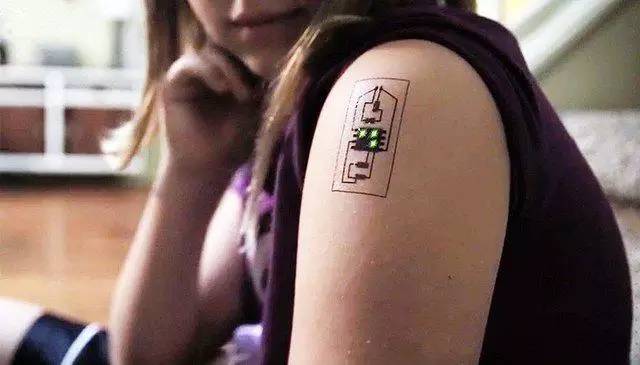
Frog Design’s New Smart Design: Wireless Sleep EarbudsKokoon, Nuzzle Pet Tracking Collar, Apple Watch 2, Invisible Wearable ProductsSmart Tattoos、Mind-Reading Wearable TechnologyWait, there are still many promising wearables that have not been introduced in detail one by one, such as the renamedVerily, Given its use of technology to diagnose cardiovascular diseases, cancer, and mental illnesses, is it any wonder that Google’s life sciences division would willingly allow itself to be sidelined by the times?
In short, let’s discuss everything at the CES in Las Vegas on January 6, 2016!