Five Key Points for Success in the 'Healthcare Partners' Innovation Competition Sponsored by Pfizer, Ping An, Tencent, and Legend Capital
The “Healthcare Partners” Innovative Collaboration Proposal Competition, jointly launched by Pfizer, Ping An Insurance, Tencent, and Legend Capital, has attracted widespread attention in the industry since its inception on December 22, 2015. This competition features a novel model of industrial resource support that differs significantly from traditional, purely investment-driven approaches. Winning enterprises in the innovative healthcare, pharmaceutical, and medical device sectors will receive targeted resource support from these four industry giants, including Pfizer’s healthcare industry resources, Ping An’s commercial insurance products and customer network, Tencent’s targeted traffic support, and Legend Capital’s synergies with its portfolio companies. This presents an excellent opportunity for startups to effectively validate their business models, develop high-quality products, and enhance their brand visibility.
How Can Participating Companies in This Competition Successfully Clear All Rounds?
Score startups and mature companies separately, with particular attention to target market, business model, and team background.
Many companies are concerned about how the selection process for this competition is conducted. What determines whether a company can advance to the next round of discussions? VCBeat communicated with the organizers and summarized the key points for participating companies to successfully pass through each stage. Please pay close attention!Key Points for Clearance!! Key Points for Clearance!! Key Points for Clearance!! (Important things said three times)
Selected companies must clear three hurdles,Initial Screening, Re-screening, Closed-Door Meetings, these three checkpoints must focus on the following five key points.
Key Point 1: The key to the initial screening stage is to provide complete information.
Key points for the initial screening stage: ensure all materials are complete. This includes information on the project team, number of employees, desired collaboration partners, available resources for docking, cooperation model, and most importantly, the business plan (BP)—none of these should be omitted. Additionally, if you provide detailed and precise collaboration proposals, the organizers will give your application priority consideration for selection!
Key Point 2: Differentiate between startups and mature companies during the re-screening phase
Scoring will commence during the re-screening phase. Many founders of startups are concerned that they lack competitive advantages compared to established companies. The organizers have thoughtfully addressed this by evaluating startups and mature enterprises separately, thereby enabling more startups to secure collaboration opportunities with the four industry giants.
Key Point 3: BP must be prepared as required during the re-screening phase
One of the key submission materials for this competition is the business plan (BP). How can you create a qualified BP? Note that this BP differs from a fundraising pitch deck. Its core content should include market analysis, an introduction to the business model, competitive analysis, a company timeline, and profiles of the founding team. As for how to elevate the BP to the required standard, that depends on each participant’s own capabilities.
Key Point 4: During the re-screening phase, scoring is based on three dimensions: the company’s target market, business model, and team background.
Confidential Information Below! The four organizers—Pfizer, Ping An Insurance, Tencent, and Legend Capital—will independently evaluate the projects based on established scoring criteria. A weighted average of these scores will determine which projects advance to the negotiation stage.
The competition primarily evaluates three key dimensions: target market, business model, and team background. Specific criteria include the size and growth rate of the target market, its ability to address strong user needs, barriers to entry, economies of scale, feasibility, and sustainability. Additionally, the assessment considers whether the team’s industry background, experience, and expertise are sufficient to successfully execute the project.
Key Point 5: The key to the closed-door meeting phase is the completeness, attractiveness, and feasibility of the proposal.
The most critical aspect of the closed-door discussion phase is to discuss cooperation concepts. Therefore, participants entering this phase must carefully consider how to articulate their willingness to collaborate, identify potential partners, specify required resources, and outline the implementation strategy for the cooperation.
At this stage, three key points must be kept in mind: first, the completeness of the collaboration proposal, including roles and responsibilities, budget, and expected deliverables; second, the attractiveness of the collaboration proposal, including its innovativeness and the return on investment for the organizer’s resource input; third, the feasibility of the collaboration proposal, including the project team’s capacity to undertake the work and user acceptance.
1/3The above registered enterprises are in the specialty field.
Enterprises are most eager to collaborate with organizers through equity, resources, and projects.
As of the registration statistics compiled by January 8, 2016, more than one-third of the companies focused on specialized medical fields, covering a wide range of specialties. Projects related to cardiology (cardiovascular), maternity care, nursing, traditional Chinese medicine, and diabetes ranked in the top five, with other companies operating in specialties such as dentistry and orthopedics.
There is a product that can collect ECG data anytime and anywhere simply by connecting to smart devices; there are platform companies providing daily care services for hospitals and homes; there is a diabetes-focused app with over one million users; there is a traditional Chinese medicine platform that has just secured substantial financing; and there are enterprises specializing in post-consultation, second opinions, and postoperative rehabilitation management for orthopedics.
Participating companies have expressed interest in engaging with the organizers through various collaboration models, primarily categorized into three types: equity cooperation, resource-based cooperation, and project-based cooperation. Equity cooperation was the most frequently cited model, mentioned by more than half of the companies. Resource-based cooperation was proposed by 22.7% of the companies, meaning that one in every five enterprises seeks to collaborate with the organizers through resource sharing.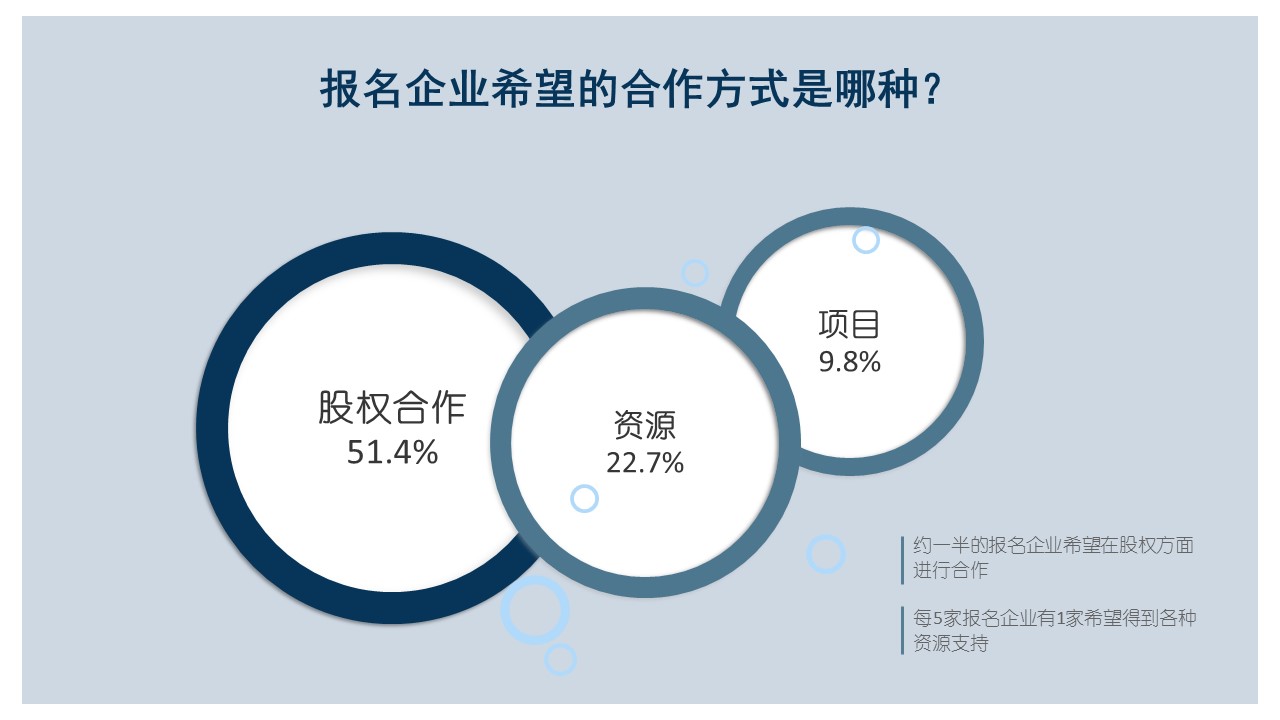
Among the registered companies, those in the internet healthcare sector accounted for the largest proportion, nearing half of the total registrations, followed by the medical services and medical devices/technology sectors. Additionally, teams with 50 or more members constituted 12% of the registered companies, while those with 10 or more members accounted for over half.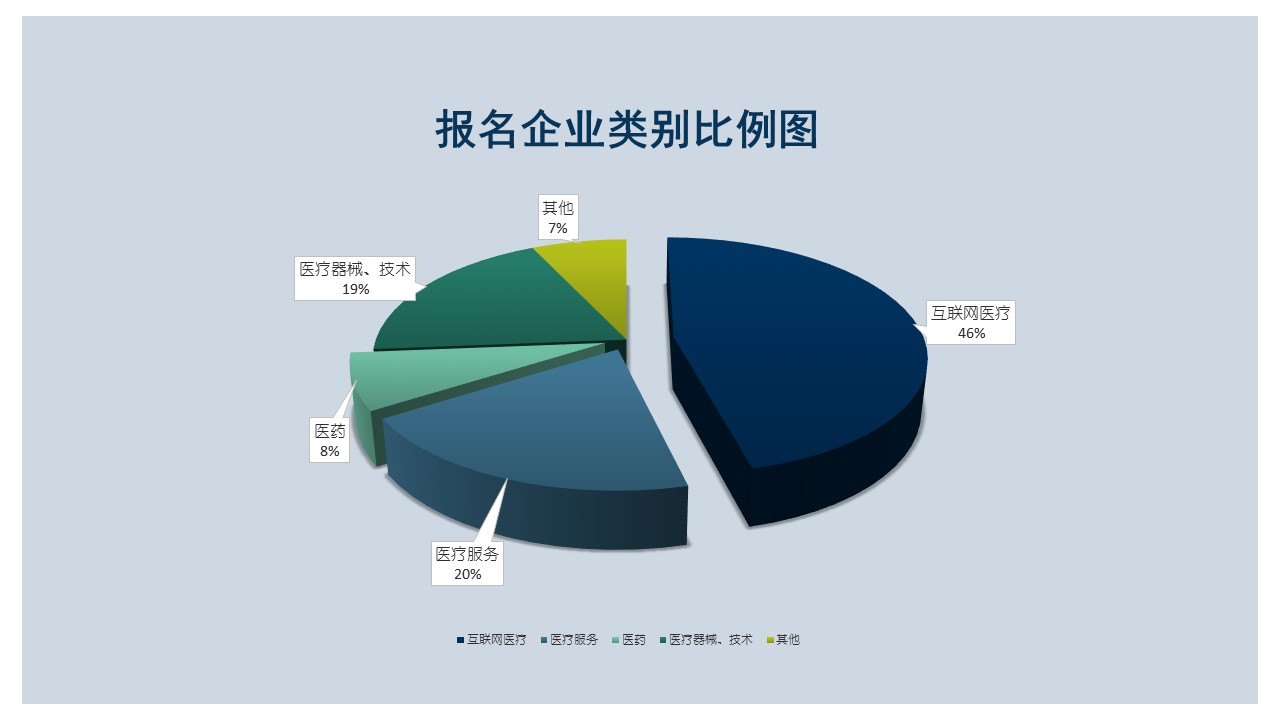
The organizers solemnly emphasized
Whether you are a startup or an established enterprise, whether in internet healthcare, pharmaceutical R&D, medical devices, or other entrepreneurial sectors, Pfizer, Ping An of China, Tencent, and Legend Capital welcome your enthusiastic applications. The organizers will carefully review every applicant and encourage more entrepreneurs to apply—after all, you might just succeed!
Registration for this competition is still in full swing. Participating companies and those interested in signing up are advised to follow the guidelines provided by VCBeat to ensure a more efficient and successful application process! (●’◡’●)
The registration link is being shared again. This is a rare opportunity that students should not miss.
http://www.cyzone.cn/features/hcpartners/
You can also scan the QR code below to follow VCBeat. Simply send a message to our backend for inquiries, and the VCBeat team will provide enthusiastic and comprehensive answers.