

Digital Prescribing in the Pharmaceutical Industry: Revolutionizing Medication Dosage Accuracy
After more than a decade of hesitation, the healthcare sector is now embracing digital technologies. According to research by Bain & Company (see Figure 1), 93% of physicians in the United States will be using electronic health records within the next two years, up from just 30% two years ago. Meanwhile, 97% of physicians will access treatment plans electronically, doubling the figure from 2011. For pharmaceutical companies, now is an opportune time to enter the market.

Figure 1 (Source: Bain & Company Healthcare Survey, January 2015)
It is not only pharmaceutical clients that are changing. Tools and data are transforming the pharmaceutical industry. The sector has adopted faster, more cost-effective, and efficient approaches to drug research and development, as well as production and commercialization. Digitalization occurring in real-world settings has begun to disrupt the traditional business model dominated by commercial insurance payments. In the future, only companies that leverage real-world data to demonstrate the efficacy of new drugs will generate substantial returns.
Many companies have begun to incorporate digital tools into certain aspects of their operations. Novartis, for example, has invested in early-stage digital health companies and pharmaceutical technologies through its joint venture, Qualcomm Life. Novartis has also partnered with Walgreens to recruit clinical trial participants from among the 100 million customers in its pharmacy database. However, companies today must establish better data connectivity, analytical workflows, and seamless integration across internal and external systems.
The pace of change is accelerating. Over the past four years, venture capital investment in the U.S. digital health sector has quadrupled, reaching over $5 billion in 2014, with IBM Watson and Apple joining in by investing in health-related database projects. In the next five years, most U.S. healthcare providers and payers will transition to digital platforms.
Creating a Successful Digital Strategy
Overall, it remains challenging to establish a fully digital strategy. Some companies feel frustrated by this challenge, while others fail to prioritize strategic initiatives due to excessively rapid development speeds. At a global pharmaceutical company, we identified over 200 digital projects and 2,000 related websites, many of which lacked necessary integration. The leadership team failed to implement a comprehensive overarching plan, resulting in minimal benefits.
For instance, when management fails to establish clear priorities for digitalization initiatives, the risk budget for strategic projects tends to be underestimated. A U.S. pharmaceutical company established a social media listening center to monitor online conversations and gain deeper insights into customers’ genuine feedback. However, due to poor internal coordination, the supervisor’s attempt to continue operating the listening platform was not approved by senior leadership, as management failed to recognize the strategic value of the listening center.
Digital health is a broad and complex field, but it is not a black box. We recommend that companies break it down into discrete thematic modules, enabling the leadership team to understand their significance and actively participate in discussions. Collectively, these modules map out the entire digital landscape, helping enterprises identify areas that have yet to be addressed. These untapped areas may represent the most competitive segments of the pharmaceutical industry’s value chain (see Figure 2).
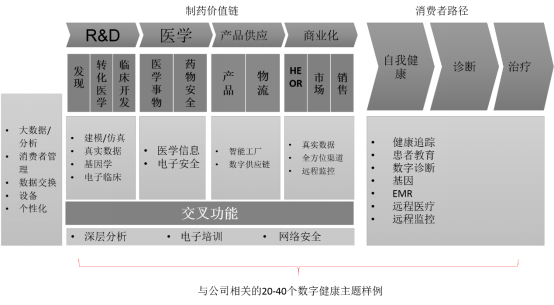
Figure 2. Digital health is a broad and complex field that can be divided into several thematic areas.
For example, big data analytics enables pharmaceutical companies to leverage real-world data to accelerate drug discovery while also providing valuable health economics insights. The correct approach is to strategically select areas that offer the highest return on investment with the lowest cost, risk, and time commitment, prioritizing them accordingly. By choosing specific projects, leadership teams can continue to move forward without getting lost in a maze of data.
There is no single correct answer to the question of where to begin in the digital realm. As more pharmaceutical companies forge ahead along this path, we observe two promising directions: leveraging real-world data and delivering a superior digital experience for customers, patients, and other stakeholders.
Embrace Real-World Data
Advanced analytics can accelerate the growth of more efficient pharmaceutical companies; however, most lack access to real-world data, preventing them from benefiting from analysis, modeling, and simulation. When paired with appropriate tools, data can serve as a torch in the dark. Without data, all research trends appear indistinguishable. Those who are first to leverage large-scale real-world data will reap substantial benefits.
According to the latest forecast by IMS Health, the top ten pharmaceutical companies could generate an additional $1 billion in annual revenue if they fully leverage this resource.
However, even with extraordinary capabilities, strategic partners are essential to accomplish this task. As a primary source of information for pharmaceutical companies, clinical trials represent a veritable gold mine of global health data. As the industry and governments increasingly adopt data tools such as electronic health records (EHRs) and patient-reported outcome platforms, a growing number of partners will contribute to enriching real-world data in the future.
Bayer has invested in addressing the bleeding side effects associated with its new anticoagulant, Xarelto. The data utilized were derived from existing disease registries and newly funded research initiatives. Real-world trials involving 6,784 patients demonstrated that 96% of participants experienced no severe bleeding or related adverse effects. These findings helped persuade insurers to provide coverage and rapidly increased the drug’s market share.
Real-world data is critically important for pharmaceutical companies that are focusing their efforts on developing treatments for rare diseases, which typically involve small markets and high drug prices. To identify suitable patients, companies may need to generate data. One approach is to offer genetic screening to family members. Screening high-risk populations for pulmonary arterial hypertension will help improve diagnostic rates and enable patients to receive early treatment.
To leverage real-world data, companies require a comprehensive data platform capable of integrating internal data with external data systems, such as those for regulatory affairs, clinical research, and marketing. Most importantly, the platform must possess data cleansing and semantic harmonization capabilities, as these data may originate from vastly different sources and serve diverse purposes. This presents a significant challenge for existing IT systems.
Building Digital User Experience
In this new digital world, if you can get closer to customers, patients, and other stakeholders and provide them with a good digital experience, then you win. Research by Bain & Company shows that doctors spend far more time on online consultations than pharmaceutical sales representatives do. As payers and providers increasingly search for medical information online and use outcome-oriented healthcare services, it is crucial for pharmaceutical companies to engage in new models of clinical roles.
Omnichannel strategies and personalized marketing can help enterprises build a digital customer experience, enhancing influence while significantly improving the return on investment in marketing and sales. Cost-effective technological tools enable businesses to shift from an isolated perspective to a customer-centric view, ensuring alignment between enterprise data and customer information, thereby facilitating seamless communication.
Personalized marketing leverages digital connectivity to address consumers’ specific issues in real time and deliver services based on an understanding of consumer behavior and preferences. For example, Merck has focused much of its attention on physician interactions, developing advanced analytics and marketing tools to better engage with physicians. Some pharmaceutical companies are recruiting patients for clinical trials, while others are establishing online communities for patient education. To participate more effectively in customer engagement, some pharmaceutical companies require additional capabilities, including access to natural history data and social media, participation in risk assessment and mitigation strategies and priority authorization platforms, as well as the provision of genomic, phenotypic, and other diagnostic platforms.
Become a Digital Pioneer
Digital strategy impacts the entire value chain. Enhancing transparency for customers and suppliers can help enterprises minimize working capital and optimize solutions. Some leadership teams may place larger bets and adopt more aggressive approaches.
Below are some strategies for pharmaceutical companies to maintain their competitive edge:
1. Start with top-tier sponsors.Digital transformation is a strategic imperative. It involves acquiring authentic data, conducting advanced analytics, seeking partnerships, and performing trend surveillance. Many innovations originate outside the industry, and no pharmaceutical company can succeed in isolation. Digitalization also requires cross-functional initiatives to coordinate internal and external operations. The engagement of top leadership will ensure comprehensive returns on investments in digital projects.
2. Expand Digital Themes。Establish or acquire entities to collect, structure, and analyze massive volumes of internal and external corporate data. Replace siloed IT systems with an integrated digital strategy to ensure information flows across all functional areas, including the supply chain. Create seamless digital customer experiences.
3. Learning Methods for Investment Testing.Once you have selected a few high-priority digital themes, launch lighthouse projects to help the company build a digital organization and create a digital blueprint, ensuring that dedicated funding is secured for their execution.
4. Build a corporate digital health incubator.Pioneers are establishing incubators to oversee digital implementation. A European pharmaceutical company has launched a digital health incubator, allocating dedicated budgets to operate several high-impact lighthouse projects while tracking the progress of each initiative.
5. Possess an entrepreneurial mindset. The traditional investment mindset focused on short-term returns is at odds with the goal of learning through exploration. Testing learning approaches is critical to helping enterprises leverage digital technologies. Lighthouse projects should be approached with the right mindset, akin to how venture capitalists manage startups. Some will succeed, and some will fail, but all lessons learned are valuable.
6. Design a digital strategy to support the corporate strategy.There is no unified digital strategy for the pharmaceutical industry. Leverage digital strategy to strengthen corporate strategy.
Recommendations for Enterprises
Digital technology has brought many changes to the pharmaceutical industry, but it will not fundamentally disrupt its business model. Drug research and development, medical affairs and safety, as well as manufacturing and commercialization will remain highly integrated, continuing to demand intensive capital and specialized expertise. Nevertheless, digitalization will undoubtedly create new opportunities to enhance the entire value chain and strengthen corporate competitive advantages.
The core competitiveness of the pharmaceutical industry lies in investing in early-stage technologies and basic science. Investment in digitalization is likewise a strategic, long-term commitment.
The following questions will help the leadership team highlight the key priorities of the digital strategy.
1. Have you considered what digital strategies your company should adopt? What do you aim to achieve with data? What specific measures have you implemented in this process?
2. Has the leadership team identified the 2 to 4 digital domains with the greatest impact on the company’s business and launched several lighthouse projects? Do you have additional funding to support these initiatives?
3. Are you aware of any technology partners associated with the company?
4. Do you have a plan to develop digital talent?
5. What is your digital operating model? Have digital tools been embedded across the entire organization?
Developing a digital strategy takes time. To date, no company has developed a comprehensive digital model for the pharmaceutical industry, but many companies are already taking action. Companies should establish clear priorities, which will enable them to reduce unnecessary expenditures while enhancing competitiveness in an ever-changing market.
Compiled by: Li Ying
Responsible Editor: Zhang Nan