

Yihuo Bio Files IPO Prospectus for EFIRM-Based eLB: A 30-Minute Non-Invasive Precision Cancer Diagnostic Platform
 Lung cancer is the second most common cancer in humans after skin cancer, and to date, it remains the leading cause of cancer-related mortality. Since2008Since [year], lung cancer has replaced liver cancer as the leading cause of cancer-related deaths in China. Over the past three decades, the number of lung cancer deaths among the Chinese population has increased by464.85%. Non-Small Cell Lung Cancer(NSCLC)Accounting for all lung cancers85%. Squamous cell carcinoma, adenocarcinoma, and large cell carcinoma are all subtypes of non-small cell lung cancer.Most doctors believe,Prevention and early monitoring of lung cancer are the best ways to combat it. Previously, The doctor will recommend three different types of lung cancer tests to you.: Imaging Examination, Sputum cytology biopsy and tissue biopsy. However,These diagnostic methods are not only cumbersome but also expensive. They are effective only when suspicious signs are detected in the body and the probability of having cancer is reasonably high. For the vast majority of patients, by the time they become aware of their cancer diagnosis, it is already too late. Therefore, Over the past few decades, the survival rate for lung cancer patients has been very low.Since2011Since the year,American Society of Clinical Oncology(ASCO)and the National Comprehensive Cancer Network (NCCN)(NCCC)Recommend advanced epidermal growth factor receptor testing for patients(EGFR)method for diagnosing non-small cell lung cancer. Simply put,,EGFRTherapy is achieved through such asgeftinib(Gefitinib) orerlotiniv(Erlotinib)EGFR-Tyrosine Kinase Inhibitors for Targeted Therapy in Lung Cancer. Although This Has Significantly Improved Survival Rates, However, it also requires a high level of resources., Significant professional expertise and time.Chinese Scientists Master Core Technology for Non-Invasive Precision Genetic DiagnosisAgainst this backdrop, a researcher from the University of California, Los AngelesUCLADr. Liao Wei, a researcher, embarked on his entrepreneurial journey by founding Yihuo Bio (Yihuo Bio) genetic diagnostics company, hiring U.S.UCLAProf. David·Wang (David Wong) serves as the Chief Scientist, with the goal of developing a super tool for genetic testing that is more precise, more convenient, and more cost-effective.
 On February 12, 2016 (U.S. time), Dr. Wei Liao and Professor David Wong formally introduced Yihuo Biology’s groundbreaking EFIRM technology to scientists and media worldwide at the AAAS 2016 Annual Meeting and Global Science Forum, immediately sparking intense coverage from over a hundred media outlets globally.VCBeat previously conducted an exclusive English interview with Dr. Liao Wei (the English report is appended after the Chinese content).EFIRM is user-friendly yet powerful, capable of accurately diagnosing the most common subtypes of lung cancer and identifying non-small cell lung cancer (NSCLC) through a simple biofluid analysis. This process, known as a "liquid biopsy," avoids the tissue damage associated with traditional biopsies. Thus, the advantages of this new lung cancer diagnostic method are self-evident. In addition to being non-invasive, clinical tests have demonstrated a high detection accuracy of over 99%. It has also been proven to be cost-effective and efficient. Liao Wei told VCBeat that EFIRM can diagnose the most common subtypes of lung cancer in under 30 minutes.
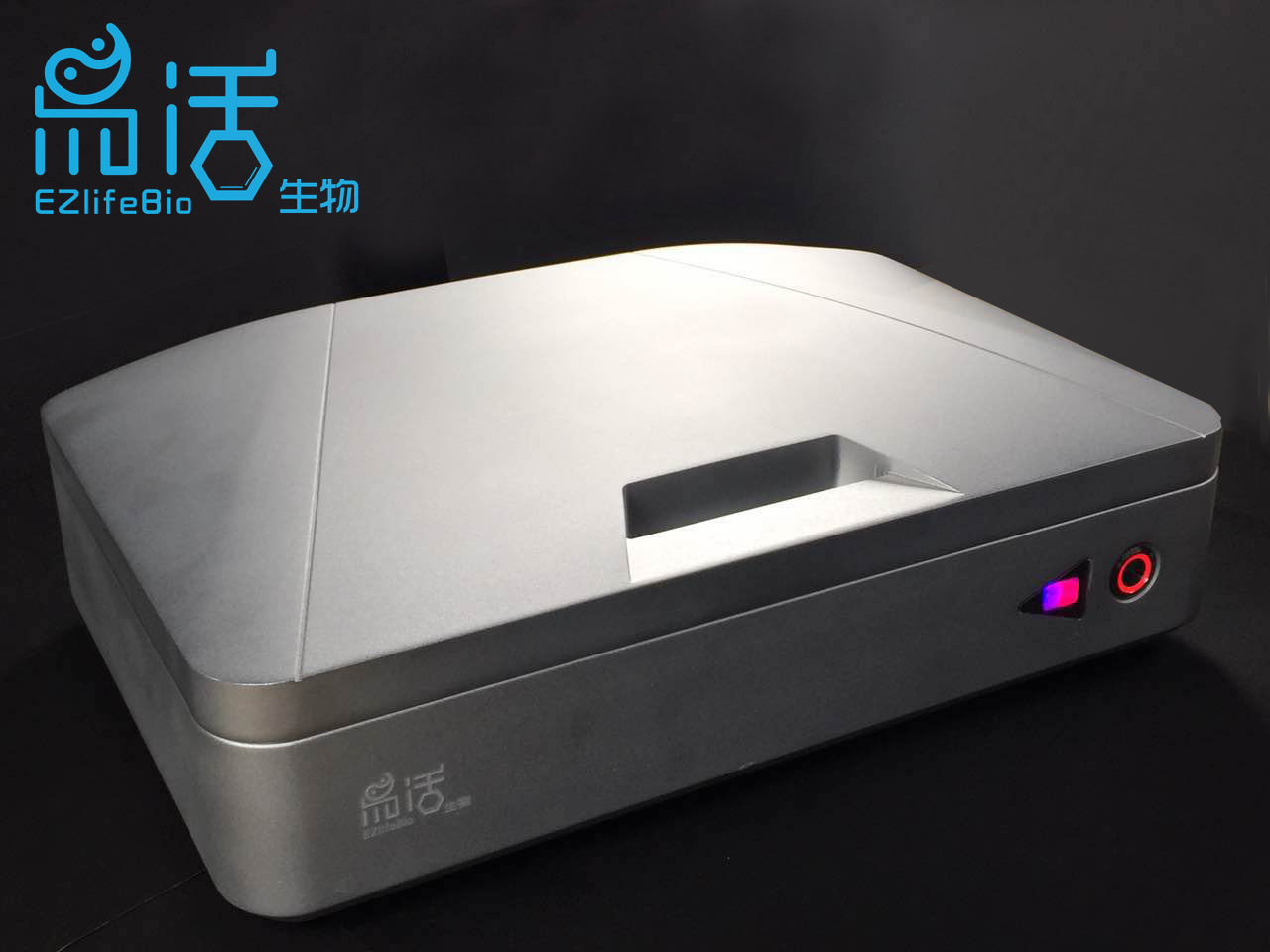
 EFIRMThe basic principle is to specifically capture cell-free tumor gene fragments using an ultra-high-sensitivity electrochemical detection method, without sample processing andPCRAmplification-free direct detection of gene mutations in body fluids, hence termed electric field-induced release and measurement(EFIRM). Products developed on the basis of this technology are referred to aseLB. Liao Wei stated,EFIRMthe core technology is entirely in the hands of ethnic Chinese,EFIRMThe instruments and kits were entirely developed by Yihuo Biology.Yihuo Biology is headquartered in the United States., Clinical trials are underway in China, and a production base is being constructed, with expectations that2016By summer, the factory will be capable of mass-producing disruptive tumor gene testing equipment and lung cancer detection reagents.2016Year6In [Month], the company plans to [hold an event/launch] in Chicago, USA.ASCOThe first-generation official product was launched at the conference, marking its formal entry into the market.Hope to benefit a larger populationLiao Wei graduated from the College of Chemistry and Molecular Engineering at Peking University and is a successful man with a happy marriage. Before returning to China, he served as a researcher at the David Geffen School of Medicine at UCLA. As he stated,He has a clear vision for the company’s future. He said sincerely:“The more people who can benefit from this new technology, the better.” “We hold our own patents.,But we are happy to share with those who share the same vision, as we aim to help as many people as possible.”He told VCBeat that the company plans to initially manufacture in China.,It was then rapidly rolled out across the entire Chinese market, given that China has become the world’s second-largest economy.2017Year,The company plans to expand the product’s reach to other regions worldwide.This product is highly significant and aligns perfectly with Dr. Liao’s vision. To use an analogy,——He aims to transform this platform into a next-generation gene mutation detection“Apple store”, this platform is open to developers, with the aim of enabling the detection of any disease through genetic mutation analysis in the near future. A wide range of diagnostic assay kits will be available on this platform, each designed to detect genetic mutations associated with a specific disease; these kits are single-use. The anticipated price is one-tenth that of current diagnostic methods.This product has three distinct advantages over its potential competitors. First, other diagnostic methods are based on polymerase chain reaction(PCR). It has obvious weaknesses——Tissue biopsy is required, thus it is considered an invasive diagnostic method. In addition,To detect gene mutations,PCRPre-amplification of the target is required.DNAorRNAsequence. Secondly,Its detection accuracy is higher thaneLBLow.PCRThe concordance rate between liquid biopsy and tissue biopsy is less than70%, andeLBCan be done without performingPCRIn the context of amplification, detection of body fluids alone can achieve99%The aforementioned concordance rate. And,ThisPCRDiagnostic methods are expensive, costing approximately in China450USD, and it is particularly time-consuming,Approximately10 — 14between days. In comparison,EFIRMTechnology is expected to cost50around USD, and not exceeding30minutes.Liao Wei told VCBeat that this new revolutionary product can be used in hospitals or central laboratories. For hospitals, the product must be approved by national regulatory authorities before it can be used, which still requires1-2years; for central laboratories, it can be used noweLBProvide scientific research services, or offer testing services to specific populations and volunteers.(Original English text)Revolutionary Device in Non-Small Cell Lung Cancer (NSCLC) Detection and BeyondLung cancer is the second most common cancer in both men and women (not counting skin cancer) and is by far the leader in cancer deaths among both men and women. In 2008 lung cancer replaced liver cancer as leading cause of deaths in China. The registered lung cancer mortality rate has increased 464.85% in the past three decades in the country of the red dragon. Non-small cell lung cancer (NSCLC) accounts for 85% of overall lung cancers. Squamous cell carcinoma, adenocarcinoma, and large cell carcinoma are all subtypes of NSCLC.Most doctors agree that prevention and early detection are often the best way to battle lung cancer. Not long ago, three different kinds of lung cancer tests could be recommended by your doctor: Imaging testing, Sputum cytology and biopsy. Yet these diagnosis methods are bothersome and costly. Only when there is a reasonable probability of having cancer will these diagnosis methods be utilized, i.e., after the detection of a suspicious agent in your organism. A vast majority of patients do not realize they have developed cancer until it is too late. Consequently, the lung cancer survival rate has remained very small in past decades. Since 2011, however, the American Society of Clinical Oncology (ASCO) and the National Comprehensive Cancer Network (NCCC) have recommended Epidermal Growth Factor Receptor (EGFR) testing for patients with advanced (NSCLC). Simply said, this recent method treats lung cancer through EGFR, more concretely, via EGFR-tyrosine kinase inhibitors such as geftinib or erlotiniv. Although it has improved the survival rate considerably, the EGFR mutation test does not differ from its predecessors in other aspects and similarly requires a high level of resources, numerous professional staff and is time-consuming.
 It is in this landscape that a new biotechnological start-up named Yihuo Bio steps in. The company is headquartered in USA, and is building in a manufacturing factory in China to produce en mass a new device that could revolutionize the lung cancer field as soon as the summer of 2016. They will make an official product presentation in the next ASCO conference this coming June in Chicago, USA.The company is run by Dr. Wei Liao, Dr. Liao, a happily married family man studied chemistry in the most prestigious Chinese university in Beijing. He followed his studies in China with post-graduate studies in medicine at UCLA. As he states, he has a clear vision of the future of his company. "The more people that can benefit from this new technology, the better," he earnestly states. "We own the patent but we do not mind sharing with anyone who has the same vision as us; we want to help as many people as possible," he adds. They plan to start producing in China and spread rapidly throughout the domestic market –the second-largest economy in the world. As soon as 2017, they plan to penetrate into other regions.The device is convenient in its usage but complex in its structure. It can detect most of the common lung cancer subtypes, non-small cell lung cancer through analysis of a simple body fluid. This process has been called a "liquid biopsy" and gives the same result as a regular biopsy without the invasive drawbacks. The advantages of this new lung cancer diagnosis method compared to previous ones are self-evident. Aside from it being non-invasive, it has proven inexpensive efficient.-It can diagnose most common lung cancer subtypes in as little as 30 minutes. In addition, tests have shown it presents a high detection accuracy rate, close to 99%.Regarding its structure-, it consists in the adaptation of a saliva-based EGFR mutation detection into an electrochemical platform integrating sensitive and specific multiplexing lab assay. The latter is named electric field-induced release and measurement (EFIRM). The combination of both structures and the final product name is eLB. This product adaptation has a significant meaning- to match Dr. Liao´s significant vision. Using an analogy-: he wants the platform to become the new "Apple Store" of gene mutation disease detection. The platform will be free. The idea is to be able to detect any disease able to be detected through gene mutation in the near future. The device would be comprised of numerous tests ticks. Each test tick can measure an EGFR mutation and is disposable. Its expected price is half' of current diagnosis methods.This product has two clear advantages related to its potential competitors. Nowadays, all other potential diagnosis methods are based on polymerase chain reaction (PCR) procedures. This has clear weaknesses- given that it requires a biopsy. It is thus considered an invasive diagnostic method. Furthermore, in order to detect a gene mutation, PCR requires advance knowledge of which DNA/RNA sequence you are targeting. Secondly, its accuracy detection is lower than eLB. PCR accuracy can also only be improved slightly by amplifying the sample. In contrast, eLB only amplifies the signal reducing time-consumption and costs. Overall, the PCR diagnostic method is costly at around US$450 in China and is especially time-consuming, taking between 10-14 days. By contrast, SABER dx is expected to cost around US$50 and takes no more than 30 minutes.The company is expected to start manufacturing its product in summer 2016. This new revolutionary product can be used in either hospitals or center labs. Unfortunately, for hospitals, the company is still working on the necessary administrative steps to begin commercializing its product. However, center labs, which determine their own regulations can being reaping the benefits of this new product as soon as it enters the market.
Text | Jopevi Chen Kun
Editor: Zhang Nan