

Has Mobile Healthcare Readied Itself for Sudden Exposure to Hundreds of Millions of Users?

Over the past few days, a nationwide crackdown on ticket scalpers has swept across China, with Beijing at the epicenter of the storm. Following a series of reports by Beijing Television (BTV), CCTV-1 and CCTV-2 have continued to provide in-depth coverage. As a result, mobile healthcare has suddenly come into the national spotlight in an unexpected way, driven by the actions of a small number of scalpers in Beijing who used mobile healthcare platforms to book appointments and resell them at inflated prices.
This incident triggered developments in two directions. First, for mobile healthcare companies, it marked their first large-scale exposure to the general public. Many ordinary citizens learned through China Central Television (CCTV) that they could register for medical appointments via their smartphones. Yihu Doctor, which was featured by Beijing Television and CCTV, experienced a massive surge of users downloading its app, even causing its servers to crash.
Another direction is the government and public's concern about the safety of mobile medical products, especially privacy.
On February 20, 1hu Doctor publicly issued a statement expressing strong support for the recent crackdown by regulatory authorities and media on ticket scalpers in Beijing. The company stated that mobile healthcare enterprises are the “natural enemies of scalpers” and committed to preventing scalpers from exploiting mobile healthcare platforms through technological and mechanistic improvements.
Strictly speaking, the exploitation by scalpers of appointment slots provided through 1hu Doctor’s “additional number” service is fundamentally identical to their exploitation of the government-run 114 registration platform due to flaws in its identity verification mechanism.
Logically speaking, mobile health companies should be the natural enemies of scalpers. An analysis of various scalping tactics reveals that their most fundamental strategy is to exploit information asymmetry among patients by acquiring appointments at low prices and reselling them at a premium. In contrast, all mobile health apps adopt transparent pricing and facilitate easy verification. Essentially, the widespread adoption of mobile health apps will continuously squeeze the operational space for scalpers, potentially leading to their eventual disappearance.
More importantly, the fundamental difference between scalpers and mobile healthcare lies in the fact that the former peddles existing inventory—acquiring appointment slots through various online and offline channels. While this enables some individuals to purchase appointments at inflated prices, it does not increase new supply in the market. In contrast, the core of mobile healthcare’s additional appointment service is to encourage physicians to allocate more time outside their regular duties to see extra patients, thereby creating new supply for each additional appointment offered.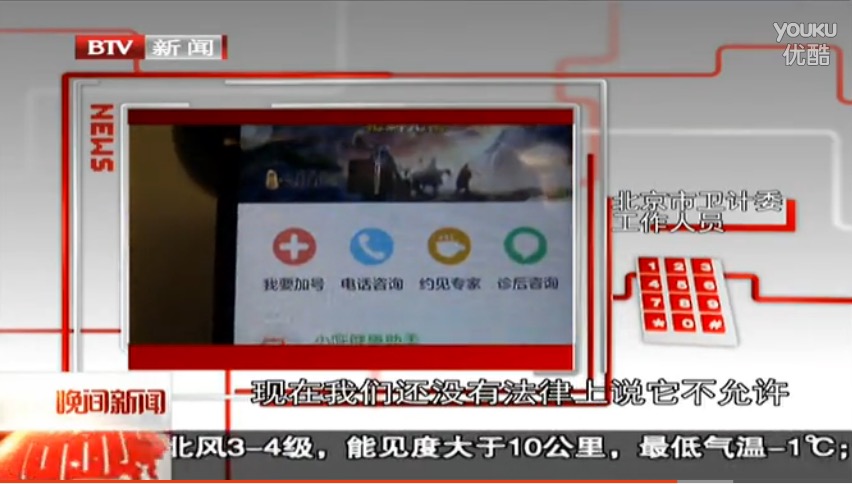
It is reassuring that the government has maintained a considerable degree of openness and rationality in this incident. BTV interviewed relevant officials from the Beijing Municipal Health and Family Planning Commission, who stated that mobile healthcare is an “emerging phenomenon” and that its practices could not be deemed illegal or non-compliant. While maintaining regulatory oversight, the government is also allowing for the development and continuous improvement of such emerging innovations.
1hu Doctor stated: “Entrepreneurship is arduous, and growth is challenging. As an emerging sector, mobile healthcare requires time for the public and media to understand its characteristics and development trajectory, during which misconceptions may arise. VCBeat deeply relates to this reality. Over the past two years of reporting, VCBeat has witnessed the concerted efforts of numerous mobile healthcare companies, government officials, hospital administrators, and physicians to improve the healthcare landscape.”
In recent years, while many hospitals and physicians—the mainstays of the healthcare system—have become advocates of mobile health, many others have remained on the sidelines. In 2016, mobile health entrepreneurs, government agencies, hospitals, and physicians will engage in greater collaboration and mutual adaptation, gaining a deeper understanding of each other’s value. Together, they will explore cooperative models that better serve patients’ interests and more effectively address healthcare challenges.
VCBeat believes that the rapid development of mobile health represents a trend in both social and industrial progress. Inevitably, various issues will arise during this fast-paced advancement, but ultimately, it will enhance the overall operational efficiency of the healthcare system and improve patients’ medical experience. Much like ride-hailing apps such as Didi and Uber, which have consistently been at the center of policy debates and public scrutiny, they have genuinely improved travel efficiency for Chinese people and transformed the quality of mobility for hundreds of millions.
VCBeat believes that television coverage has objectively raised public awareness of mobile health, which is highly likely to represent a watershed moment for the industry. While accelerating the development of mobile health, it also imposes higher requirements on mobile health companies, necessitating superior quality in terms of safety, privacy, and user experience.
VCBeat calls on all colleagues in the mobile health sector to jointly treat every patient’s trust and entrustment with seriousness, strictly uphold industry self-discipline, and adhere to the core values of the healthcare industry—safety and care.
Appendix: Full Text of the 1hu Doctor Statement
1hu Doctor has noted that BTV on February 18 and CCTV-1 and CCTV-2 on February 20 consecutively reported on Beijing’s recent crackdown on scalpers. Some of these reports mentioned that scalpers were purchasing appointment slots through the 1hu Doctor APP and reselling them for profit. The company has taken note of this situation.
In this regard, 1hu Doctor issues the following statement:
1. As a leading enterprise in the mobile healthcare industry, 1hu Doctor firmly supports the recent resolute crackdowns and public oversight by competent authorities at all levels, hospitals, and the media against ticket scalpers and “huangniu” engaged in the illicit resale of appointment slots.
2. 1hu Doctor has always been the natural enemy of ticket scalpers and “huangniu” (illegal appointment resellers). This is because the core of 1hu Doctor’s business models, such as additional appointment registration and specialist bookings, advocates for the fair and transparent allocation of high-quality medical resources by leveraging internet principles and market dynamics. The emergence of these new models inherently brings fairness and convenience to patients, while significantly compressing the survival and arbitrage space for ticket scalpers and “huangniu” by eliminating information asymmetry.
3. Yihu Doctor will further prevent exploitation by appointment scalpers and “yellow cows” through mechanistic and technical measures. From relevant reports, we have also learned that the methods used by these scalpers to exploit Yihu Doctor’s public channels for additional appointment registrations are constantly evolving. We have been actively combating such activities by implementing relevant technical safeguards and a blacklist mechanism. Going forward, we will strengthen our preventive efforts and promote the establishment and improvement of corresponding mechanisms and technical solutions.
4. Entrepreneurship is arduous, and growth is challenging. As an emerging sector, mobile healthcare requires time for the public and media to understand its characteristics and development trajectory, during which misconceptions may arise. We actively call on mainstream media to fully recognize and safeguard the innovative nature of mobile healthcare startups and their commitment to enhancing medical service experiences, thereby providing robust protection for these nascent enterprises. Through media and various channels, we will strengthen multi-stakeholder communication with regulatory authorities, public opinion institutions, hospitals, and patients. This effort aims to help the public appreciate the value of mobile healthcare in improving patient care experiences, optimizing the allocation of medical resources, and expanding the supply of medical services, ultimately enabling broader benefits for all parties involved.
5. Today, the mobile health industry has become a key focus of the “Mass Entrepreneurship and Innovation” initiative, with numerous outstanding enterprises and continuously evolving business models. The model adopted by 1hu Doctor has been recognized and embraced by the majority of leading mobile health companies, representing the mainstream trend and future direction of the industry. As this significant opportunity for engagement with the public and media arises, 1hu Doctor calls on more industry peers to actively voice their perspectives, enhance communication and sharing with the public, and contribute to the development of mobile health.
1hu Doctor will continue to uphold its corporate mission of “conveniently connecting people with medical services to promote health and happiness,” advancing steadily on the path of innovative development and benefiting both patients and healthcare providers.
1hu Doctor
February 20, 2016
Note: Founded in 2014, Yihu Doctor is one of the leading startups in the fields of online follow-up consultations and specialist appointments. With over 200,000 registered physicians and millions of users, its core features include appointment slot addition services and follow-up consultation services.