

Market Opportunities and Challenges in Rehabilitation Hospitals: Business Models, Competitive Advantages, and Strategic Outlook
In the research report by Industrial Securities Research Institute, excerpted by VCBeat in its previous issue, a detailed and comprehensive analysis was conducted on the industry background, development trends, and other aspects of rehabilitation medicine (In-Depth Report: Will Rehabilitation Medicine Become the Next Hotspot?), VCBeat has excerpted another section of this report—the rehabilitation hospital segment. This section will focus on analyzing the future development of rehabilitation hospitals from two perspectives: business models and industry advantages.
The report analyzes rehabilitation hospitals.ofThree Business Models:
Transformation of Public Secondary Hospitals into Rehabilitation Hospitals
Entrusted Operation of Public General Hospitals
Social Capital and Cooperative Operation of Public Hospitals
The report analyzes the five major advantages of rehabilitation hospitals:
Improving Bed Turnover Rates and Revenue in Public Hospitals
Supporting Medical Insurance Cost Control and Alleviating Patients' Financial Burden
Rehabilitation Hospitals: Strong Profitability and Short Payback Period
Low labor costs and weak bargaining power of personnel
Highly standardized, easy to rapidly replicate and expand.
According to 2012 data from the National Health and Family Planning Commission, China currently has only 322 rehabilitation hospitals, with 206 in urban areas and 116 in rural areas. This means that more than half of the over 600 cities nationwide still lack specialized rehabilitation hospitals.
I.National PolicyIncreaseRehabilitationHospital Support Intensity
In recent years, national policies such as tiered diagnosis and treatment and medical insurance have significantly strengthened their support for rehabilitation medicine. In 2009, the central government’s guiding document on healthcare reform, the Opinions of the Central Committee of the Communist Party of China and the State Council on Deepening the Reform of the Medical and Healthcare System, explicitly stated that China’s healthcare system should emphasize the “integration of prevention, treatment, and rehabilitation.” In 2011, the Ministry of Health’s Notice on Launching Pilot Programs to Establish and Improve the Rehabilitation Medical Service System further proposed the establishment of a three-tier rehabilitation medical service system under the tiered diagnosis and treatment framework (acute phase: general hospitals; rehabilitation phase: rehabilitation hospitals; long-term follow-up phase: community hospitals).
II. Current Rehabilitation Hospitals in ChinaofThree Business Models
1. Public Secondary Hospitals Seek Transformation
Over the past five years, secondary hospitals have found themselves in an awkward position characterized by unclear positioning, brain drain, and indistinct specialty features. The main reasons are as follows: 1) Brain drain: In some major cities, medical consortia have been established between tertiary and secondary hospitals. The rapid expansion of tertiary hospitals has created a greater demand for specialized talent, leading senior physicians from some secondary specialized hospitals to migrate to tertiary institutions. This has resulted in the "hollowing out" of certain secondary hospitals, where previously existing advantageous departments have disappeared, and competitiveness has continued to decline; 2) Tiered diagnosis and treatment benefits primary hospitals: In recent years, tertiary hospitals have increased post-operative referrals to accelerate bed turnover rates, but the direct beneficiaries have been primary hospitals and some community health centers. On one hand, primary hospitals enjoy geographical proximity to communities and price advantages; on the other hand, inpatient care during the stable post-operative phase does not require highly complex medical services, which primary hospitals and some community health centers can adequately provide. Secondary hospitals lack competitive advantages in this regard.
Some public secondary hospitals are seeking transformation, with the conversion of secondary hospitals into rehabilitation hospitals being a highly viable option. In a mature rehabilitation healthcare system, the primary patient source for rehabilitation hospitals is inevitably referrals of patients in the recovery phase from tertiary hospitals. Compared to private hospitals, secondary hospitals remain part of the public healthcare system after transformation, giving them significant advantages in coordinating with tertiary hospitals. Furthermore, unlike private hospitals, they do not require additional review by medical insurance funds as payers. Therefore, secondary hospitals possess inherent advantages in transitioning into rehabilitation hospitals.
Furthermore, the transformation of secondary hospitals has received strong policy support. In 2012, the Ministry of Health issued the “Guiding Opinions on Rehabilitation Medical Work during the 12th Five-Year Plan Period,” which encouraged secondary general hospitals in areas with abundant medical resources to transform into rehabilitation hospitals. In Shanghai, three secondary general hospitals have undergone such transformation: by the end of 2012, Yangpu District Geriatric Hospital was transformed into Shanghai First Rehabilitation Hospital, and Baoshan District Yigang Hospital was transformed into Shanghai Second Rehabilitation Hospital; in 2014, Huashan Hospital’s Yonghe Branch was transformed into Shanghai Third Rehabilitation Hospital. After its transformation, Beijing Xiaotangshan Hospital allocated 100 beds for rehabilitation purposes and has been designated as the first “rehabilitation hospital” among municipal-level large hospitals.
2. Managed and operated by public general hospitals
Due to issues such as unreasonable initial planning, unclear functional positioning, a shortage of professional talent, weak marketing awareness, a scarce patient base, and a lack of scientific and rational operational management capabilities, some public rehabilitation hospitals or rehabilitation departments within public hospitals in China suffer from subpar rehabilitation medical service capabilities, severe waste of medical resources, and constrained hospital development, failing to generate social or economic benefits. Consequently, some rehabilitation hospitals in China have adopted an operational model involving trusteeship by public general hospitals. Through this “external” operator, effective business mechanisms, scientific management methods, technological achievements, and high-quality brands are introduced into the hospital, along with certain amounts of start-up capital, to implement compensated operations.
Tangshan Workers’ Hospital Group has taken over the management of Tangshan Rehabilitation Medical Center and established Tangshan Workers’ Hospital Group Rehabilitation Hospital. The Group renovated the original Rehabilitation Medical Center on-site and relocated four inpatient wards—Endocrinology I, Endocrinology II, Rheumatology and Immunology, and Traditional Chinese Medicine—from Tangshan Workers’ Hospital to the Rehabilitation Hospital. Additionally, it introduced technical personnel from specialties such as ophthalmology and otolaryngology, thereby building a comprehensive hospital featuring rehabilitation and integrating treatment, healthcare, rehabilitation, and prevention. Furthermore, Xuzhou No. 1 People’s Hospital has taken over the management of Xuzhou Gulou Rehabilitation Hospital, providing talent, funding, and technical guidance to promote its healthy development. Meanwhile, Gulou Rehabilitation Hospital aligns with the long-term development goals of Xuzhou No. 1 People’s Hospital to extend services into communities and implement two-way referrals, thereby achieving a win-win outcome.
3. Social Capital Influx into RehabilitationHospital
At the national level, social capital is encouraged to invest in healthcare. Given private capital’s preference for addressing gaps in the medical system and its advantage in establishing specialized hospitals, the rehabilitation medicine sector is poised for a surge in investment. With increasing policy support from the government, rehabilitation medicine has gradually emerged as a new hotspot in healthcare services.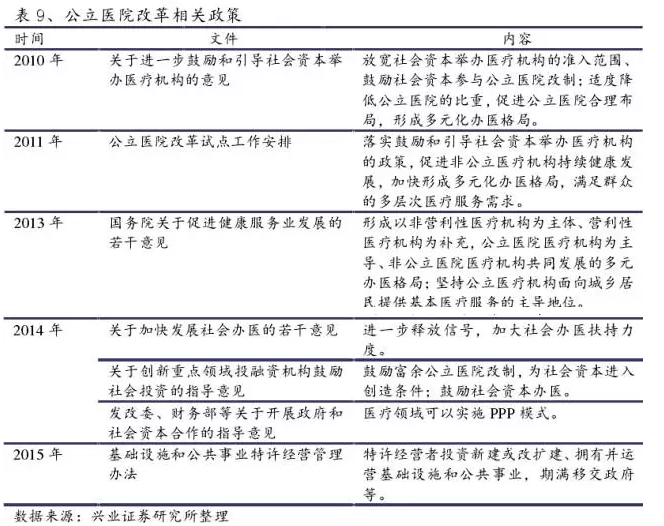
Social capital employs flexible and diverse approaches to invest in rehabilitation medicine, primarily including the establishment of new facilities, acquisitions, and entrusted management of rehabilitation hospitals. Among these, collaboration between social capital and public hospitals to establish rehabilitation hospitals has emerged as the mainstream win-win model. This cooperative model not only alleviates the financing difficulties faced by public hospitals but also addresses the challenges enterprises face regarding scarce medical resources and an unstable patient base, making it an optimal choice for mutual growth. The establishment of rehabilitation hospitals helps mitigate the difficulty of accessing care at general hospitals while stabilizing the patient volume for rehabilitation hospitals. Furthermore, since the average pricing level of rehabilitation hospitals is lower than that of general hospitals, this reduces the burden on medical insurance funds and, to some extent, alleviates the issue of high healthcare costs. Compared with the substantial investment required to build new general hospitals, the model of social capital partnering with public hospitals to co-establish rehabilitation hospitals involves lower initial costs, shortens the payback period, and offers a higher cost-performance ratio.
Typical Case 1: Beijing Chaoyang Hospital is a large public tertiary Grade A general hospital, while Yingzhi Rehabilitation Hospital is a private specialized rehabilitation hospital. In 2006, under the guidance of the Beijing Municipal Health Bureau and the Chaoyang District Health Bureau, the two hospitals established a two-way referral collaboration mechanism through an agreement. Yingzhi Rehabilitation Hospital carried out foundational work for the three-tier rehabilitation medical service system by establishing its own community outpatient clinics and cooperating with community institutions and disability rehabilitation stations. Chaoyang Hospital was primarily responsible for acute-phase rehabilitation, Yingzhi Rehabilitation Hospital for recovery-phase rehabilitation, and community health service stations for stable-phase rehabilitation.
Typical Case 2: Changsha City actively introduced social capital and, relying on the technical guidance of Xiangya Hospital, established Xiangya Bo’ai Rehabilitation Hospital, a tertiary-level specialized rehabilitation hospital. The city aims to build a regional rehabilitation medical center and form a rehabilitation medical service system characterized by “tertiary public general hospitals and tertiary private specialized hospitals.” By aligning with Xiangya Hospital and undertaking government-purchased services, Xiangya Bo’ai Hospital addressed the issue of patient source shortages in its early stages. Through trusteeship by Xiangya Hospital, it resolved the scarcity of physician resources. Adopting an asset-light model involving leased premises, the hospital achieved profitability shortly after commencing operations, rapidly recouped investment costs, and alleviated financial pressure for rapid chain expansion. The Provincial Health Department and the Provincial Department of Human Resources and Social Security included Xiangya Bo’ai Hospital as a designated institution for the New Rural Cooperative Medical Scheme and the provincial urban basic medical insurance. It was also selected as the sole pilot hospital to implement lump-sum settlement for inpatient medical expenses for initial rehabilitation treatment of five conditions, including stroke. Furthermore, for referrals from higher-level to lower-level hospitals, a policy of “one increase, one exemption, and one reduction” was implemented: for patients referred bidirectionally whose inpatient medical expenses exceeded the deductible but were within RMB 10,000, the reimbursement rate from the pooled fund was increased by 3%; the inpatient deductible at primary care institutions was waived for patients referred upward; the 28-day interval requirement between two hospitalizations for bidirectionally referred patients was waived; and 50% of the deductible standard at higher-level hospitals was reduced for patients referred downward. It was also stipulated that continuous settlement could be applied to patients transferred from Xiangya Hospital to Bo’ai Rehabilitation Hospital.
III. Currently in ChinaRehabilitation HospitalThe Five Major Advantages
Rehabilitation hospitals have become favored by private capital due to their unique advantages. Unlike general hospitals, which demand exceptionally high standards across all operational elements, rehabilitation hospitals offer benefits such as lower talent requirements, strong profitability, shorter payback periods, a high degree of standardization, and ease of replication and expansion. Meanwhile, integrating rehabilitation hospitals with public hospitals helps alleviate the persistent challenges of difficult and costly access to care within the public healthcare system, thereby creating favorable opportunities for private capital investment.
1. As the natural partner of public hospitals, improve their bed turnover rate and revenue
Encouraging private capital to enter the healthcare sector has become a key focus of national medical policy under the new healthcare reform. However, due to inherent conflicts with the existing public hospital system, the development of private general hospitals still faces significant resistance, and overall progress has been less than smooth. Rehabilitation hospitals, in contrast, are different. As natural partners of public hospitals, their development aligns with the interests of large public general hospitals. Consequently, the external environment for their development is vastly superior to that of private general hospitals.
Rehabilitation hospitals help alleviate the difficulty of accessing medical care at large general hospitals. While rehabilitation hospitals primarily admit patients in the post-acute phase (i.e., the rehabilitation phase), large general hospitals, which are at the forefront of medical service delivery, mainly treat patients in the acute phase. Due to the scarcity of high-quality medical resources, it has become commonplace for public general hospitals to face severe bed shortages. In this context, public general hospitals have a strong intrinsic incentive to discharge patients as quickly as possible to improve their bed turnover rates. Rehabilitation hospitals serve as a natural recipient for these discharged patients; the more robust their development, the more they facilitate improved bed turnover at public general hospitals. From an international comparative perspective, the average length of stay for patients in public hospitals in China is 10 days, compared to only 7 days in Hong Kong and 5 days in Japan, indicating significant room for improvement in bed turnover rates at Chinese public hospitals.
Furthermore, during the patient’s complete course of treatment, daily costs for procedures, medications, and other interventions are often significantly higher upon admission due to the more acute, severe, and complex nature of their condition, and these costs tend to decrease over time. For large public general hospitals, where demand for beds far exceeds supply, expediting the discharge of existing patients to admit new ones has become a key strategy for effectively increasing business revenue. Based on Xiangya Hospital’s average length of stay (ALOS) of 11.47 days in 2013, transferring hospitalized patients with rehabilitation needs—such as those in orthopedics, neurology, and neurosurgery—to rehabilitation hospitals once their conditions stabilize is projected to reduce the ALOS to approximately 9 days. Without any increase in staffing or bed capacity, the hospital could admit more than 9,000 additional patients annually. This approach can also encourage physicians to engage in beneficial and standardized multi-site practice, thereby increasing staff income through legitimate channels and honest work.
2. Support cost containment in medical insurance and alleviate patients' financial burden
Rehabilitation hospitals reduce the burden on medical insurance payments, helping to alleviate the high cost of healthcare. Data shows that compared with the average daily inpatient costs of 5,000 yuan for orthopedics and 1,500 yuan for neurology in general hospitals, specialized rehabilitation hospitals (such as Xiangya Boai Rehabilitation Hospital) charge only around 500 yuan per day for patients undergoing bone and joint rehabilitation, and approximately 600 yuan per day for neurological rehabilitation patients, such as those recovering from stroke. This significantly reduces the financial burden on medical insurance and helps mitigate the issue of expensive healthcare.
3. RehabilitationHospitals demonstrate strong profitability and short payback periods.
Most general hospitals are public, non-profit institutions. While their revenue and profit growth are stable, they rely heavily on fiscal subsidies, operating at a loss without such support. In 2011, the net profit margin for general hospitals nationwide was 3.5%; however, excluding fiscal subsidies, they incurred a loss of RMB 7.13 million, resulting in a net profit margin of -4.2%. In terms of profit composition, fiscal subsidies made the largest contribution to profits, amounting to RMB 13.13 million in 2011, or 50% of total profits. Furthermore, the issue of "subsidizing medical services with drug revenues" remains severe, with drugs contributing a significant share to profits; in 2011, drug-related profits totaled RMB 4.33 million, accounting for 17% of total profits. Although medical service revenue accounted for nearly 50%, its contribution to profit was negative due to low pricing, resulting in a loss of RMB 7.71 million in 2011. The primary reasons for the poor profitability of public general hospitals lie in their positioning as non-profit entities, which leads to a lack of profit motive, weak cost control awareness and capabilities, imperfect incentive mechanisms, and extensive management practices. Some hospitals even intentionally suppress profit margins and conceal profits to create artificial "losses" in order to secure fiscal subsidies.
Rehabilitation hospitals generally exhibit strong profitability. Compared with general hospitals, they charge higher prices for medical services, achieving an overall profit margin of 7.2%. Among specialized rehabilitation hospitals, the net profit margin ranks fourth at 10.7%, trailing only ophthalmology, medical aesthetics, and dentistry. Although the average daily treatment cost in rehabilitation hospitals is lower than that in general hospitals, their operating costs are also relatively low, resulting in substantial profit margins. In China, the average investment per bed in general hospitals ranges from RMB 500,000 to RMB 1 million, whereas in rehabilitation hospitals, it is only between RMB 300,000 and RMB 500,000. Among private hospitals, some so-called “high-end” positioning focuses less on advanced medical technology and more on premium services, which suits obstetrics and gynecology hospitals that prioritize comfortable medical and recuperation environments. However, this model may not be suitable for rehabilitation hospitals. Since rehabilitation courses are relatively long, high medical fees driven solely by premium services—without solid clinical efficacy as support—are detrimental to long-term operations. Rehabilitation hospitals should therefore focus on ensuring the effectiveness of rehabilitation outcomes. To provide patients with comprehensive integrated clinical rehabilitation care, some rehabilitation hospitals register as general hospitals. Adopting a “small general, large specialty, with rehabilitation as the core feature” model helps increase hospital operational revenue.
Furthermore, rehabilitation hospitals have a short payback period. According to statistics from the Chinese Medical Association, the average return on investment (ROI) period for China’s healthcare industry exceeds 10 years, while some well-performing public hospitals achieve an average ROI period of approximately five years. In contrast, rehabilitation hospitals require only three years. Taking Xiangya Boai Rehabilitation Hospital, a subsidiary of Hunan Development Group, as an example: the hospital officially commenced operations in 2012, achieved break-even status in 2014 with revenue of RMB 100 million, and was projected to generate revenue of RMB 150 million in 2015, with a net profit of approximately RMB 16 million and a net profit margin of around 10%. Going forward, as bed utilization rates increase and patient turnover accelerates, its net profit margin is expected to reach 15%. Zhou Jianglin, the hospital’s president, committed that net profits for 2015–2017 would be no less than RMB 16 million, RMB 18 million, and RMB 20 million, respectively, confirming that its payback period is merely three years.
4. Low labor costs and weak bargaining power of personnel
According to China’s Basic Standards for Rehabilitation Hospitals (2012 Edition), the ratio of health technical personnel per bed should reach 1.4, which is higher than the 1.03 per bed required for tertiary general hospitals. In practice, however, the primary staffing consists of rehabilitation therapists and nurses, rather than rehabilitation physicians. The main responsibilities of rehabilitation physicians are diagnosing conditions and formulating rehabilitation plans, while the specific implementation of these plans is carried out by rehabilitation therapists and nurses. Unlike clinically trained physicians who graduate from medical schools, rehabilitation therapists in China undergo only a 50-day training program and are required to hold merely an associate degree, resulting in labor costs significantly lower than those of physicians. Meanwhile, as the core members of the healthcare team, rehabilitation physicians—characterized by the high technical content, low physical labor intensity, and time efficiency of their work—are increasingly attracted to engage in multi-site practice, especially under the current policy environment in China that encourages such arrangements among physicians from rehabilitation departments of tertiary Grade A hospitals.
5. High degree of standardization, facilitating rapid replication and expansion
Specialized hospitals in high-barrier specialties, such as oncology and pediatrics, tend to have larger individual scales, whereas those in low-barrier specialties, such as dentistry, medical aesthetics, and health check-ups, are smaller in scale. For specialized hospitals in low-barrier fields, due to their small individual size, they must rely on chain operations to achieve economies of scale, build brand recognition, and expand their overall market presence. The key to successful chain expansion lies in replicability. The success factors for hospital chains can be categorized into basic and advanced elements. Among the basic success factors, the most critical is the ability to rapidly replicate and expand through a standardized model.
Rehabilitation hospitals require relatively low capital investment for geographic expansion and can adopt an asset-light model, with an average investment of only approximately RMB 300,000–500,000 per bed, significantly lower than that for general hospitals. Taking Xiangya Boai Rehabilitation Hospital as an example, part of its facilities are leased, with a total investment of RMB 130 million. Its affiliated Changde Rehabilitation Hospital, with 260 beds, had an initial investment of RMB 20 million, while the Xiangxi Rehabilitation Hospital, with 100 beds, had an initial investment of RMB 5 million; both operate under an asset-light model. Furthermore, rehabilitation medical services primarily target post-acute patients whose conditions are relatively stable, resulting in lower medical risks and facilitating the development of standardized treatment protocols, which in turn supports replication and expansion across different regions.