

Haisco Announces RMB 400 Million Investment to Co-found Xinxin Life Insurance, Expanding into Health Insurance Business
On April 28, Haisco Pharmaceutical approved the “Proposal on Initiating the Establishment of a Life Insurance Company,” agreeing to participate as a promoter in the establishment of Xin Xin Life Insurance Co., Ltd. using its own funds not exceeding RMB 400 million.
The announcement stated that the Company intends to use its own funds, not exceeding RMB 400 million, to participate in the establishment of Xinxin Life Insurance Co., Ltd. (in preparation), which is expected to account for no more than 20% of the total share capital of Xinxin Life Insurance Co., Ltd. (in preparation).
In terms of risks, as the preparation and establishment of insurance companies, as well as matters concerning our company acting as an investor, are subject to approval by relevant authorities such as the China Insurance Regulatory Commission (CIRC), there is a possibility that such approvals may not be granted. Therefore, there is a risk that this outbound investment may fail to be implemented due to lack of approval from the relevant authorities.
Introduction to the Background of Haisco Pharmaceutical
Haisco Pharmaceutical Group, established in 2000, is a publicly listed pharmaceutical group company with new drug R&D at its core and particularly strong sales capabilities. The company is a leader in the parenteral nutrition industry, holds a significant position in the liver disease niche market, and ranks among the top production and sales bases for liver disease medications in China.
Since its listing on the Shenzhen Stock Exchange’s A-share market on January 17, 2012, the Company has demonstrated strong performance in the capital markets. Its current market capitalization stands at approximately RMB 16.5 billion, with a trading volume of RMB 47.85 billion in 2015. The Company achieved sales revenue of RMB 1.2 billion and a net profit of RMB 370 million. It ranks 17th among listed companies in the chemical pharmaceutical subsector. In 2014, it was ranked third overall and first among pharmaceutical enterprises on Forbes China’s List of 100 Most Promising Listed Companies.
Haisco manages over 900 distributors through a regional agency sales model, with more than 8,000 end-point sales personnel distributed across over 1,500 cities (including approximately 110 cities with populations exceeding one million), covering around 3,000 hospitals at Level II and above. All four of the company’s core products are pioneering innovative generics developed as the first of their kind in China, are included in the National Reimbursement Drug List, cover more than 80% of tertiary hospitals nationwide, and have established strong professional brand recognition among clinicians and patients in China.
According to Haisco Pharmaceutical’s 2015 annual report, VCBeat found that 99.95% of its profits came from the pharmaceutical industry. In 2015, the year-on-year growth rate of operating revenue in the pharmaceutical sector was merely 0.1% compared with 2014, indicating a clear growth bottleneck. In contrast, other business segments surged by 1,794.69%. Although their contribution to total operating revenue remains small in terms of scale, such rapid growth certainly warrants attention.
Although Haisco did not disclose in the report whether its other businesses include health and wellness operations, an analysis of its current revenue structure suggests that, while maintaining income from its core pharmaceutical business, Haisco needs to inject fresh vitality into its business portfolio through mergers, acquisitions, or investments. This strategy would enable the company to sustain its growth momentum via revenues from other sectors, even if the pharmaceutical industry encounters development bottlenecks, thereby preventing total revenue from stagnating or declining.
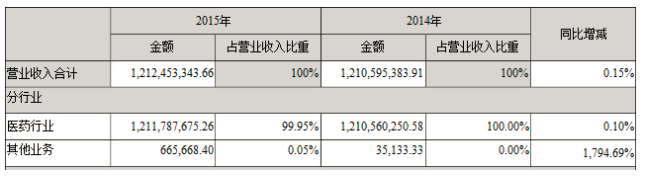
(Data from the 2015 Annual Report)
In 2016, Haisco Pharmaceutical released its first-quarter report. VCBeat noted that both revenue and net profit in the first quarter decreased compared to the same period last year. VCBeat analyzed that the primary reason was the medical insurance cost-containment policy implemented in 2015. With the pharmaceutical industry constrained by increasingly stringent insurance cost controls, coupled with a decline in the proportion of drug revenue in hospital income, it was inevitable that pharmaceutical companies’ profits would be impacted under this dual pressure.
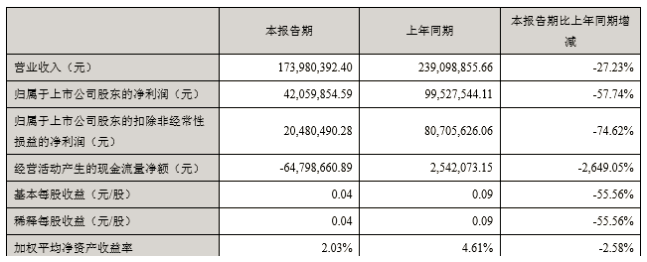
(Data from the Q1 2016 Report)
Strategic Expansion into Healthcare and Wellness
According to statistics, from January to August 2015, China’s premium income increased by approximately 20% year-on-year, propelling its market size to the third largest globally. Over more than a decade of development, the premium income from commercial health insurance in China rose from RMB 3.654 billion in 1999 to RMB 86.276 billion in 2012, with an average annual growth rate as high as 27.53%. During the same period, the average annual growth rates for personal insurance premiums, life insurance premiums, and personal accident insurance premiums were 20.79%, 20.74%, and 14.39%, respectively, highlighting the strong growth potential of health insurance.
By establishing Xinren Life Insurance, Haisco can not only leverage the high growth rates and profitability of life and health insurance products to further optimize its investment structure, enhance overall risk resilience, and promote the sound, long-term development of its revenue-generating businesses, but also significantly advance its strategic layout across the broader health industry chain.
On April 10, 2015, Haisco initiated the establishment of the Haisco Medical Health Innovation Investment Fund (Limited Partnership) and the Haisco Kangrui Medical Health Industry M&A Fund (Limited Partnership), marking Haisco’s formal entry into the broader medical and health sector. The two funds are dedicated to innovation and mergers and acquisitions, respectively, with investment scopes covering innovative drugs, medical devices, medical consumables, healthcare institutions, and healthcare informatization.
Following the establishment of the fund, Haisco began to expand into the medical device sector. Through the fund, it invested in MST (Laparoscopic Surgery Intelligent Tracking System), SENSIBLE (Heart Failure Detector), NEWPACE (Linear Fully Subcutaneous Implantable Cardioverter Defibrillator), and ENDOSPAN (Aortic Repair Stent), thereby securing exclusive sales agency rights for the corresponding products in China for either 15 or 20 years. In early 2016, the fund subscribed to a 22% equity stake in Regentis for USD 12.5 million, obtaining exclusive sales agency rights in China for its regenerative gel used for articular cartilage repair.
Since the first half of 2015, the company has completed five overseas investment deals, with a cumulative outbound investment amounting to approximately USD 100 million. The company is currently actively strategizing the introduction of high-quality overseas medical devices, and products across the entire medical device portfolio are scheduled to be launched in the Chinese market in a phased manner starting from 2017.
According to Haisco, the company also plans to directly invest approximately $50 million to establish an overseas investment fund with Panda. The fund will primarily focus on investments in Israel’s advanced life sciences, healthcare, medical devices, and pharmaceuticals (particularly innovative drugs). By collaborating with top-tier international professional investment institutions, this initiative aims to facilitate more efficient investment and acquisition strategies in these sectors, which is expected to have a highly positive impact on the company’s future development.
VCBeat believes that traditional, single-focus pharmaceutical operations are no longer sufficient to support the rapid growth of listed pharmaceutical companies. Judging from current national policies and investment trends, healthcare and wellness services may become a key driver for future revenue growth at Haisco Pharmaceutical. Against this backdrop, the core challenge facing Haisco is how to leverage its accumulated resources in the pharmaceutical industry, integrate multiple stakeholders, and build a comprehensive, sustainable healthcare and wellness value chain.