Frontier Research: Global Investment Trends in Light-Asset Elderly Care Startups
Preface: The large-scale, asset-heavy construction in the elderly care sector over the past few years has laid a solid infrastructure foundation for asset-light entrepreneurship in this field. Although there remain many skeptical voices regarding the asset-light elderly care sector, we have observed that the development of the commercial elderly care market, continued government support, and the emergence of numerous public welfare and non-public welfare organizations are reintegrating the elderly into social structures. Offline institutions, elderly households, relatives/children, and care providers are collectively establishing entry points for seniors to access technology-driven lifestyles. We firmly believe that a wave of asset-light venture capital and innovation targeted at the elderly population is inevitable...
Having Completed the Initial Phase, Elderly Care Entrepreneurship in Developed Nations Enters a Period of Rapid Growth and Diversified Development
Over the past three years, more than 2,000 age-tech startups have been reported worldwide. In particular, as the U.S. Baby Boomer generation enters old age (with the cohort born between 1946 and 1964 numbering 76 million) and population aging intensifies in Europe, a large number of asset-light startups serving older adults have emerged in recent years in Western developed countries. These ventures span areas such as social engagement for seniors, health management, rehabilitation and nursing care, financial services, smart technology, and cultural entertainment. This trend has also given rise to numerous investment firms, incubators, and various for-profit and non-profit organizations dedicated to supporting aging-related entrepreneurial projects.
To gain a clear understanding of the current state of asset-light elderly care startups abroad, VCBeat’s Eggshell Research Institute collected data on over 200 overseas asset-light elderly care startup companies and conducted statistical analyses from various dimensions.
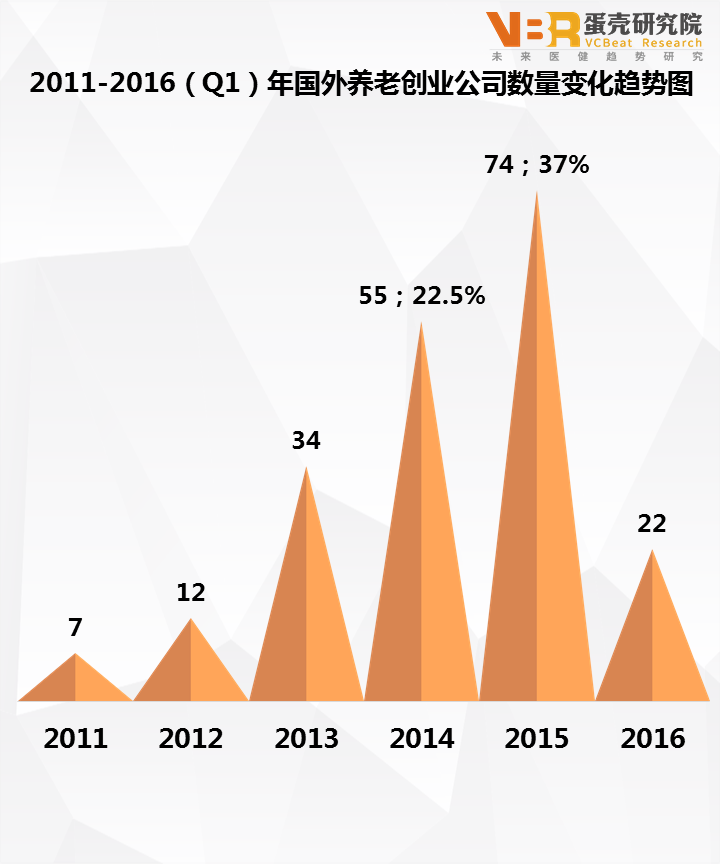
The chart above illustrates the trend in the number of overseas elderly care startups from 2011 to 2016. As shown, the wave of entrepreneurship in this sector abroad began in 2012, with an explosive growth period occurring between 2013 and 2015, during which the number of startup projects increased significantly. This trend resulted from the convergence of multiple factors. First, it is linked to the large-scale entry of the post-war baby boomer generation in Europe and America into old age. Second, the development of emerging smart technologies, such as the internet and the Internet of Things (IoT), has spurred the emergence of numerous startups tailored to meet the specific needs of the elderly population. Key focus areas include elderly care, telemedicine, chronic disease management, and smart hardware.
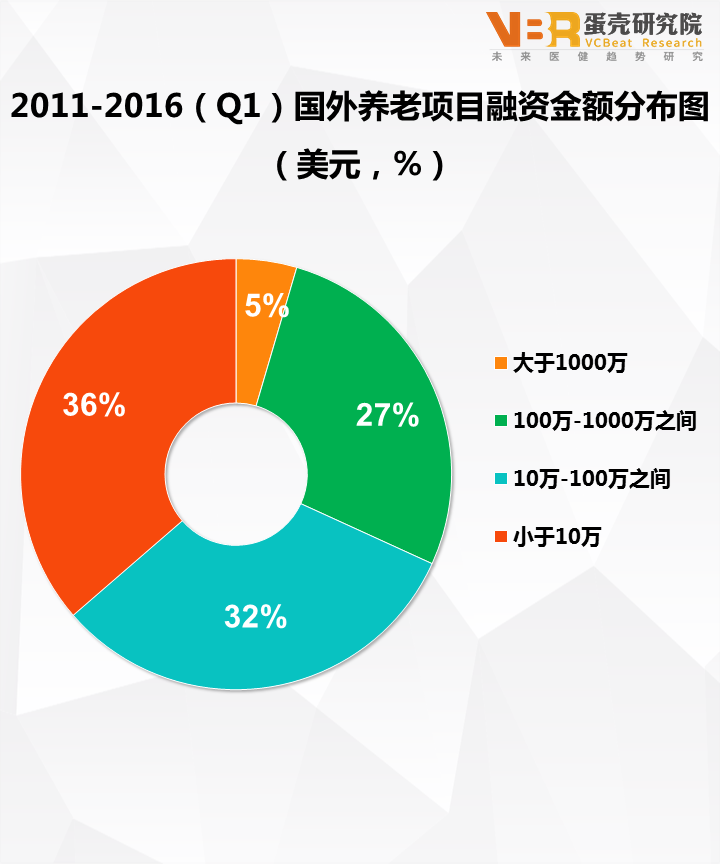
List of Elderly Care Startups with Disclosed Investment AmountsThe highest investment amount went to a medical technology company, Q Bioscience, totaling $111.4 million, while the smallest was only $20,000. The average financing amount for these projects was $688,000. The chart above illustrates the distribution of financing amounts for elderly care projects. Projects with financing exceeding $10 million accounted for 5% of the total number, those between $1 million and $10 million accounted for 27%, and projects with investment amounts below $100,000 represented the largest share at 36%. Overall, investment amounts in elderly care startups are relatively small.
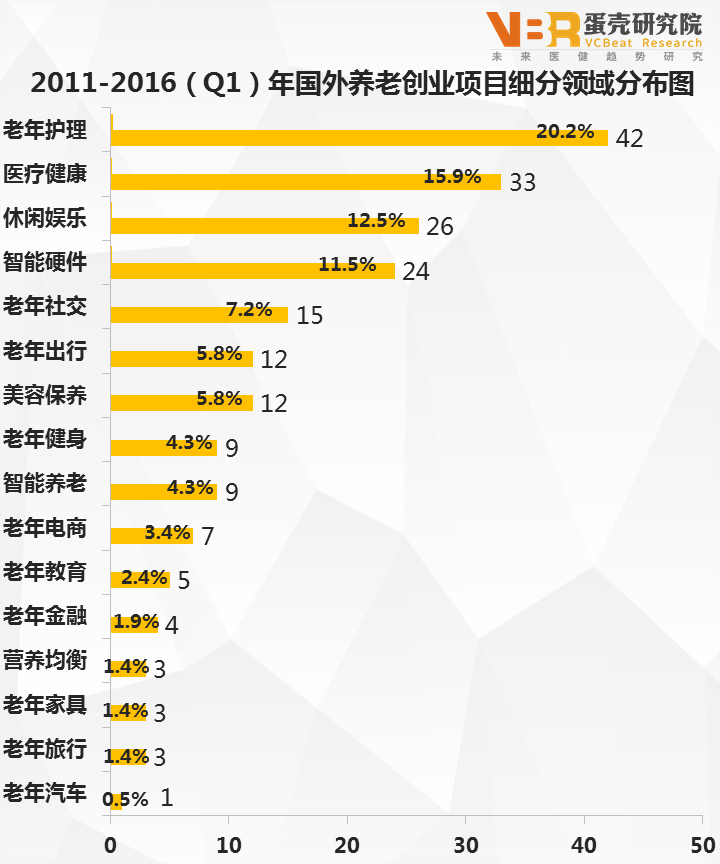
The chart above illustrates the distribution of sub-sectors in overseas elderly care startups from 2011 to Q1 2016. In the international elderly care startup landscape, entrepreneurial activity is most concentrated in the elderly care sector, with 42 cases accounting for 20.2% of the total. This is followed by the elderly healthcare and medical sector, with 33 projects representing 15.9%. Combined, these two sectors account for over one-third of the total, a phenomenon closely linked to the high demand for medical and nursing services among the elderly population. Ranking third to fifth are leisure and entertainment (26 cases, 12.5%), smart hardware (24 cases, 11.5%), and elderly social networking (15 cases, 7.2%). Other sectors include elderly mobility, beauty and wellness, elderly fitness, smart elderly care, elderly e-commerce, elderly education, elderly finance, nutritional balance, elderly furniture, elderly travel, and automobiles for the elderly.
Key Areas for Elderly Care Entrepreneurship: Internet Healthcare (for the 50+ Population)
As people age, their physical functions decline due to natural aging. There is strong global growth in demand for medical services and products targeting age-related diseases. Many such conditions, including hypertension and heart disease, are characterized by long durations, controllability, and incurability. These features have driven rapid growth in demand for internet-based healthcare services tailored to chronic diseases affecting middle-aged and older adults.
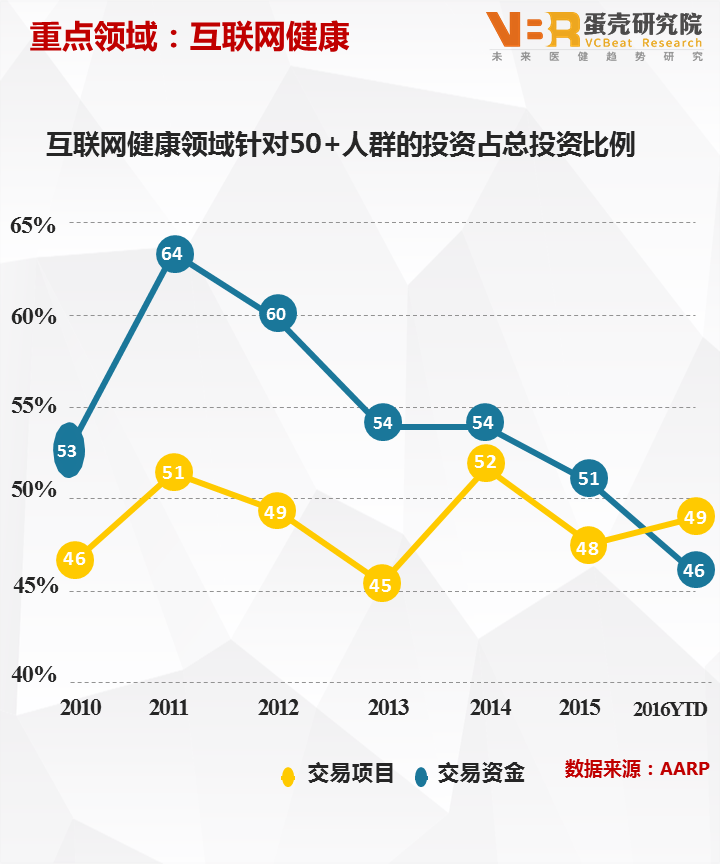
The chart above illustrates the proportion of investment in the overseas internet healthcare sector directed toward individuals aged 50 and older, relative to total internet healthcare investments. From 2010 to 2015, nearly half of the investment capital and transaction volume in the internet healthcare sector was allocated to startups serving the 50+ demographic. The overseas investment trends in this segment provide significant directional guidance for China’s future internet healthcare venture capital market. Entrepreneurs and investment institutions should capitalize on this trend and make strategic preparations in advance.
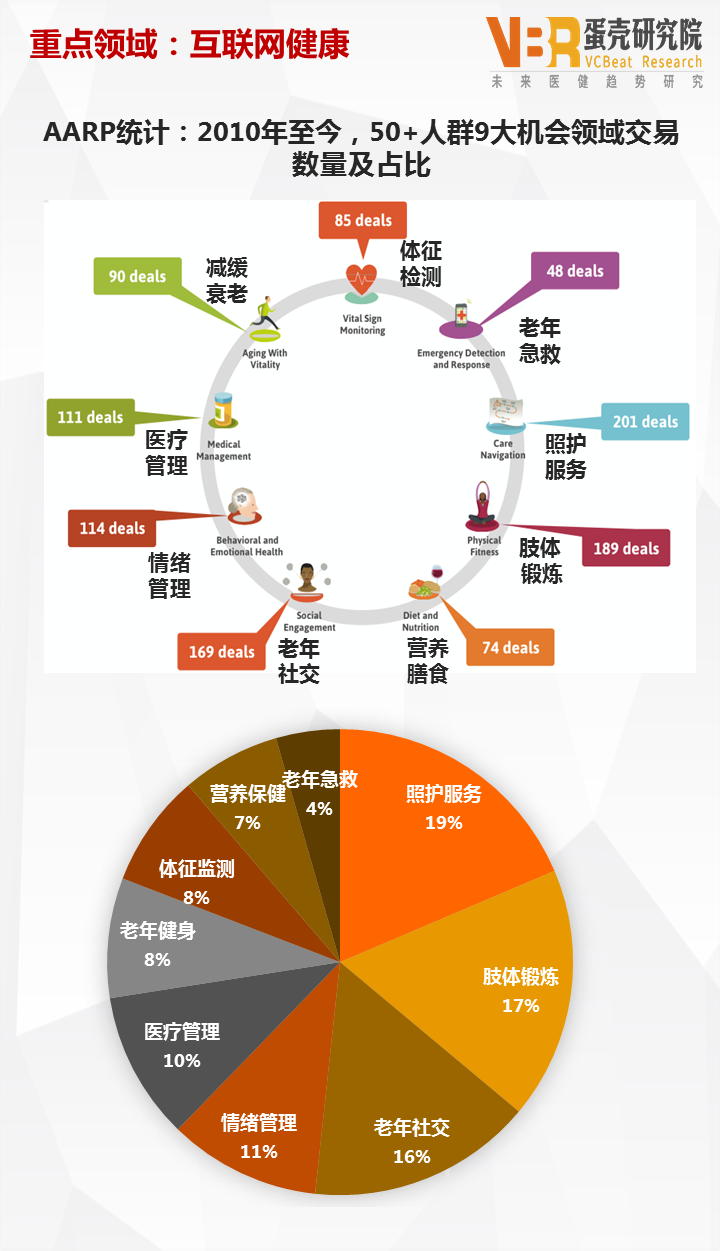
The chart above illustrates the proportion of investment in the overseas internet healthcare sector directed toward individuals aged 50 and older, relative to total investment in internet healthcare. From 2010 to 2015, nearly half of the capital invested and the number of transactions in the internet health sector were allocated to startups serving the 50+ demographic. The overseas investment trends in this segment offer significant directional guidance for China’s future internet healthcare venture capital market, suggesting that investment institutions should strategically position themselves in this area at an early stage.
Introduction to Outstanding International Cases: Lively, Everplans, SafeWander, Honor
1. Lively—A Monitoring Service Provider Integrating Social Interaction for the Elderly
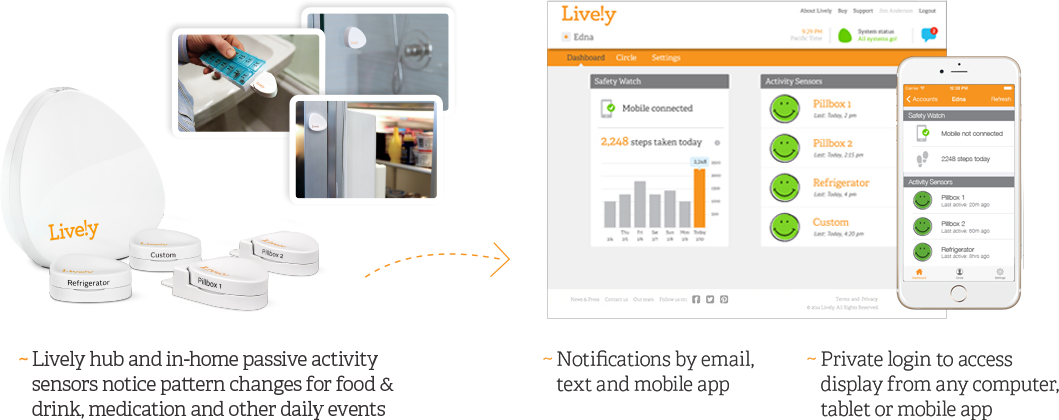
Lively is a senior care startup founded in 2012 and headquartered in San Francisco, California. In December 2015, Lively was acquired by GreatCall. Lively aims to provide peace of mind and facilitate communication for seniors living alone and their children. By using passive sensors installed on household items such as kitchen appliances and medicine cabinets, the company tracks and records seniors’ activity patterns to ensure their well-being. Meanwhile, family members and friends can receive customized LivelyGram newsletters (e.g., published twice a month) via the LivelyHub, even without an internet connection, allowing them to stay updated with photos and private messages about the seniors’ daily lives. Currently, there are approximately 11.3 million seniors living alone in the United States. Although it is common for American seniors to live apart from their children, this arrangement has given rise to certain challenges, such as the inability of children to monitor their parents’ living conditions in real time. This represents a significant market opportunity for Lively.
2. SafeWander—A Boon for Alzheimer’s Patients
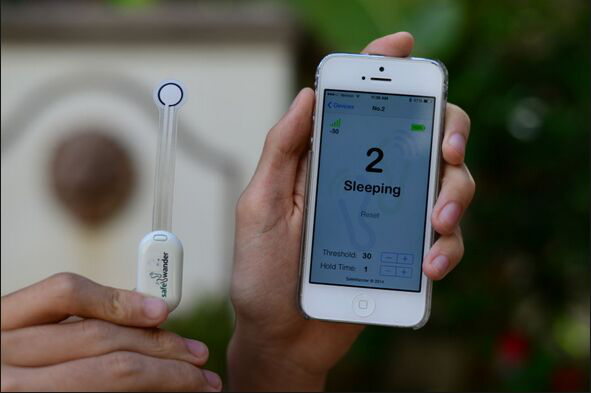
SensaRX was founded on July 22, 2014, by Kenneth Shinozuka, a 17-year-old American teenager. Currently in its startup phase, SensaRX’s flagship product is SafeWander, a device designed to address a specific need in Alzheimer’s disease caregiving. It enables long-term monitoring of patients with Alzheimer’s, allowing caregivers to receive alerts via their mobile phones.
Since its initial launch in 2014, SafeWander has undergone multiple iterations, resulting in three generations of mature products. The current third-generation product includes an angle sensor, a wireless signal transceiver known as Getaway, and a companion iOS application. The iOS app for the third generation supports the reception of signals from multiple sensors on a single mobile device, meeting the needs of rehabilitation facilities where one caregiver monitors multiple patients. Currently, approximately 3.4 million Alzheimer’s disease patients in the United States require monitoring services similar to those provided by SafeWander.
3. Everplans—A Practitioner of Online End-of-Life Planning

Everplans is a website specializing in the storage of end-of-life plans, such as wills, online account details, and funeral preferences. It is dedicated to making personal end-of-life planning simpler and more approachable. To date, Everplans has completed three rounds of seed financing, totaling approximately $6 million. The first round, closed in June 2013, raised $1.4 million from Scout Ventures and Bradley C. Harrison. The proceeds from this seed round were primarily used to develop the digital product “Everplan.”
Everplans primarily offers two categories of services.One is an account designed for individuals, and the other is a service specifically developed for corporate client business.In terms of personal accounts, there are two types: free and paid. Free accounts provide customers with basic planning tools and a secure vault for storing personal information, as well as for designated primary family members who can share this information. Regarding business functions for individual professionals, in June 2015, Everplans launched its new service offering—Everplans Professional—primarily targeting financial advisors, insurance agents, estate planning attorneys, and independent accountants.
4. Honor——The Most Considerate Online Nursing Expert
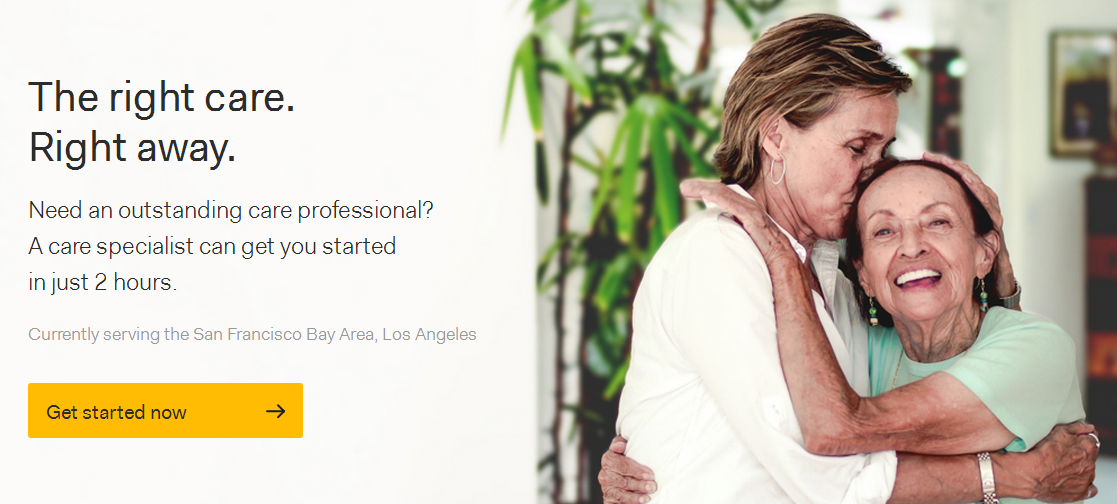
Honor is an online O2O caregiving booking platform that connects caregivers, seniors, and their family members. It addresses the need for seniors to select suitable caregivers while enabling family members to stay informed about the seniors’ well-being at all times. Through a service called Honor Frame, Honor provides seniors with information about their caregivers and notifies them of scheduled home care visits.
A group of angel investors, led by Andreessen Horowitz, collectively raised $20 million in Honor’s Series A financing round. In response to management challenges such as excessively high and difficult-to-control turnover rates among caregivers, Honor announced in January 2016 that it would convert all care professionals into full-time or part-time regular employees, thereby transforming the previously unstable contractor relationships into formal employment arrangements.
Having moved past the stage of popularizing concepts and knowledge, the elderly care industry is gradually progressing toward healthy development.
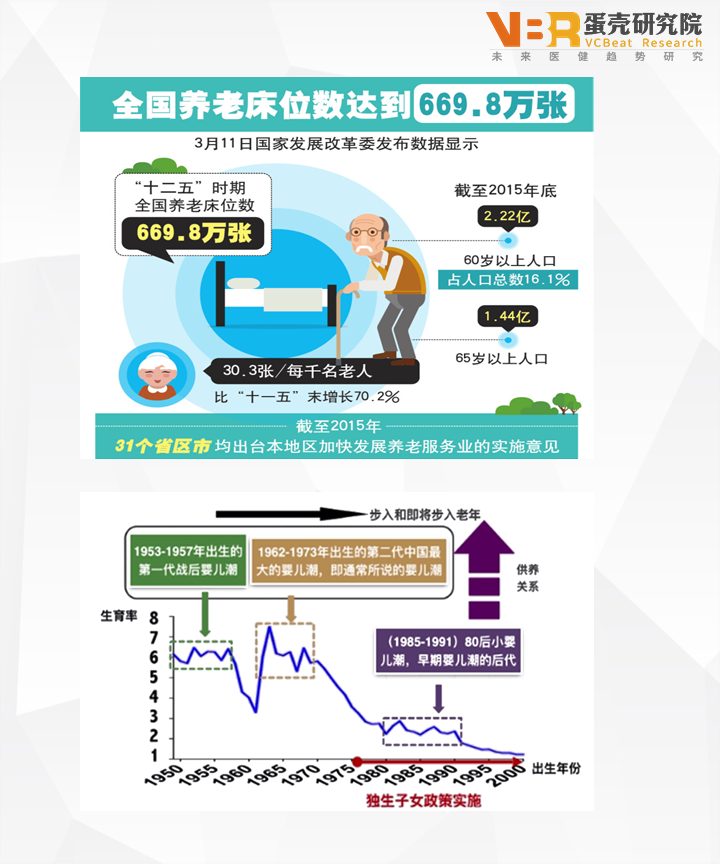
Figure 1: Data released by the National Development and Reform Commission on March 11, 2016. As of the end of 2015, the population aged 60 and above reached 222 million, an increase of 10 million from the previous year, accounting for 16.1% of the total population. The number of elderly care beds nationwide totaled 6.698 million, representing a 21.5% increase compared to 2014.
Figure 2: China’s first baby boom cohort has entered the aging stage, while the second baby boom is imminent. The peak of this baby boom occurred in 1965 and lasted until 1973, representing the largest birth cohort in Chinese history with the most significant impact on the subsequent economy. During this period, the national economy gradually improved, leading to a surge in compensatory births. The crude birth rate ranged between 30‰ and 40‰, averaging 33‰.
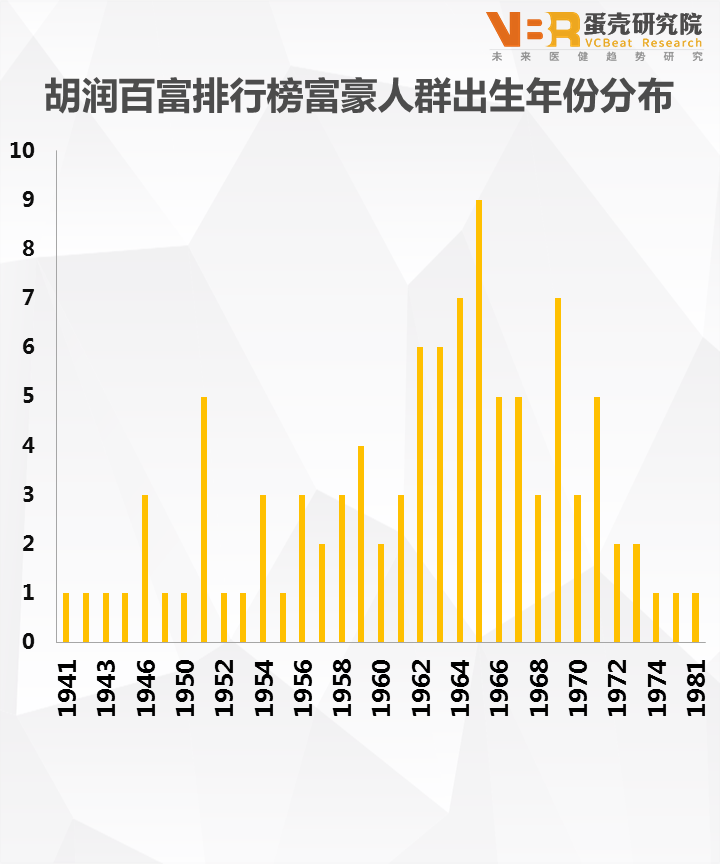
An analysis of the birth year distribution among the top 100 individuals on the Hurun Rich List reveals that nearly 60% were born between 1960 and 1970, belonging to China’s second baby boom generation. During this decade, nearly 260 million babies were born in China, accounting for approximately 20% of the country’s current total population. This cohort has now become the backbone of society, with the majority of societal wealth concentrated in their hands. We believe that as this group gradually enters old age, it will usher in a golden era for China’s elderly care industry.
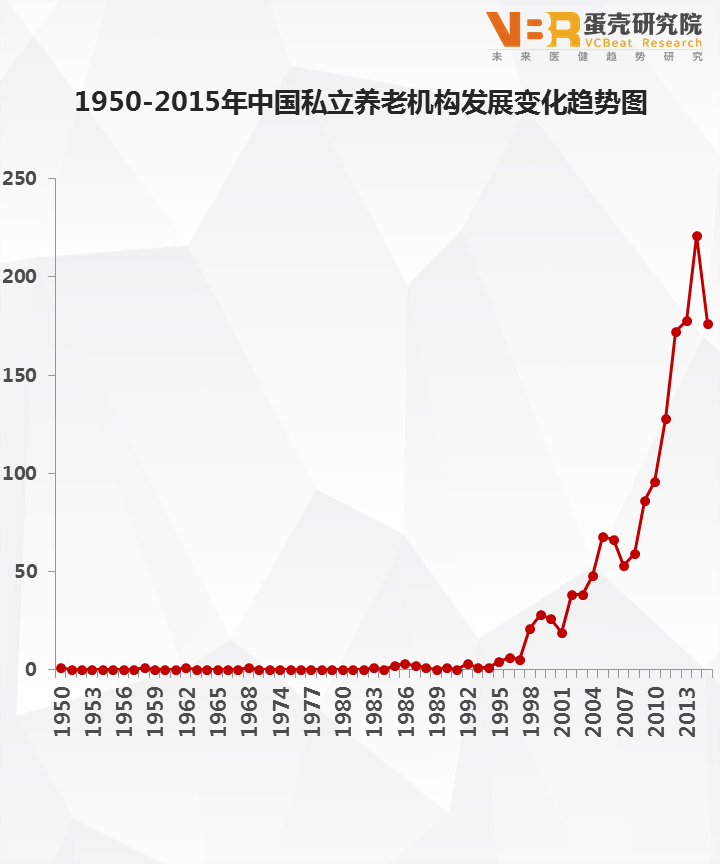
As clearly shown in the figure above, China’s private elderly care institutions officially emerged in 2005. Starting in 2007, they entered a phase of large-scale development. During the period from 2005 to 2013, state-run elderly care facilities saw virtually no growth, while the spotlight shifted to private institutions established by individuals and small- and medium-sized enterprises (SMEs), represented by Huichen and Qinheyuan, which began to flourish. Following 2013, regarded as the inaugural year of China’s elderly care industry, the subsequent two years witnessed intensive resource competition characterized by “land grabbing,” driven by the aggressive expansion of insurance-backed, real estate-backed, state-owned, and public-private partnership (PPP) elderly care institutions. Since 2015, a significant number of state-owned enterprises, financial institutions, real estate developers, insurance companies, and foreign-funded enterprises have begun acquiring existing elderly care projects, marking the industry’s entry into an era of capital-driven competition.
Large-Scale, Asset-Heavy Infrastructure Lays the Foundation for Asset-Light Ventures: China’s “Internet+” Elderly Care Entrepreneurship Takes Off
Thanks to the continuous efforts of experts, scholars, and frontline practitioners in the elderly care industry, China’s elderly care sector has gradually moved beyond its phase of extensive,粗放式 development and is now entering a new stage characterized by professionalism and rationality. The large-scale, asset-heavy infrastructure investments made in recent years are laying a solid foundation for asset-light entrepreneurial ventures in the elderly care industry.
As China’s asset-light elderly care entrepreneurship is still in its early stages, with a relatively small number of ventures, we collected and compiled data on 88 domestic asset-light elderly care startups through public channels to gain a concrete understanding of the current state of development in this sector. We also conducted a multi-dimensional statistical analysis of these entrepreneurial projects, with the results as follows:
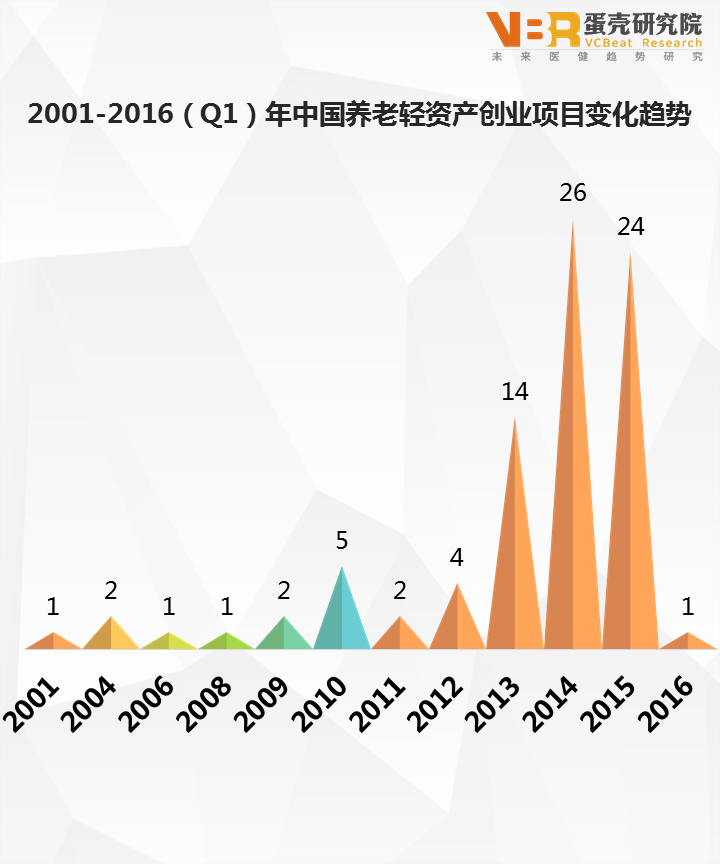
As shown in the figure above, these 88 asset-light elderly care startups were predominantly established between 2013 and 2015, with a total of 66 companies accounting for 75% of the sample. The year 2013 marked the inaugural year of China’s elderly care industry development and witnessed a surge in the establishment of domestic asset-light elderly care startups. Based on our frontline market experience gained through offline engagements, a large number of unpublicized startups were founded during these two years. As the market matures, these companies are expected to emerge in significant numbers in the coming years, giving rise to a cohort of high-quality entrepreneurial projects during this period.
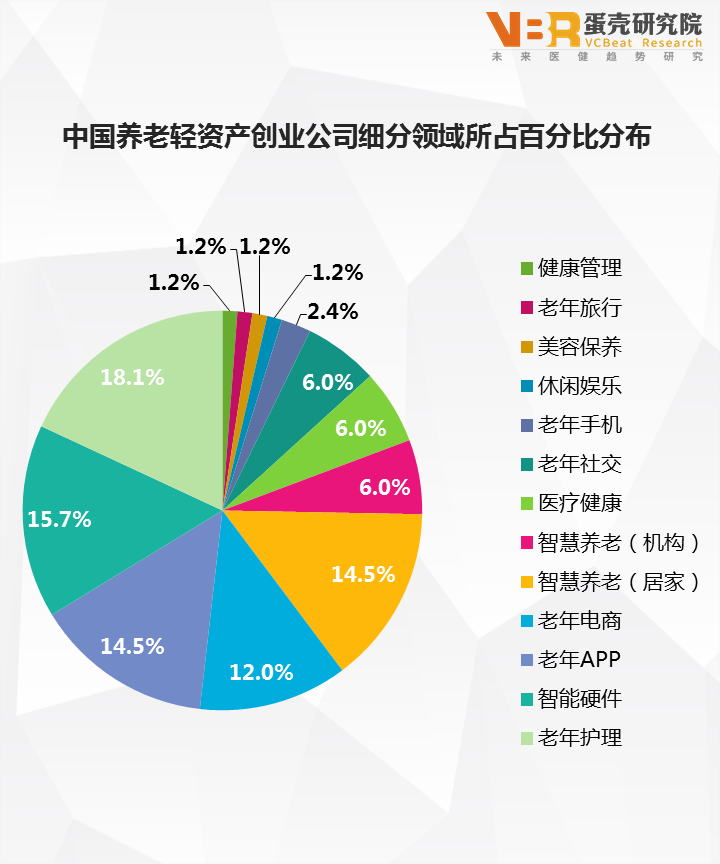
The chart above illustrates the distribution of sub-sectors among asset-light startups in China’s elderly care industry. Currently, the sector with the highest concentration is elderly nursing, accounting for 18.1% of the total number of projects. This is followed by smart hardware for the elderly, which represents 15.7%. Ranking third are smart elderly care initiatives, divided into two categories: home-based smart elderly care enterprises account for 14.5%, while institution-focused smart elderly care enterprises make up 6%. Next are utility apps for the elderly, comprising 14.5%, followed by e-commerce projects targeting the elderly, at 12%.
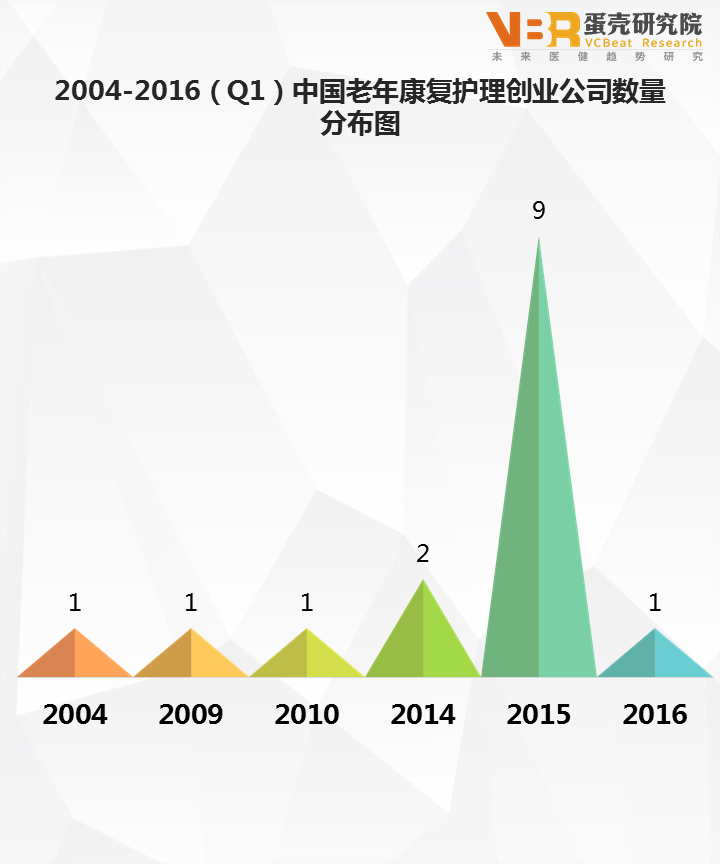
The chart above illustrates the distribution of founding dates for 15 elderly care projects in China. The peak period for the emergence of such projects was in 2015, when a total of nine startups were established, accounting for 60% of the total. This trend is closely related to current policies in the elderly care market and the growing market recognition that rehabilitation and nursing care constitute the most pressing immediate need for the elderly. Compared with other needs of the elderly population, demand in this sector rose first.
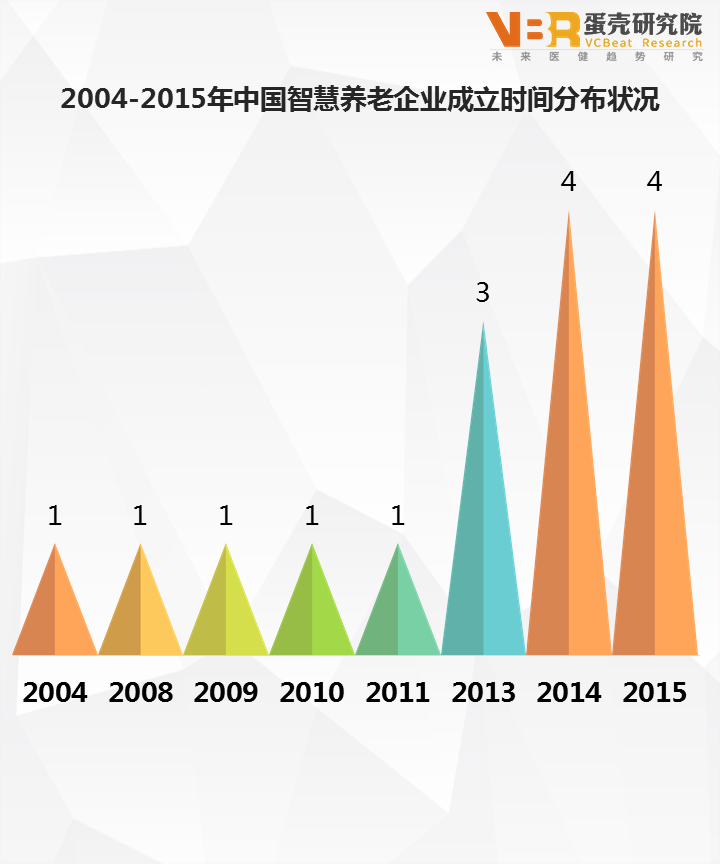
The chart above illustrates the distribution of founding years for 16 smart elderly care enterprises in China. As shown, the establishment of these companies was most concentrated between 2013 and 2015, with 11 firms founded during this three-year period, accounting for 69% of the total. This surge is closely linked to the proliferation of commercial elderly care institutions in recent years, as well as policy orientations that prioritize home-based elderly care, strongly promoted by the government.
Currently, the majority of elderly care startups in China that have secured funding are concentrated at the angel and Series A stages. This is largely because asset-light elderly care ventures in China are still in their infancy, most investors lack sufficient understanding of this asset-light model, and there have yet to emerge any significant success stories domestically. As a result, the vast majority of investment firms remain on the sidelines. We believe that as more startups enter the field, the emergence of one or two major success stories will spark an investment boom in the asset-light elderly care sector.
Conclusion: For the first time in history, such a large number of people on Earth have reached the age of 65, becoming what is traditionally defined as elderly. Never before in human history have innovative technologies been so widespread, affordable, and easily accessible to the general public. Standing at this historic intersection of two major trends, we look forward with great anticipation to a high-quality, smart aging lifestyle driven and led by technology. We believe that the journey toward the end of life is no longer merely a gray period marked by chronic illness and passive dependence on care; rather, it is a remarkable journey where individuals can continue to leverage their expertise, embrace boundless possibilities, live autonomously while mutually supporting one another, and walk together hand in hand.