

Tongdu Capital's Wu Ronghui: Focused on High-Demand Verticals in Mobile Health
This article is from the iFenxi Official Account (ID: ifenxicom), and reproduction has been authorized.
In conversations with Wu Ronghui, “value” is the most frequently mentioned word. Her emphasis on “value” is also reflected in her selection of projects, entrepreneurial partners, and limited partners (LPs).
In the investment community, investors exhibit diverse styles, yet each is aligned with a corresponding set of values. “We are knowledge-driven rather than profit-seeking, emphasizing rationality and professionalism.” This mindset, which prioritizes rationality and value, stems from her past experiences.
Intel Experience
Prior to founding Tongdu Capital, Wu Ronghui worked at Intel Capital, known as the “Whampoa Military Academy of the investment world,” where she served for nine years. Her reason for joining Intel was her “awe” for the company, which was then at the height of its power, and her desire to “see what it was like inside a large corporation.”
She described her first two years on the job as a period of “intensive catch-up,” noting that it was “very intensive.” Her approach to this rapid learning involved accompanying colleagues to meet with any accessible projects and meticulously reviewing all available cases in the database. At Intel, she had access to abundant resources and tools, which enabled her to quickly master the methods for rapidly assessing startups.
“This is the kind of work you’ve been looking forward to, so take the initiative and do it yourself. No one will guide you on how to proceed; you are expected to resolve issues independently. Unlike large institutions or investment banks, where manager training programs often follow a highly standardized, step-by-step approach, here you must think for yourself, identify whom to seek help from when challenges arise, and determine what tools can assist you in finding solutions.”
She grew rapidly, completing her first project within three years and gradually building an impressive track record. Among her numerous past projects, five have achieved successful exits: Startech Software,Phoenix Network, Yinjiang Co., Ltd. (Digital Mobile Healthcare Systems and Intelligent Transportation), Wanghai Kangxin (Acquired by Neusoft, Hospital Information System), LepaiMall (by RakutenAcquisitions, TV shopping), and several others are on the verge of exiting.
Intel Capital’s influence on Wu Ronghui’s value investment philosophy is deeply ingrained.““We will abandon projects that lack core value, even if they are highly profitable in the short term.”
“Could such rigorous standards lead to any oversights?”
“It is possible; I do not deny it at all.”Wu Ronghui said calmly and unhurriedly,“One philosophy means investing in only one type of company. There can be many successful models. I find it difficult to invest in companies that rely solely on storytelling and raising large amounts of capital to burn through.”
“So, even if Jack Ma were standing here, he still wouldn’t invest?”
“Perhaps! Investing is not gambling; I hope to see the company’s future development path when I invest in it. Of course, not all risks can be controlled. Therefore, being humble is a crucial quality. There are too many unknowns and things we do not know in this world; no one should consider themselves the best and others inferior.”
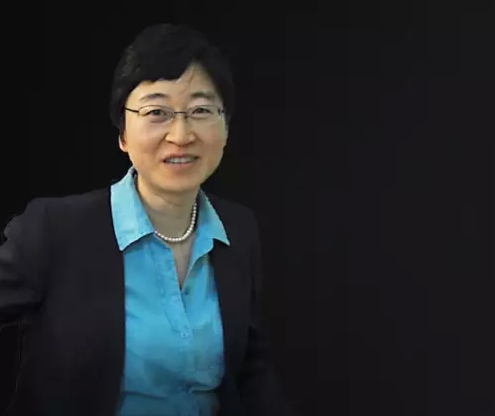
Wu Ronghui
Tongdu Capital | Founding Partner
Tsinghua Imprint
If “Intel” is one label attached to Wu Ronghui, then “Tsinghua” counts as another.
In 2014, Wu Ronghui founded Tongdu Capital, focusing on startups in the healthcare and consumer sectors. All three partners are Tsinghua University alumni. “Thanks to this Tsinghua connection, we have a higher level of mutual trust, and our working style is characterized by speaking less and doing more. Tsinghua’s motto is ‘Actions speak louder than words,’ which I have slightly adapted to ‘Actions precede words.’””She described it this way.
At Tsinghua University, I pursued a dual-degree program, majoring in Biomedical Engineering and minoring in Finance. During my five years of undergraduate study, I would attend lectures for my major during the day and then rush to the School of Economics and Management for my minor courses, often finishing late at night, close to curfew. Consequently, I had little time to explore off-campus or socialize. In today’s parlance, I would be considered a “straight-A student.”
Before founding Tongdu, Wu Ronghui faced many tempting choices. “Should I switch jobs to join a fund? Or start my own venture to manage one?” Standing at this crossroads, Wu took a personality test and discovered that she had an “entrepreneurial gene.” Her decision was driven not only by dreams and passion but also by rational consideration: “If I joined an existing fund, it would take another four or five years to prove myself. By the time I spun off to launch my own fund, I would no longer be young!”
Gender Advantage
Is Being Female an Advantage in Investment? The Reality Is That Women Represent a Small Minority in the Venture Capital Community, and Those Who Excel Are Few and Far Between.
“At first, I felt that being a woman was an obstacle to success.” Wu Ronghui did not shy away from the challenges she faced as a female investor. “Male investors can take entrepreneurs out for meals and drinks, pat them on the back, and call them ‘brothers.’ For us, it’s much harder; there’s always a barrier, making it difficult to break into male-dominated circles.”
As she took on more projects and witnessed a string of successes, she also recognized the advantages of being a female investor. Women tend to be more sincere, frank, and empathetic, which helps lower entrepreneurs’ defensiveness and enables more direct and efficient communication.
Wu Ronghui’s emphasis on value has benefited from the guidance of several investment pioneers. She keeps a photograph with biographies of Warren Buffett, Steve Jobs, and Peter G. Peterson in the background. “Buffett has had the greatest influence on my investment philosophy. I constantly consider how his theories can be applied to early-stage investing. I do not rush into investments simply because a sector is trending.” She cited the 1990s, when excessive enthusiasm for high technology fueled the dot-com bubble, yet Buffett stayed away, stating, “Because I don’t understand it; I haven’t seen the value in these things.” Buffett once summarized two essential qualities of successful investors: independent thinking and a calm, composed mindset. “I strive to embody these traits myself and encourage my team to do the same.”
Internet Healthcare in the Eyes of Tongdu Capital
Q: What are the investment opportunities in mobile health?
A:I believe the opportunity lies in the technological transformation of healthcare services. Technologies such as the internet, smart hardware, the Internet of Things (IoT), robotics, artificial intelligence, and big data each have the potential to enhance the accessibility of healthcare, reduce costs, and improve service quality, ultimately impacting human health and longevity. There are abundant opportunities in this direction, with significant room for future growth.
Q:What are the specific investment opportunities?
A:Healthcare will be personalized. Every individual will differ, from the onset of disease to treatment modalities. It is difficult to build a large, all-encompassing platform akin to Tmall or Taobao.
How Vertical Sectors Are Being Transformed by TechnologyThe first two vertical sectors that Tongdu targeted were chronic disease management and maternal and child health. We believe the former represents a rigid demand, while the latter offers a sufficiently large market. Only in sectors with user bases numbering in the hundreds of millions can deep exploration yield meaningful opportunities; it is far more challenging in markets with fewer than ten million users. We have also invested in dental care projects. Dental care and treatment are universal needs, representing a vast market. In the past, however, limited economic development meant that public awareness was insufficient, preventing demand from fully materializing.
Q:What Are the New Directions in Vertical Domains?
A:In addition, we are focusing on the fields of oncology and rehabilitation. Oncology represents a rigid demand with a substantial patient population in China, where annual per-patient expenditures exceed RMB 100,000. Professional rehabilitation is also poised for growth, as postoperative care, along with neurological and orthopedic conditions, requires continuous outpatient rehabilitation treatment.
Q:Are large comprehensive platforms like Chunyu and Haodafu doomed?
A:I am not particularly aligned with the concept of a "broad platform." Many investors still approach internet healthcare with the same mindset used for general internet projects. While the internet has rapidly scaled up and improved efficiency in sectors such as e-commerce, news, and entertainment, and is gradually penetrating the service industry, medical needs are inherently non-standardized. The healthcare service sector is deep and highly specialized, making it difficult to develop broad yet superficial applications based solely on internet technologies.
Having invested in both the healthcare and internet sectors, I believe the opportunity in digital health lies in “healthcare + internet,” rather than “internet + healthcare.”
Q:"Online consultations on the platform eliminate the need for patients to visit hospitals, thereby improving efficiency, right?"
A:Medical services are inextricably linked to healthcare institutions. Medicine is a highly rigorous service, and the consequences of medical errors can be severe. Efficiency must be improved under the premise that there is a liable entity to assume responsibility, thereby mitigating medical risks, regardless of whether the provider is a traditional hospital or a novel healthcare model. The key question is whether online consultations can eliminate the need for hospital visits. Mere online physician consultations cannot effectively close the loop on patient care or resolve medical issues. Consequently, it remains difficult for online consultation services to charge fees or generate revenue from service transactions.
Q:What strategic initiatives has Tongdu implemented in the mobile healthcare sector?
A:First, invest in vertical industries; second, invest in cross-disciplinary teams. As previously discussed regarding vertical industries, when it comes to cross-disciplinary teams, the emphasis should be on healthcare as the core, with internet technology playing a supporting role. The healthcare industry is highly complex. If entrepreneurs have not spent many years navigating this sector and lack a thorough understanding of the medical field, they will struggle to identify genuine needs and determine viable pathways to meet those needs and deliver value.
Q:How does Haorensheng Company evaluate investments?
A:Another aspect of the investment logic. In addition to specific diseases and fields, we also consider populations. Hao Rensheng serves healthy and sub-healthy individuals, who all have needs for health management and disease prevention.
Who will pay for the demand in health management? A professional payer is needed, namely insurance companies. Commercial insurers will allocate a portion of their funds to health management in order to reduce the claim ratio for disease treatment. In China, the payer segment has long been absent due to underdevelopment of commercial insurance. Since last year, commercial insurance has begun to accelerate its growth, and it is expected to reach a scale of one trillion yuan within a few years. This represents a significant environmental benefit for professional health management companies like Haorensheng.
Q: PleaseSummarize your investment style.
A:</span