

VR to Assist in Groundbreaking 'Head Transplant' Surgery; Healthcare VR Market Projected to Reach $5.1 Billion by 2020
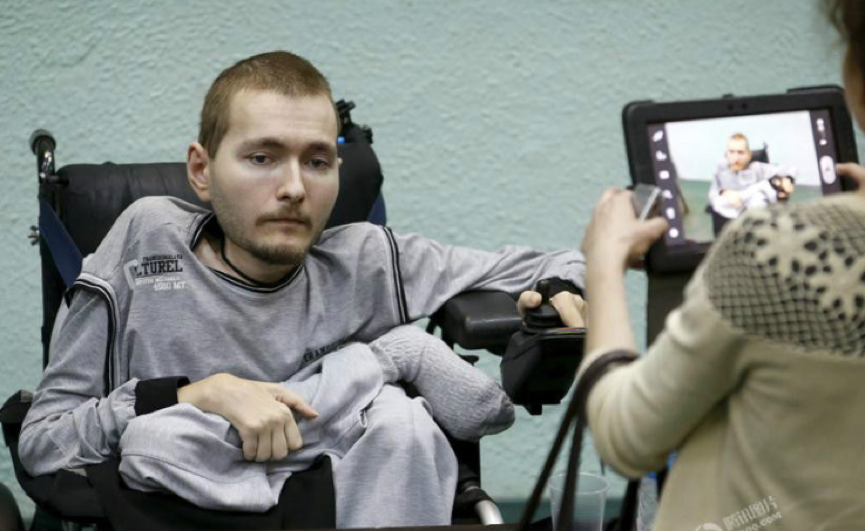
On May 3, foreign media reported that Italian neurosurgeon Sergio Canavero was prepared to perform a head transplant on a Russian patient who had suffered from spinal muscular atrophy since childhood, with the surgery scheduled for late 2017.
Notably, this procedure will be performed with the aid of VR technology. The entire surgery is expected to last 36 hours, involve 150 personnel—including virtual reality engineers, physicians, nurses, technicians, and psychologists—and cost $26 million. Specific details regarding the application of VR technology have not been disclosed.
Sergio’s surgery has caused a global uproar: is he an innovative pioneer or a reckless Dr. Frankenstein?
In 2013, Sergio announced his intention to perform a head transplant surgery. Two years later, after multiple email exchanges with surgical candidates, the final candidate was confirmed as Valery Spiridonov, a 31-year-old Russian who had suffered from spinal muscular atrophy since childhood. This 31-year-old computer scientist was born unable to eat or use the toilet normally. In an interview with RT (Russia Today), he expressed his willingness to take this risk, stating that it represented a valuable opportunity for him and that, regardless of the surgical outcome, it would provide a scientific foundation for future research.
Market Potential of Integrating VR with Healthcare
In April, Deutsche Bank’s latest VR report revealed that many companies are exploring the application potential of virtual reality in the healthcare sector. By creating personalized VR experiences that simulate real-life scenarios, doctors and therapists are attempting to treat patients with phobias and other conditions using this novel therapeutic approach.
In its 2016 report, Goldman Sachs predicted that the VR/AR market size would reach $80 billion by 2020, with the healthcare sector accounting for $5.1 billion and covering 3.4 million users.
VR Will Play Three Roles in the Healthcare Market:
1) As a tool to assist physicians with diagnostic treatment and daily tasks, such as Google’s collaboration with multiple hospitals to test Google Glass, doctors can use Google Glass to project CT scan and MRI results;
2) Used in physical therapy, such as for post-traumatic stress disorder (PTSD), primarily by simulating specific environments to help patients adapt;
3) Virtual doctor visits, with physicians providing video consultations.
Latest Cases of VR Integration in Healthcare
1) In March this year, Neil Martin, Dean of Neurosurgery at the University of California, Los Angeles (UCLA), in collaboration with Surgical Theater, announced that “the future is here.” By leveraging 3D virtual reality technology for preoperative observation and analysis of brain tumors, this approach enables comprehensive visualization of cerebral structures compared to conventional CT imaging, facilitates surgical rehearsal, and reduces operative risks.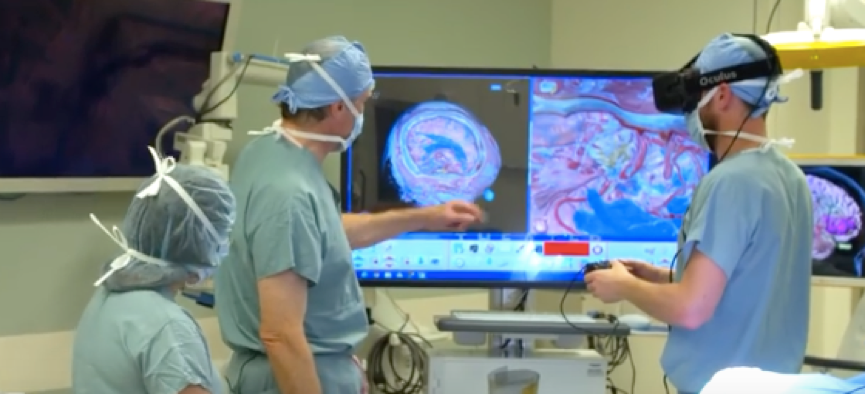
In 2015, Surgical Theater secured $9 million in Series A funding, with HTC among its investors.
2) The MedVR Lab at the University of Southern California’s Institute for Creative Technologies has launched a VR therapy platform for clinical healthcare, integrating VR technology with mental health therapy, motor rehabilitation, cognitive assessment, and clinical skills training.
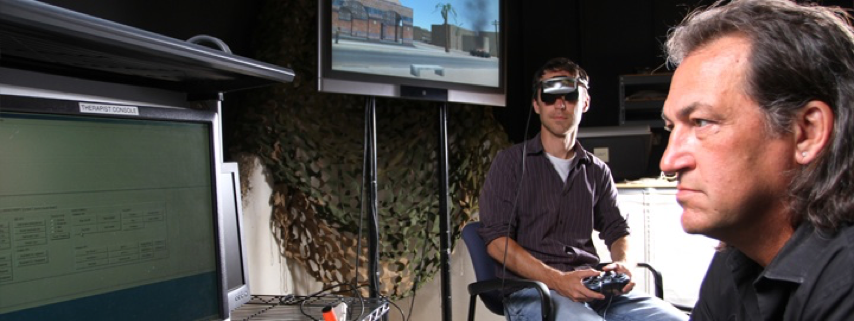
3) London-based Virtual Exposure Therapy utilizes VR exposure therapy to treat phobias. Exposure therapy can address specific phobias, including fear of flying, driving, and heights, as well as social anxiety related to public speaking, and phobias of spiders, thunderstorms, confined spaces (claustrophobia), and open or crowded places (agoraphobia). It is also effective for post-traumatic stress disorder (PTSD) resulting from motor vehicle accidents.

4) VR also has significant potential in the broader health and wellness sector. In February, former rugby player Gerry Cruz filmed a 360-degree fitness video and is considering creating VR content for himself.
5) Companies such as VirZOOM have also integrated cycling with VR to provide a more engaging fitness experience. By using wireless sensors to track movement and cycling speed, and wearing VR headsets such as Oculus Rift, PlayStation VR, or HTC Vive—with plans to introduce Samsung GearVR—users find that the faster they cycle in reality, the faster they move in the virtual world.