

Two CD20 Monoclonals Take the Lead as World's First Adult Primary Membranous Nephropathy Therapy Gains Approval

Mabworks
Differentiated Antibody Drug Developer

Roche
Oncology Drug Research, Development, and Manufacturing
On June 4, 2026, the Center for Drug Evaluation (CDE) of the National Medical Products Administration (NMPA) officially announced that Roche's obinutuzumab injection was proposed for inclusion in the priority review and approval program for the treatment of adult primary membranous nephropathy (pMN). Shortly thereafter, on June 9, MIL62 (generic name: obinutuzumab beta injection), independently developed by Mabworks, received formal NMPA approval for this indication, becoming the world's first dedicated targeted therapy specifically for primary membranous nephropathy.
Two innovative CD20-targeting monoclonal antibodies have sequentially achieved key breakthroughs: the former accelerates the market entry of an established imported biologic, while the latter positions a domestically developed innovative drug at the forefront globally. Together, they offer new therapeutic opt ions for patients with primary membranous nephropathy (pMN) who have long been constrained by conventional treatments.
Primary Membranous Nephropathy: A Large Patient Population with Limited Treatment Options
Primary Membranous Nephropathy is the second most common primary glomerular disease after IgA nephropathy and the most frequent cause of primary nephrotic syndrome in adults, carrying a very high risk of disease progression. The incidence of PMN has risen significantly worldwide; data from China indicate an annual growth rate of 13%, making it the leading cause of nephrotic syndrome in individuals over 40 years of age.
Clinical data indicate that approximately 30%–35% (about one-third) of patients with primary membranous nephropathy who do not receive standardized treatment will progress to end-stage renal disease (ESRD, i.e., end-stage kidney failure) within 10 years. These patients ultimately require renal replacement therapies such as dialysis or kidney transplantation, which not only severely compromises patient health but also imposes a heavy burden on families and the healthcare system.
Currently, there is a lack of standardized innovative therapies specifically approved for pMN that can achieve long-term disease control. Clinical treatment has long relied on immunosuppressive regimens, including glucocorticoids, cyclophosphamide, and calcineurin inhibitors. In recent years, B-cell targeted therapies, represented by rituximab, have gradually been incorporated into clinical practice; however, some patients still experience inadequate efficacy or disease relapse.
Meanwhile, traditional immunosuppressive therapy is often associated with safety risks such as infection, metabolic abnormalities, and nephrotoxicity, making it difficult to achieve precise intervention against pathogenic B cells. As research into disease mechanisms continues to deepen, the development of more efficient and precise B-cell-targeted therapies has become a key direction in the treatment of primary membranous nephropathy (pMN).
From the perspective of the industry R&D landscape, data from the Insight database show that there are currently 42 drugs globally targeting primary membranous nephropathy. Competition in this therapeutic area is gradually intensifying, but most products remain in early stages of development. Among them, only Roche's obinutuzumab and Mabworks' MIL62 are leading in development progress, highlighting an urgent market demand for novel, safe, and effective targeted therapies.
Glycoengineering-Optimized Monoclonal Antibodies for Precise Targeting of Pathogenic Targets
Abnormal B-cell activation is a core driver in the onset and progression of chronic autoimmune diseases such as primary membranous nephropathy. Targeting the CD20 protein on the B-cell surface to achieve deep depletion of abnormal B cells represents the current mainstream innovative therapeutic approach. The two core products introduced in this article are both developed based on the CD20 target.
Roche's Obinutuzumab: Deeper B-Cell Depletion, Targeting New Indications in Kidney Disease
Obinutuzumab is a humanized type II anti-CD20 monoclonal antibody, independently developed by Roche and deeply optimized through glycoengineering.
From a mechanistic perspective, this drug can precisely bind to the CD20 protein on the surface of B cells and eliminate abnormal B cells through multiple mechanisms, including direct cell death and antibody-dependent cellular cytotoxicity (ADCC), thereby intervening in abnormal immune responses at the level of key disease pathogenesis. Compared with broad-spectrum immunosuppressive therapies such as glucocorticoids and cyclophosphamide, its precise regulation of B cells provides new insights into the treatment of autoimmune kidney diseases.
From a technical perspective, obinutuzumab employs glycoengineering to optimize the structure of the antibody's Fc region, thereby enhancing its binding affinity to immune effector cells and improving B-cell depletion efficiency. This represents one of the key features distinguishing it from earlier-generation CD20 antibodies.
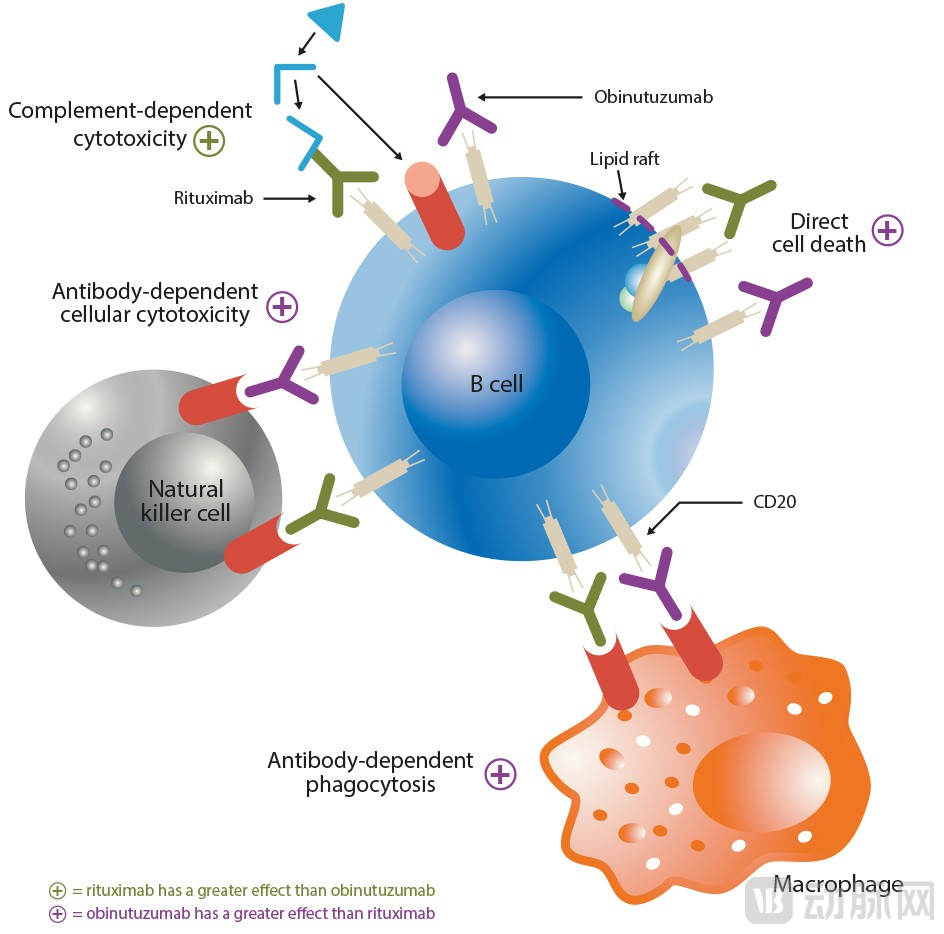
Comparison of the Mechanisms of Action: Obinutuzumab vs. Rituximab
(Image source: https://www.nature.com/articles/d42473-018-00278-8)
As a core antibody asset of Roche, obinutuzumab has accumulated over a decade of experience in clinical development and commercialization. The product was first approved for marketing overseas in 2013 and currently covers multiple indications, including chronic lymphocytic leukemia, small lymphocytic lymphoma, follicular lymphoma, and lupus nephritis. In China, it was approved for marketing in 2021 for the treatment of follicular lymphoma. In 2025, global sales of obinutuzumab reached $1.19 billion, representing a year-on-year increase of 15.6%.
With the approval for lupus nephritis and the advancement of indications for primary membranous nephropathy, obinutuzumab is gradually evolving from a hematologic oncology drug into a multi-indication platform product covering autoimmune diseases.
MIL62 (trade name: Bejescin®) is a glycoengineered Type II anti-CD20 monoclonal antibody independently developed by Mabworks, and it is also the first product to receive approval for the indication of primary membranous nephropathy.
In terms of technical design, MIL62 was developed based on a proprietary ADCC-enhancing antibody platform. Through glycoengineering modifications such as fucose knockout, it improves the binding affinity of the antibody to immune effector cells, thereby enhancing antibody-dependent cell-mediated cytotoxicity (ADCC) and achieving efficient clearance of abnormal B cells.
Unlike traditional broad-spectrum immunosuppressive therapies, MIL62 also targets key pathogenic mechanisms by reducing pathogenic B cells and autoantibody production, thereby achieving more precise immune intervention. With its approval for primary membranous nephropathy, it has become the first therapeutic agent globally to be approved for this indication.
In addition to the nephrology field, MIL62 was approved in February 2026 for the treatment of neuromyelitis optica spectrum disorders (NMOSD), becoming the first CD20 antibody drug approved globally for this indication. The company is currently continuing to advance the development of indications for autoimmune diseases such as systemic lupus erythematosus.
Just days before its approval (on June 4, 2026), commercialization efforts also saw progress. Mabworks entered into a strategic partnership with Everest Medicines (01952.HK), granting Everest Medicines exclusive rights to develop and commercialize MIL62 in the Asia-Pacific region (including Southeast Asia, India, South Korea, Australia, New Zealand, and China's Taiwan, Hong Kong, and Macau regions). Mabworks will receive an upfront payment of $23 million, as well as up to $186 million in development and sales milestone payments, and will participate in subsequent sales royalties.
Positive Readouts from Pivotal Phase III Studies: Dual Validation of Efficacy and Safety for Two Monoclonal Antibodies
Whether it was the successful approval of Mabworks' MIL62 or Roche's obinutuzumab entering priority review, both milestones were underpinned by pivotal Phase III clinical trials. These two studies validated the clinical value of CD20-targeted therapy in primary membranous nephropathy (pMN) among global and Chinese patient populations, respectively, thereby providing new evidence-based medical support for a disease area that has long lacked innovative therapies.
The key basis for obinutuzumab receiving priority review status in China stems from the global, multicenter Phase III MAJESTY study.
MAJESTY is a randomized, open-label, multicenter Phase III study that enrolled 142 adult patients with primary membranous nephropathy, who were randomly assigned in a 1:1 ratio to receive either obinutuzumab or tacrolimus. The primary endpoint was the complete remission rate at 104 weeks of treatment, with key secondary endpoints including the complete remission rate at 76 weeks and the overall remission rate at 104 weeks.
The results demonstrated that obinutuzumab achieved positive outcomes on the primary endpoint. At 104 weeks of treatment, the complete response rate in the obinutuzumab group was significantly superior to that in the tacrolimus group, reaching statistical significance. Meanwhile, obinutuzumab also outperformed the control group on key secondary endpoints, including the complete response rate at 76 weeks and the overall response rate at 104 weeks, indicating a stronger capacity for disease remission.
In terms of safety, the study results showed that the adverse event profile of obinutuzumab was consistent with the established safety profile from previous clinical studies and post-marketing use. No new safety signals were identified, and the overall safety was highly predictable.
Notably, in addition to adult primary membranous nephropathy, Roche has previously submitted a marketing application for obinutuzumab in the treatment of primary nephrotic syndrome in children and adolescents, which was granted priority review in February 2026. As multiple renal indications continue to advance, obinutuzumab is emerging as a key strategic product for Roche's expansion into the field of autoimmune kidney diseases.
Compared to obinutuzumab, which is still under regulatory review, MIL62 has taken the lead in achieving commercial breakthroughs. Its approval was also based on high-quality Phase III registration studies.
The Phase III registration study of MIL62 for primary membranous nephropathy (MIL62-CT307) is a multicenter, randomized, open-label study that enrolled 154 patients with biopsy-confirmed pMN to compare the efficacy and safety of MIL62 monotherapy versus cyclosporine in a head-to-head manner. The primary endpoint was the complete remission rate at Week 76, with follow-up continuing through Week 104.
Research data demonstrate that MIL62 exhibits significant advantages across multiple key efficacy endpoints. At 52 weeks of treatment, the complete response rate in the MIL62 group was 37.7%, significantly higher than the 6.6% observed in the cyclosporine group. By the primary endpoint assessment at 76 weeks, the complete response rate in the MIL62 group further increased to 49.4%, compared to only 3.9% in the cyclosporine group. With continued follow-up through 104 weeks, the complete response rate in the MIL62 group reached 57.1%, and the overall response rate reached 85.7%.
In addition to its superior response rates, MIL62 also demonstrates remarkable rapidity of onset. Studies have shown that the time to immunological and renal responses is significantly shorter with MIL62 than with cyclosporine. During long-term follow-up, no significant signs of relapse were observed between weeks 52 and 104 in patients who had achieved response by week 52, suggesting sustained remission and favorable durability of disease control.
Furthermore, the study showed that patients in the MIL62 group exhibited an overall improving trend in estimated glomerular filtration rate (eGFR), whereas the cyclosporine group experienced a continuous decline, suggesting that MIL62 may provide additional renal benefits while controlling disease activity.
In terms of safety, the overall safety profile of MIL62 was comparable to that of the control group. No new safety signals were identified, and the types of adverse events were consistent with prior experience with CD20 monoclonal antibodies.
CD20 Pipeline Undergoes Concentrated Validation
From a timeline perspective, the approval of MIL62 and Roche's obinutuzumab being proposed for priority review were separated by only five days; from a technical standpoint, both products target the same core antigen—CD20.
In recent years, as research into disease mechanisms has deepened, abnormal B-cell activation has been recognized as one of the key drivers in the onset and progression of primary membranous nephropathy (pMN). Aberrant B cells continuously produce pathogenic autoantibodies, such as anti-PLA2R antibodies, thereby triggering glomerular injury and proteinuria. Consequently, eliminating abnormal B cells to reduce the production of pathogenic antibodies at the source has become a major focus of innovative therapies for pMN, with CD20 being one of the most established therapeutic targets for this strategy.
The two products that achieved breakthroughs in this instance are both glycoengineered type II anti-CD20 monoclonal antibodies. Through optimized design of the antibody Fc region, both enhance antibody-dependent cell-mediated cytotoxicity (ADCC), improve the clearance efficiency of abnormal B cells, and thereby achieve more precise immunomodulation.
Despite similar technical pathways, public information indicates that the two products have followed different development trajectories.
Among these, obinutuzumab is a core antibody asset of Roche and the first globally approved glycoengineered type II anti-CD20 monoclonal antibody. This product has accumulated substantial clinical evidence across multiple indications, including chronic lymphocytic leukemia, follicular lymphoma, and lupus nephritis. The results of the Phase III MAJESTY study evaluating its use in the treatment of primary membranous nephropathy (pMN) were published in the New England Journal of Medicine (NEJM), providing high-level evidence-based medical support for the application of CD20-targeted therapy in this field.
In contrast, MIL62 represents the first breakthrough by a domestically developed innovative drug in this therapeutic area. Developed on Mabworks' proprietary ADCC-enhanced antibody platform, MIL62 features further optimized design in the Fc region, with the core objective of enhancing B-cell depletion. This approval makes MIL62 the first drug globally approved for the treatment of primary membranous nephropathy, marking the first time a Chinese company has achieved regulatory leadership in this field.
Notably, MIL62 has previously been approved for the treatment of neuromyelitis optica spectrum disorders (NMOSD), becoming the first CD20 antibody drug approved in China for this indication. Meanwhile, obinutuzumab is accelerating its development for multiple renal indications, including lupus nephritis, primary nephrotic syndrome, and primary membranous nephropathy. Although the two companies have adopted different strategies, both regard autoimmune diseases as a significant growth market for CD20 antibodies.
From an industry perspective, these two milestone events provide dual support through "regulatory validation" and "clinical validation": the initial approval of MIL62 demonstrates that CD20-targeted therapy has gained regulatory recognition; obinutuzumab further solidifies the evidence-based medical foundation of this therapeutic approach by leveraging global Phase III studies and NEJM-level evidence.
As more products and indications continue to advance, primary membranous nephropathy is gradually transitioning from the era of traditional broad-spectrum immunosuppressive therapy to the era of precise B-cell targeted therapy.