

Internet + Chronic Disease Management: Insights from Pharma, Insurers, Investors, and Startups
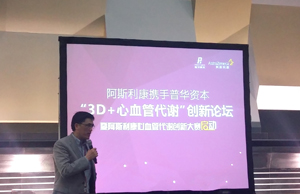
On May 7, VCBeat was invited to attend the event co-hosted by AstraZeneca and Puhua Capital.The First “3D+"Cardiovascular Metabolism" Innovation ForumLaunch of the AstraZeneca Cardiovascular and Metabolic Innovation Competition. Numerous industry leaders provided multi-perspective insights into the management of chronic diseases, such as cardiovascular and metabolic disorders, covering policy, internet healthcare, pharmaceutical companies, insurance, and capital investment. Duan Mingjie, Senior Researcher at VCBeat, also participated in the forum and conducted a statistical analysis of intelligent cardiovascular hardware both domestically and internationally. Below are the key highlights from the event, compiled by VCBeat:
Internet Perspective: The Internet Holds Significant Value in Chronic Disease ManagementKuang Ming, CEO of Palm Sugar Doctor
Does the Internet hold value for chronic disease management? Yes. First, the Internet can enhance efficiency across the entire industry; second, it enables rational allocation of resources. The chronic disease sector has its own distinct characteristics: treatment cycles are long; demand is highly repetitive, with a significant proportion of services being amenable to standardization; and there is a relatively abundant supply of healthcare professionals capable of managing chronic conditions. It is precisely these inherent features of chronic diseases that lay the foundation for realizing the value of the Internet in this industry.
However, the integration of the internet with chronic disease management still faces numerous challenges: the absence of a standardized service system has led to fragmented offerings; insufficient data hinders effective intervention and management; and it remains unclear who should bear the costs for closing the service loop.
Data Perspective: A Significant Gap in Application Innovation Between Domestic and International Cardiovascular Smart HardwareDuan Mingjie, Senior Researcher at VCBeat
2014 and 2015 marked the boom period for smart hardware. The momentum of smart hardware startups in China and abroad remained largely synchronized, with over 70% of smart hardware products both domestically and internationally launched during these two years. Startups played a dominant role in this wave of smart hardware entrepreneurship. However, as China’s smart hardware industry was still in its early stages, none of the startups in this field had gone public. In China, wearable devices were primarily worn on the arms and wrists, whereas cardiovascular smart hardware abroad featured more diverse wearing positions, including the ears, head, knees, arms, fingers, wrists, and chest. This indicates a significant gap between China and other countries in terms of application innovation for cardiovascular smart hardware. Less than half of most smart hardware products, both domestic and foreign, have obtained relevant certifications. Many foreign cardiovascular smart hardware products are evolving from original leisure and entertainment gadgets into medical-grade smart hardware. Real-time monitoring capabilities will become a standard feature of smart hardware in the future. Currently, the most common function is data acquisition, while there are still shortcomings in areas such as diagnostic examination.
Pharmaceutical Company Perspective:Precision treatment can only be achieved based on precision diagnosis.Wu Wei, AstraZeneca
New Care Models Demand New RequirementsPrecision treatment can only be achieved on the basis of precision diagnosis. As the primary decision-makers in clinical practice, physicians need to enhance their diagnostic and therapeutic skills. Pharmaceutical companies and medical diagnostics technology firms must collaborate to improve physicians’ capabilities in precision diagnosis and precision treatment. This shift in care models will also drive changes in the industry landscape. Pharmaceutical companies must prioritize patients, adopt a patient-centric approach, keep pace with technological advancements, and leverage internet-based big data to enhance their own diagnostic and therapeutic competencies. Only through collaborative efforts among internet companies, pharmaceutical enterprises, and healthcare providers can the field of precision medicine truly reap substantial benefits.
Insurance Perspective: Optimistic Outlook for the Development of Health Insurance Hou Wencai, Deputy General Manager of Business Development Department, Munich Re
Insurance companies are gradually increasing their investment in protection-oriented products, which hold significant future potential. Savings-oriented products have alleviated the pressure on early-stage profitability for protection-oriented products and provided momentum. However, the currently excessive proportion of savings-oriented products has increased the pressure on insurance companies to transition toward protection-oriented products. At present, China’s premium income as a percentage of GDP is below the global average and significantly lower than that of Japan, South Korea, and developed Western countries.
Significant progress has also been made in insurance coverage innovation, with even greater opportunities on the horizon. First, channel innovation: although traditional channels currently remain the primary contributors, internet-based channels have achieved substantial growth. This is mainly driven by lower premiums, convenient enrollment, regulatory encouragement, and product diversity. Second, product innovation: the pace of product upgrades and iterations has accelerated, rapidly aligning with mature markets abroad. Encouraged by government policies, the outlook for health insurance development is optimistic.
Capital Perspective:Investing in the Chronic Disease Management Sector Is Not Easy to Profit FromZhou Mi, Partner at Puhua Capital
From a capital perspective, investing in the field of chronic disease management is indeed not highly profitable. Currently, areas attracting significant investment interest are mainly concentrated on diabetes; by comparison, cardiovascular diseases and hypertension receive less attention, while the oncology sector is currently in an upward growth phase. The advantage of the diabetes sector lies in the large number of patients requiring out-of-hospital management. Most current projects combining internet technology with chronic disease management start from the direction of medical services, connecting disease management inside and outside hospitals through the internet. Analyzing from the perspectives of medical services, pharmaceuticals, medical devices, and mobile health, the industrial chain model for diabetes management is relatively mature. When facing numerous chronic disease management projects, investors consider multiple key factors, including profitability models, data, ecosystem, and the development of smart hardware overseas.