

Xiaolu Clinic Files IPO Prospectus: Building a TCM-Focused Full-Process Platform Inspired by Sogou Mingyi

Recently, Sogou CEO Wang Xiaochuan prominently launched the “Mingyi” search feature, presenting Sogou Search’s response to the Wei Zexi incident. Meanwhile, Xiao Lu Yi Guan, a traditional Chinese medicine (TCM) platform founded by Zhang Kuo, who also hails from Sogou, has put forward its own “perspective.”
Zhang Kuo told VCBeat that in the Baidu incident, users were directed to problematic medical institutions while seeking information. In Zhang’s view, even non-paid organic search results on search engines are often rife with ambiguous and misleading medical information. On the internet, it seems as if everyone is a renowned doctor. Whether it was Zhang Wuben’s mung bean remedy from several years ago, the “health tips” and “longevity secrets” that now flood WeChat Moments, or the well-meaning netizens offering “help” online, “folk doctors” are ubiquitous.
“Therefore, the TCM content we produce and the TCM services we provide will be the most professional.”
To deliver the most professional Traditional Chinese Medicine (TCM) content and services
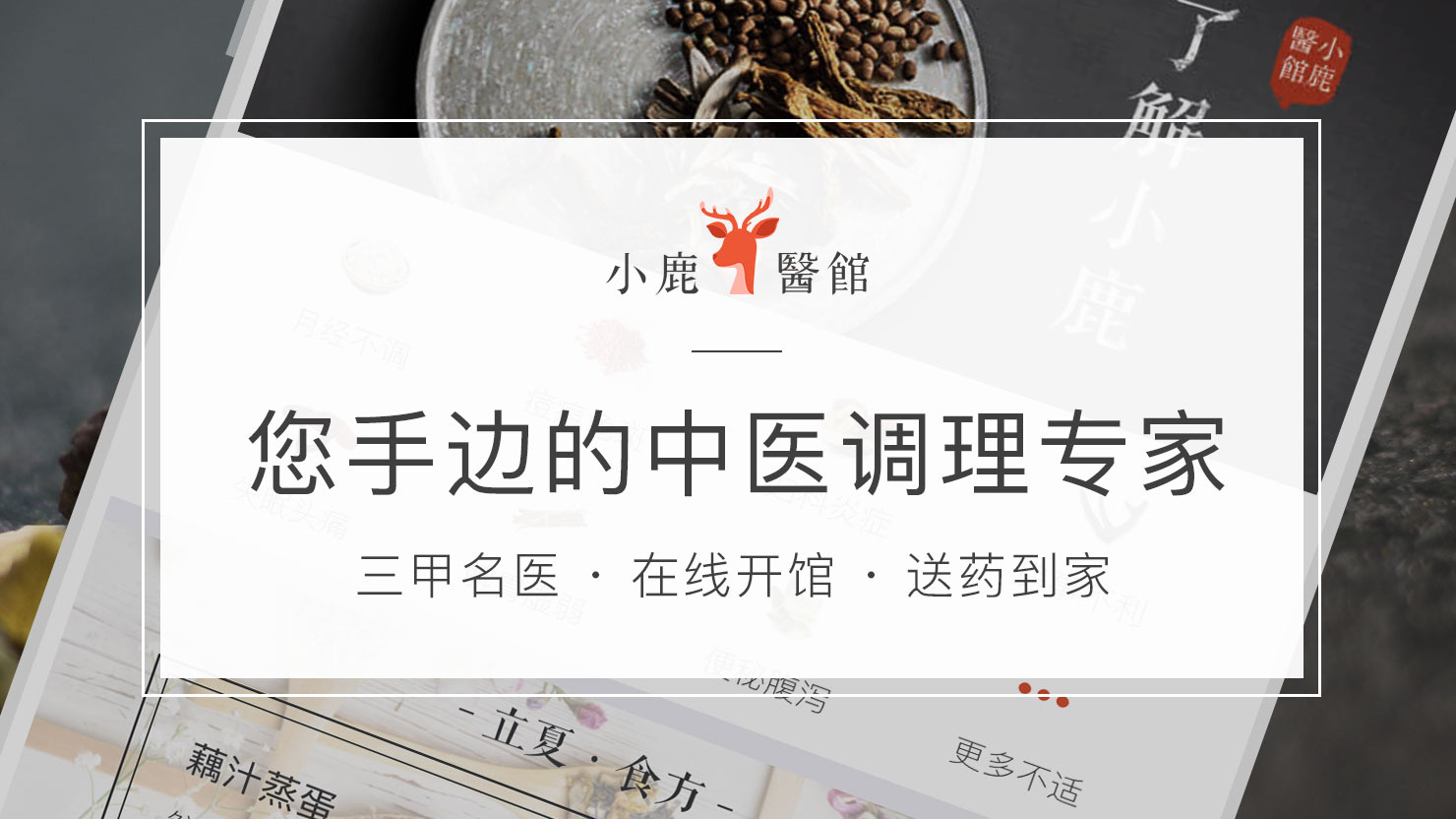
Xiaolu TCM Clinic is a traditional Chinese medicine (TCM) wellness app designed for individuals with chronic diseases and urban populations in sub-health conditions. On one hand, it provides users with professional TCM knowledge; on the other, it offers convenient, direct-access TCM services, including online consultations and follow-up visits with premium physicians, as well as open medication purchasing. Within one month of its launch, Xiaolu TCM Clinic has onboarded nearly 100 physicians, registered and activated over 60,000 users, and facilitated more than 4,000 transactions.
Zhang Kuo stated that the primary target user groups are individuals with chronic diseases and urban populations in a sub-health state. On one hand, urban white-collar workers highly value their time and prefer to spend their leisure time enjoying life rather than queuing at hospitals merely for health conditioning and maintenance. On the other hand, while individuals in a sub-health state experience physical discomfort, they do not need to go to great lengths to visit hospitals frequently. What they require is an online, convenient platform for health conditioning, coupled with high-quality in-person consultation and medication delivery services.
While launching online personal services on its app, Xiaolu Medical Clinic has also introduced Ping An Mai, a corporate service product. It provides employees with services such as constitution type monitoring, health status assessment, Traditional Chinese Medicine (TCM) syndrome differentiation, formulation of treatment and regulation strategies, herbal medicine regimens, and lifestyle adjustment plans. As a result, employees’ physical health is improved. For enterprises, this not only enhances workforce productivity but also reduces human resource losses, demonstrating the company’s care for its employees.
Currently, Ctrip, Tencent, Baidu, China Life, and others have already partnered with Xiaolu Clinic.
To ensure the professionalism of its services, all physicians providing medical care on the platform are chief or associate chief physicians from top-tier medical institutions such as Beijing Dongzhimen Hospital, Guang’anmen Hospital, Xiyuan Hospital, and Guoyitang. Furthermore, all authors contributing to the “Xiaolu TCM Encyclopedia” hold positions of associate professor or higher at universities of traditional Chinese medicine or Grade 3A hospitals.
Regarding medicinal materials, Xiaolu Clinic has partnered with the Tongrentang flagship store to ensure product quality. For pharmaceutical delivery, it collaborates with SF Express to guarantee that no issues arise during the distribution process.
Zhang Kuo stated that Sogou Mingyi has partnered with DXY, Zhihu, and others to provide authentic and reliable guarantees for search results related to Western medicine. However, there is currently a lack of content on traditional Chinese medicine.
Data show that in 2015, traditional Chinese medicine (TCM) accounted for 20% of the total number of medical consultations in China. Clearly, providing only Western medicine content cannot meet the needs of all users.
Developing a TCM version of “Sogou Mingyi” is precisely where Xiaolu Clinic excels. Xiaolu Clinic has timely launched the “Xiaolu TCM Encyclopedia,” with each article authored and reviewed by experts, complete with source attribution, author identification, and references. For instance, the entry on “Male Infertility” was edited and reviewed by Professor Li Haisong (Director of the Andrology Department at Dongzhimen Hospital, Beijing University of Chinese Medicine; M.D., Chief Physician, Doctoral Supervisor; Vice Chairman of the Andrology Branch of the China Association of Chinese Medicine).
The Entrepreneurial Journey of the Former Chief Scientist at Sogou
Prior to founding his startup, Zhang Kuo spent ten years at Sogou. During that decade, he became the fastest-promoted employee in the company’s history. At the age of 32, he was appointed Chief Scientist and General Manager of the Large-Scale Search Business Unit at Sogou, and was exceptionally conferred the title of Professor-Level Senior Engineer by the Beijing Municipal People’s Government. He also served as the Principal Investigator for a major national research project under China’s National High-Tech R&D Program (863 Program) and was a recipient of the First Prize of Beijing Science and Technology Award.
In 2015, Zhang Kuo began to engage with Traditional Chinese Medicine (TCM). “At that time, I was experiencing gastric discomfort. Western medicine practitioners found no definitive issues, but after receiving TCM treatment and regulatory therapy, my condition improved significantly.” As his interest in TCM grew, Zhang Kuo resolved to conduct in-depth research into the field by extensively reading relevant articles and consulting a vast body of literature. Through this process, he increasingly felt that TCM urgently needed to be promoted and further developed.
Zhang Kuo stated, “Traditional Chinese Medicine (TCM) has accumulated profound expertise in researching and addressing a wide range of health issues, such as cervical spondylosis, digestive disorders, insomnia, and menstrual irregularities. In the face of life’s mounting pressures, an increasing number of people are turning to TCM for holistic regulation and care.”
Obviously, with the continuous development of Internet technology, the integration of Traditional Chinese Medicine (TCM) with the Internet and big data will be a major trend in the future, and TCM mobile healthcare will also have broad market prospects.
Furthermore, policies have consistently supported the development of “Internet + Traditional Chinese Medicine (TCM).” In May 2015, the State Council issued the Development Plan for TCM Health Services (2015–2020). The policy clarified several directions for integrating TCM with internet technologies and established basic guidelines to promote the substantial growth of the TCM health service industry. Specifically, it called for accelerating the formulation of norms and standards for TCM wellness and healthcare services, and developing TCM health intervention plans or guidelines tailored to populations with different health statuses. It encouraged leveraging information technologies such as cloud computing, mobile internet, and the Internet of Things (IoT) to develop intelligent TCM health service products. The aim was to provide residents with high-quality, personalized, and convenient TCM wellness and healthcare services that integrate TCM health monitoring, consultation and assessment, wellness and regimen, and follow-up management.
Currently, Xiaolu Medical Clinic has secured tens of millions of yuan in Series A financing from Morning Star and IDG.
It is understood that Xiaolu Medical Clinic consists of more than 20 people, most of whom come from companies such as Sogou, Wandoujia, Haodf, and 360.
In the future, Xiaolu Yiguan will evolve toward greater intelligence and plans to launch wearable devices.