AI in Healthcare Series IV: The Era of Big Tech Acquisitions
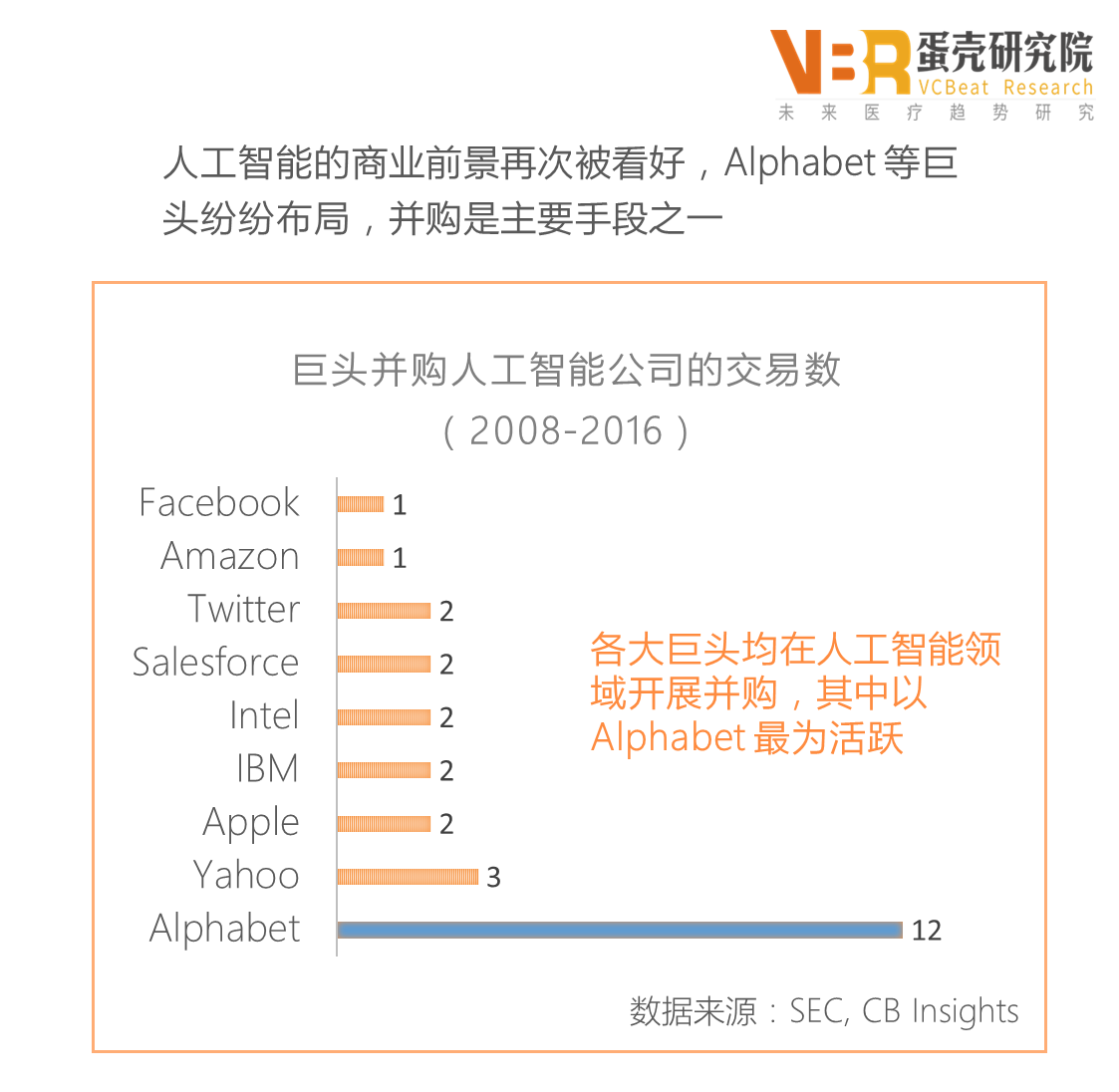
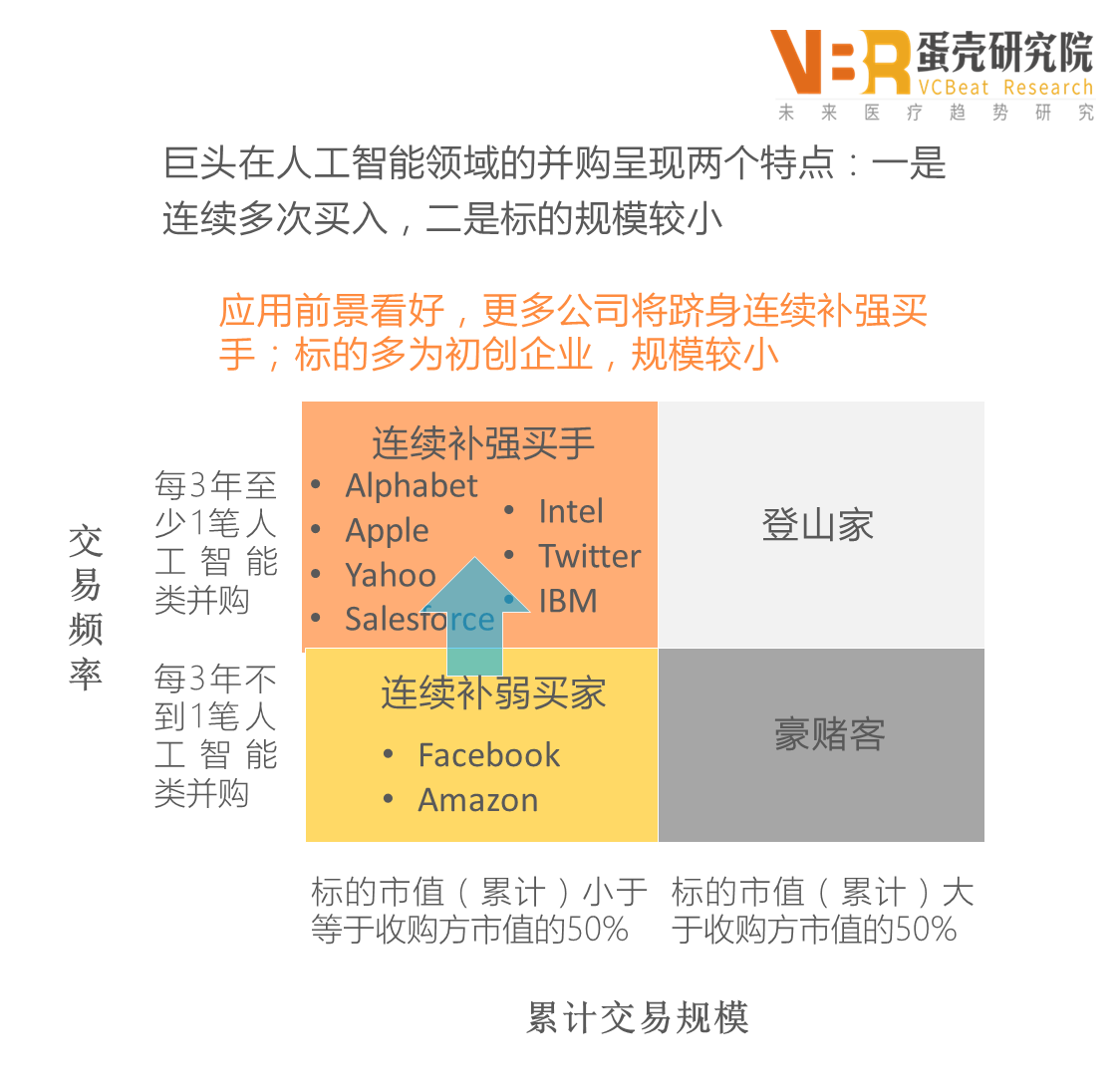
The commercial prospects of artificial intelligence are once again viewed favorably, with giants such as Alphabet actively making strategic moves, where mergers and acquisitions (M&A) serve as a primary approach. M&A activities by these tech giants in the AI sector exhibit two key characteristics: first, they engage in repeated, successive acquisitions; second, the target companies are typically small in scale.
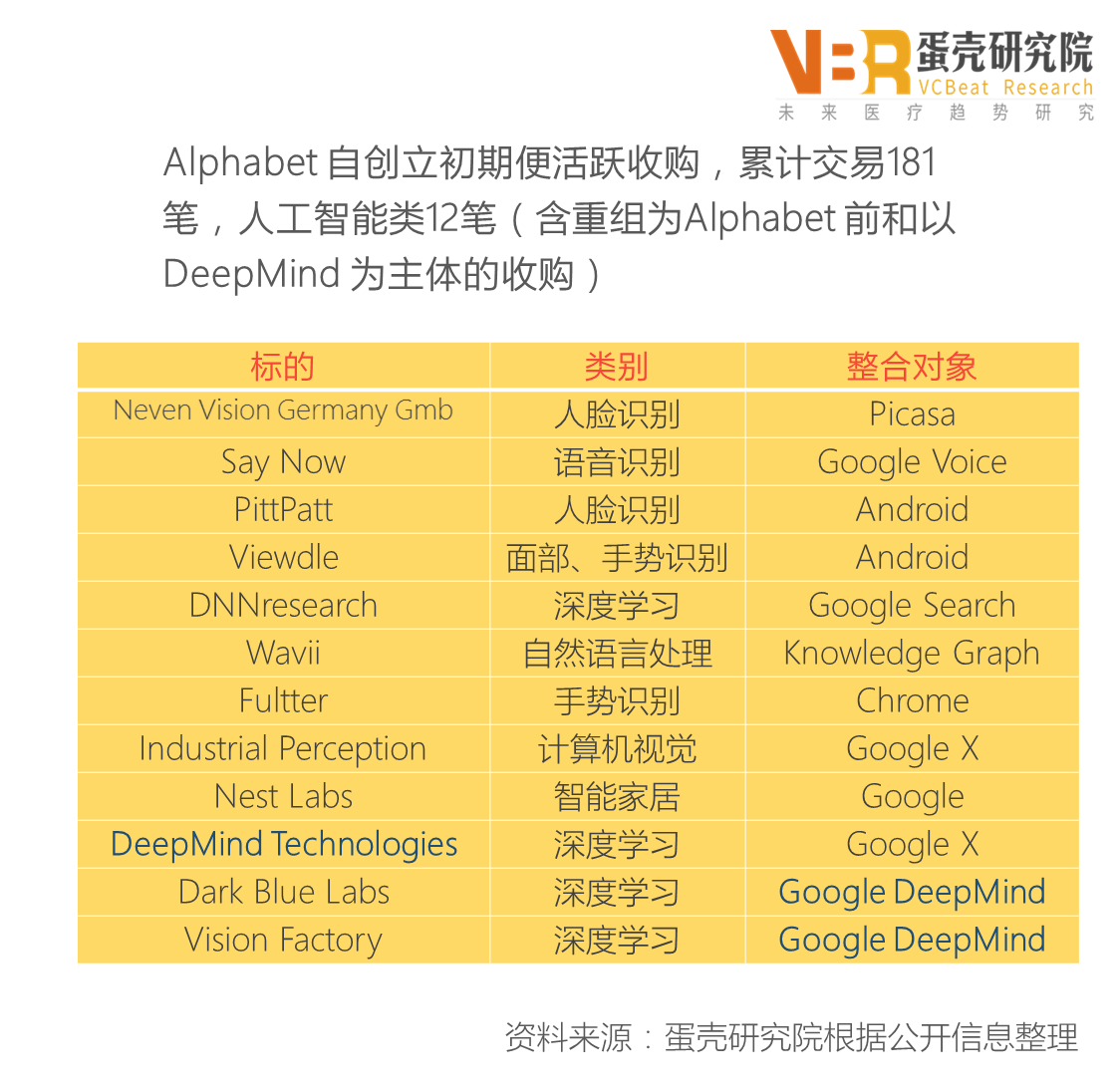
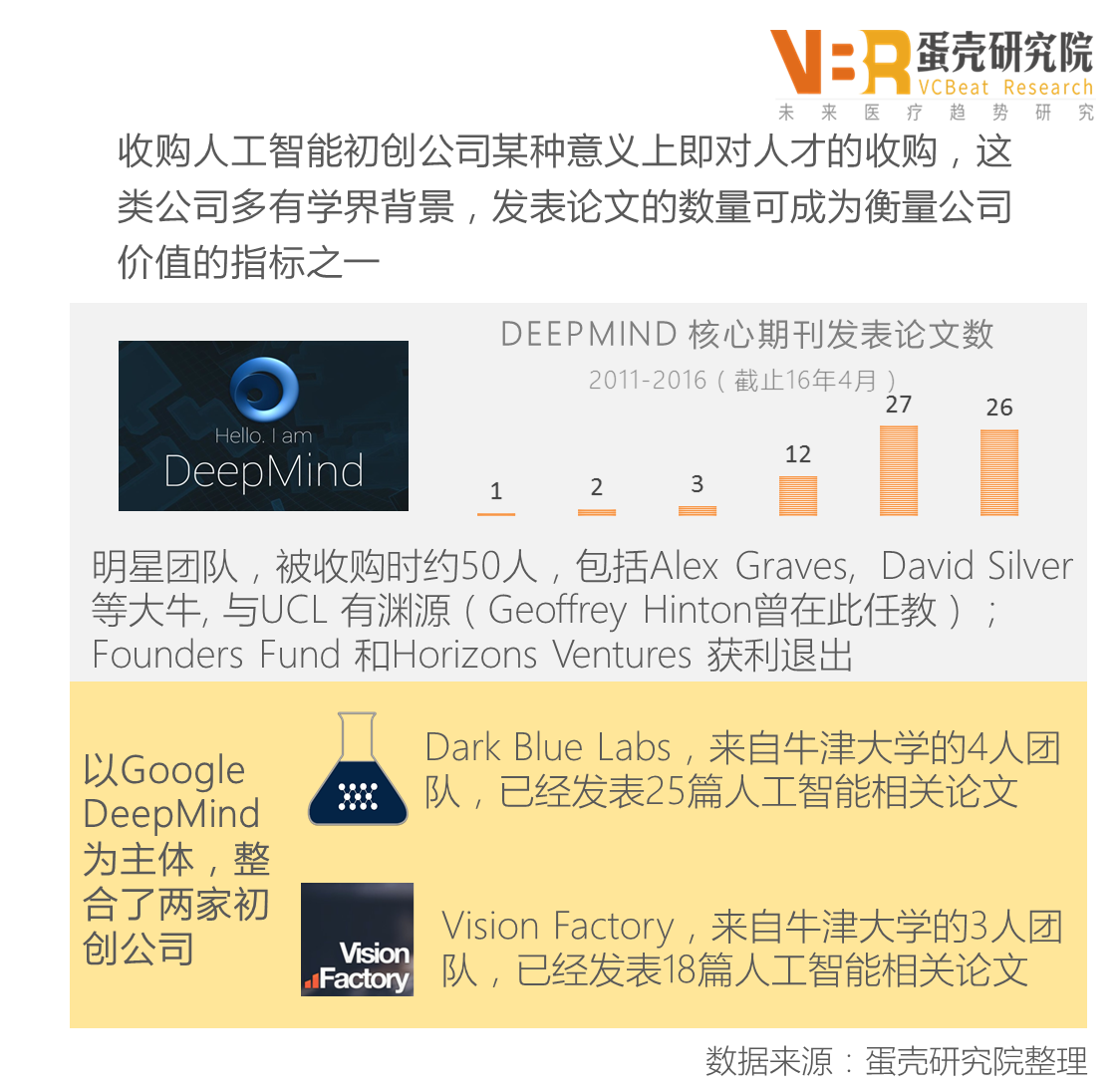
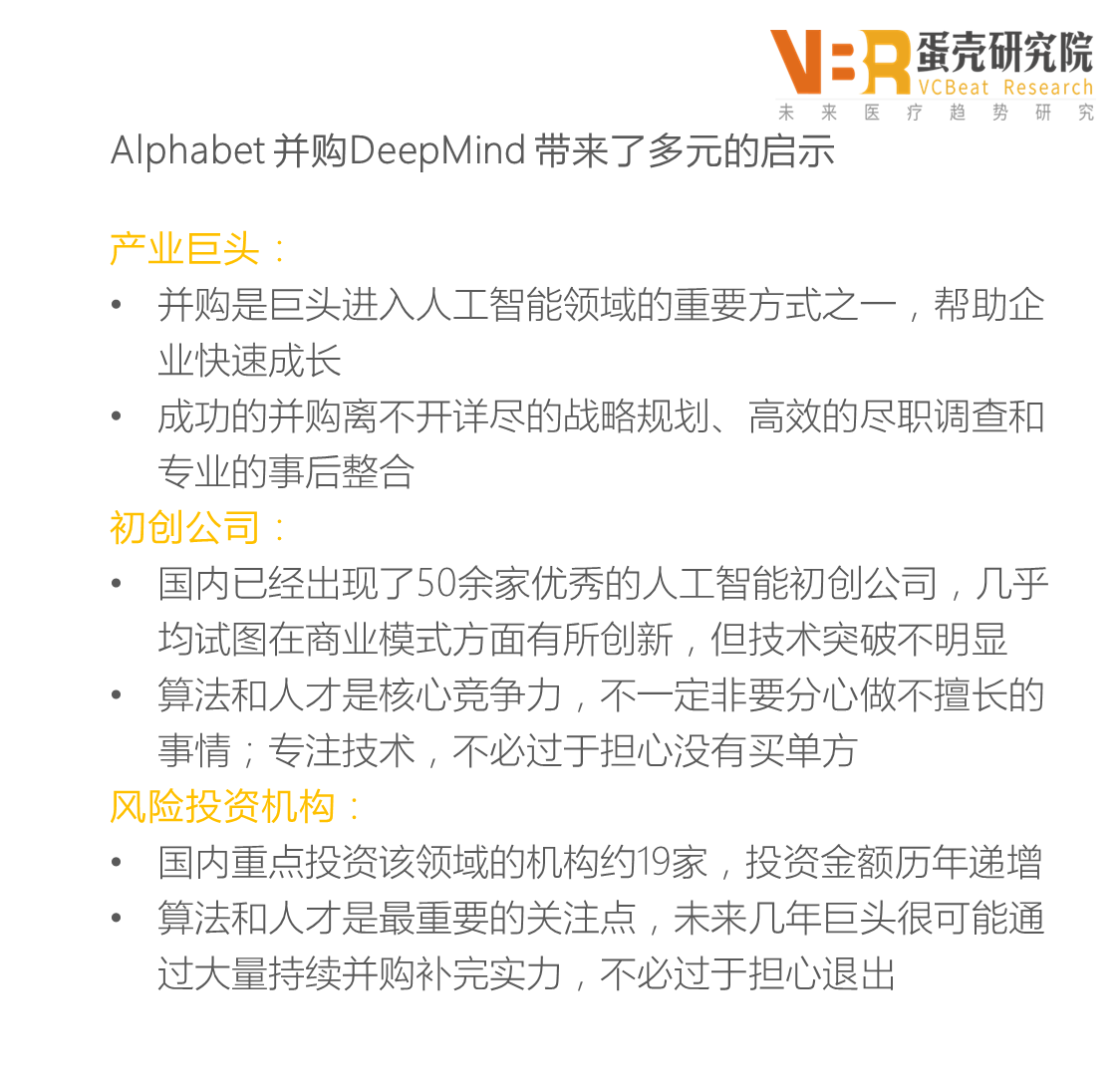
Alphabet has been actively engaged in acquisitions since its early days, completing a total of 181 transactions, including 12 in the artificial intelligence sector (covering deals before its restructuring into Alphabet and those primarily centered on DeepMind). Mergers and acquisitions constitute a complex systematic endeavor, in which Alphabet serves as a model of success. Its strategic planning prior to acquisition, due diligence during the process, and post-merger resource integration offer valuable lessons for Chinese internet companies.
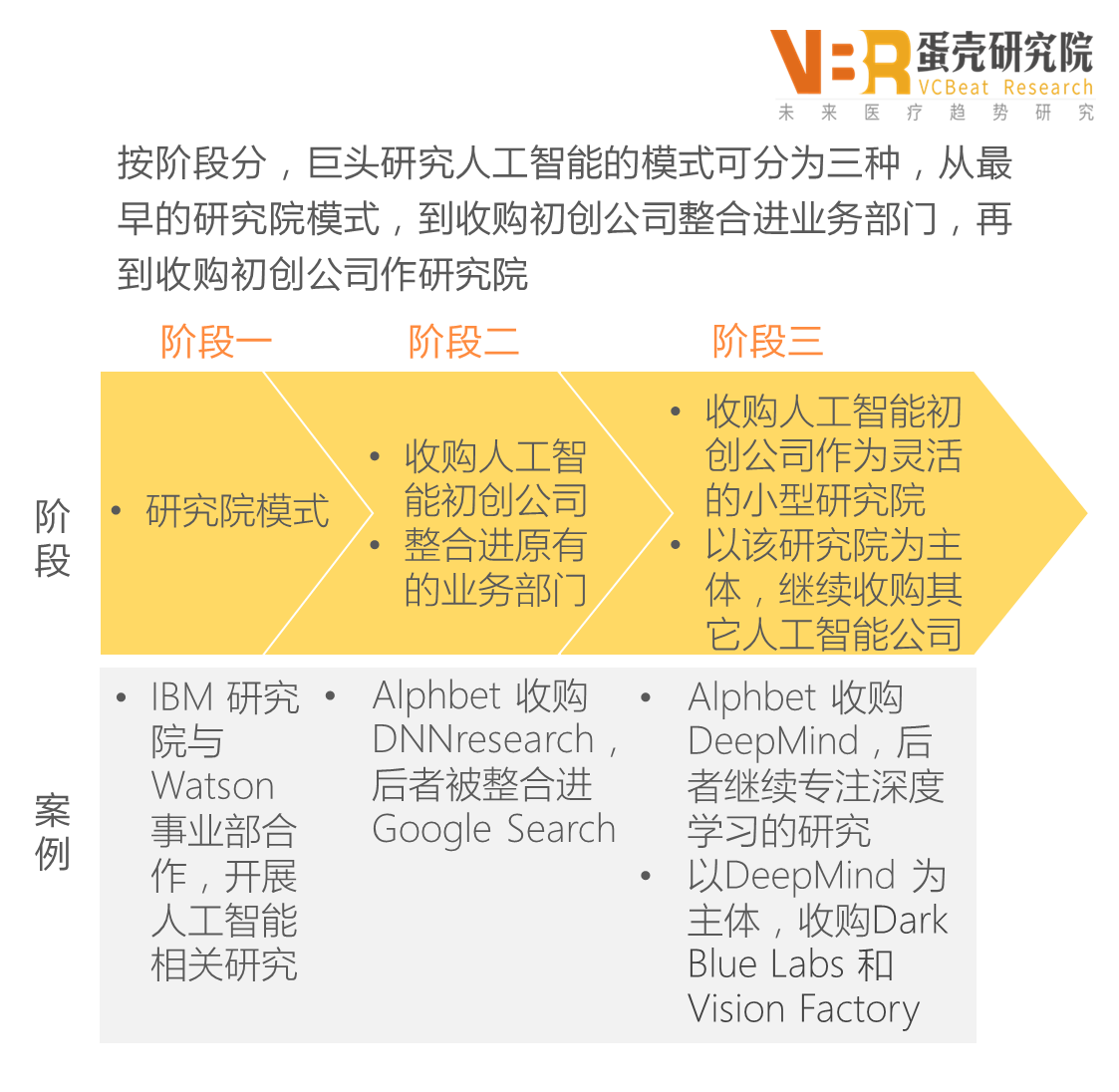
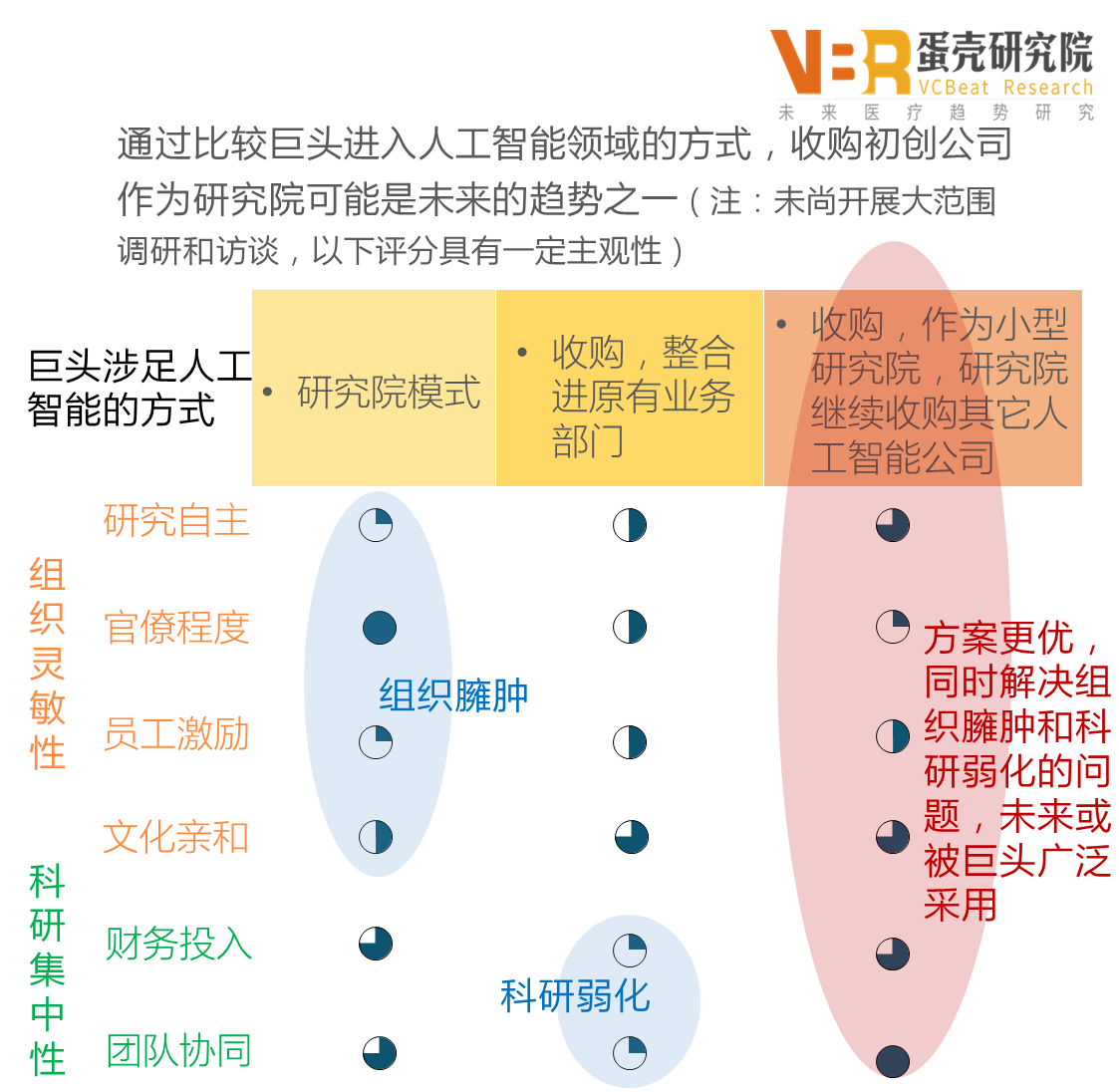
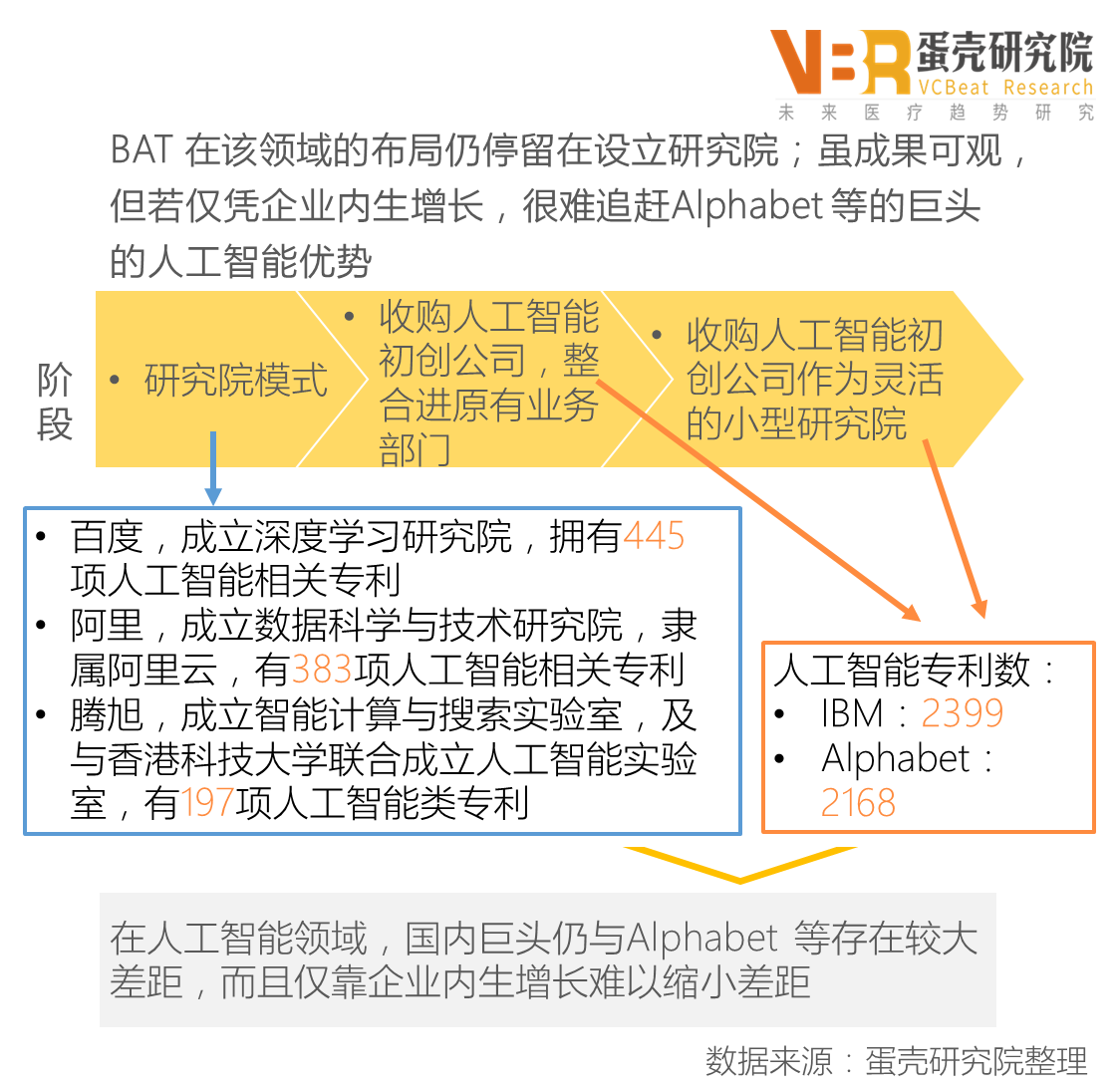
The evolution of AI research among industry giants can be divided into three stages: from establishing in-house research institutes, to acquiring startups and integrating them into business units, and finally to acquiring startups as agile, small-scale research entities. Most Chinese industrial giants remain at the stage of setting up AI research institutes, which presents opportunities for venture capital firms investing in related startups.