

Augmented Reality in Healthcare: Future Vision Files IPO Prospectus
[VCBeat Note] This article features key insights shared by Mo Renying, a researcher at VCBeat Eggshell Research Institute (WeChat ID: moluo1111), during the 18th session of “Tai Tanbai,” a WeChat open lecture series under TMTPost.
Topic: How Is AR, Which Better Represents the Future Than VR, Capturing a Share of the Healthcare Market?
I believe everyone has noticed a phenomenon: VR is currently in the spotlight, thriving in gaming, entertainment, and social applications. Can AR better represent the future? This question is rather broad. However, if we judge solely by the final application outcomes, I am more optimistic about the integration of AR with various industries.
According to Digi-Capital’s estimates, the global AR market will reach $120 billion by 2020, while the VR market will amount to only $30 billion. Of course, this data should not lead us to overlook the importance of either technology; each has its own application scenarios and value. In certain cases, the two technologies may even overlap in their applications.
Currently, the most widely discussed AR applications are entertainment-oriented apps running on smartphones or tablets. In contrast, my focus lies within the healthcare sector, which includes applications such as medical simulation, minimally invasive surgery, and rehabilitation. Here, I would like to discuss the current state of this industry, provide some contemporary examples of AR applications in healthcare, and finally offer my personal perspective on the future development trends, risks, and challenges associated with AR in medical settings.
Industry: The application of AR in the healthcare sector is still in the exploratory phase of a blue ocean market.
According to the latest statistics from AR in China, there are now over 200 companies engaged in AR application development domestically. Of these, 80% tend to focus on developing gaming applications, while the remainder primarily lean toward lifestyle-oriented applications such as film/TV and shopping. In contrast, based on publicly available information, it is estimated that no more than 10 companies are currently dedicated to applications in the medical and health sector.
Overseas, comprehensive data from CB Insights, Crunchbase, and AngelList indicate that approximately 30 startups are currently focusing on AR applications in the medical field. Among them, nine startups have secured financing, with a total funding amount of $552 million and a funding success rate of 30%.
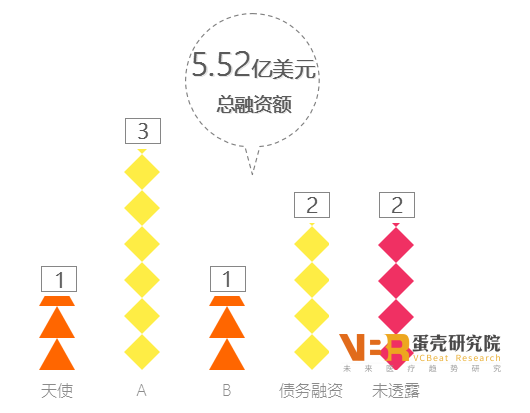
The funded projects primarily serve three categories of clients: healthcare institutions, laboratories, and the visually impaired. Among these, solutions targeting healthcare institutions mainly focus on virtual patient information, vascular illumination, surgical education, surgical navigation, and simulated surgical training. In other words, projects that penetrate the market by serving business-to-business (B2B) clients attract greater attention from capital investors. Consequently, on a global scale, the application of augmented reality (AR) in the healthcare sector remains in an exploratory phase within a blue ocean market.
In the AR healthcare application industry chain, companies are currently primarily categorized into four segments: terminal devices, software, content, and applications. These companies provide hardware and PC-based application software to end-users, with most generating revenue through direct sales of their products.

Currently, the market remains far from mature. Nevertheless, it has still attracted some pioneering industry giants to participate.
The most renowned example is Microsoft’s HoloLens holographic headset. In official promotional videos, medical researchers can use HoloLens to visualize the structures of human organs, muscle tissues, and skeletal systems, making it currently the most technologically advanced AR device. Additionally, there is a 3D augmented reality system designed by the gaming giant Illusion to help surgeons perform cosmetic procedures more effectively. Furthermore, Philips Healthcare and Accenture have jointly developed an AR application that enables physicians to monitor patients’ vital signs in real time and receive alerts when potential risks are detected.
Based on the application distribution among diversified industrial conglomerates and startups, statistical analysis indicates that the current market is segmented into approximately 20 fields:

Example: The application of AR in the healthcare sector is still in its early exploratory stage.
The first is related to vascular visualization, using PC-based software applications to assist medical personnel in viewing hidden blood vessels during surgery.
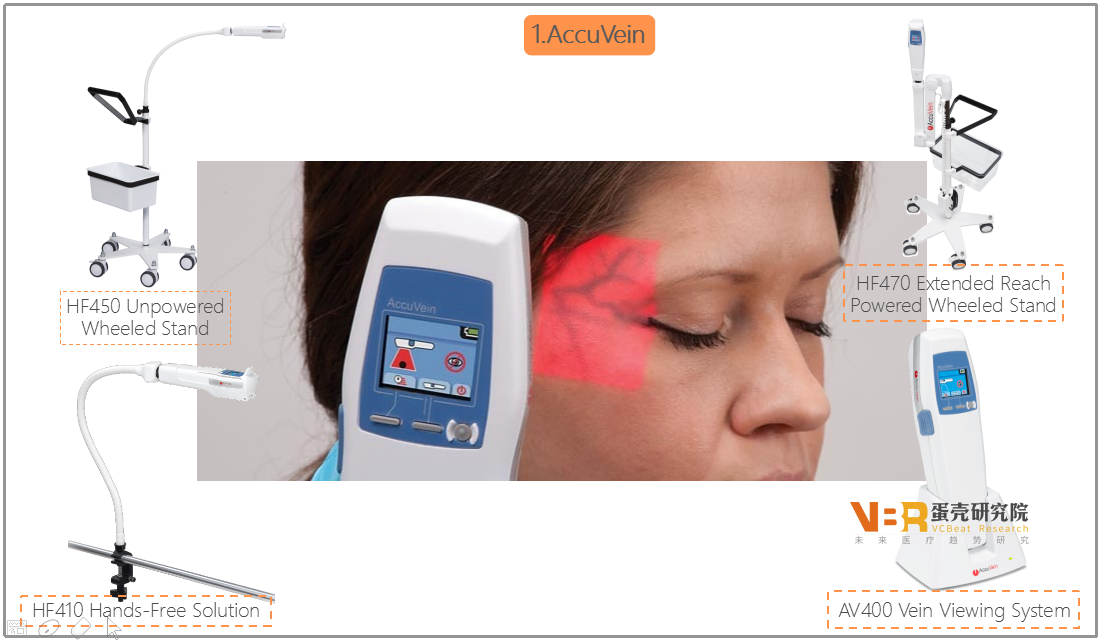
AccuVein has developed four product models tailored to different scenarios. These devices are designed to be directly projected onto the skin surface during procedures such as venipuncture, blood draw, sclerotherapy, general surgery, and cosmetic surgery, visualizing vascular patterns to facilitate vein localization.
The second is a case study on the visualization of medical device marketing.
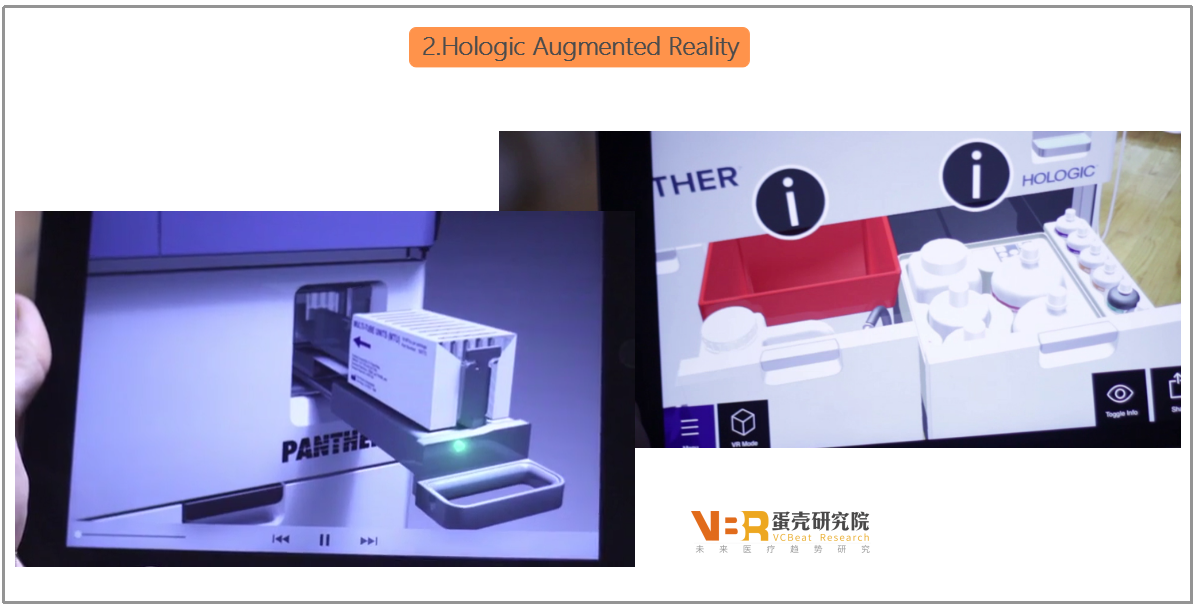
Hologic is a company dedicated to developing imaging systems and diagnostic testing products for women’s health. It has developed the Hologic Augmented Reality app, which provides target users with an intuitive visual experience and real-time interactivity prior to purchasing equipment. Furthermore, Hologic sales representatives can use this 3D augmented reality tool to demonstrate clinical applications anytime and anywhere, showing users how medical devices integrate into existing setups.
Finally, we share with you the application of OrCam in visual navigation. It mainly relies on a head-mounted display and portable accessories based on a camera-enhanced reality system, allowing people with impaired vision to move freely and read.
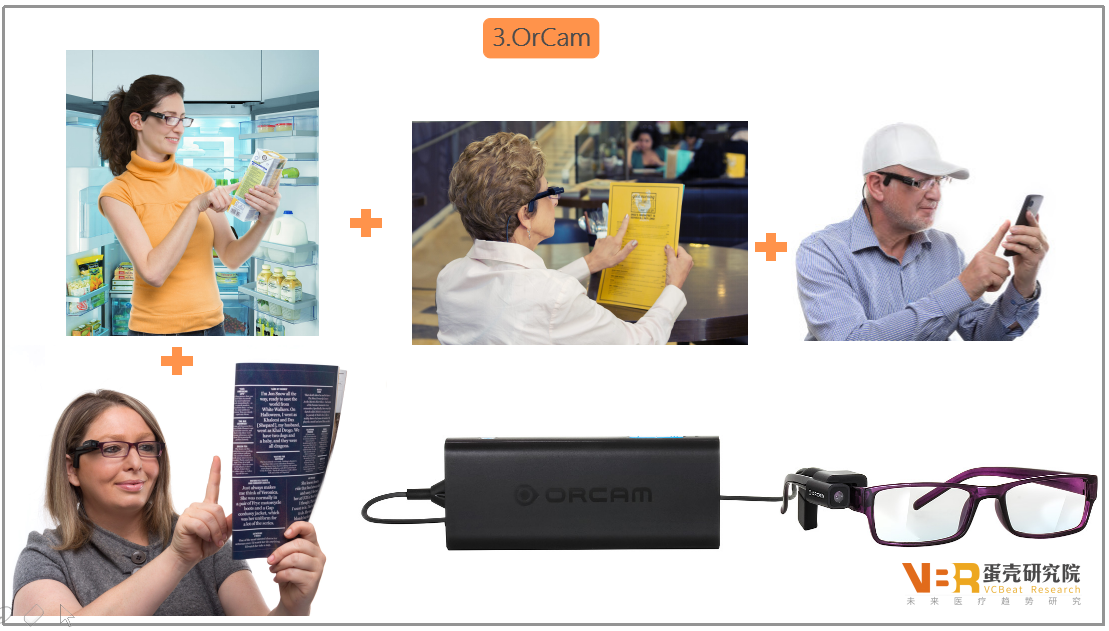
A camera attached to the eyeglass frame via magnets is connected to a pocket-sized portable computer through a thin cable. Meanwhile, bone-conduction speakers clearly convey the interpreted content—such as newspapers, street signs, traffic lights, and faces—to the user.
Overall, the application of AR in the healthcare sector remains in an early exploratory phase driven by startup innovation, far from entering a stage of intense, large-scale competition.
Currently, the primary business models are B2B and B2C:
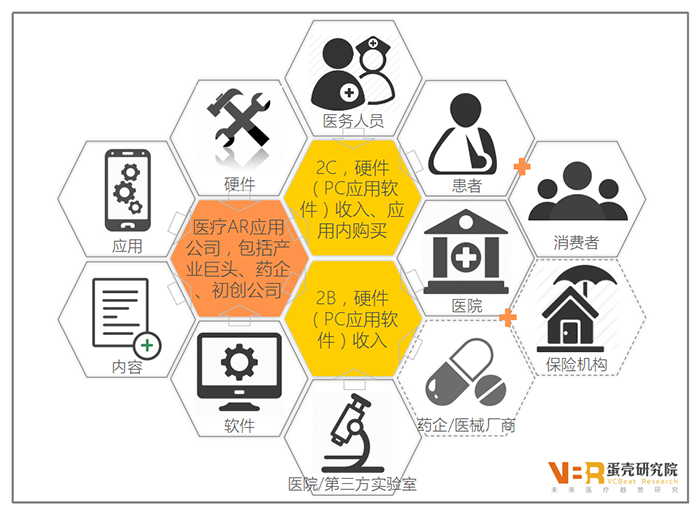
The B-side primarily comprises hospitals and third-party laboratories, to which we provide hardware (head-mounted displays and handheld devices) and PC-based application software for revenue generation. For the broader healthcare system, future efforts will intensify development for B-side users (as indicated by the dashed lines in the figure above), such as pharmaceutical companies and medical device manufacturers. Since drug and equipment sales are influenced by policy and market dynamics, hardware and applications designed to support sales will deliver more intuitive and realistic experiences to users.
On the consumer side, which primarily comprises healthcare professionals, patients, and general consumers, revenue is mainly derived from hardware sales and in-app purchases; however, achieving comprehensive coverage of this demographic remains a distant goal.
Future models will undoubtedly become increasingly diversified, and the products offered will be richer. For instance, surgeons can leverage precise graphics and text provided by AR medical applications to guide them step-by-step through entire surgical procedures; emergency responders can use AR head-mounted displays to direct on-site medical personnel in implementing targeted resuscitation measures, thereby preventing missed opportunities for optimal emergency care due to delays.
Trend: A Growing Proportion of Clients from the Industrial and Commercial Sectors
When forecasting future trends from the perspectives of participants, sub-sectors, and product categories, my personal view is:
Industry giants and healthcare incumbents (traditional pharmaceutical companies/medical device manufacturers) are continuously entering the market, leading to an increasingly complete industry chain;
The niche sector is dominated by surgical assistance tools, such as PC-based software applications for navigation visualization and anatomical teaching in surgery. Additionally, there will be an increase in mobile apps designed for pharmaceutical and medical device marketing, targeting traditional pharmaceutical companies and medical equipment manufacturers.
The product category primarily consists of specific PC application software, but it should ideally assist physicians in handling routine tasks, thereby freeing their hands;
The target clientele primarily originates from the industrial and commercial sectors rather than the consumer sector, such as hospital operating rooms and third-party laboratories.
According to a study published in The Lancet, 5 billion people worldwide lack access to safe and affordable surgical care. Each year, 143 million simple surgical procedures need to be performed, requiring 2.2 million surgeons. In terms of AR applications for surgical navigation, both head-mounted displays and PC-based software represent potential areas of application.
Finally, two primary risks must be highlighted: data privacy and security, and technical challenges. For instance, achieving a high level of performance in field-of-view display and natural gesture interaction presents a significant barrier. Of course, any application adopting new technologies will face such circumstances.
I believe that entrepreneurs deeply engaged in this field need to remember only one principle: remain patient and committed to researching the applications of AR in healthcare, rather than relying on hype. Do not expect to quickly find a breakthrough to profitability.
★★★★★Those who have conducted research on or are interested in the applications of VR/AR/MR in the healthcare sector are welcome to contact the author (WeChat ID:moluo1111) Communication★★★★★