

Big Data Application in Tiered Diagnosis and Treatment: Sichuan Province's Innovative Practices and Monitoring Platform Development
In September 2015, the General Office of the State Council issued the Guiding Opinions on Advancing the Development of a Tiered Diagnosis and Treatment System. The Guiding Opinions explicitly stated: “Develop internet-based medical and health services, and fully leverage the role of information technologies such as the internet and big data in the tiered diagnosis and treatment system.”
Applying big data to the development of a tiered diagnosis and treatment system tests the synergy and depth of collaboration among governments, healthcare institutions, research institutes, and enterprises. In 2015, the Sichuan Provincial Health and Family Planning Information Center collaborated with the Big Data Research Center at the University of Electronic Science and Technology of China. Through in-depth research and practical implementation, the two parties established a monitoring and evaluation platform for big data-enabled tiered diagnosis and treatment within less than six months. This collaboration not only significantly advanced the application and research of medical big data in Sichuan Province but also provided a valuable case study for medical big data practices across China.
To gain a detailed understanding of the specifics of this collaboration, VCBeat conducted an exclusive interview with Qiu Hang, Director of the Institute of Health Big Data at the Big Data Research Center of the University of Electronic Science and Technology of China.
Background of Cooperation
According to Qiu Hang, the Sichuan Province Tiered Diagnosis and Treatment Monitoring and Evaluation Plan, formulated in early 2015, primarily adopted a combination of basic information assessment and on-site inspection. The advantage of this evaluation approach lies in its ability to provide an overall grasp of the implementation progress of tiered diagnosis and treatment systems across medical institutions at all levels and within various regions. However, it also has certain limitations, mainly reflected in the limited dimensions of data available for analysis, which makes it difficult to uncover underlying issues and identify the core factors influencing the advancement of the system.
If big data analytics are employed, the correlations within the data can facilitate overall data flow, thereby clearly revealing the information underlying the data.
Based on the aforementioned reasons, in June 2015, the Sichuan Provincial Health and Family Planning Information Center and the Big Data Research Center of the University of Electronic Science and Technology of China initiated the “Sichuan Provincial Hierarchical Diagnosis and Treatment Big Data Monitoring and Evaluation Platform” project.
“By leveraging big data technology to support the monitoring and evaluation of tiered diagnosis and treatment, both parties are transitioning from ‘experience-based decision-making’ to ‘data-assisted decision-making,’ ultimately achieving ‘data-driven decision-making.’ This approach lets the data speak for itself, providing a scientific basis for the allocation of medical resources and the monitoring, evaluation, and assessment of tiered diagnosis and treatment, thereby offering crucial support for government authorities in maintaining comprehensive oversight,” said Qiu Hang.
Environmental Advantages
As a populous province in China, Sichuan has substantial demand for medical services. Meanwhile, it faces insufficient medical resources and significant disparities between urban and rural areas as well as across regions. The province is home to high-quality, large-scale hospitals such as West China Hospital of Sichuan University, which ranks second nationwide in comprehensive strength, as well as small and medium-sized medical institutions in old revolutionary base areas and impoverished mountainous regions. Therefore, ensuring that residents have equitable access to high-quality medical resources for serious illnesses and can manage common and frequently occurring diseases at the primary care level is more urgent in Sichuan than in other provinces.
On September 17, 2014, the Sichuan Provincial Health and Family Planning Commission, the Provincial Development and Reform Commission, and four other departments jointly formulated and issued the "Opinions on Establishing and Improving the Tiered Diagnosis and Treatment System." Since then, Sichuan Province has fully implemented the tiered diagnosis and treatment system, introducing numerous policies to promote its development. As a result, Sichuan became the first populous province in China to establish a tiered diagnosis and treatment system across its entire jurisdiction.
Two Major Centers
Regarding the division of labor in this collaboration, Qiu Hang told VCBeat: “The Sichuan Provincial Health and Family Planning Information Center is led by Director Long Hu, with core members including Deputy Director Pan Jingping, Duan Zhanqi, Head of the Statistics Department, and Deng Ren, Head of the Big Data Department. They are primarily responsible for data support (including New Rural Cooperative Medical Scheme data, medical record front-page data, and data related to tiered diagnosis and treatment), data cleaning, and operational guidance. The Big Data Research Center at the University of Electronic Science and Technology of China is led by its Director, Professor Zhou Tao, with key personnel including Professor Qiu Hang, Director of the Institute of Health Big Data within the Big Data Research Center, and Professor Fu Bo. They are mainly responsible for data mining and analysis. The two centers leverage their complementary strengths, foster mutual trust and communication, and engage in multi-level, comprehensive cooperation focused on matters related to tiered diagnosis and treatment.”
It is reported that the Sichuan Provincial Health and Family Planning Information Center is an affiliate of the Sichuan Provincial Health and Family Planning Commission. It is primarily responsible for undertaking the development of health and family planning informatization, participating in the construction of the basic population information database, and promoting the establishment of a mechanism for the comprehensive development and sharing of health and family planning information resources. Additionally, it undertakes statistical management tasks such as health and family planning statistical surveys and analysis, monitors population development trends related to family planning, and provides recommendations for issuing early warnings and forecasts on family planning safety.
The Big Data Research Center at the University of Electronic Science and Technology of China is currently the largest and most comprehensively structured integrated institution for industry, academia, and research in big data in China. The Center comprises six institutes, including the Institute of Health Big Data, the Institute of Security Big Data, and the Institute of Education Big Data. The Institute of Health Big Data focuses on the entire lifecycle of medical and health data—covering acquisition, processing, storage, analysis, visualization, and application services. It is dedicated to conducting fundamental theoretical research, tackling key technological challenges, and promoting applications in areas such as anomaly detection in medical data, health-related public opinion analysis and monitoring, big data-assisted disease diagnosis, and big data-based supervision of medical insurance.
Three Core Pillars
In the big data monitoring platform jointly developed by both parties, patients serve as the core, complemented by diseases and medical institutions, forming the three primary entities of big data analysis. In addition to presenting the characteristics of these three entities, the platform also displays service provision and utilization patterns, along with the key factors influencing them, while conducting in-depth analysis across three administrative levels: provincial, municipal, and district/county. By fully leveraging the advantages of big data, this system supplements Sichuan Province’s existing analytical mechanisms, thereby enhancing governmental oversight of data outcomes and facilitating subsequent policy adjustments.
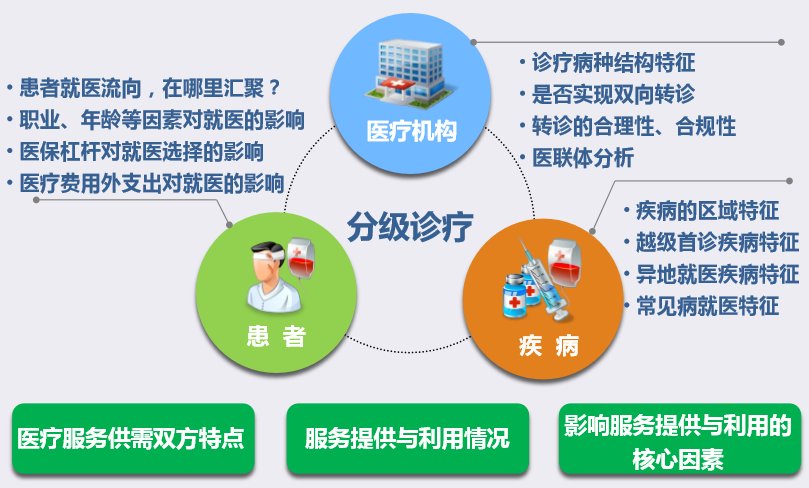
The Three Core Pillars: Patients, Diseases, and Healthcare Institutions
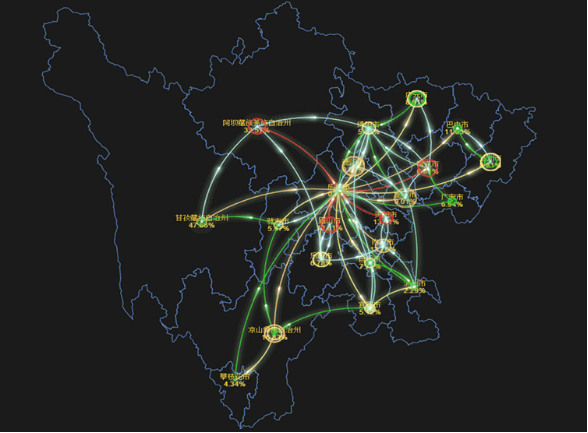
Visualization of Patient Flow Across the Province
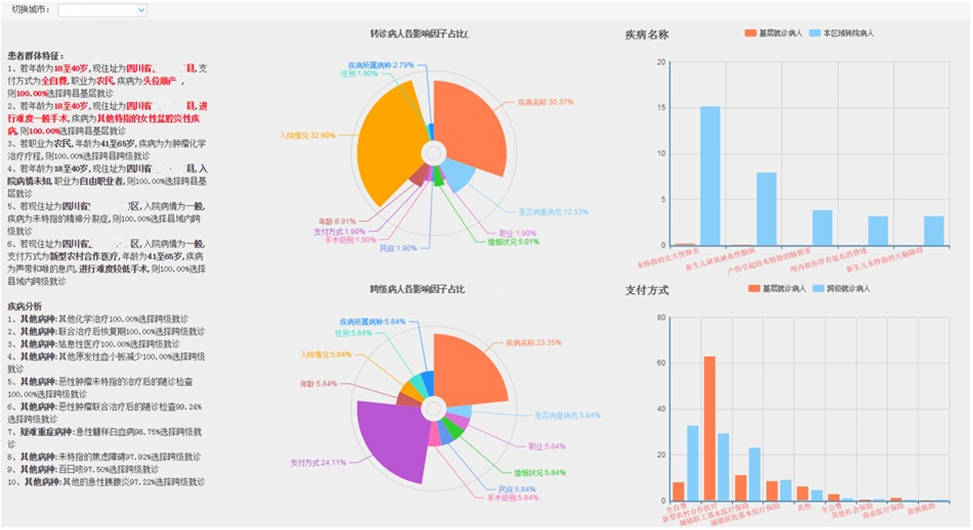
Multidimensional Patient Characteristic Analysis by Region
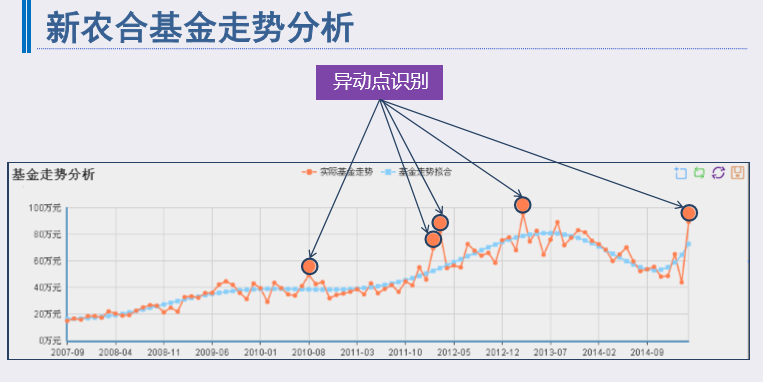
Prediction and Analysis of the Trend of Regional New Rural Cooperative Medical Scheme Funds
Project Achievements
Since the collaboration began in May 2015, the practical application of the “Sichuan Provincial Tiered Diagnosis and Treatment Big Data Monitoring and Evaluation Platform” has helped the Sichuan Provincial Health and Family Planning Commission gain better insights into patient flow. Through comprehensive analysis of patients, diseases, and medical institutions, health authorities have gained a clear understanding of the reasons behind patient referrals and cross-level healthcare seeking, thereby constructing multi-dimensional and precise patient profiles. Furthermore, by analyzing intra-county consultation rates for common, frequently occurring, and chronic diseases, the platform has assisted competent authorities in comprehensively assessing and managing the service capacity of primary healthcare facilities.
It is reported that Sichuan Province has adopted multiple measures, leveraging information technology and big data to support the implementation of the tiered diagnosis and treatment system, with initial progress already evident. By the end of 2015, the year-on-year growth in outpatient and emergency visits at county- and township-level medical institutions in Sichuan reached 5.4%, and the proportion of patients treated within their respective counties attained 88.37%. Meanwhile, the growth rates of outpatient and emergency visits and hospital discharges at large provincial- and municipal-level medical institutions decreased by 4.68% and 4.38%, respectively, compared with the average levels of the preceding three years.
Future Focus
Regarding the future work of the project team, Qiu Hang revealed that the focus will be on advancing technologies for big data analytics platforms:
Prediction Methods: Employ advanced data mining techniques, such as time series analysis, to forecast patient flow direction and volume.
Association Analysis: By leveraging big data association analysis algorithms, this approach identifies correlations among diseases, providing a basis for clinical diagnosis and supporting the implementation of Diagnosis-Related Groups (DRGs) payment systems, ultimately achieving the goals of aiding diagnosis and controlling healthcare costs.
Service Extension: The results of data analysis are not limited to decision-makers or statisticians; useful insights derived from them can also be made accessible to patients. For instance, by comparing the costs and treatment outcomes of care received outside versus within the county for common diseases, patients can be guided to seek medical attention within their local county.
Application Scenarios
Regarding future application scenarios, Qiu Hang also revealed, “The big data analytics platform plans to expand its operations into more areas of healthcare and medicine.”
Decision Support: Customized functionalities can be developed for each department to address the specific needs of management teams across various divisions.
Supervision and Evaluation: At the current stage, the primary focus is on supervising and evaluating the advancement of tiered diagnosis and treatment, assessing implementation status across various districts, counties, and medical institutions, and comprehensively evaluating the effectiveness of the tiered diagnosis and treatment system. In the future, real-time monitoring capabilities powered by big data can be incorporated to enable rapid response to various emergencies.
Healthcare Cost Containment: Advanced big data analytics can be leveraged to predict and evaluate the rationality of medical expenditures. Examples include promoting rational drug use by physicians and implementing Diagnosis-Related Groups (DRGs) payment models.
Disease Prevention and Control: As the tiered diagnosis and treatment system is gradually improved and established, big data analytics can be leveraged to strengthen disease prevention and control as well as health management, thereby achieving the integration of prevention and treatment. This will truly realize the application of big data technology to serve China’s healthcare sector.