

Talent Shortage, Not Hardware, Is the Biggest Challenge for Tiered Diagnosis System: 365 Hospital Network Files IPO Prospectus
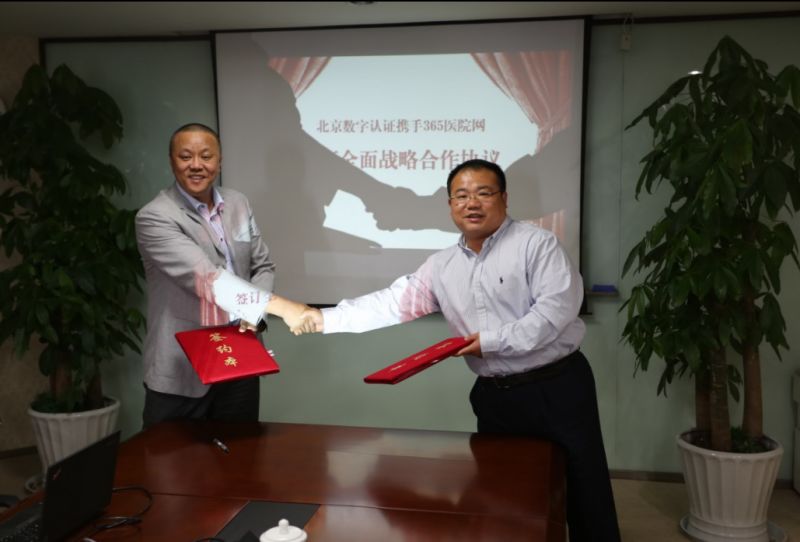
365 Hospital Network Signs Comprehensive Strategic Cooperation Agreement with Beijing Digital Certification Co., Ltd.
Although large medical institutions concentrate numerous high-quality medical resources, they still fail to meet the public’s growing demand for healthcare services. In recent years, the state has increased policy-driven investments in primary care, leading to gradual improvements in the hardware conditions of primary healthcare institutions; however, the shortage of talent remains a persistent challenge that cannot be alleviated in the short term. Telemedicine, which integrates “Internet+” with healthcare services, offers a potential solution. The telemedicine information service platform launched by 365 Hospital Network may help mitigate the scarcity of high-level professionals at the primary care level.
Primary Care Hospitals Struggle to Recruit Top-Tier Talent
“Primary Hospitals Unable to Attract PhDs Despite Offering 300,000 Yuan” – A News Report on Grassroots Medical InstitutionsHospitals have spared no expense in offering high salaries to recruit physicians with doctoral degrees to work at the grassroots level, yet few applicants have come forward. Many other news reports similarly highlight staff shortages and high turnover rates in primary healthcare institutions. The underlying reasons are none other than inadequate hospital facilities, low income, and limited professional growth opportunities.
With the state’s increasing emphasis on tiered diagnosis and treatment, equipment in primary healthcare institutions is becoming increasingly high-end and advanced, gradually narrowing the gap with large hospitals. Primary healthcare institutions are progressively acquiring the hardware foundation necessary for diagnostic examinations of certain complex and major diseases. However, the allocation of highly skilled professionals remains inadequate, resulting in a disproportionate investment between personnel and equipment. To some extent, this prevents primary healthcare institutions from fully realizing the value of their high-end equipment.
Professor Kong Xiangquan of Union Hospital, Tongji Medical College, Huazhong University of Science and Technology, stated that the majority of high-level medical professionals hold doctoral degrees from medical schools and tend to concentrate in large hospitals or teaching hospitals upon graduation, making it difficult for such talent to trickle down to primary care institutions. The state must identify a solution to facilitate the deployment of talent to the grassroots level.
High Targets for First-Contact Visits at Primary Care Level in Tiered Diagnosis and Treatment: An Unattainable Goal
In accordance with the national requirements for tiered diagnosis and treatment, the initial consultation rate at primary healthcare institutions must exceed 65% and continue to rise gradually. In response to this mandate, Dan Qin, President of a primary hospital, explicitly stated that such targets are unattainable. Although primary hospitals are equipped with advanced medical devices, they lack personnel capable of mastering and applying these technologies. Consequently, even when patients undergo examinations using high-end equipment, the accuracy of diagnostic results cannot be guaranteed. Telemedicine information platforms can help alleviate the uneven distribution of specialized medical talent, facilitate the effective implementation of tiered diagnosis and treatment, and ensure that residents in grassroots communities have access to affordable healthcare services.
Decentralizing Medical Capabilities Is Key
Yang Haolin, founder of 365 Hospital Network, stated, “The national push for tiered diagnosis and treatment aims to address healthcare access for the entire population, rather than solving individual cases. Without decentralizing medical capabilities, a simplistic approach to tiered diagnosis and treatment cannot be successfully implemented. Through our efforts in business operations, we hope to help patients access expert services and support within the existing healthcare system. Only then will patients have the willingness and confidence to receive treatment at primary care institutions. Against the backdrop of macro-level policy support, telemedicine is bound to present significant opportunities.” 365 Hospital Network, affiliated with Yijia Interconnection (Wuhan) Information Technology Co., Ltd., is a telemedicine information service platform centered on primary healthcare institutions. On this platform, each primary hospital can establish its own ecosystem with itself as the core. Its emergence aligns well with the industry’s momentum toward tiered diagnosis and treatment.
Digital Certification Safeguards Telemedicine
In 2009, national policies promoted the adoption of electronic medical records (EMRs) in hospitals, and Beijing Digital Certification Co., Ltd. began to engage in signature authentication for EMRs in the healthcare sector. To date, the penetration rate of EMRs in traditional hospitals has become very high. However, EMRs are not exclusive to large tertiary hospitals; their widespread application has brought significant benefits to primary care institutions. Internet-based healthcare and EMRs have connected primary care facilities with large hospitals, thereby narrowing the gap between them.
It is reported that on May 13, Beijing Digital Certification Authority joined hands with 365 Hospital Network to launch a comprehensive strategic partnership. Yang Haolin told VCBeat, “The internet healthcare industry is booming, and related services are being improved; however, regulatory constraints on internet-based medical practices are currently lacking. In terms of promoting the development of the internet healthcare industry, maintaining the seriousness of medical practice, and ensuring the quality of care, we and”Beijing Digital Certification“Their shared mission created an immediate alignment, thereby facilitating this collaboration.”
Zhang Zhifeng, General Manager of the Healthcare Division at Beijing Digital Certification Authority, stated thatBeijing Digital CertificationThe core business focuses on electronic certification (digital signatures) and identity authentication. In the healthcare industry, as the adoption of electronic medical records (EMRs) continues to expand, electronic certification is essential to prevent arbitrary tampering with electronic data. In recent years, digital signatures have gradually become widespread within hospitals, leading to stronger self-discipline among physicians and a significant improvement in the overall quality of medical records. Given the critical nature of medical liability, the internet healthcare sector is booming but still faces policy barriers and legal challenges, with key issues including the determination of medical liability.
This collaboration between Beijing Digital Certificate Authority and the 365 Hospital Network Platform ensures that every medical record and prescription is digitally “signed,” providing technical support to uphold the seriousness of medical practice and guarantee medical quality. Furthermore, it enables evidence preservation to resolve potential legal disputes.
Technically, a digital signature is a unique string of data that can only be generated by the information sender and cannot be forged by others. This string also serves as valid proof of the authenticity of the information sent by the sender. It ensures the integrity of information transmission, authenticates the sender's identity, and prevents repudiation in transactions. According to reports, digital signatures are compatible with various clients; users can simply activate the tool when a signature is required, making the process highly convenient.