

"Global Imaging" Application Guide: Real-World Use Cases of Its Cloud Service Platform

LIANZHONG MEDICAL
Provider of Imaging Cloud Medical Service Platform
“Global Imaging” is a brand achievement developed by Hangzhou Lianzhong Medical Science Co., Ltd. over the past two years. Compared with traditional film, its cloud-based, internet-enabled, and digital development aligns with the favorable internet environment of the new era. Currently, “Global Imaging” has business coverage in nearly all provinces across China, except for Hainan and Qinghai. Key provinces include Zhejiang, Fujian, Guizhou, Sichuan, Hubei, Inner Mongolia, and Guangxi.
VCBeat recently interviewed Mr. Wang Ling, CTO of Hangzhou Lianzhong Medical, to gain an in-depth understanding of the practical application scenarios of the “Global Imaging” medical cloud service platform.
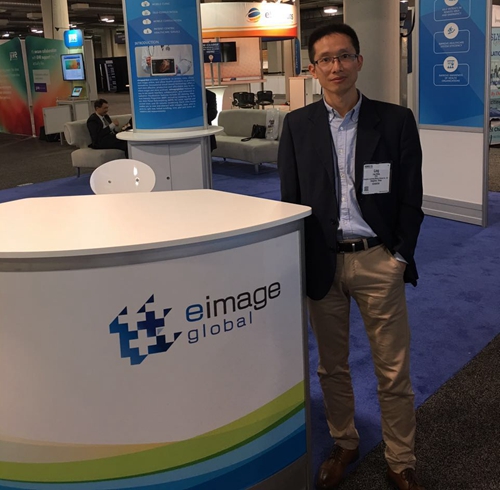
Mr. Wang Ling, CTO of Hangzhou Lianzhong Medical
Four Major Service Modules + Two Supporting Platforms: Making Healthcare Services Faster and More Effective
Currently, the "Global Imaging" medical cloud service platform is divided into four major service modules: medical big data cloud services, telemedicine cloud services, medical academic cloud services, and patient health management services. All services are hosted on two platforms: the "Global Imaging" WEB website and the Palm Cloud Doctor APP.
Application Scenarios for Hospitals and Physicians:
After completing patient imaging, physicians at primary care hospitals upload medical imaging data to the cloud via the “Global Imaging” medical cloud service system. They can then quickly and effectively identify appropriate imaging specialists by leveraging designated contracted departmental physicians, with configurable access permissions and prioritization settings. Specialists from tertiary hospitals can review patients’ original images anytime and anywhere using computer monitors or mobile devices such as smartphones, and proceed to draft or verify diagnostic reports, thereby assisting primary care hospitals in completing patient diagnosis and treatment.
When primary care hospitals encounter patients with complex or critical conditions requiring referral or remote consultation, traditional methods face several pain points: difficulty in extracting and collecting initial diagnostic data; challenges in transmitting large-volume data such as medical images; and the inconvenience for senior specialists who must be available at fixed times and locations. The “Global Imaging” cloud healthcare system addresses these pain points, enabling efficient and effective referrals and remote consultations. As the cloud-based system continues to improve and telemedicine and two-way referral models are more deeply implemented, unevenly distributed medical resources will be further integrated, providing significant support for the advancement of tiered diagnosis and treatment.
QR Code Film: A Transitional Product in the Digitalization Process
Mr. Wang Ling believes: “Paperless digital films are undoubtedly the future trend. However, there is a transitional process from traditional films to digital ones, and QR code-enabled films are products designed to align with this transition.。”
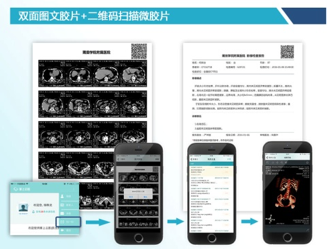
Currently, most hospitals in China still provide physical films (whether black films or paper films) to patients after imaging examinations. However, developed regions abroad have long phased out black films in favor of digital films. Both traditional black films and paper films exist in physical form, making them inconvenient for carrying, storage, sharing, and personal health information management. Meanwhile, with the widespread adoption of hospital PACS (Picture Archiving and Communication Systems), an increasing number of physicians are reviewing images on computer monitors rather than using traditional light boxes. With the proliferation of smartphones and various social applications, QR codes, as gateways to internet applications or content, have been rapidly promoted due to their convenience.
Patient Application Scenarios:
After completing radiological examinations at the hospital, patients can print illustrated reports with QR codes from self-service kiosks. By scanning the QR code with their mobile phones and verifying their identity through dual authentication using their phone number and national ID number, they can access electronic films and even the original full-sequence medical imaging data. Patients can save these images to a cloud storage account provided by "Global Imaging," allowing them to view, share, or send the images to others anytime and anywhere. Once electronic films are widely adopted, the system will automatically notify patients and push both the examination reports and electronic films after they complete radiological exams, thereby truly realizing digital imaging services.
Vertical Domain Research, Aimed at Precision Medicine
“Global Imaging” takes medical imaging in clinical diagnosis as its entry point. Based on big imaging data, it will next attempt to conduct in-depth vertical application research in specialty areas that are heavily reliant on imaging, such as oncology, vascular medicine, orthopedics, and breast health.
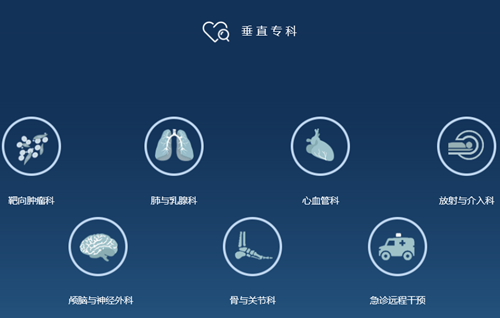
For example, the Precision Oncology Imaging Evaluation System currently under development. This system leverages clinical data from a cloud computing platform to enable early detection of tumors and intelligent assessment of their benign or malignant nature. By reconstructing 3D models of affected organs and tumor masses through an organ reconstruction and surgical simulation assistance system, and by analyzing multiple imaging examinations over a specific period, the system tracks tumor growth and spread. This facilitates precise preoperative assessment and surgical planning, enables quantitative evaluation of treatment efficacy, and ultimately achieves more accurate oncological diagnosis and therapeutic outcomes.
Three-Step Strategy: Steady Progress, One Step at a Time
“Hangzhou Lianzhong’s three-step strategy involves: first, achieving data integration and cloud storage; second, facilitating data trading and exchange to enable applications such as telemedicine and tiered diagnosis and treatment based on data interoperability; and third, performing data cleaning and analysis to realize intelligent applications,” said Mr. Wang Ling.
“Global Imaging” product planning closely follows strategic steps, divided into the following three directions:
I. Application expansion and innovation of traditional healthcare information platforms based on cloud architecture in the “Internet+” environment. Examples include: telemedicine and tiered diagnosis and treatment platforms with full data interoperability; third-party imaging diagnostic center platforms incorporating an internet-based order-grabbing model; and the application of facial recognition in scenarios such as personal identity authentication and online medical insurance payments.
II. Big Data Applications, such as: enabling clinical decision support, health insurance cost control, remote patient monitoring, and public health surveillance through big data analytics;
III. Artificial Intelligence Applications, such as: machine learning, automated image interpretation, and intelligent diagnosis.
“Global Imaging” establishes its current presence with a pragmatic approach, solidifying foundational tasks such as the acquisition, storage, and management of basic medical data through the development of systems like imaging cloud platforms. By strengthening data integration, it conducts in-depth research and development centered on the analysis and application of medical big data. Meanwhile, with an open and proactive attitude, it seeks various collaborations with experienced and qualified institutions and manufacturers within the industry.