

Allergen Detection Startup 6SensorLabs Rebrands as Nima Following $9.2M Funding Round
Recently, allergen testing company 6SensorLabs secured $9.2 million in investment. According to mobihealthnews, this round of financing was led by Foundry Group, with participation from Upfront Ventures, SoftTech VC, SK Ventures, Lemnos Labs, and Matt Rogers. This brings the company’s total funding to $14 million. Additionally, the company announced that it has been renamed Nima.
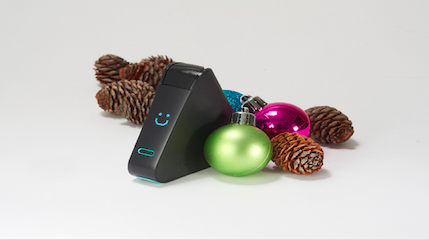
In theory, 6SensorLabs can monitor the ingredients and allergens in a wide variety of foods; however, it currently focuses solely on gluten detection. Gluten-free foods are highly popular in the United States due to the prevalence of gluten allergies. Shireen Yates, one of the founders of 6SensorLabs, suffered from gluten sensitivity for many years.
How do you plan to use the funds raised?
Shireen Yates, CEO of Nima, stated in a press release: “This round of financing enables Nima to continue developing a range of devices capable of detecting various proteins and other substances, helping as many people as possible lead healthier lives. The Nima brand has gained widespread acceptance and has become synonymous with our company and products. We are poised to launch new products building on the Nima platform, and Nima’s success will further strengthen our marketing efforts.”
Nima will use the funding to develop food testing devices for peanuts and dairy products, which are expected to launch in 2017. Meanwhile, Nima’s gluten detector is still in user testing, with the company planning to bring it to market in the second half of this year.
Nima’s first product, a gluten detector, has been available for pre-order since October 2015. Priced at $199, the kit includes the Nima sensor, three single-use sample capsules, a micro-USB cable, and a carrying case. To use it, users place a small food sample into one of the provided capsules and insert the capsule into the device. If the gluten content in the sample exceeds 20 parts per million (ppm), the device displays a sad face; if it is below 20 ppm, it shows a happy face. The entire testing process takes just two minutes. In addition to testing food and providing results, the sensor transmits data via Bluetooth to the user’s smartphone, allowing them to log and store the results of each meal.
Prior to this, Aydogan Ozcan’s laboratory at the University of California, Los Angeles (UCLA) attempted to develop a similar device, dubbed iTube. By integrating a spectrometer with an iPhone camera, the device was capable of identifying peanuts, almonds, eggs, gluten, and hazelnuts, and displaying their concentrations. To date, however, the device has not become a consumer product.
The Key to Food Testing Is Speed and Accuracy
Current gluten testing devices on the market require food samples to be crushed and involve the use of mortars, test tubes, pipettes, and test strips, making the detection process laborious and slow. The sensor developed by 6SensorLabs is an innovation built upon existing protein detection technologies, suitable for all types of food, and offers faster detection speeds compared to traditional methods.
There are many other products in this field, but their accuracy varies widely, and virtually none make any claims akin to effectively helping people prevent allergies. SCiO is a compact spectrometer that connects to smartphones for food analysis; it raised $2 million on the crowdfunding platform Indiegogo and secured approximately $5 million from the Silicon Valley venture capital firm Khosla Ventures. On its fundraising page, the company stated that SCiO is not a medical device and should not be relied upon to prevent various types of allergies. Another similar device, TellSpec, raised $380,000 on the crowdfunding platform Kickstarter, but the accuracy of its claimed detections has been called into question.