

Health580 Files IPO Prospectus: Leveraging Closed-Loop Data to Power Personalized Oncology Prevention, Treatment, and Rehabilitation Services
Health 580 is a platform connecting physicians, healthy individuals, high-risk populations, and patients. It establishes a closed-loop system for cancer prevention, treatment, and rehabilitation, providing end-to-end services for cancer patients or those at potential high risk. Users can leverage its mobile application to conduct comprehensive management of health risk factors for individuals or populations, including detection, analysis, assessment, and intervention. The platform offers free access to physician consultations and shares the latest medical technologies, while also building a bridge for interaction between doctors and patients, enabling online appointment scheduling for consultations and interpretation of medical reports. Meanwhile, Health 580 collects user data at every stage of the closed loop, laying the groundwork for subsequent big data analytics.
The platform was launched in March 2016. Within just over two months of its launch, it has accumulated more than 20,000 WeChat users and over 50,000 Weibo followers. There are more than 4,000 valid users available for data analysis, and the various services provided by the platform have been utilized by more than 200 user sessions.
The 400 Billion Yuan Oncology Market Is in Urgent Need of High-Quality Products
In the future, Health 580 aims to build a comprehensive health platform. The decision to start with the oncology sector is driven by the significant pain points and the vast market size in this field. Data shows that in China, one out of every six deaths is caused by cancer. According to the "2015 China Cancer Statistics," there were 4.292 million new cancer cases and 2.814 million cancer-related deaths in 2015 alone, equivalent to an average of 12,000 new cancer diagnoses and 7,500 cancer-related deaths per day. Furthermore, the number of new cancer cases globally is rising at an annual rate of 5%, with the demographic of patients becoming increasingly younger, predominantly affecting young and middle-aged adults.
In addition to the large patient population, high treatment costs are another characteristic of the oncology field. According to data from IMS Health, if we consider China’s annual new cancer cases at 4 million, with an average hospitalization cost of RMB 24,018 per patient, and take into account that patients typically require more than one hospital admission during treatment, the total expenditure amounts to approximately RMB 60,000–80,000. When maintenance therapy costs are further included, a conservative estimate places the total cost of cancer treatment at around RMB 100,000. Consequently, the overall market size for oncology healthcare has reached approximately RMB 400 billion.
With the improvement of living standards, the phenomenon of weak cancer prevention awareness has been alleviated, and people are paying more attention to their health. Meanwhile, as medical standards continue to rise, there are increasingly more effective treatment methods available. People have begun to proactively prevent cancer through cutting-edge detection technologies, dietary adjustments, and other measures.
Meanwhile, cancer patients and their families have also begun to proactively seek information on the latest technological advancements both domestically and internationally via the Internet. Their mindset is continuously evolving, with a growing willingness to accept combined treatment modalities involving radiotherapy, chemotherapy, targeted drug therapy, and emerging technologies.
Provide Personalized Closed-Loop Services
“Only refined and in-depth mobile medical + health service platforms can truly meet user needs. Generalized services such as appointment registration, online consultations, and light consultations seem difficult to address the pain points of users facing complex and serious diseases like cancer,” said Yun Peng, founder of Health 580, in an interview with VCBeat.
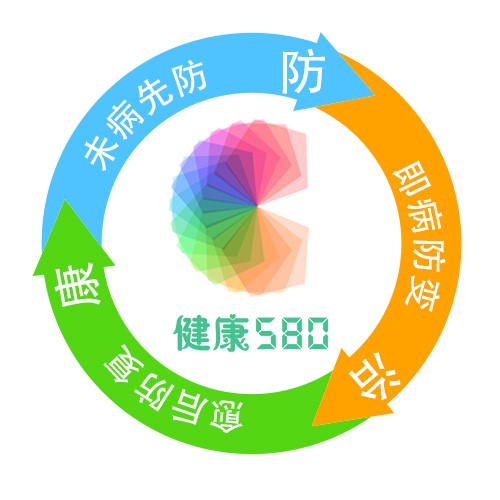
Health 580’s closed-loop service platform delivers refined mobile healthcare services through the seamless integration of online and offline channels, including health protection, genetic screening, tumor check-ups, cancer prevention guidance, mobile access to medical records and examination reports, overseas medical treatment, appointments with renowned specialists, and post-operative cancer rehabilitation care.
Yun Peng believes that the development model for current mobile medical service platforms should no longer focus on connecting individual steps in isolation; only a closed-loop system possesses greater vitality. He stated, “If a patient visits a platform and finds that it only offers appointment registration with no follow-up services, they may be reluctant to use it, as the limited services provided cannot facilitate systematic treatment. By offering closed-loop services encompassing prevention, treatment, and rehabilitation, patients are more likely to receive systematic and targeted care, unlike the experience at general hospitals.”
The Health 580 platform offers personalized services. For instance, when a user accesses the platform’s WeChat page, they can select categories such as “healthy individuals” or “high-risk populations.” Different selections lead to targeted services; for example, healthy individuals may opt for genetic screening or tumor risk assessment and analysis.
On the Health 580 platform, users can easily view the profiles and medical specialties of renowned oncology experts, allowing them to select specialists based on their individual needs. After completing an online appointment, patients can proceed with in-person consultations and subsequent treatment. Meanwhile, the Health 580 platform conducts follow-up visits to monitor the entire care journey and provide professional medical guidance.
During his conversation with VCBeat, Yun Peng repeatedly mentioned “closed-loop” and “big data,” with the latter derived from various service stages within the closed loop. The Health 580 platform collects user data at each stage and analyzes it to better serve the public.
Regarding the future development direction of Health 580, Yun Peng stated, “The first version of the Health 580 Oncology Platform is positioned as a closed-loop platform specializing in the prevention, treatment, and rehabilitation of cancer. Once the oncology version is launched and stabilized, and its business model is well-established, we will roll out versions for other diseases, such as cardiovascular and cerebrovascular diseases and diabetes. Our ultimate goal is to build Health 580 into a truly professional service platform for disease prevention, treatment, and rehabilitation.”
Revenue Model: Service Commission + Big Data Fees
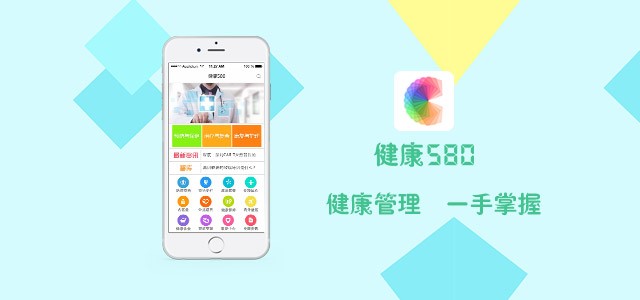
Health 580's revenue streams primarily consist of two components: commissions from various services, and fees charged for providing big data to other institutions.
Service Commission and Incentives Mainly Include:
1. For users who undergo preventive screening, diagnosis, and treatment through the platform, the platform will collect commissions from relevant institutions and return a portion of these commissions to users as cash rebates, thereby enhancing the platform’s credibility and user stickiness;
2. By collecting clinical research projects recommended for advanced cancer patients willing to undergo new technology clinical treatment, which cooperate with authoritative hospitals, doctors, and authoritative treatment technology institutions, obtain certain fees through the project platform;
3. Recommend patients to seek medical treatment at renowned overseas partner hospitals and receive commissions from overseas medical facilitation agencies;
4. Earn price differentials from the sales volume of healthy diets and health products sold through the Health Mall;
5. Commissions from the purchase of critical illness medical insurance policies, underwritten by cooperating well-known domestic insurance companies, by users via the promotion platform.
Revenue from big data services is primarily generated by leveraging the platform’s accumulated valid data on high-risk individuals and patients, which is analyzed and filtered for provision to national government research institutions, thereby securing government funding.
Specialized Team
The Yunpeng team has many years of experience in the research, development, and implementation of systems for the medical information industry. From 2014 to 2015, they independently started a business, developing a clinical treatment information system for biological cells and obtaining copyright registration. Yunpeng stated that these experiences have enabled the team to engage with more hospitals, clinics, and other medical institutions, thereby establishing stronger collaborative relationships.
In July 2005, a team of scientists led by Dr. Hu Xiang jointly invested with the Shenzhen HK-Shenzhen Industry-University-Research Base to establish Shenzhen Beike Biotechnology Co., Ltd. and the Shenzhen Beike Cell Engineering Research Institute in the Shenzhen High-Tech Industrial Park, professionally dedicated to building China’s clinical translational research platform for cell therapy. In 2011, it initiated the establishment of the China National Strategic Alliance for Technological Innovation in Stem Cells and Regenerative Medicine Industry and was elected as the first Vice Chairman of the Alliance.
Dr. Hu Xiang is dedicated to building innovative business models and channel networks based on the biological characteristics of personalized cell therapy, to accelerate the rapid translation of internationally advanced personalized cell therapy technologies from the laboratory to clinical practice. He is focused on driving his enterprise into the ranks of world-leading companies in the clinical translation of cell therapy technologies.
Currently, Health 580 has secured RMB 3 million in angel investment and is preparing for its next round of financing.